Artwork
Diana
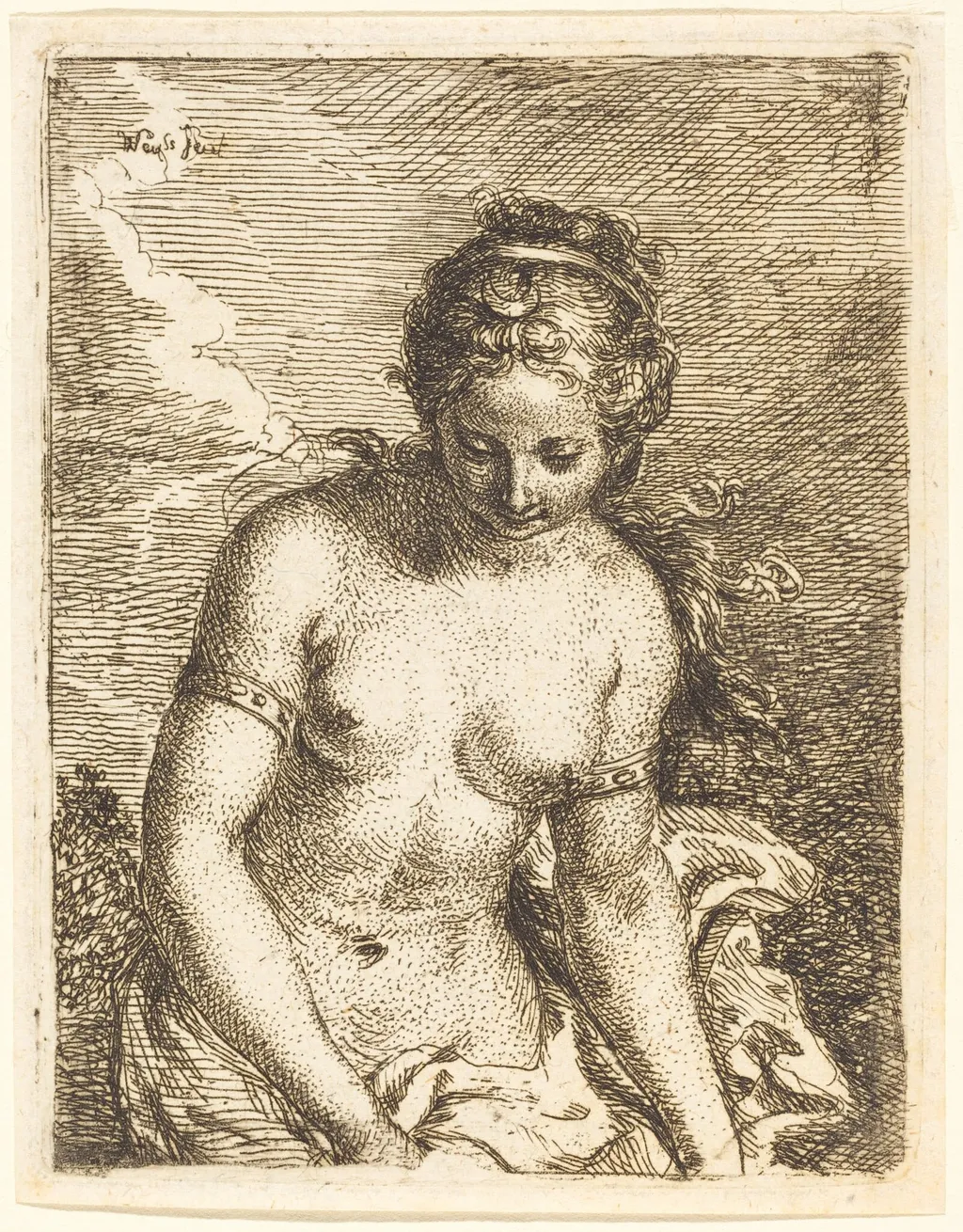
Diana is an ink print by the Baroque artist Bartholomäus Ignaz Weiss. It dates from 1777 and is held in the collection of the National Gallery of Art.
About this work
Overview
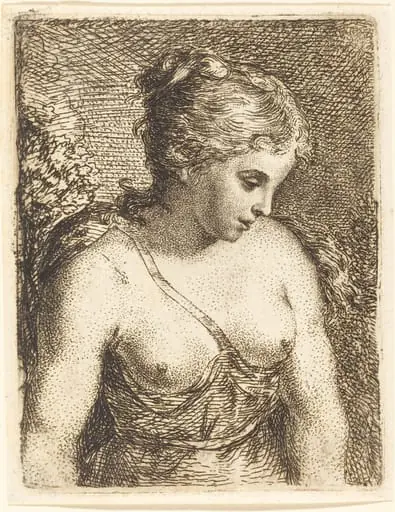
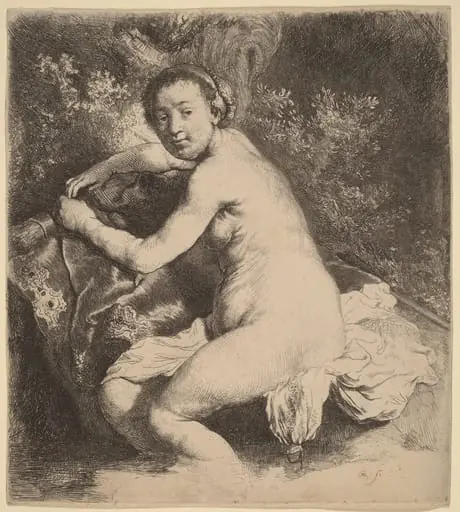
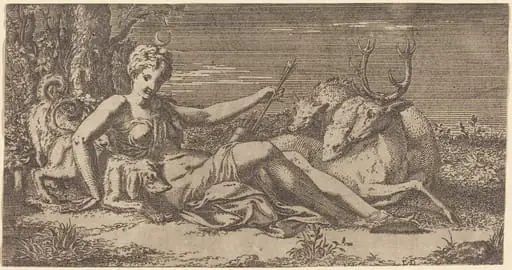
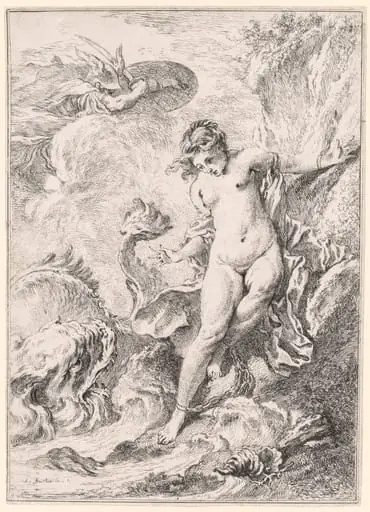
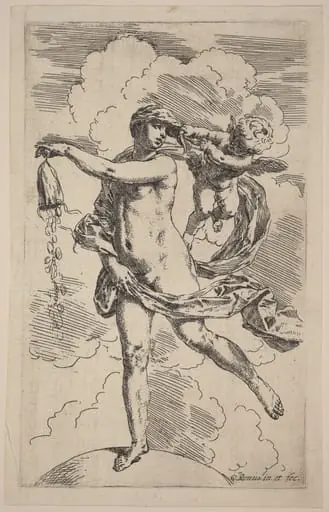
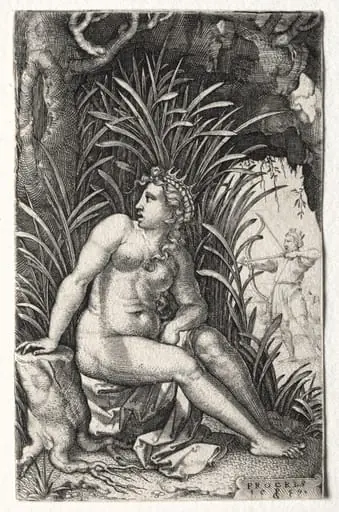
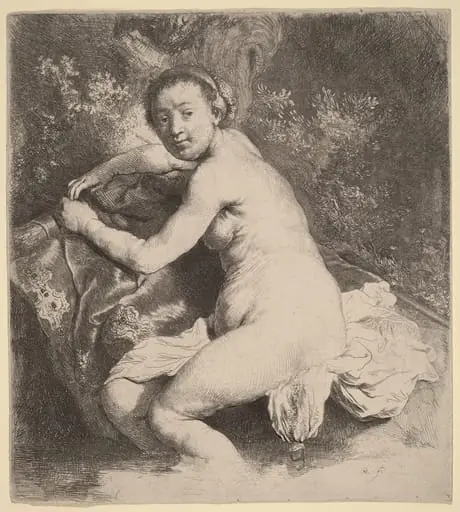
Created in 1777 by Bartholomäus Ignaz Weiss, this etching depicts the Roman goddess Diana. Rendered in monochrome, the print captures a solitary female figure in a contemplative pose, framed against a textured, indistinct background. The work exemplifies the precision possible in etching, emphasizing form through line and tone rather than color.
Subject & Meaning
The figure represents Diana, goddess of the hunt and the moon, identified by her composed, self-possessed stance. Her crossed arms suggest both vigilance and serenity, aligning with classical ideals of divine restraint. The absence of traditional attributes like a bow or crescent moon shifts focus to her presence, inviting interpretation through posture rather than symbolism.
Technique & Style
Weiss employed fine etching lines to model the figure’s form, using subtle gradations of tone to suggest volume and fabric weight. The drapery of her dress is rendered with deliberate folds, conveying movement and texture. Background elements are minimally suggested with sparse, irregular marks, enhancing the figure’s prominence through contrast and negative space.
History & Provenance
The etching was produced during Weiss’s active period in Vienna, where he worked within a tradition of mythological prints for private collectors. While no early ownership records are widely documented, the piece reflects the 18th-century European interest in classical themes and the technical refinement of printmaking as a fine art medium.
Context
In the late 1700s, etchings of mythological subjects were popular among educated audiences who valued intellectual and aesthetic refinement. Weiss’s work aligns with broader trends in Viennese art that favored restrained classical imagery over theatrical Baroque excess, emphasizing clarity and emotional restraint.
Legacy
Though not widely reproduced today, this etching remains a representative example of late Enlightenment printmaking. It illustrates how artists used technical discipline to convey mythic themes with quiet dignity, influencing later generations interested in the expressive potential of line and tone over narrative spectacle.
Own this work as a print
Artist & collection