Artwork
Studies of Eleven Heads
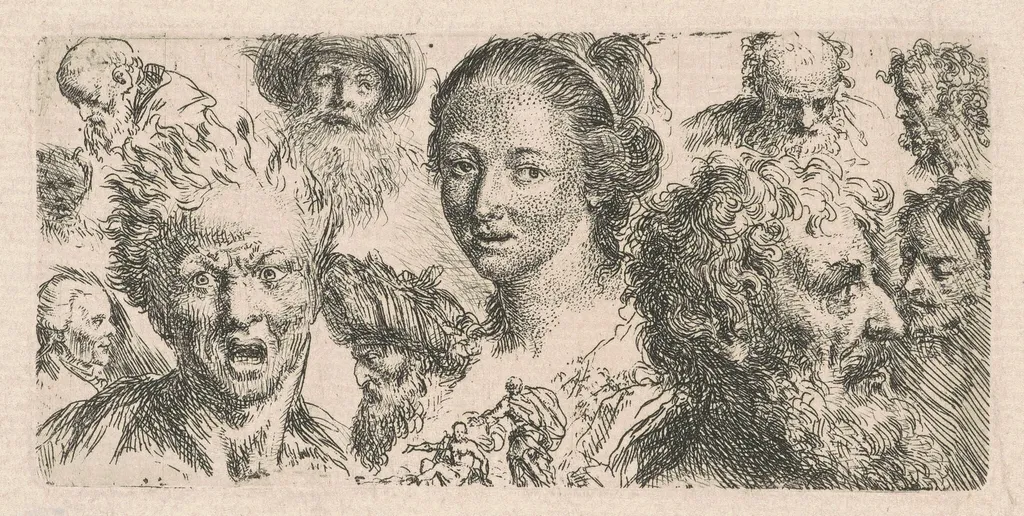
Studies of Eleven Heads is an ink print by the Romanticist artist Bartholomäus Ignaz Weiss. It dates from 1774 and is held in the collection of the National Gallery of Art.
About this work
Overview
Bartholomäus Ignaz Weiss produced the print Studies of Eleven Heads around 1774. Executed as an etching with drypoint on laid paper, the work presents a compact grouping of eleven individual faces. The composition is rendered in brisk, gestural lines that convey a range of expressions, from placid to startled, giving the sheet a lively, almost theatrical quality.
Subject & Meaning
The print concentrates on the human visage, arranging the eleven heads in close proximity so that each facial expression can be compared directly. The varied moods—calm, angry, surprised—suggest an exploration of emotional states and the capacity of line to capture fleeting psychological nuances without narrative context.
Technique & Style
Weiss combined traditional etching with drypoint, allowing for both clean incised lines and the characteristic burr of drypoint that yields soft, fuzzy edges. This hybrid approach produces a spectrum of tonal values, from light shading to deep, velvety blacks, and gives the hair and contours a slightly blurred, atmospheric texture.
Context
Created in the late eighteenth century, the work reflects the period’s interest in studies of physiognomy and the practice of drawing multiple heads for academic training. The use of laid paper, with its visible ribbed texture, was common for fine prints, providing a subtle background that enhances the contrast of the drawn forms.
Artist & collection

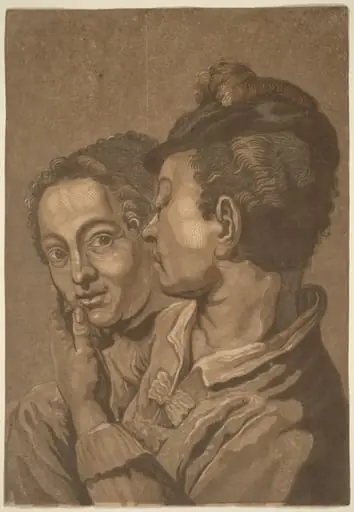 Two Lovers
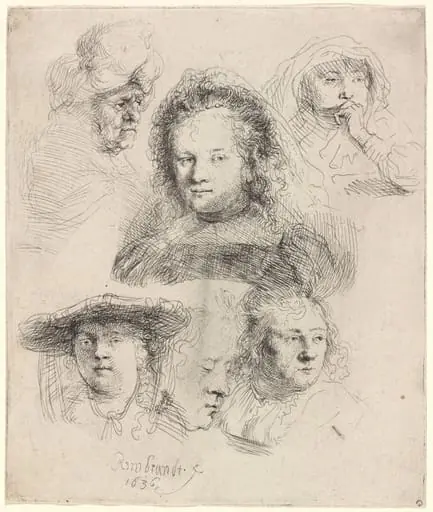 Studies of the Head of Saskia and Others
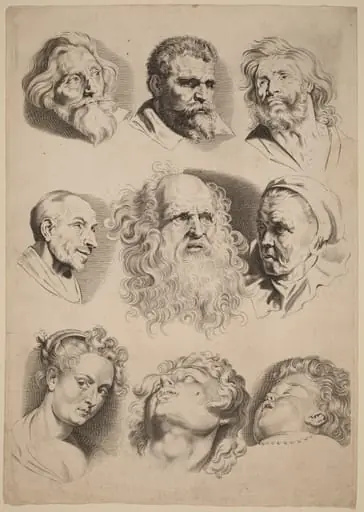 Nine Heads
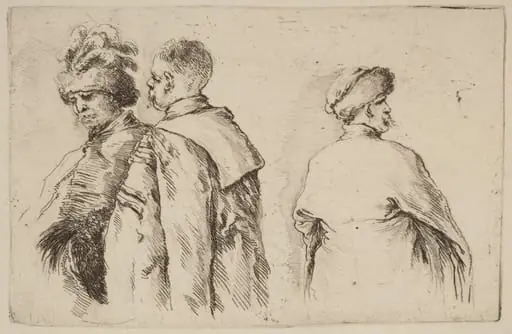 Three Hungarians
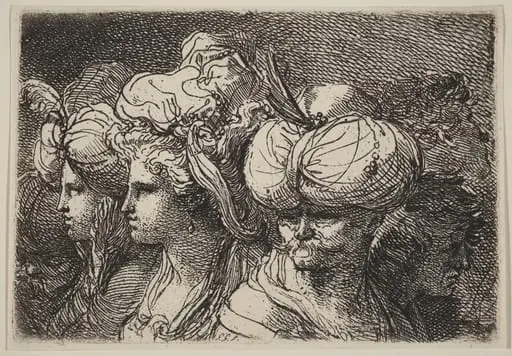 Six Heads, a Turk in Front
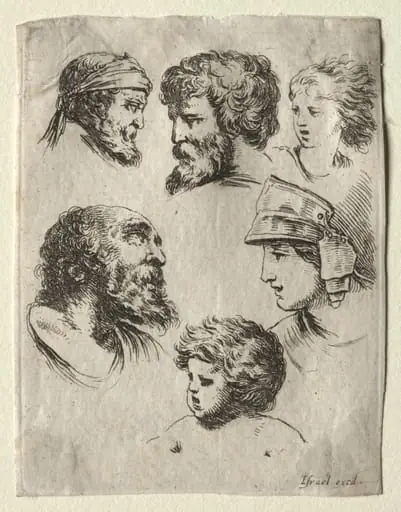 Book for Learning to Draw (Livre pour apprendre à dessiner): Six Portrait Heads
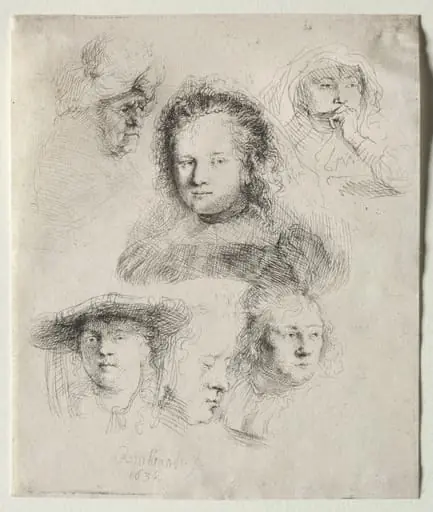 Studies of the Head of Saskia and Others
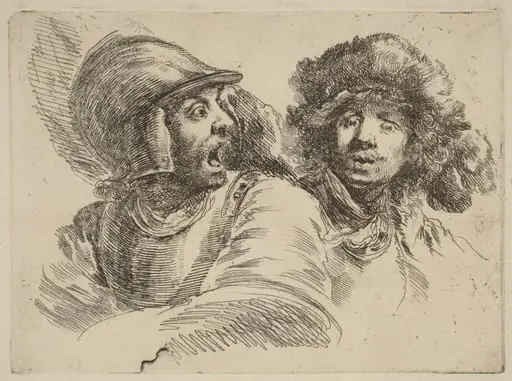 Frightened Soldier and Man with Fur Cap
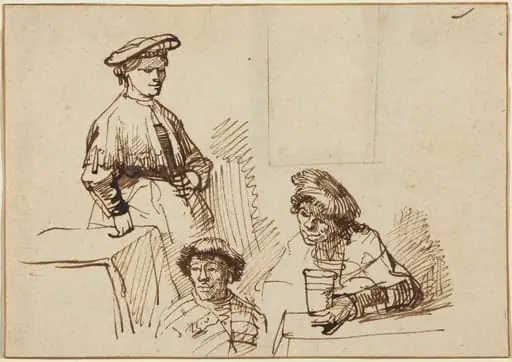 Sketches from a Tavern: Woman Standing and Two Men Seated
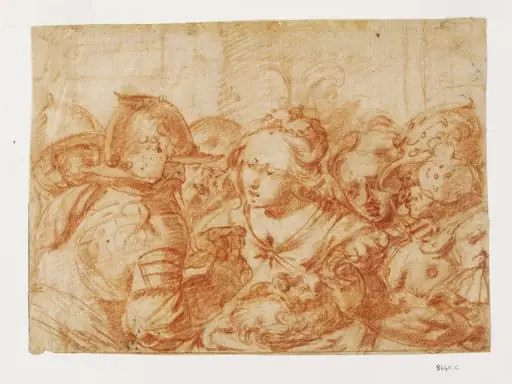 Judith showing the head of Holofernes to the Israelite elders