Artwork
Thomas Flatman
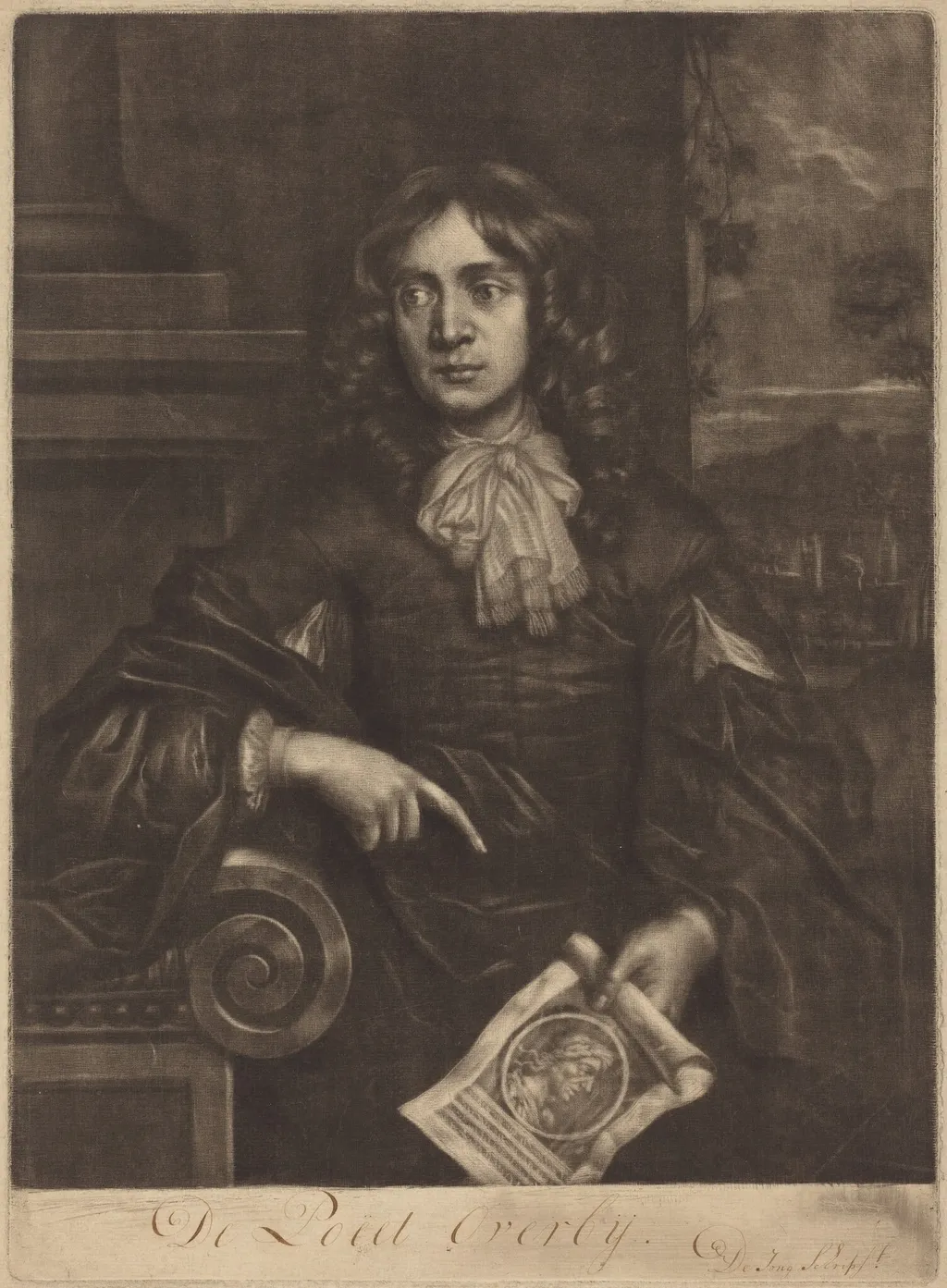
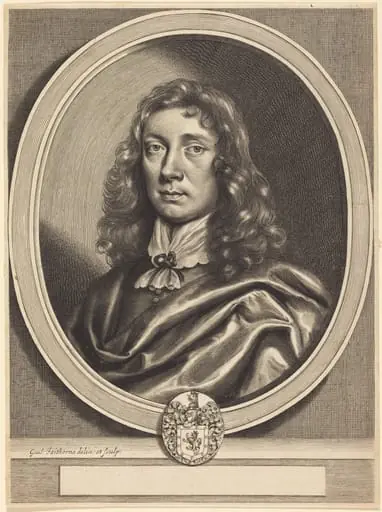
Thomas Flatman is an ink print by the Baroque artist William Faithorne. It dates from 1690 and is held in the collection of the National Gallery of Art.
About this work
This painting features a man with long, curly hair, dressed in a dark robe with a white ruffled collar and cuffs.
This painting features a man with long, curly hair, dressed in a dark robe with a white ruffled collar and cuffs. He sits in a chair, holding a paper with an image of a woman on it. The background is dark, with a faint landscape visible behind him.
The man's attire and hairstyle suggest a formal portrait from the 17th century. The use of chiaroscuro, a technique that uses strong contrasts between light and dark, adds depth to the image.
To learn more about the artistic style of this period, explore the Baroque movement.
Overview
This mezzotint, executed by the English engraver William Faithorne around 1690, depicts the poet‑artist Thomas Flatman. Rendered on laid paper, the image presents a solitary figure seated in a dark interior, his profile illuminated against a subdued background that hints at a distant landscape.
Subject & Meaning
Flatman is shown with long, curled hair and dressed in a dark robe trimmed with a white ruffled collar and cuffs, holding a sheet of paper that bears a woman's likeness. The inclusion of the paper suggests his literary pursuits, while the contemplative pose conveys a sense of introspection typical of portraiture in the late seventeenth century.
Technique & Style
Faithorne employed the mezzotint process, a tonal engraving method that allows for rich gradations of light and shadow. The work relies on chiaroscuro, using stark contrasts to model the figure’s features and the surrounding space, creating a three‑dimensional effect on the flat paper support.
History & Provenance
Created circa 1690, the print was likely produced shortly after Flatman's death in 1688, serving as a commemorative portrait. Faithorne, a prominent London engraver, frequently reproduced likenesses of literary and artistic figures, and this work would have circulated among collectors of printed portraiture.
Context
The mezzotint belongs to the Baroque period in England, a time when dramatic lighting and expressive detail were favored in both painting and printmaking. Faithorne’s technique reflects the influence of continental artists while adapting to English tastes for portraiture that emphasized personal achievement and intellectual identity.
Artist & collection
Artist
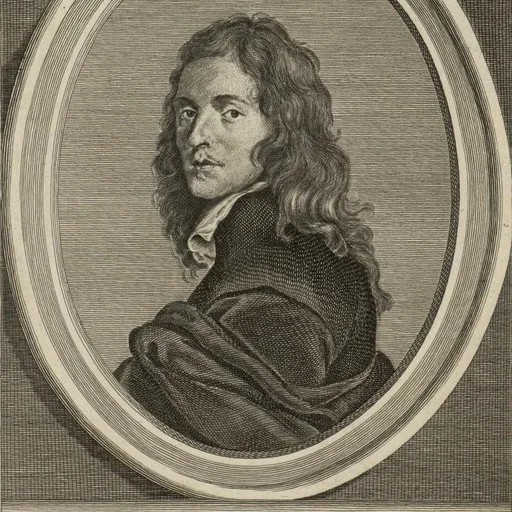
William Faithorne (1616–1691) was a British artist, born in Greater London.

 Sir Robert Henley, Bart.
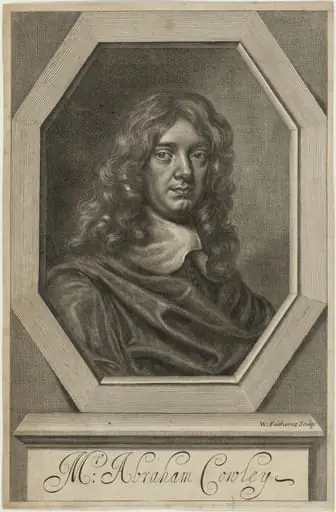 Abraham Cowley
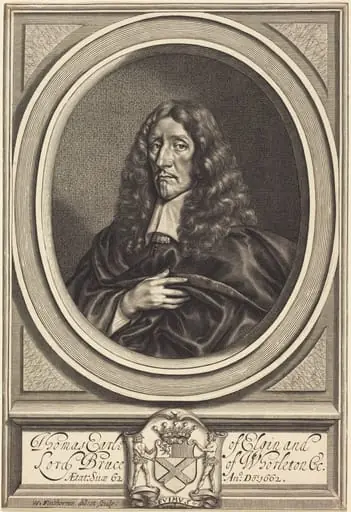 Thomas Bruce, Earl of Elgin
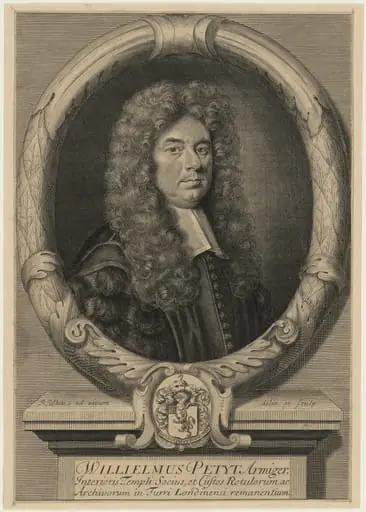 William Petyt, Keeper of the Records in the Tower
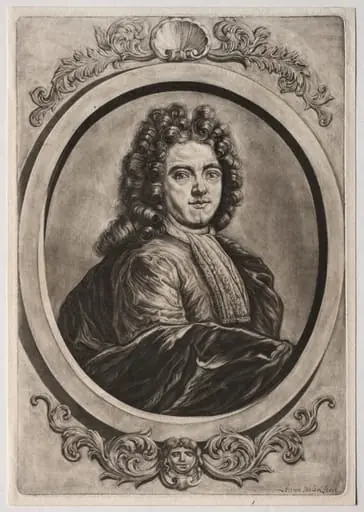 Self-Portrait
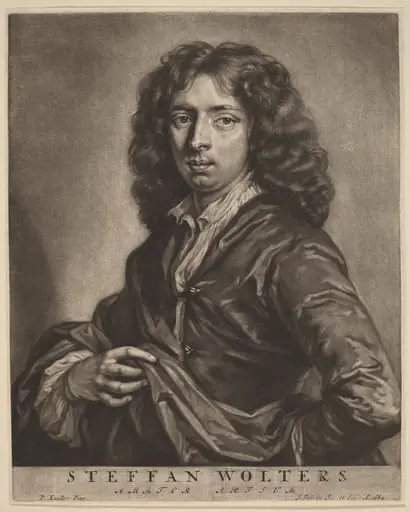 Steffan Wolters
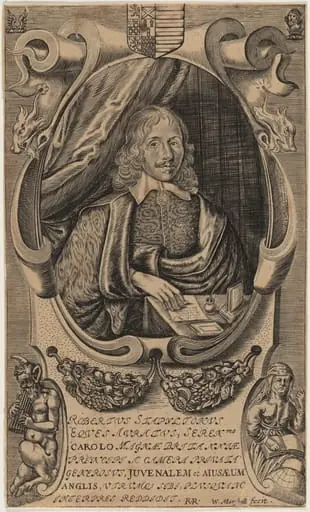 Sir Robert Stapylton, dramatic poet and translator
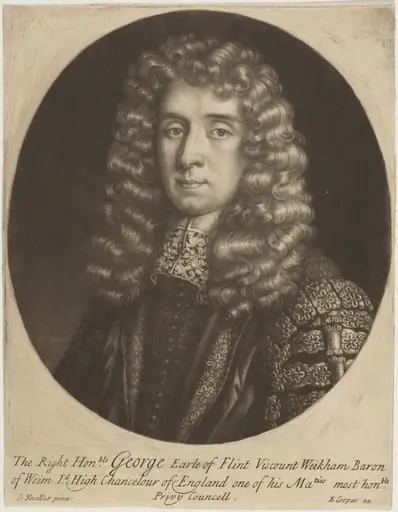 George Jeffreys, Earl of Flint, Viscount Weikham
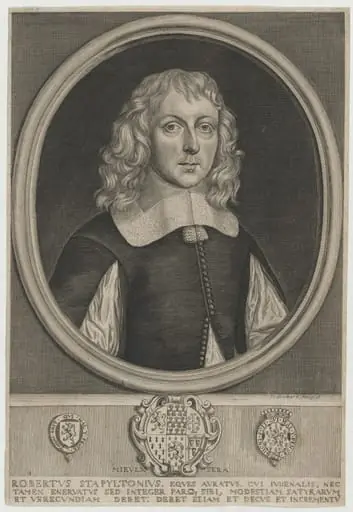 Sir Robert Stapylton, Dramatic Poet and Translator
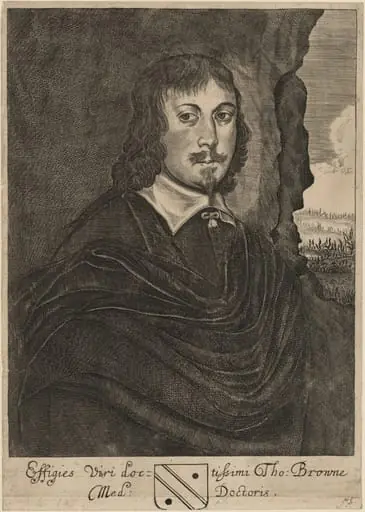 Tho. Browne, Med. Doctoris (Sir Thomas Browne, M.D.)
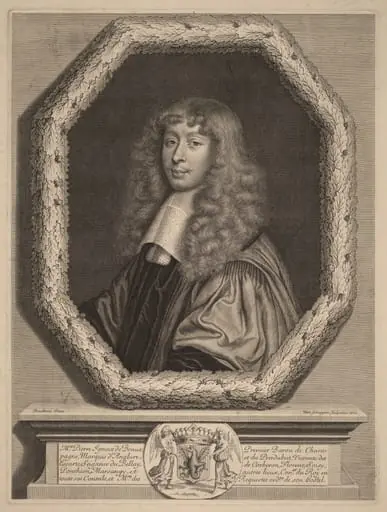 Pierre Ignace de Braux
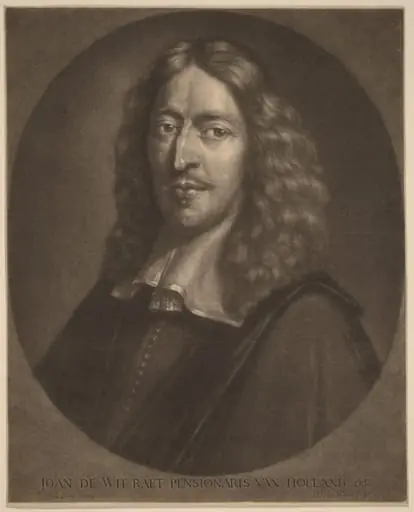 Johan de Wit