Artwork
Thomas Bruce, Earl of Elgin
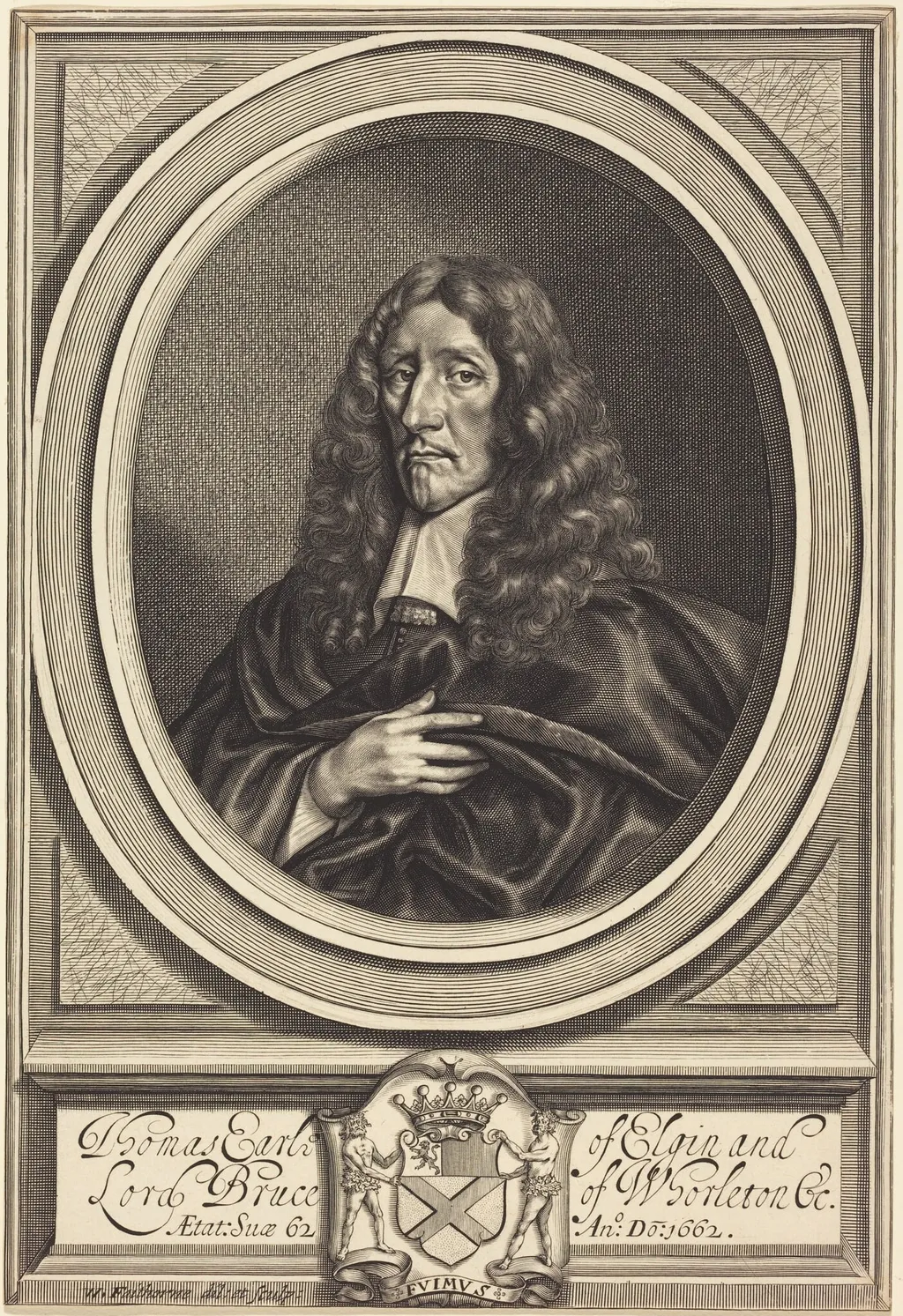
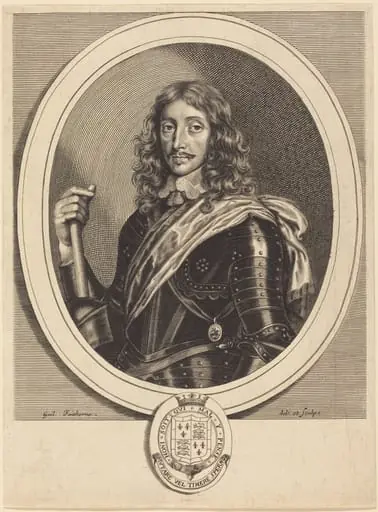
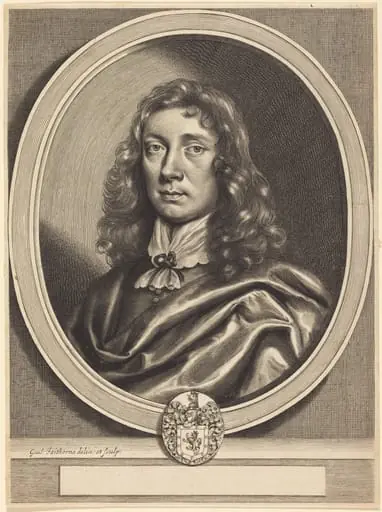
Thomas Bruce, Earl of Elgin is an ink print by the Baroque artist William Faithorne. It dates from 1662 and is held in the collection of the National Gallery of Art.
About this work
The background is plain, but the frame has a detailed border with swirls and a crest at the bottom showing a crown and a shield.
This is a black-and-white portrait of a man with curly hair and a mustache. He’s dressed in a fancy coat with ruffled cuffs, and his hands rest on a piece of paper. The background is plain, but the frame has a detailed border with swirls and a crest at the bottom showing a crown and a shield.
The name "Thomas Earl Bruce" is written below, along with the year 1662. This was likely made to show his importance, since the crest suggests he held a high rank.
Next, look up engraving to see how artists like this one carved detailed images into metal.
Overview
William Faithorne’s 1662 engraving presents Thomas Bruce, Earl of Elgin, in a formal half‑length pose. Rendered in black ink on paper, the image shows the nobleman with curled hair, a moustache, and a richly trimmed coat whose cuffs are adorned with lace. His hands rest on a sheet of paper, and a decorative frame with scrollwork and a heraldic crest encloses the portrait, while the inscription below identifies the sitter and date.
Subject & Meaning
The sitter, Thomas Bruce, held the title of Earl of Elgin, a rank that placed him among the upper echelons of 17th‑century British aristocracy. The inclusion of a crown and shield in the frame’s crest underscores his noble status, while the paper he holds may allude to his involvement in diplomatic or scholarly affairs, a common visual shorthand for learned or official activity in portraiture of the period.
Technique & Style
Faithorne employed the traditional copper‑plate engraving method, incising fine lines with a burin to achieve delicate shading and texture. The contrast between the richly detailed costume and the plain background highlights the subject’s prominence. Swirling ornamental borders and the heraldic device are rendered with precise, repetitive strokes, exemplifying the meticulous craftsmanship typical of mid‑Baroque English printmaking.
History & Provenance
Created in 1662, the print was likely commissioned to commemorate Bruce’s social standing or a specific achievement. Faithorne, a prominent London engraver, produced portraits for aristocratic patrons, and this work would have been distributed as a collectible image among the Earl’s circle. Surviving copies are found in several museum and library collections, indicating its circulation among collectors of portrait prints in the late 17th and 18th centuries.
Context
The engraving belongs to a broader tradition of portrait prints that documented the English nobility during the Restoration era. Such images served both as personal memorabilia and as visual records of lineage and rank. Faithorne’s work reflects the period’s interest in realism combined with decorative elegance, aligning with contemporary tastes for detailed, status‑affirming portraiture.
Artist & collection
Artist
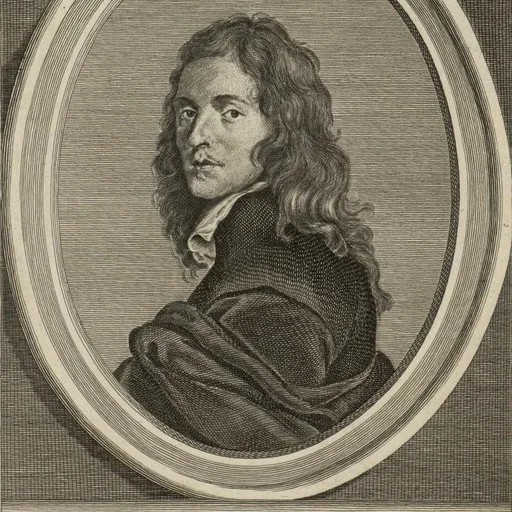
William Faithorne (1616–1691) was a British artist, born in Greater London.