Artwork
William Camden
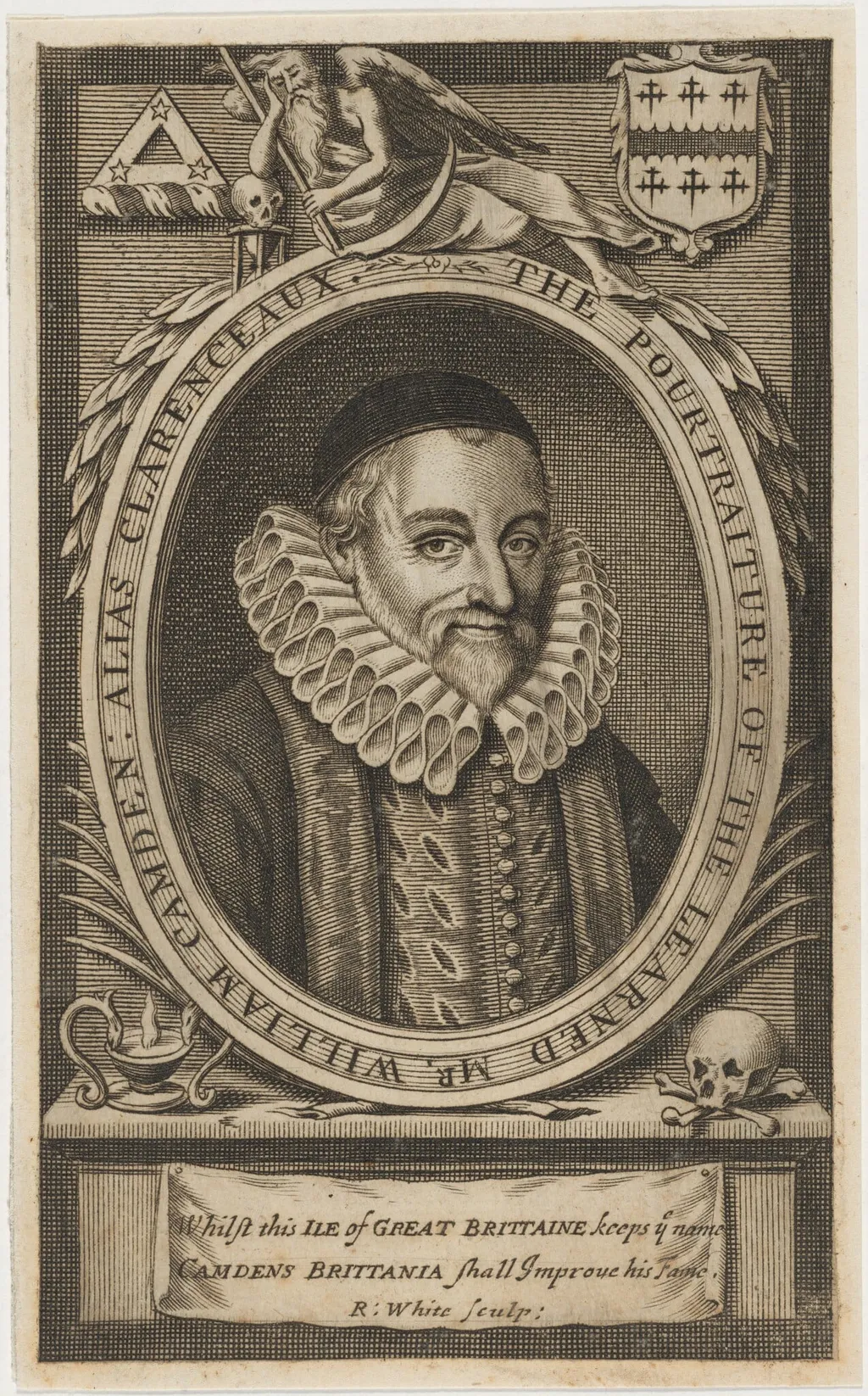
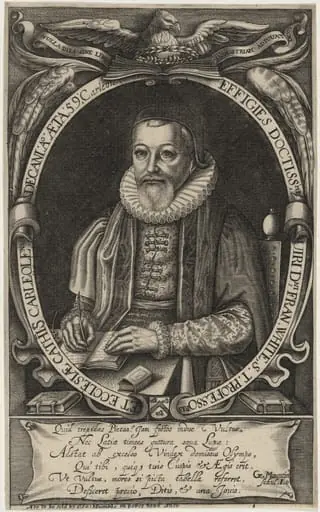
William Camden is an ink print by the Baroque artist Robert White. It dates from 1674 and is held in the collection of the National Gallery of Art.
About this work
Overview
The composition follows the conventions of scholarly portraiture in late 17th-century England, emphasizing intellectual legacy over individual expression.
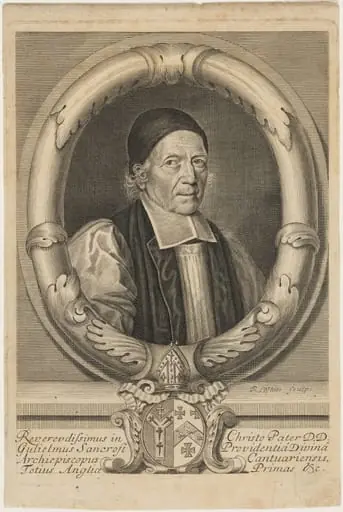
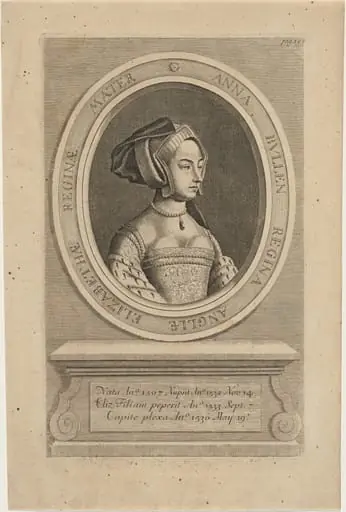
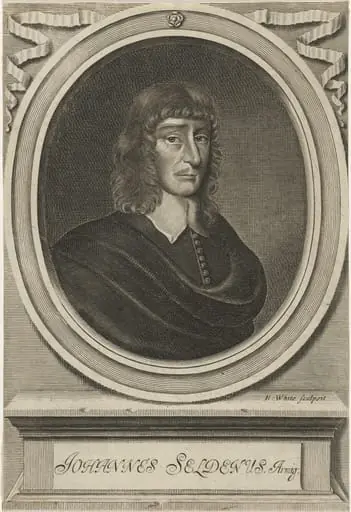
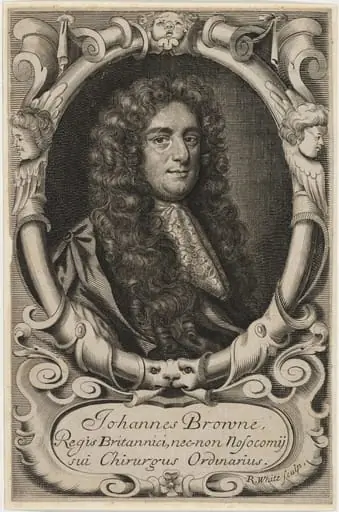
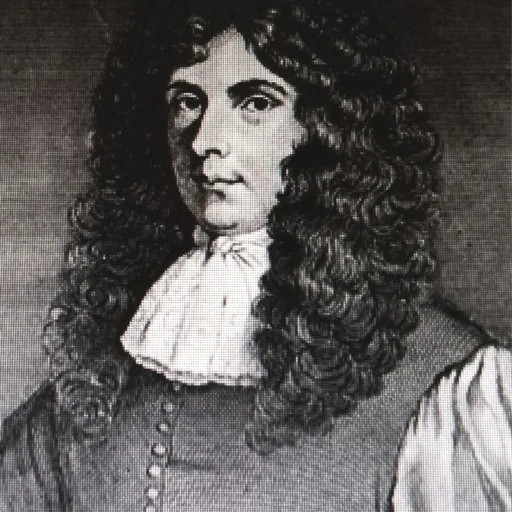
This 1674 engraving by Robert White portrays William Camden, a prominent English antiquary and historian. Executed in black ink on paper, the portrait is framed within an ornate oval border inscribed with Latin text. A decorative motif including a skull and banner encircles the image, while a small allegorical figure hovers above. The composition follows the conventions of scholarly portraiture in late 17th-century England, emphasizing intellectual legacy over individual expression.
Subject & Meaning
William Camden is depicted as a scholar whose work defined English historical study. The Latin inscription beneath the portrait asserts that his book 'Britannia' will endure as long as Britain retains its identity. Above him, a winged figure holds a scroll and shield—symbols of historical record and national heritage. The skull in the border alludes to mortality, reinforcing the theme of enduring fame through scholarship rather than physical life.
Technique & Style
Robert White rendered the portrait using fine-line engraving, a technique that allowed precise control over tone and texture. His use of pencil on vellum for the original drawing was transferred to copper for printing, resulting in crisp, detailed lines. The ruff collar and facial features are rendered with subtle gradations, typical of English portrait engraving of the period. The decorative border, rich in symbolic elements, was carefully integrated into the plate to enhance the scholarly tone.
History & Provenance
Created in London in 1674, the engraving was part of a broader effort to memorialize national figures through printed portraiture. White, trained under David Loggan, specialized in such works and was active in the London print trade. The image likely circulated among scholars and collectors, serving both as a tribute and a commercial product. Its survival in multiple institutional collections suggests early and sustained interest in Camden’s legacy.
Context
In the decades following the English Civil War, there was renewed interest in national history and antiquarian study. Camden’s 'Britannia' had become a foundational text, and his image was frequently reproduced to affirm cultural continuity. White’s engraving aligns with this trend, using classical motifs and Latin inscriptions to link Camden’s scholarship with the humanist ideals of earlier centuries, reinforcing his status as a pillar of English historical tradition.
Legacy
The engraving contributed to the visual canon of Camden as a national historian. Its formal structure—scholarly portrait framed by allegory and memento mori—became a template for later depictions of antiquaries. Though White’s name faded from public memory, this work preserved Camden’s likeness for centuries, ensuring his image remained associated with the scholarly rigor of early modern English historiography.
Artist & collection
Artist
Robert White (1645 – 1703) was an English draughtsman and engraver. A Londoner, he was a pupil of David Loggan, and became a leading portrait engraver. White was celebrated for his original portraits, drawn in pencil on…