Artwork
Last Judgement
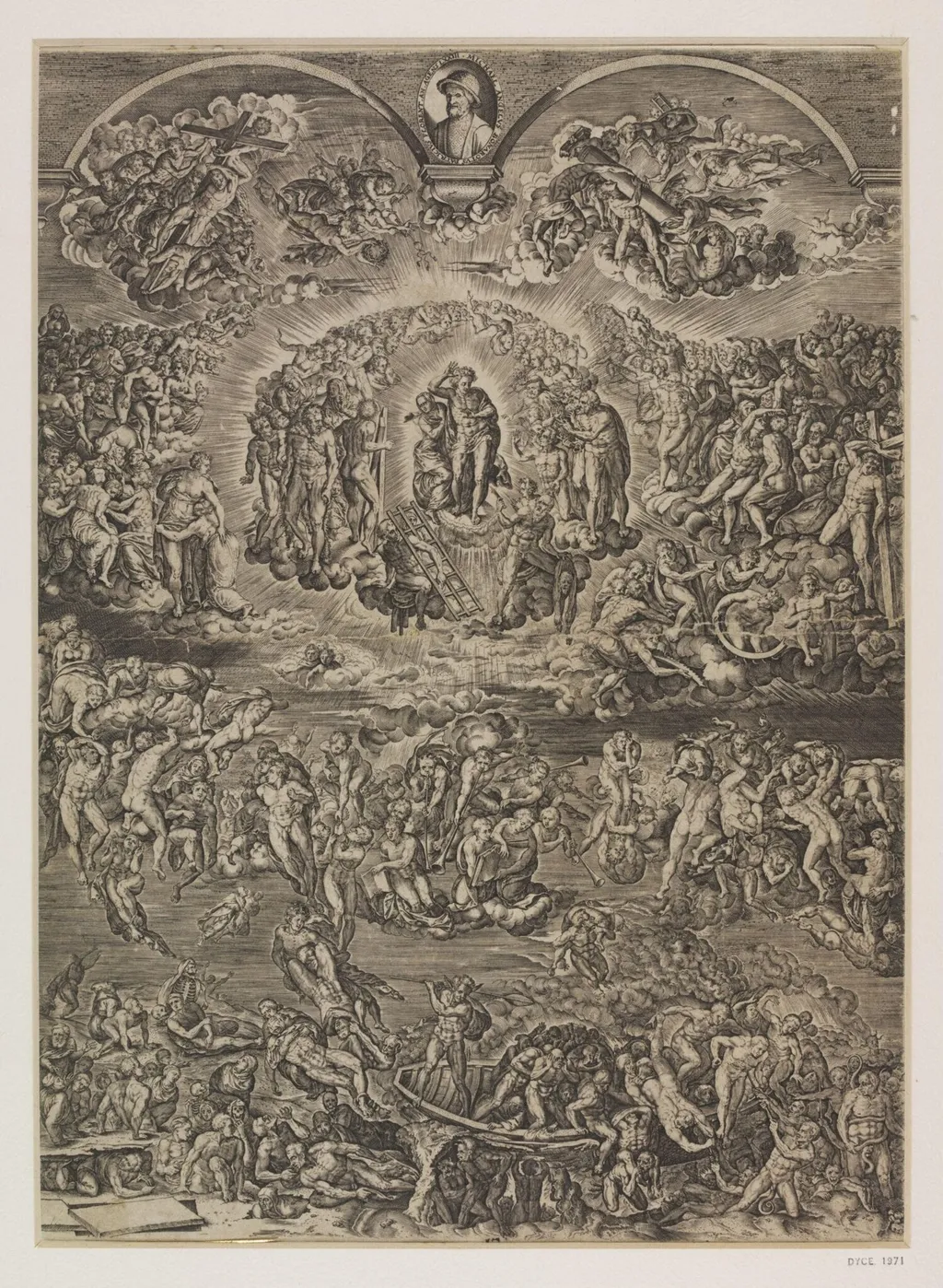
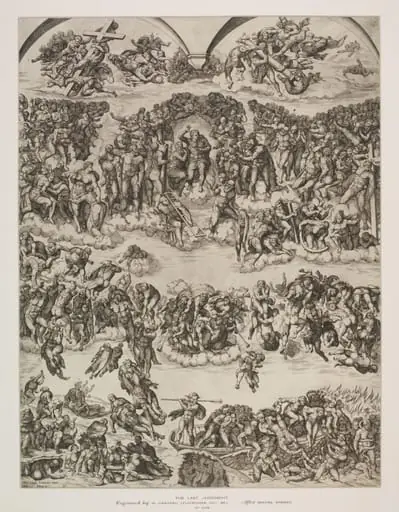
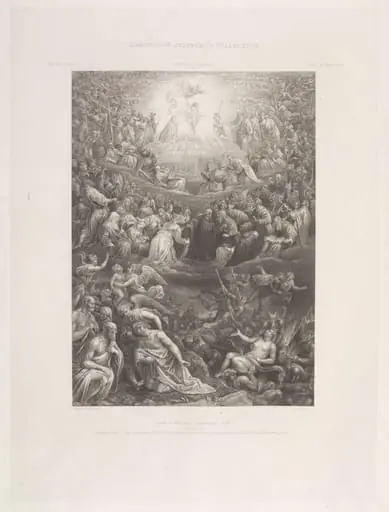
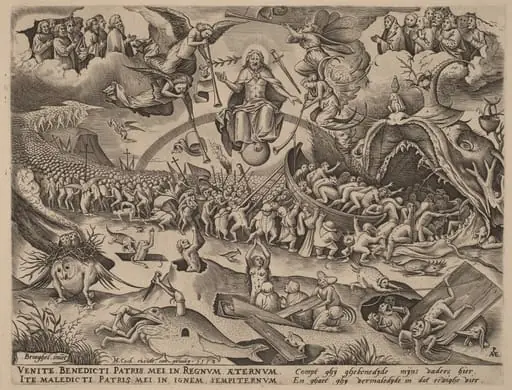
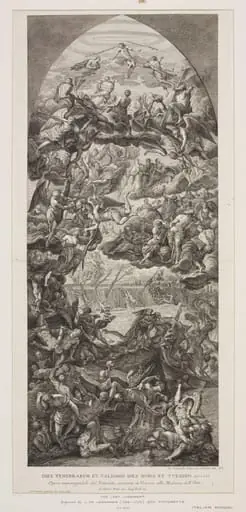
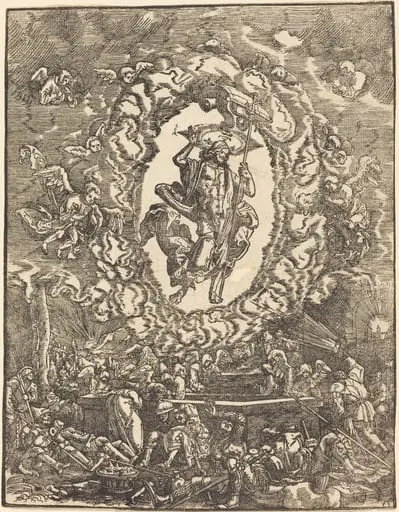
Last Judgement is a print by Jan Wierix. It is held in the collection of the Victoria and Albert Museum.
About this work
Overview
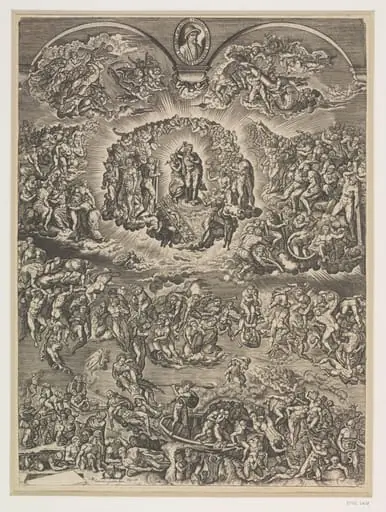
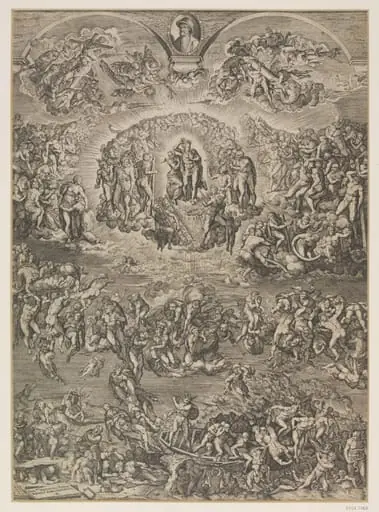
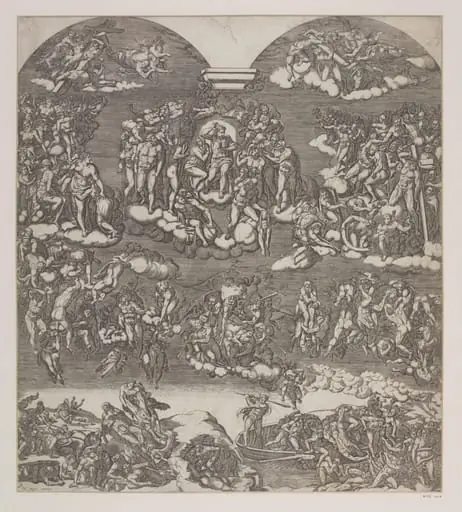
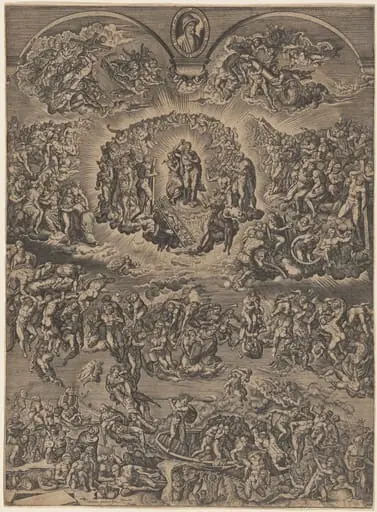
Jan Wierix's 1650 engraving, 'Last Judgement', is a reversed reproduction of Michelangelo's Sistine Chapel fresco, mediated through Martino Rota's earlier print of the same size. Executed as a proof impression on paper, the work remains unmarked by subsequent inscriptions.
Subject & Meaning
A central robed figure on a rocky base anchors the scene, surrounded by the resurrected rising from the ground and others being pulled upwards.
The engraving depicts a chaotic scene of the Last Judgement, with figures ascending, descending, and struggling amidst a dynamic, light-and-shadow dominated composition. A central robed figure on a rocky base anchors the scene, surrounded by the resurrected rising from the ground and others being pulled upwards. Contrasting zones of heavenly order (above, with a haloed face in a smaller circle) and earthly turmoil (below, in a dark, tangled mass) underscore the judgement's dichotomy.
Technique & Style
Wierix's engraving showcases sharp, detailed lines, rendering visible every muscular and textile detail. The pronounced contrast between light and dark creates a pronounced visual depth, making the figures appear to emerge from the page.
History & Provenance
Created in 1650, this print is part of a reproductive engraving lineage: Michelangelo's original fresco (1508-1542) -> Martino Rota's direct engraving -> Wierix's reversed engraving. The sheet's status as a proof impression and lack of later markings suggest an early state of the print.
Context
As a reproductive engraving, 'Last Judgement' reflects 17th-century practices of disseminating famous artworks through prints. Its reverse composition, however, introduces an interesting variation on the well-known original.
Legacy
While not an original composition, Wierix's engraving contributes to the broader dissemination of Michelangelo's iconic 'Last Judgement' across Europe during the Baroque period, making the fresco's imagery accessible to a wider audience.
Artist & collection
Artist
Johannes Wierix (1549 – c. 1620) was a Flemish engraver, draughtsman and publisher. He was a very accomplished engraver who made prints after his own designs as well as designs by local and foreign artists. He further…