Artwork
Still life with a golden goblet
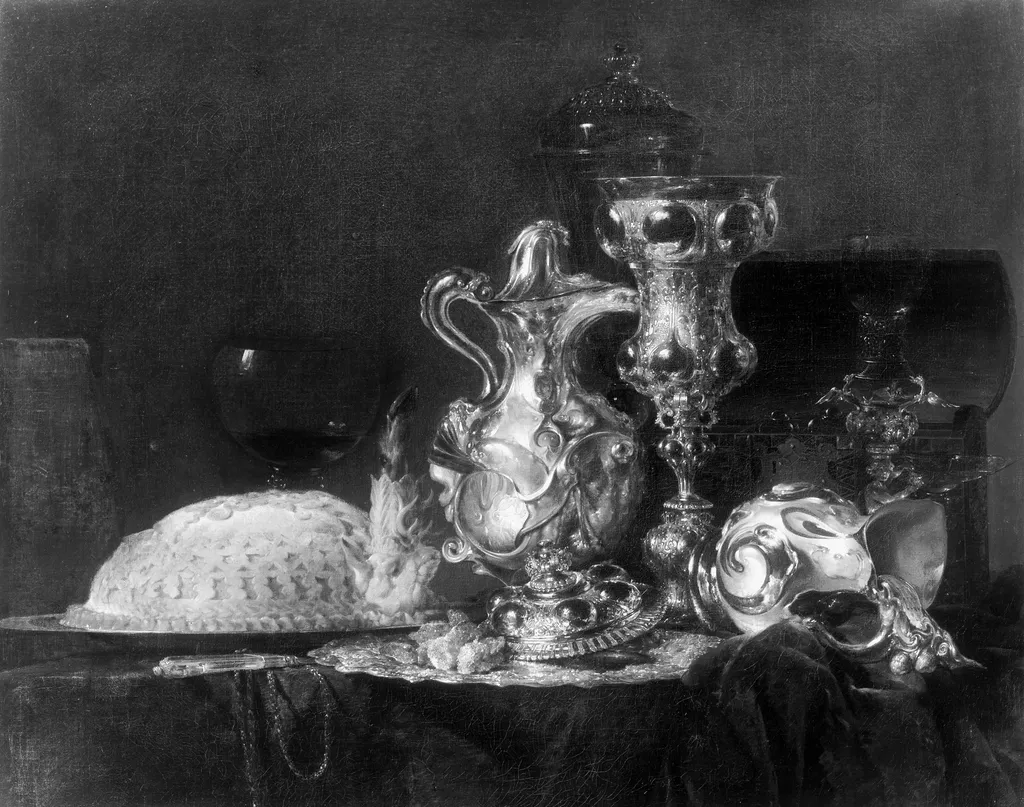
Still life with a golden goblet is a paint painting by the Dutch Golden Age artist Willem Kalf. It dates from 1657 and is held in the collection of the Gemäldegalerie Berlin.
About this work
Overview
The composition includes a covered plate, several smaller vessels, and reflective objects that together create a study of material richness.
Willem Kalf’s 1657 oil painting presents a meticulously arranged tabletop scene dominated by an opulent golden goblet. The composition includes a covered plate, several smaller vessels, and reflective objects that together create a study of material richness. Light falls across the surfaces, highlighting textures and the interplay of metal, glass, and porcelain, while the overall effect is one of quiet, controlled elegance.
Subject & Meaning
The central goblet, rendered with gleaming gold and intricate ornamentation, serves as the focal point, drawing attention to notions of wealth and the transience of luxury. Surrounding items—plates, cups, and bowls—complement the main object, suggesting a display of abundance typical of 17th‑century Dutch still lifes, where material splendor often carried moral undertones about the fleeting nature of earthly possessions.
Technique & Style
Kalf employs a refined chiaroscuro, using strong contrasts of light and shadow to model the surfaces of metal and glass. His brushwork captures the subtle sheen of polished gold and the translucency of porcelain, while the careful placement of objects reflects the “pronkstilleven” tradition of lavish, detailed still‑life painting. The palette is restrained, emphasizing the luminous quality of the objects rather than vivid coloration.
History & Provenance
Created in the height of the Dutch Golden Age, the painting entered the collection of the Gemäldegalerie in Berlin, where it remains on display. Documentation traces its ownership through several European collections before its acquisition by the museum in the early 20th century, confirming its attribution to Kalf and its status as a representative work of his mature period.
Context
Kalf was a leading exponent of the “pronkstilleven,” a genre that showcased exotic and costly items to reflect the prosperity of the Dutch Republic. This work exemplifies the period’s fascination with trade‑brought luxuries and the technical skill required to render their reflective qualities, aligning it with contemporary works by artists such as Jan Davidsz. de Heem and Pieter Claesz.
Own this work as a print
Artist & collection
Artist
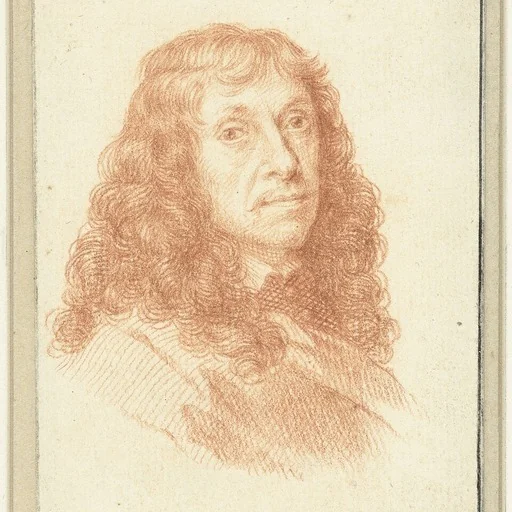
Willem Kalf (1619 – 31 July 1693) was one of the most prominent Dutch still-life painters of the 17th century, the Dutch Golden Age.

 Objects of Art from the Louvre
 A Jug, Fruit, Food and other Things on a Table
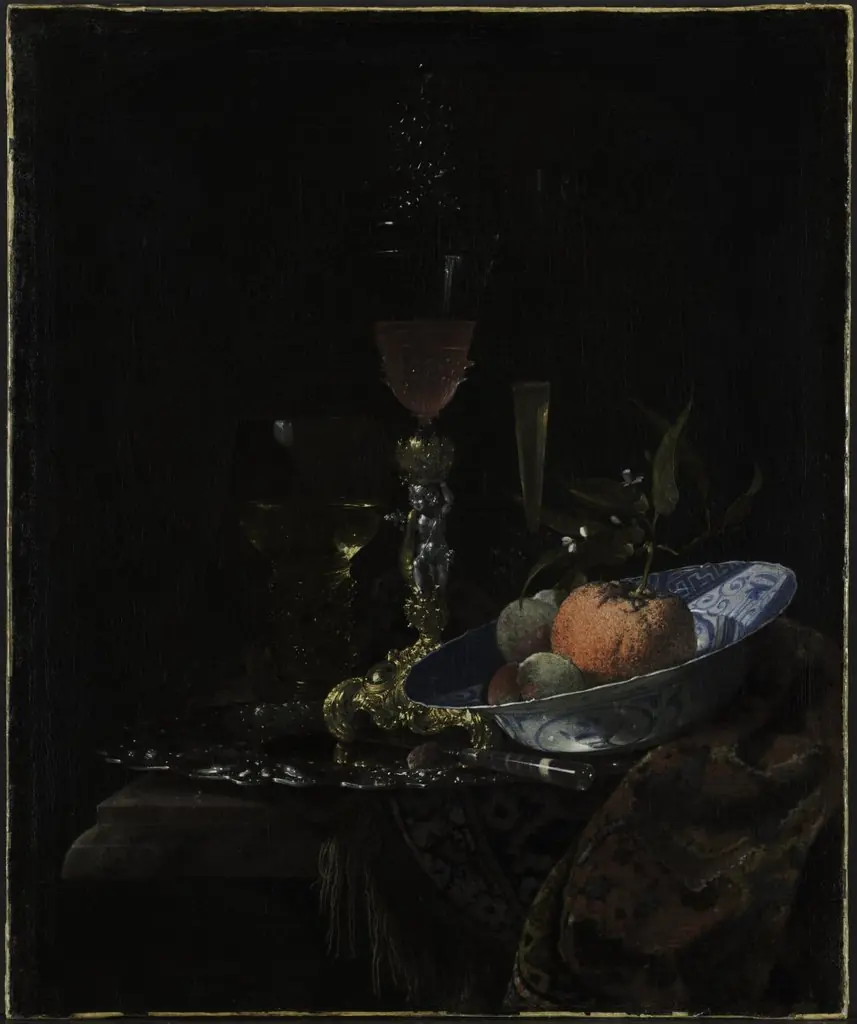
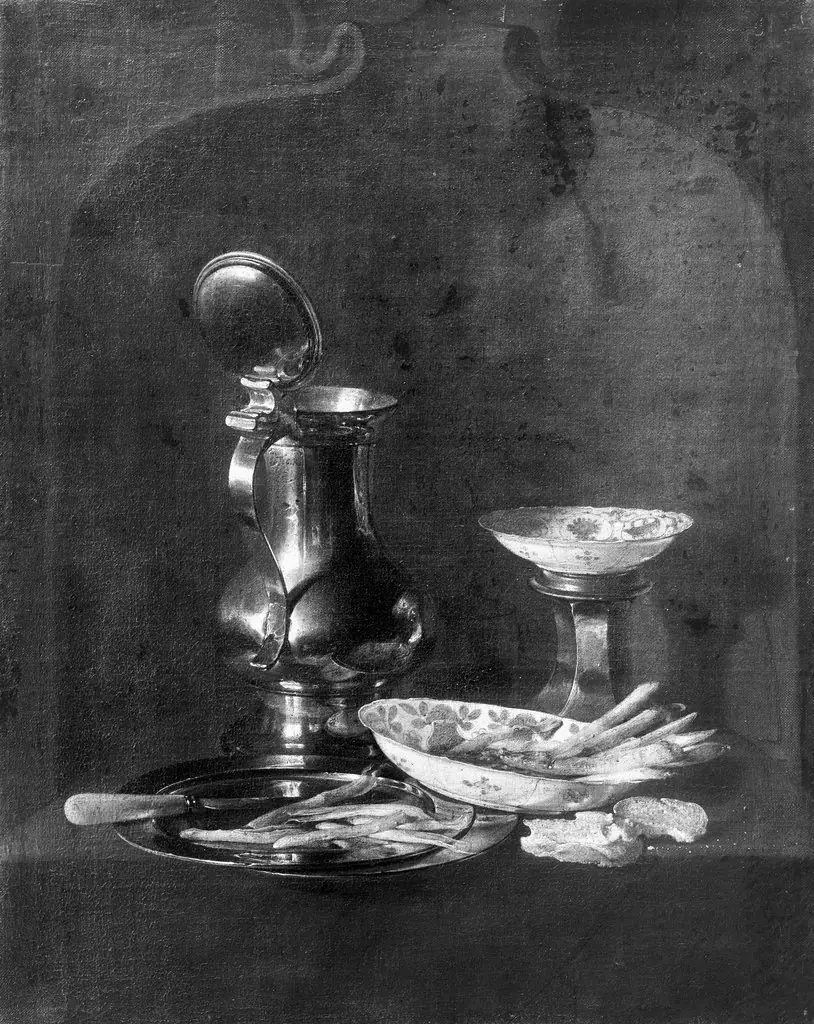 Still life with pewter utensils and Chinese bowls
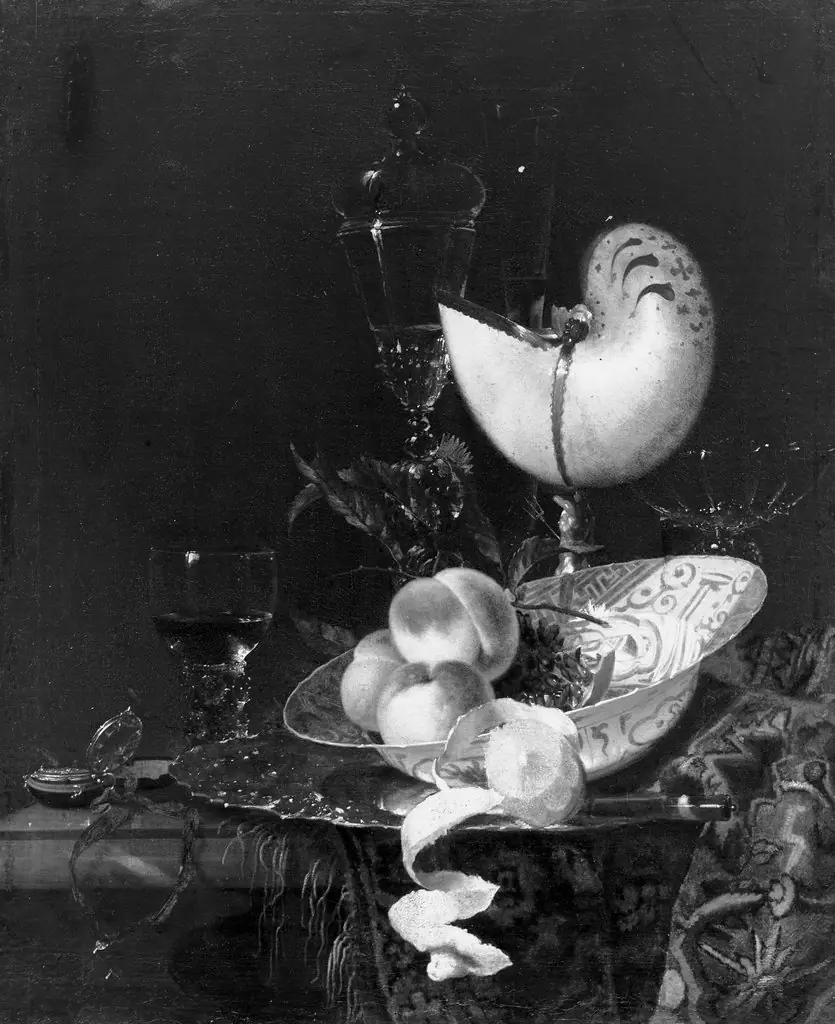 Still life with a nautilus cup
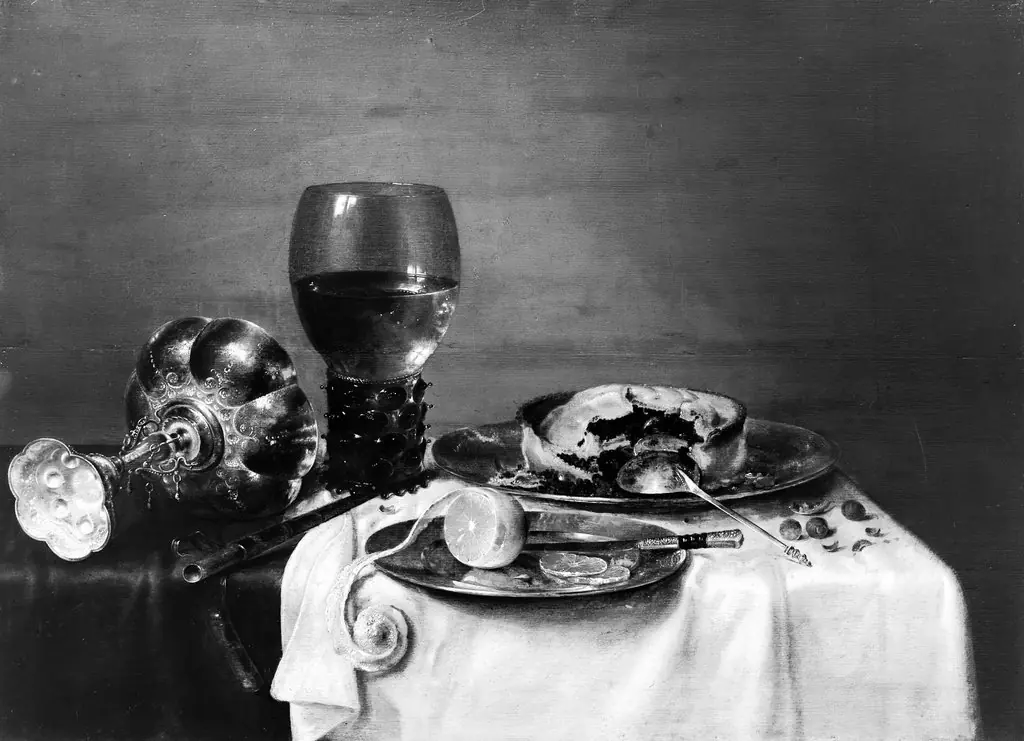 Stilleben mit Römer
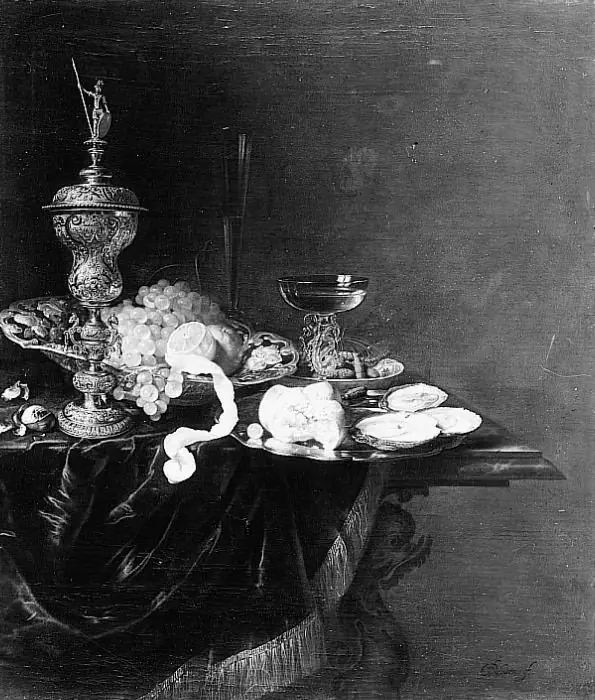 Still life with Akelei covered beaker dish of grapes, lemon and wine glasses
 Flower Piece
 Still life
 Still life with silver decanter and ham
 Flower Piece
 Früchtestück
 Still life with a glass lid goblet