Artwork
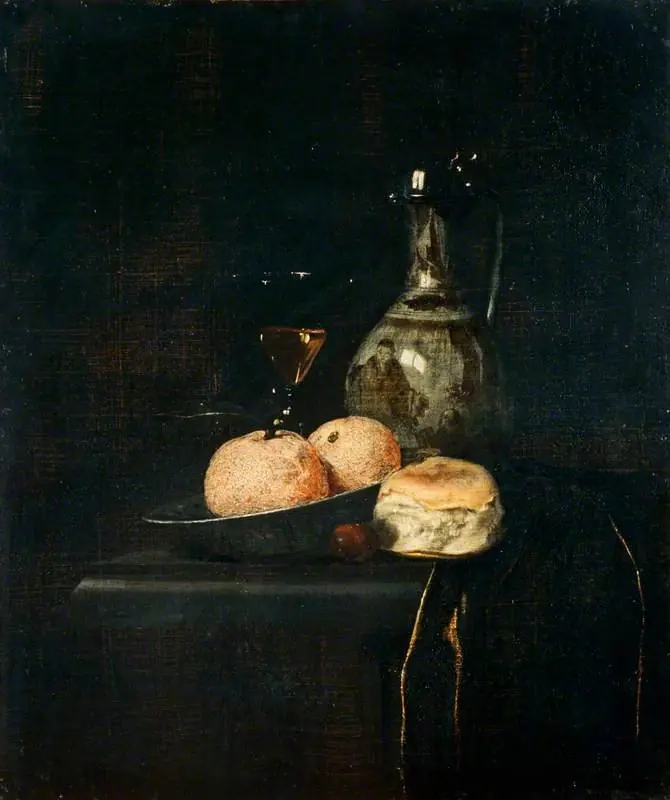
Still Life with Bread and Wine Glass
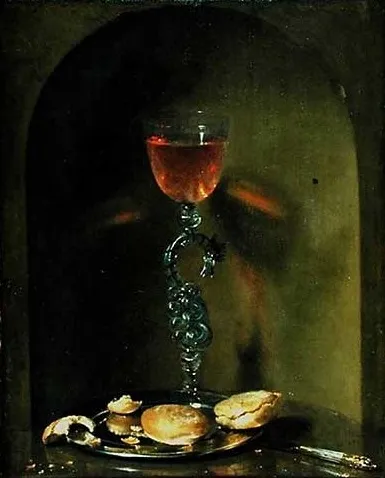
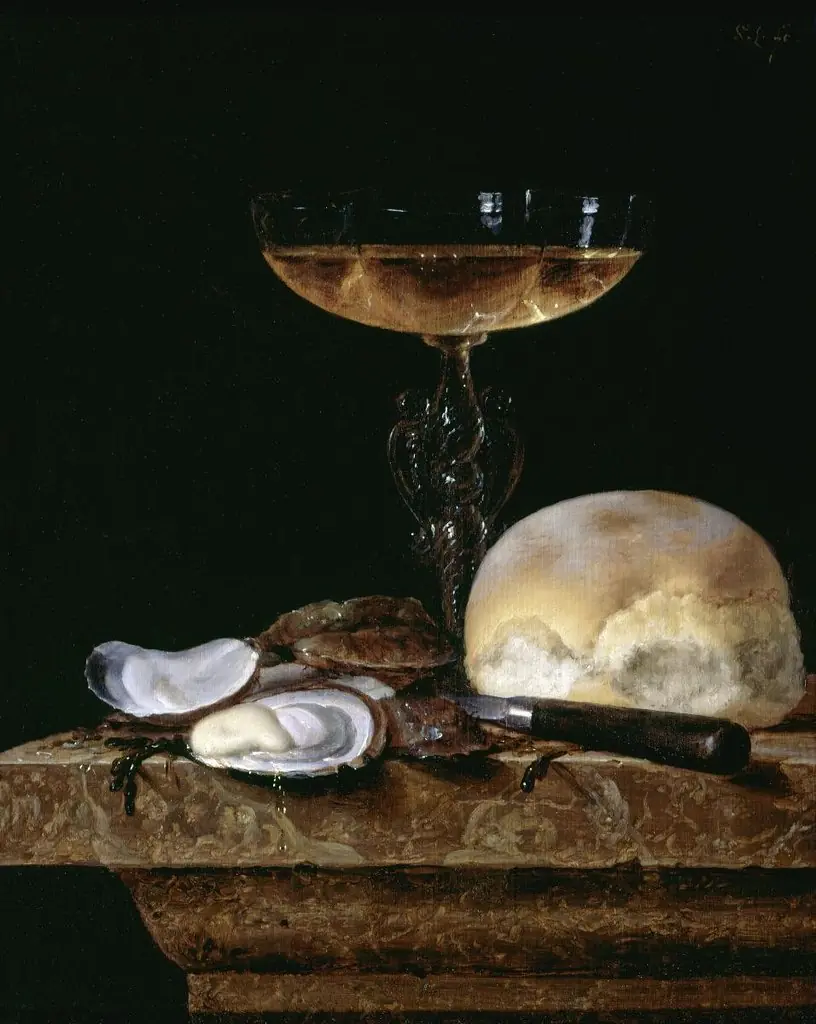
Still Life with Bread and Wine Glass is an oil painting by the Dutch Golden Age artist Willem Kalf. It dates from 1650 and is held in the collection of the Hamburger Kunsthalle.
About this work
Overview
Though modest in subject, the composition reflects the era’s fascination with material culture and the quiet dignity of domestic items.
Painted around 1650 by Willem Kalf, this oil on canvas work belongs to the Dutch Golden Age tradition of pronkstilleven—luxury still lifes that elevate ordinary objects through careful arrangement and luminous detail. Though modest in subject, the composition reflects the era’s fascination with material culture and the quiet dignity of domestic items. It resides in the Hamburger Kunsthalle, where it exemplifies Kalf’s mastery of light and texture.
Subject & Meaning
The painting presents a loaf of bread, a wine glass, and a knife arranged on a plate within a shallow niche. These humble items—common in Dutch households—are rendered with such precision that they transcend the mundane. Their placement suggests ritual or quiet repose, inviting reflection on sustenance, consumption, and the passage of time, themes central to Dutch still-life painting of the period.
Technique & Style
Kalf employs a restrained palette dominated by warm browns and deep shadows, with the wine’s crimson hue serving as a subtle focal point. He renders surfaces with meticulous attention: the glass’s reflective curvature, the bread’s crusty texture, and the metal’s cool sheen are all captured through layered glazes and controlled brushwork. The dark niche enhances the objects’ three-dimensionality, emphasizing the interplay of light and matte surfaces.
History & Provenance
The painting has remained in public collections since at least the 19th century, eventually entering the Hamburger Kunsthalle’s holdings. Its provenance reflects the broader European appreciation for Dutch still lifes during the 1800s, when collectors sought works that combined technical precision with philosophical quietude. No significant alterations or restorations are documented, preserving its original tonal harmony.
Context
In mid-17th-century Amsterdam, wealthy merchants commissioned still lifes that displayed global trade goods—silver, porcelain, exotic fruits. Kalf’s work diverges by focusing on simple, locally sourced items, suggesting a quieter, more introspective version of prosperity. This shift reflects broader cultural values: restraint, domestic order, and the moral weight of everyday abundance.
Legacy
Kalf’s approach influenced later still-life painters by demonstrating that emotional depth could arise from restraint rather than opulence. His focus on texture, light, and spatial harmony set a standard for the genre. While less celebrated than his more lavish compositions, this work endures as a quiet testament to the artistic potential of simplicity.
Artist & collection
Artist
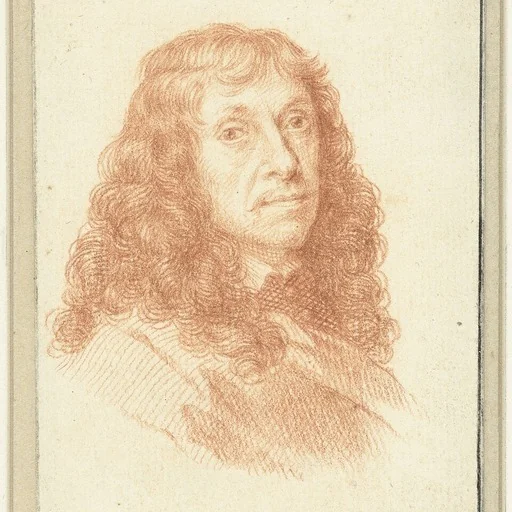
Willem Kalf (1619 – 31 July 1693) was one of the most prominent Dutch still-life painters of the 17th century, the Dutch Golden Age.

 Schalenglas, Austern und Brötchen
 Natură moartă cu pești; pandant: Natură moartă cu scoici
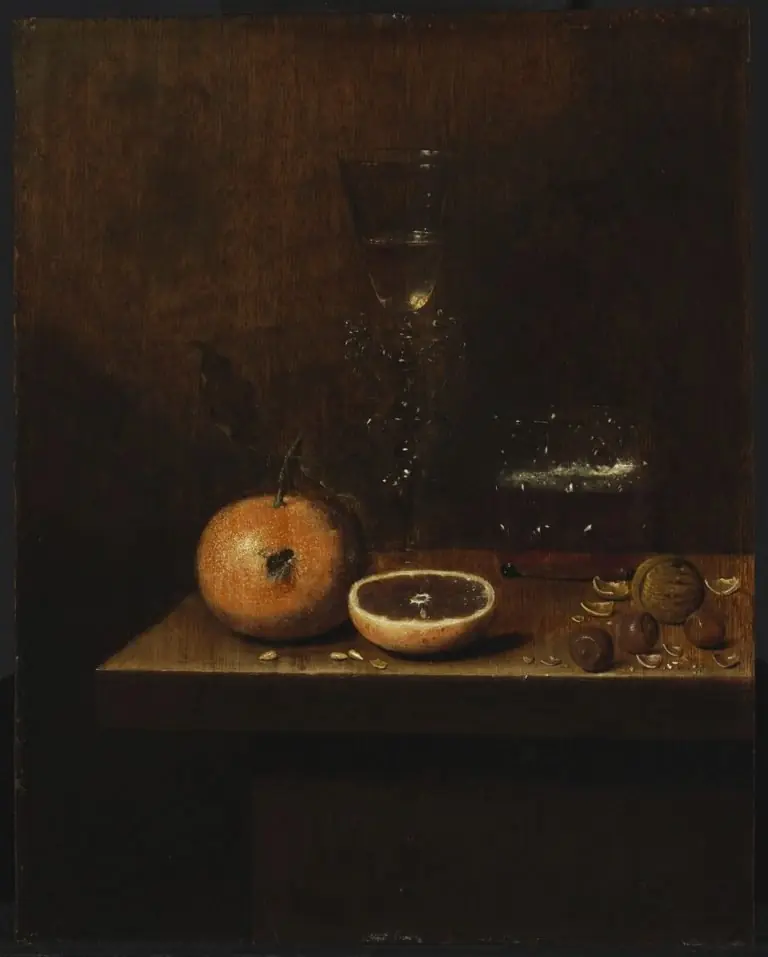 Still Life with Orange and Venetian Glass
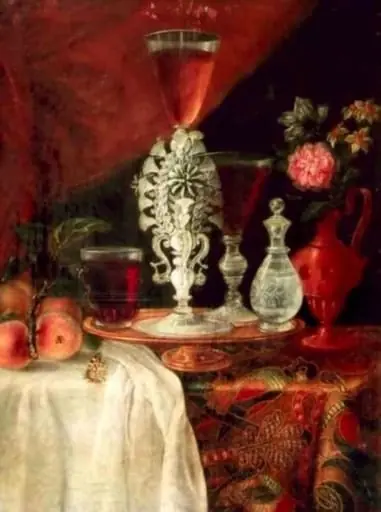 Natură moartă cu vază; pandant: Natură moartă cu cană
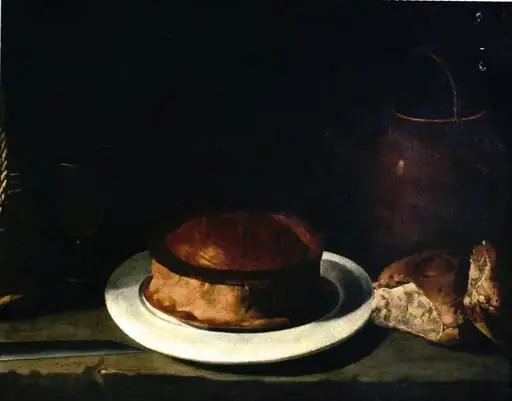 Bodegones
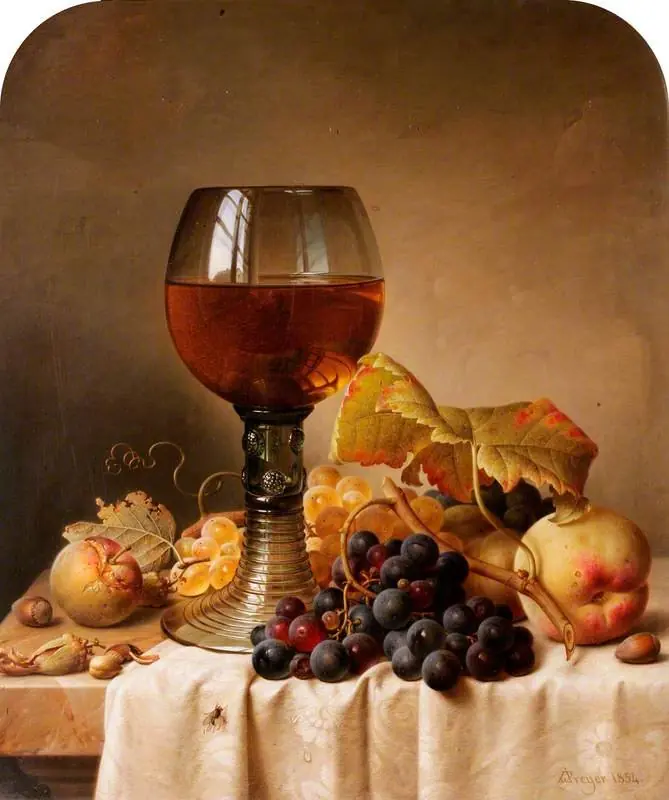 Still Life: Fruit and a Goblet
 Still-life
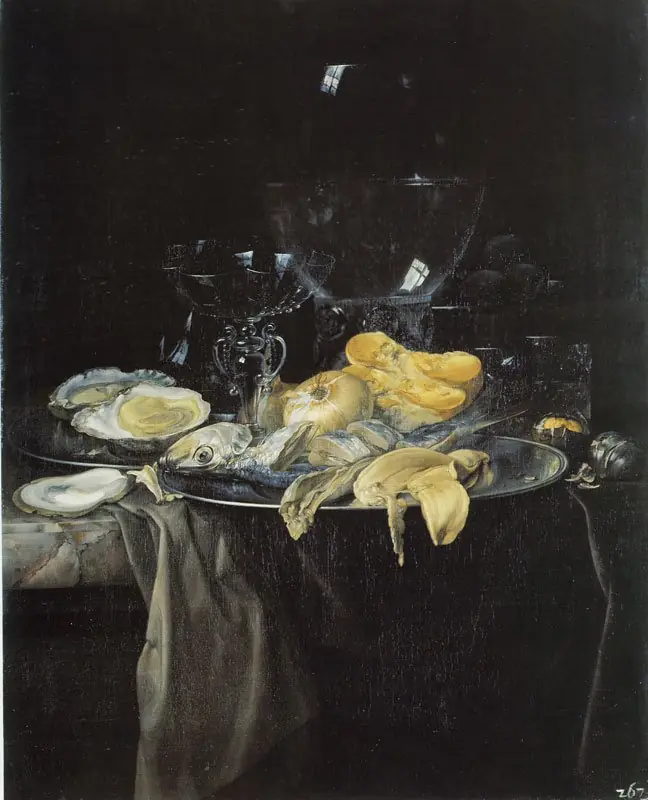 Seafood, Onion, and Glassware
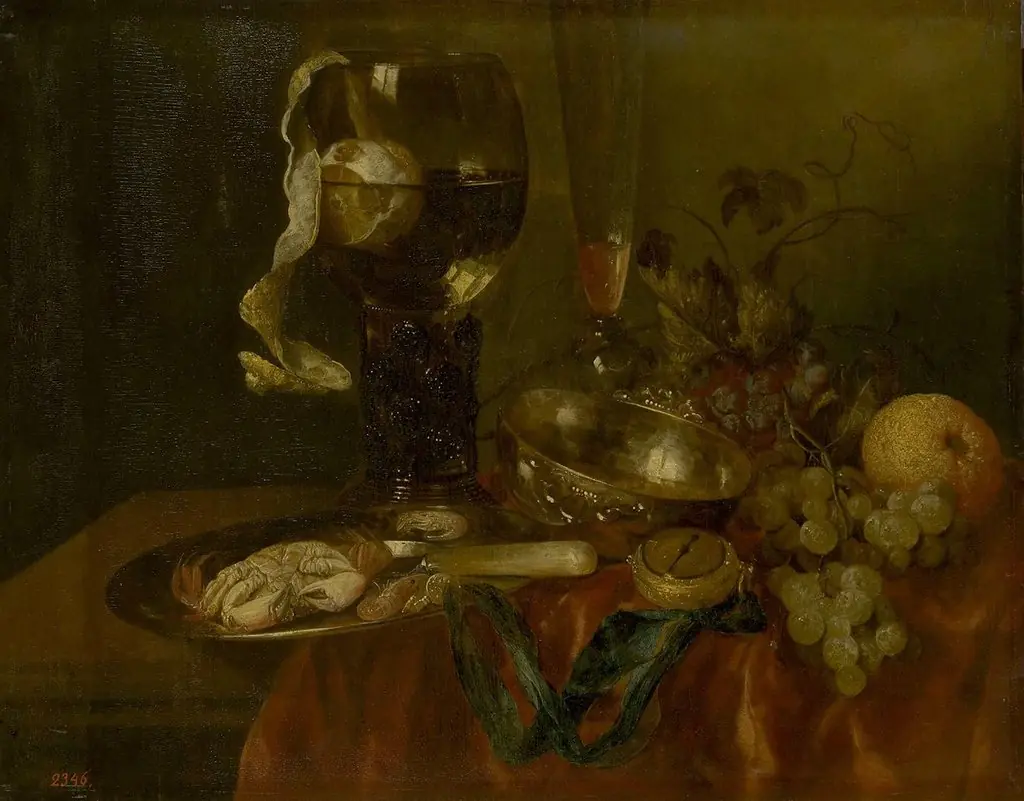 Snack (Still Life with Crab, Fruit and Clock)
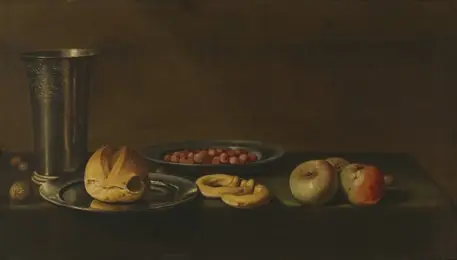 Still life with berries