Artwork
A Capriccio with Pastoral Figures and Animals
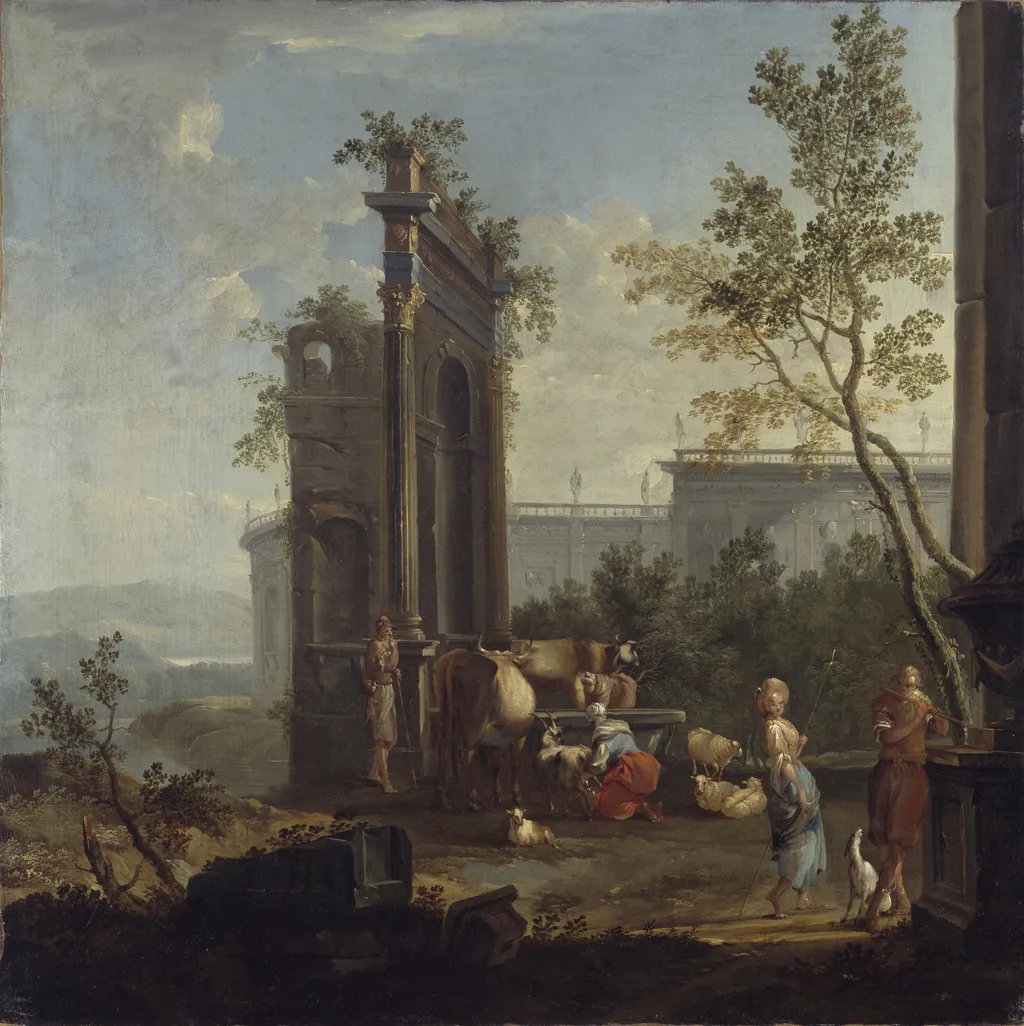
A Capriccio with Pastoral Figures and Animals is an oil painting by the Rococo painting artist Willem Van der Hagen. It dates from 1732 and is held in the collection of the National Gallery of Ireland.
About this work
Overview
Created in 1732 by Willem van der Hagen, this oil painting presents an imagined pastoral scene typical of early eighteenth‑century Rococo aesthetics. The composition balances a tranquil countryside with classical ruins, populated by shepherds, livestock, and a modest gathering near a prominent stone edifice, all set beneath a softly clouded sky.
Subject & Meaning
The work assembles idealised rural life, merging human figures and animals within a fabricated landscape that suggests harmony between civilization and nature. The inclusion of ancient architectural fragments hints at a nostalgic reverence for classical antiquity, while the leisurely activity of the figures conveys a bucolic serenity favored by contemporary taste.
Technique & Style
Van der Hagen employs a delicate palette of pastel greens, warm ochres, and muted blues, using subtle gradations of light to model forms and suggest atmospheric depth. Fine brushwork renders the stone texture and foliage, while gentle chiaroscuro creates a modest contrast that enhances the three‑dimensionality of the scene without dramatic chiaroscuro effects.
History & Provenance
After settling in Ireland in the early 1720s, van der Hagen became a pivotal figure in establishing a local landscape tradition. This particular canvas, produced during his Irish period, entered the National Gallery of Ireland’s collection, where it remains part of the institution’s representation of early Irish Rococo painting.
Artist & collection
Artist
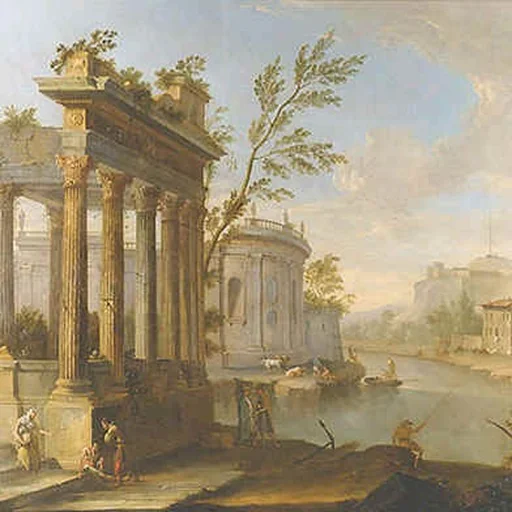
Willem (or William) van der Hagen (died 1745) was a Dutch painter who settled in Ireland in the early 1720s, where he subsequently painted many works of art.

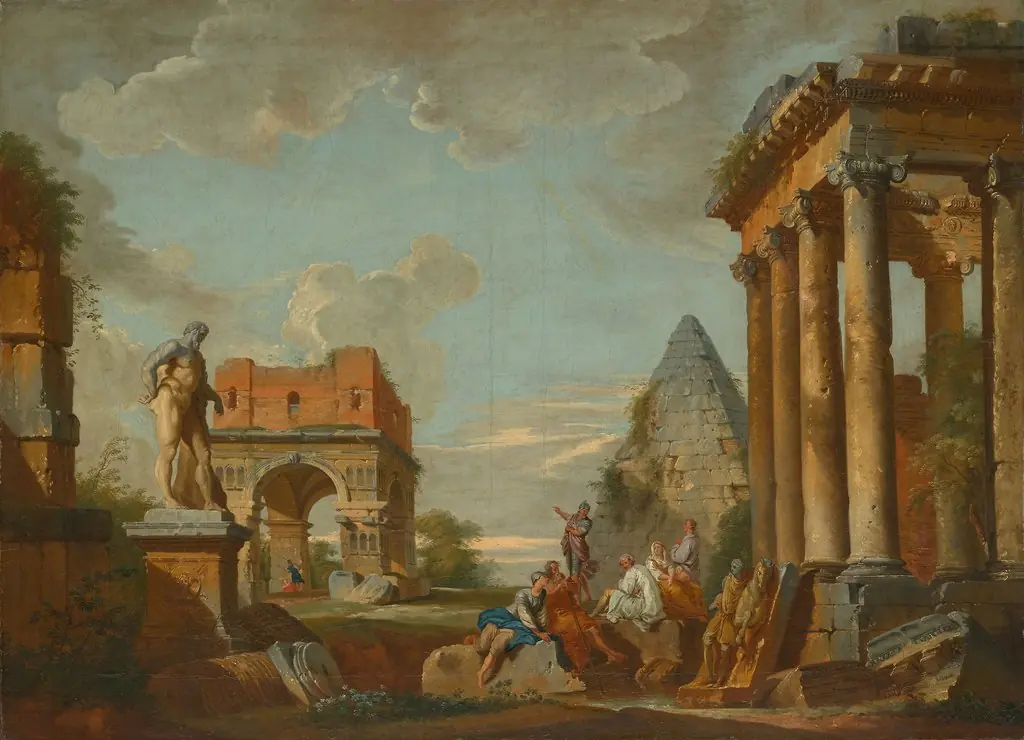 Classical Landscape
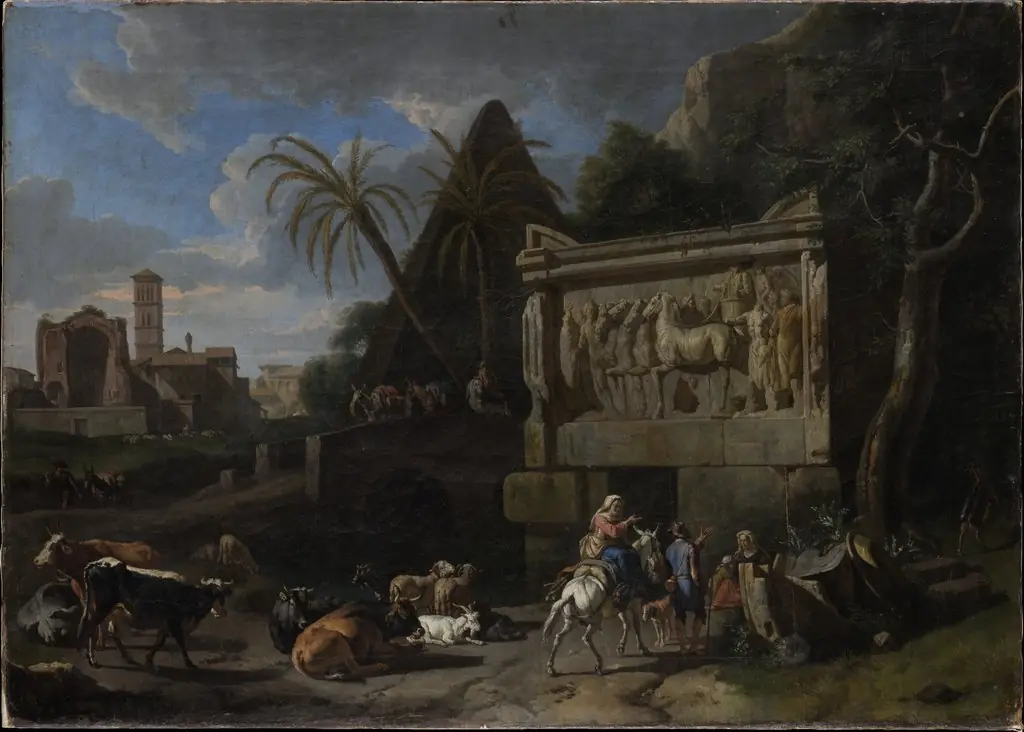 Landscape with Ancient Ruins, a Resting Flock in the Front
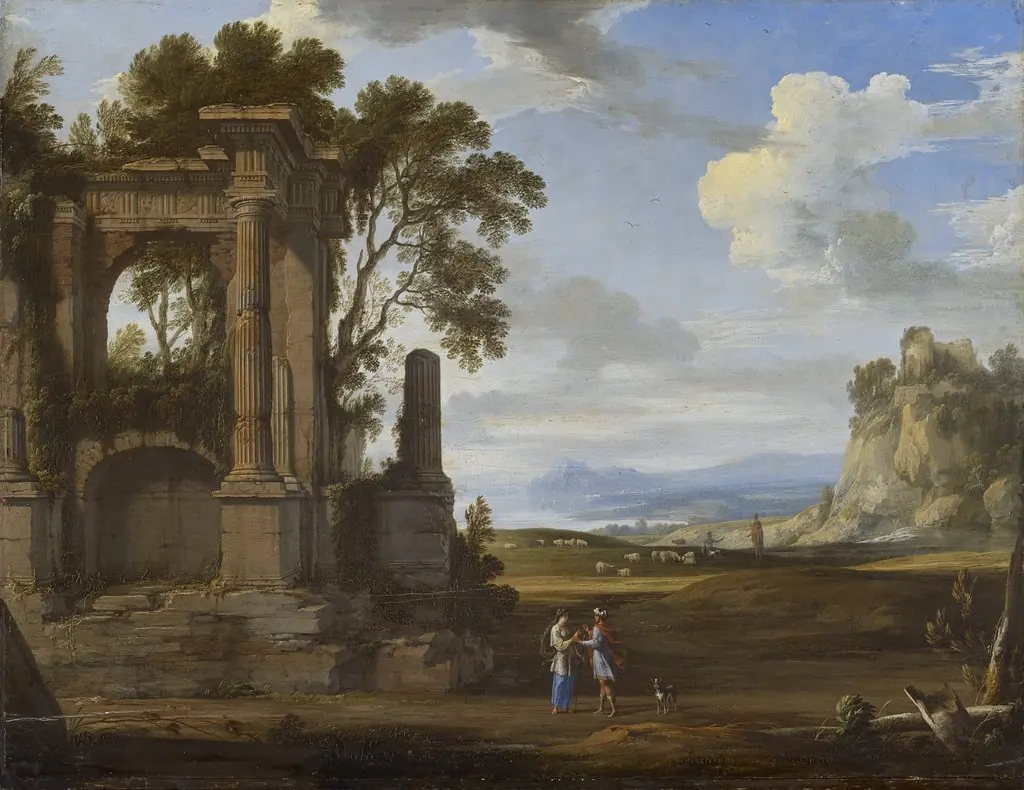 A Classical Landscape with Judah and Tamar
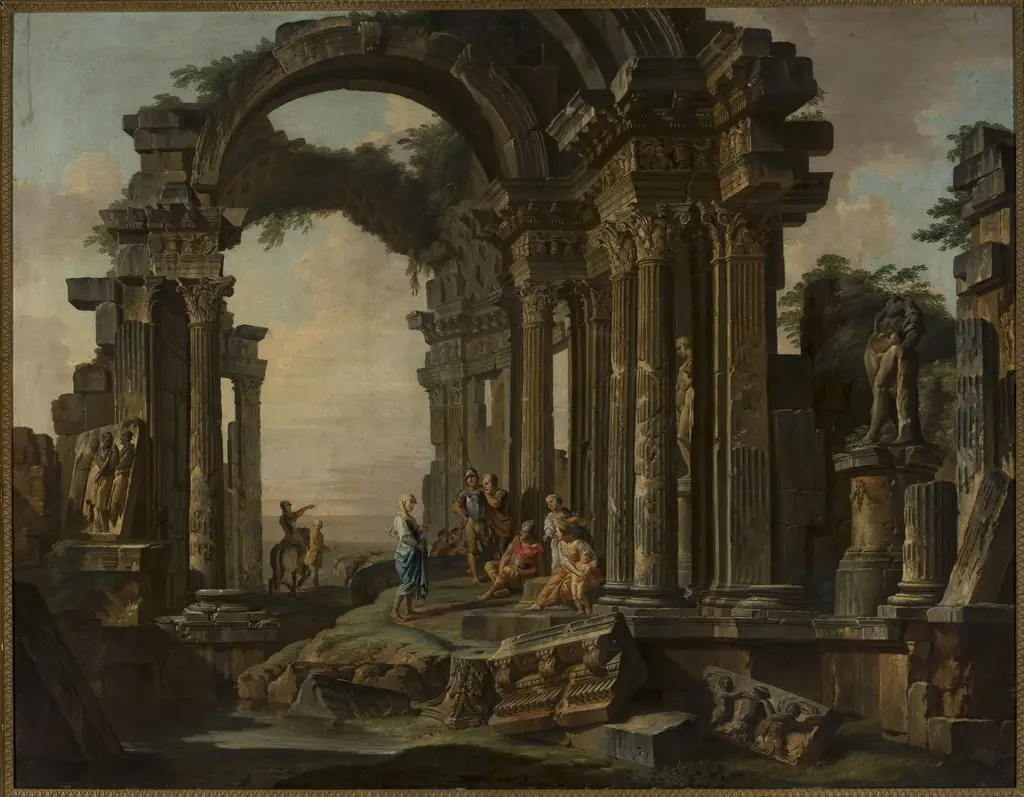 Roman ruins
 Italian marketplace
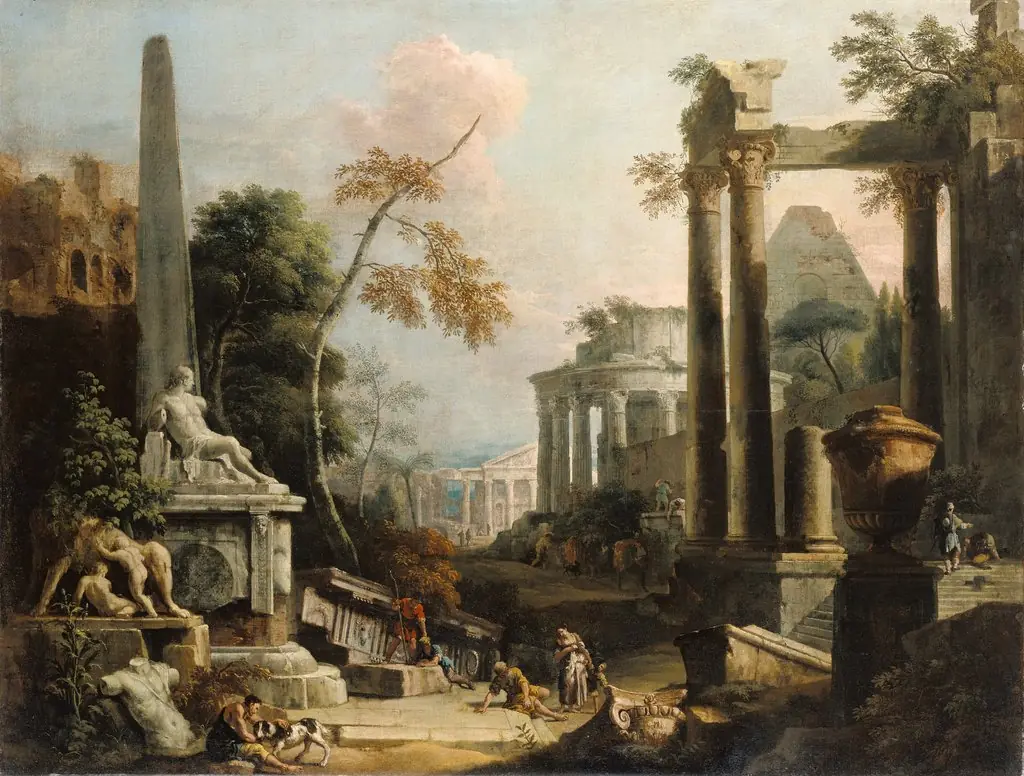 Landscape with Classical Ruins and Figures
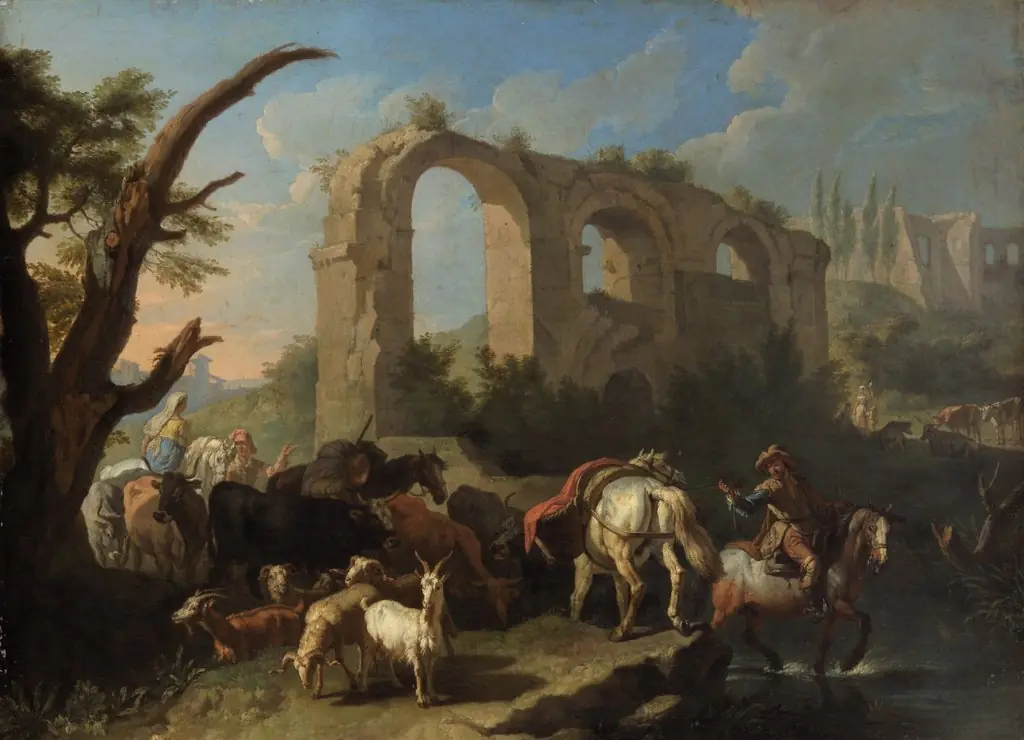 Italian Landscape with Horses and Herdsmen
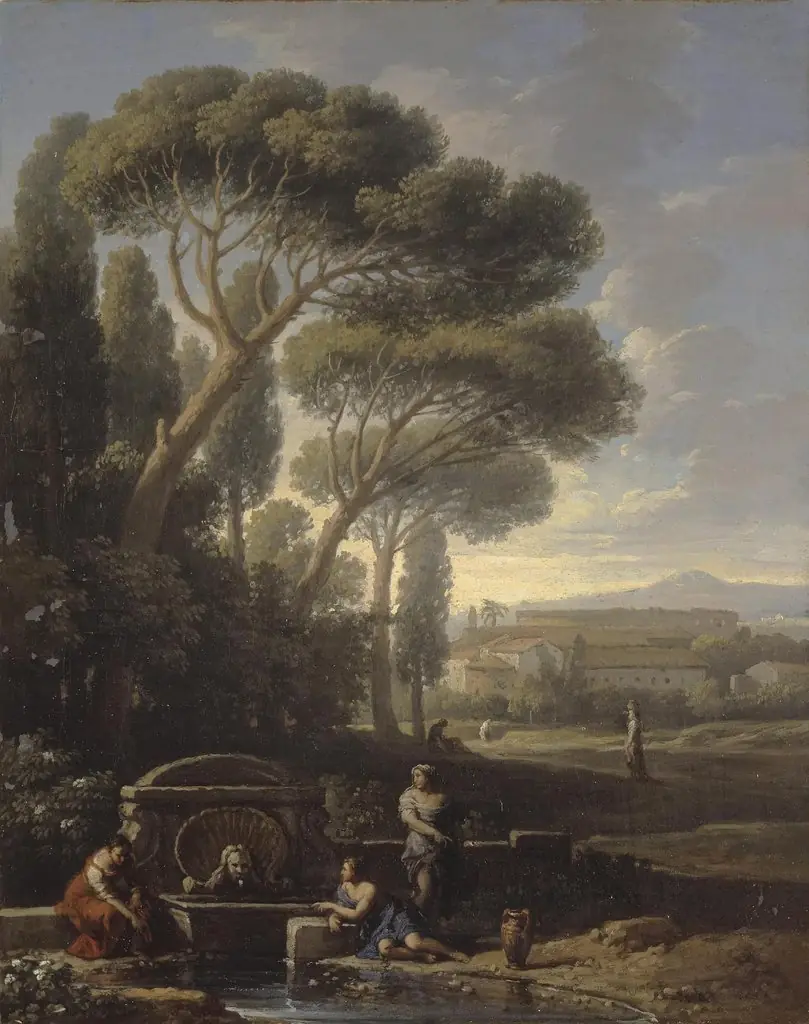 Landscape in Latium
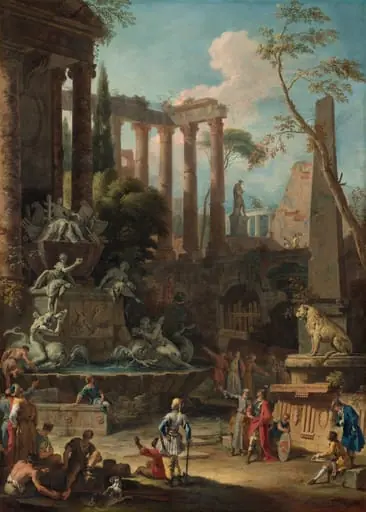 Memorial to Admiral Sir Clowdisley Shovell
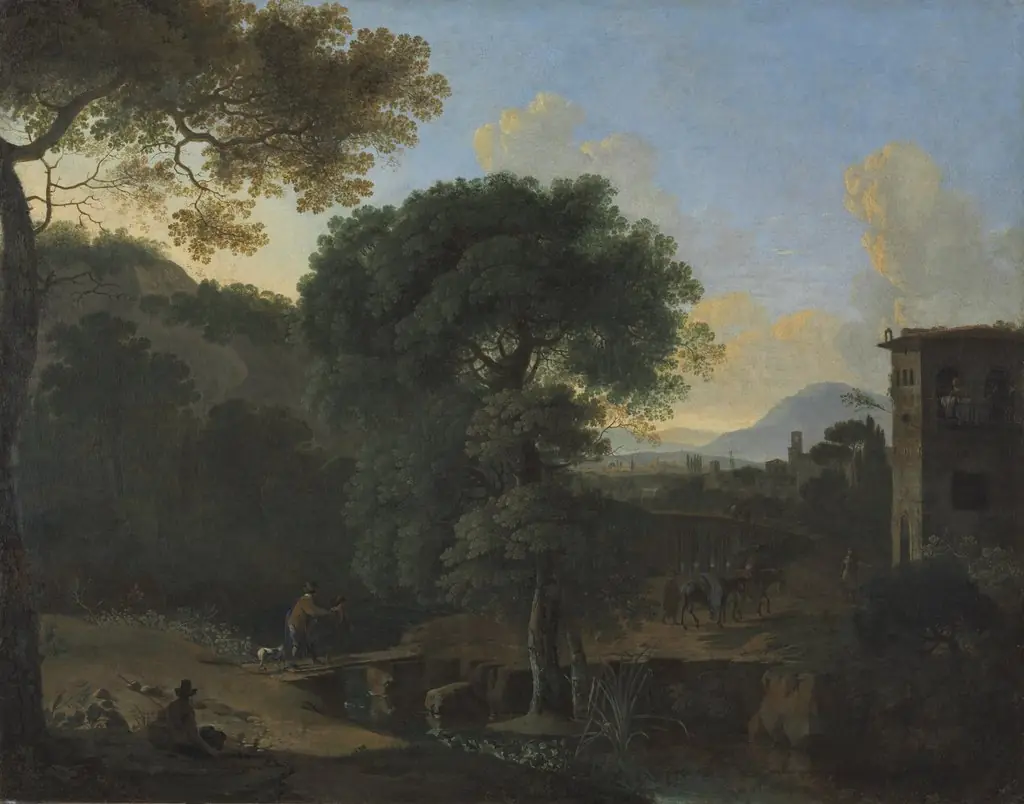 Landscape with Travelers
 Banditti at Rest
 Pastoral landscape