Artwork
The Book of Job: Pl. 10, The Just Upright Man is laughed to scorn
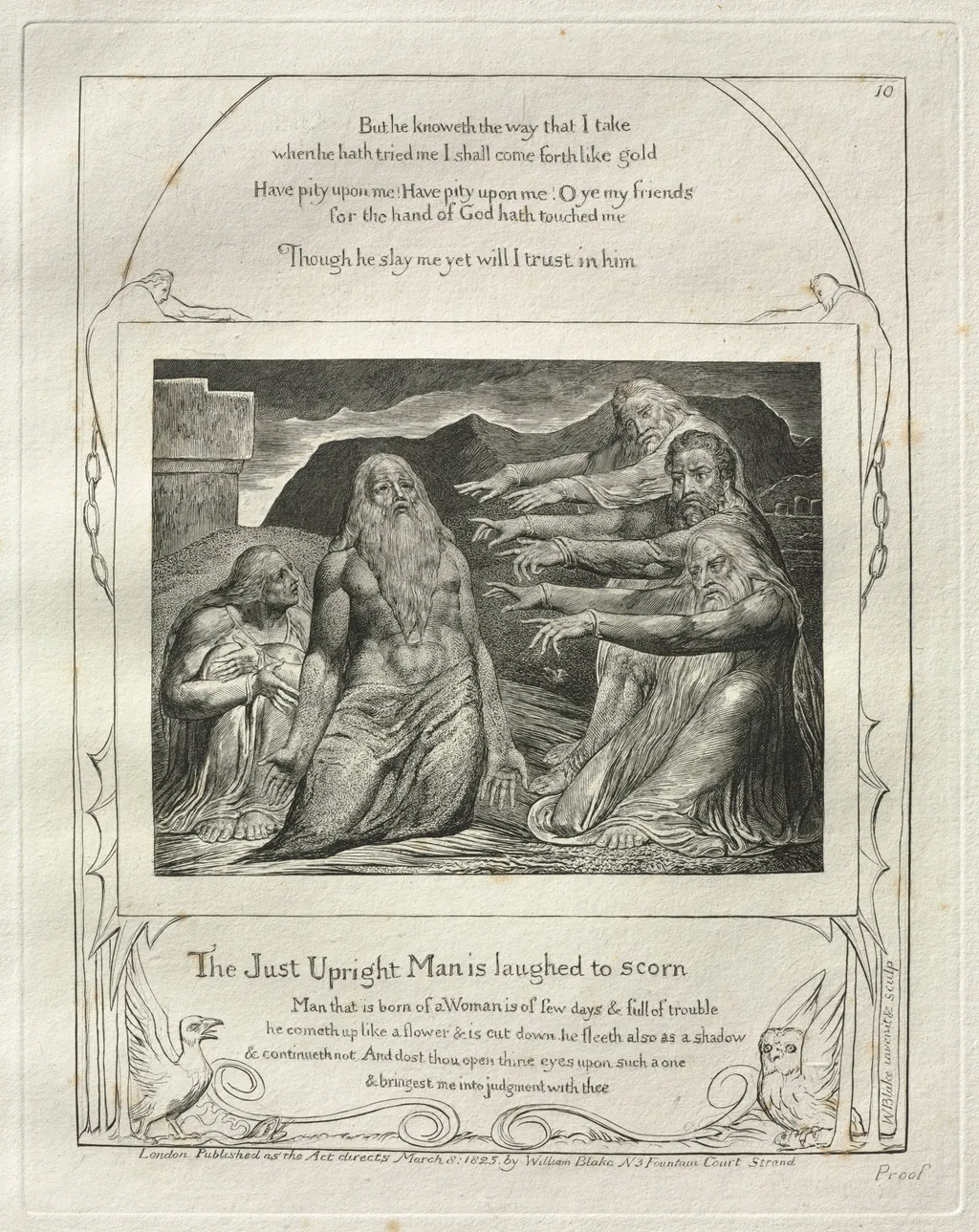
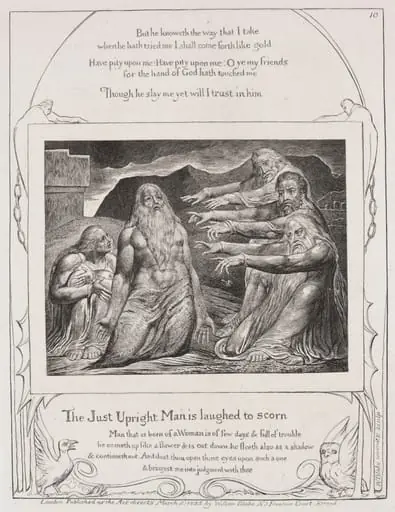
The Book of Job: Pl. 10, The Just Upright Man is laughed to scorn is a work on paper by the Romanticist artist William Blake. It dates from 1825 and is held in the collection of the Cleveland Museum of Art.
About this work
Overview
Created in 1825, this engraving is the tenth plate in William Blake’s illustrated series of the biblical Book of Job.
Created in 1825, this engraving is the tenth plate in William Blake’s illustrated series of the biblical Book of Job. As part of a larger portfolio, it combines visual imagery with poetic text to convey spiritual struggle. Blake, who produced both the designs and the printed plates himself, used relief etching to unify image and verse in a single composition, reflecting his belief in the inseparability of art and prophecy.
Subject & Meaning
The scene portrays the torment of a righteous man abandoned by those around him. Three figures—kneeling, pleading, and prostrate—represent different responses to suffering, while the surrounding text echoes Job’s lamentations. The title, drawn from scripture, underscores the theme of unjust persecution. Blake frames moral integrity not as rewarded, but as tested, challenging conventional notions of divine justice and human sympathy.
Technique & Style
Blake employed relief etching to integrate text and image seamlessly, a method he developed to maintain creative control. The composition uses stark chiaroscuro to heighten emotional tension: light falls sharply on the central figure, while the surrounding figures vanish into shadow. The swirling sky and jagged contours amplify the sense of chaos, aligning visual form with the psychological weight of the narrative.
History & Provenance
Commissioned by John Linnell, a patron and fellow artist, the Job series was completed between 1821 and 1826. Blake printed and hand-colored each plate himself, producing only a small number of copies. This particular plate survives in a few known impressions, held in major collections such as the British Museum and the Metropolitan Museum of Art, reflecting its significance within Blake’s late oeuvre.
Context
Blake produced this work during a period of personal obscurity, yet he remained committed to his visionary ideals. His illustrations of Job responded to contemporary debates on faith, suffering, and authority, drawing from both biblical tradition and his own mystical theology. Unlike mainstream art of the time, which favored classical harmony, Blake’s imagery embraced turbulence and symbolic complexity.
Legacy
Though largely overlooked in his lifetime, Blake’s Job series later became central to Romantic studies and modern interpretations of spiritual art. Critics and artists recognized its fusion of poetry and visual symbolism as a radical departure from academic norms. The series continues to influence discussions on the role of suffering in artistic expression and the power of personal vision in confronting institutional dogma.
Artist & collection
Artist
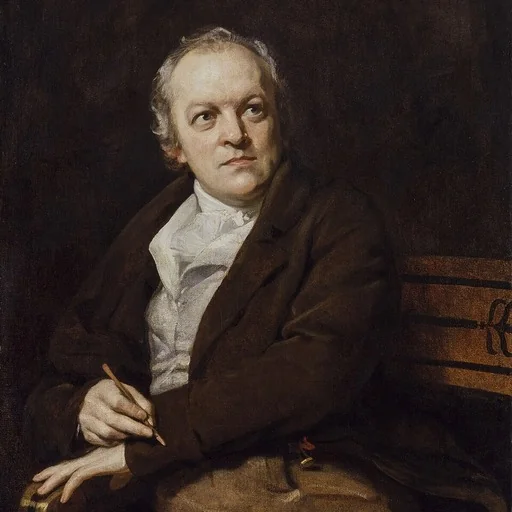
William Blake (28 November 1757 – 12 August 1827) was an English poet, painter and printmaker.

 The Book of Job: Pl. 10, The just upright man is laughted to scorn
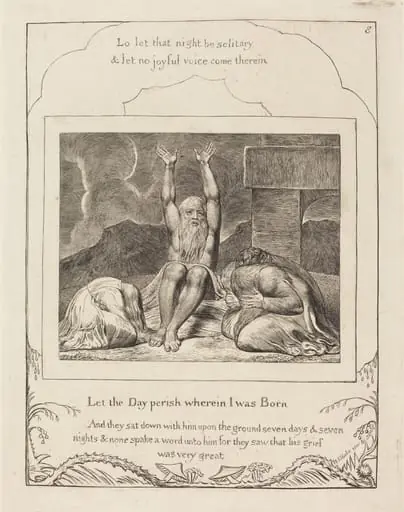 Job's Despair
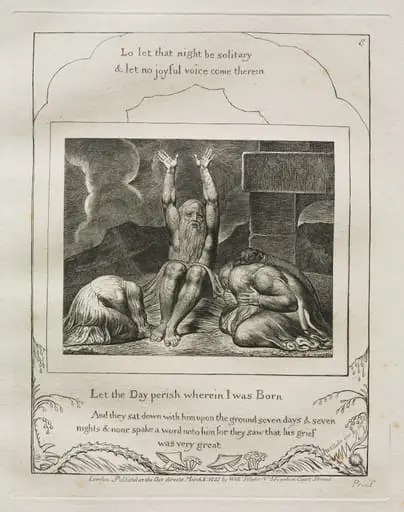 The Book of Job: Pl. 8, Let the Day perish wherein I was Born
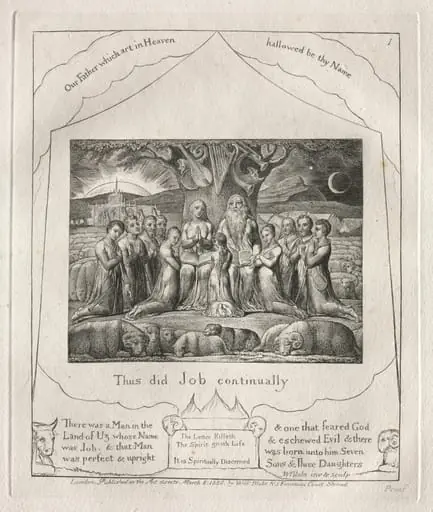 The Book of Job: Pl. 1, Thus did Job continually
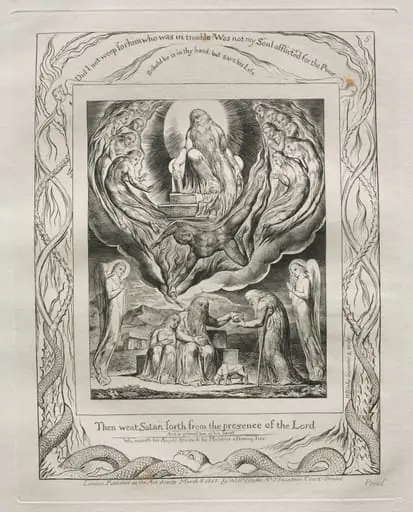 The Book of Job: Pl. 5, Then went Satan forth from the presence of the Lord
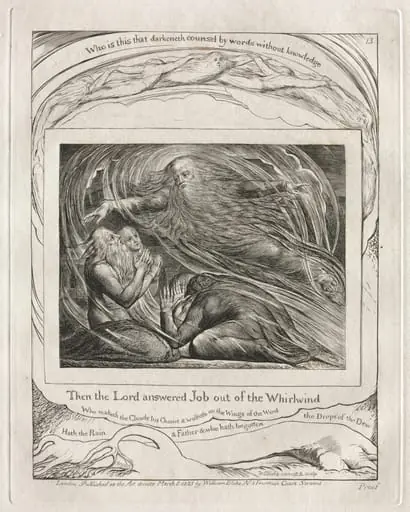 The Book of Job: Pl. 13, Then the Lord answered Job out of the Whirlwind
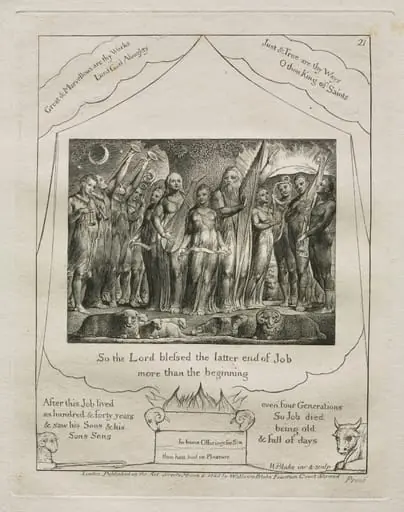 The Book of Job: Pl. 21, So the Lord blessed the latter end of Job
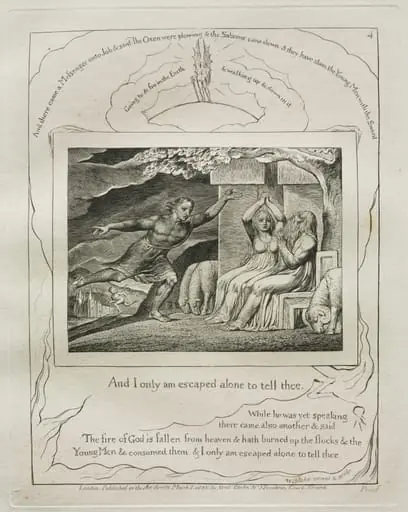 The Book of Job: Pl. 4, And I only am escaped alone to tell thee
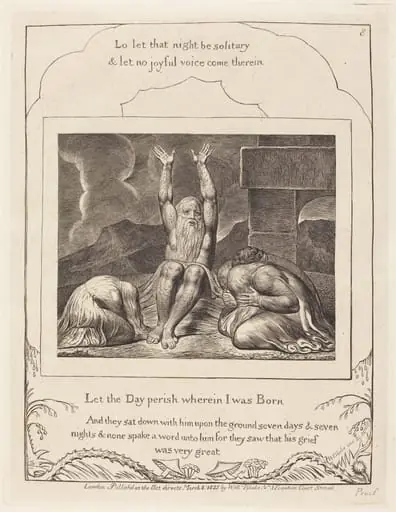 Job's Despair
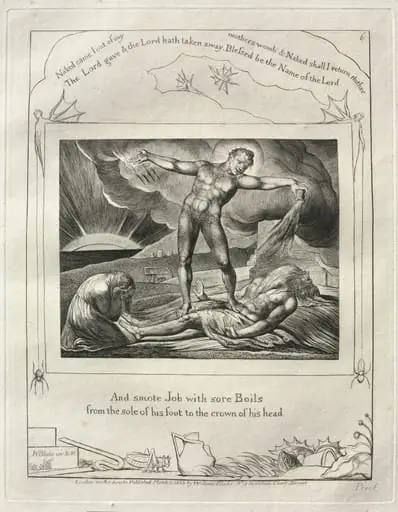 The Book of Job: Pl. 6, And smote Job with sore Boils
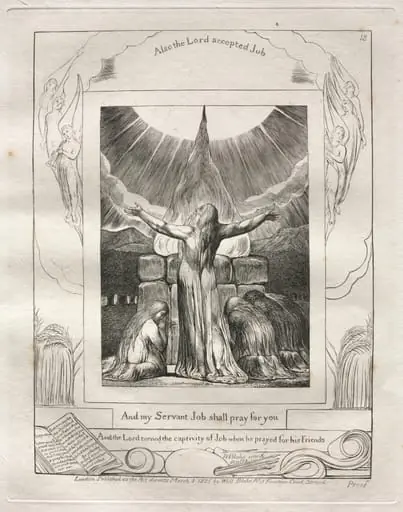 The Book of Job: Pl. 18, And my Servant Job shall pray for you
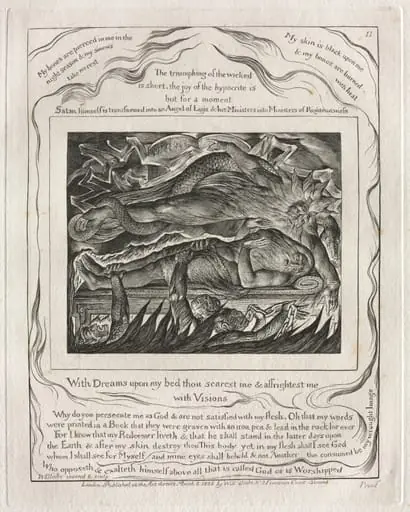 The Book of Job: Pl. 11, With Dreams upon my bed thou scarest me and affrightest me