Artwork
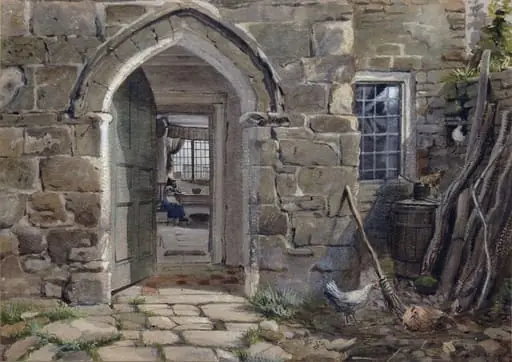
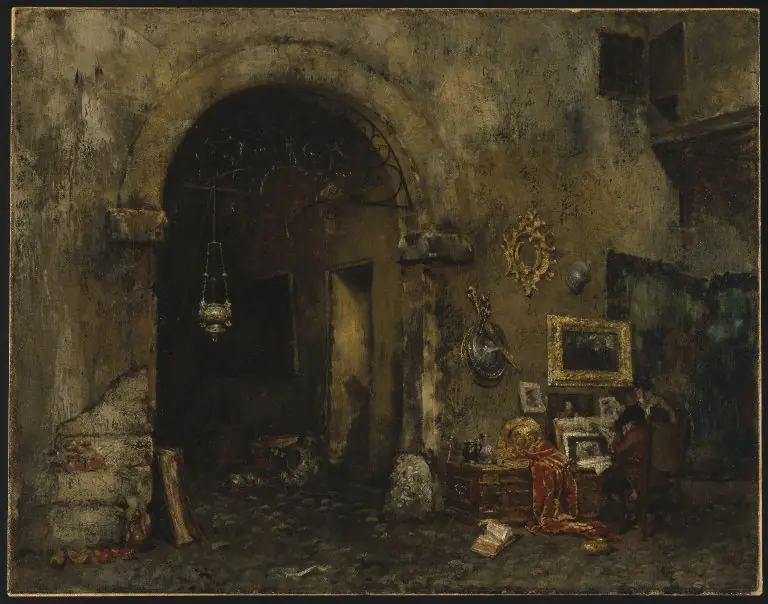
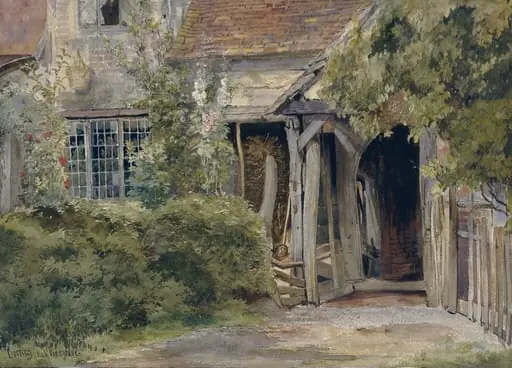
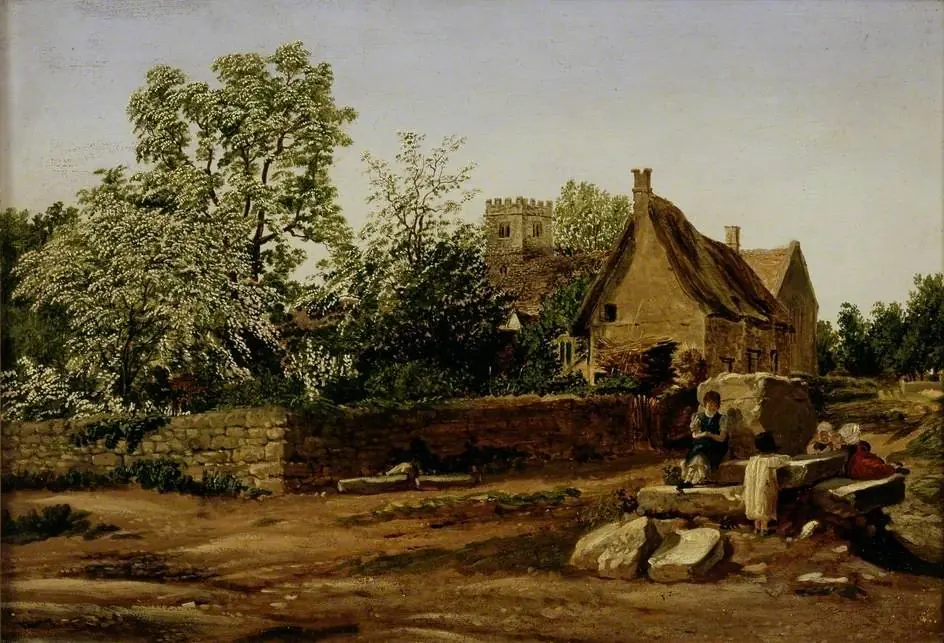
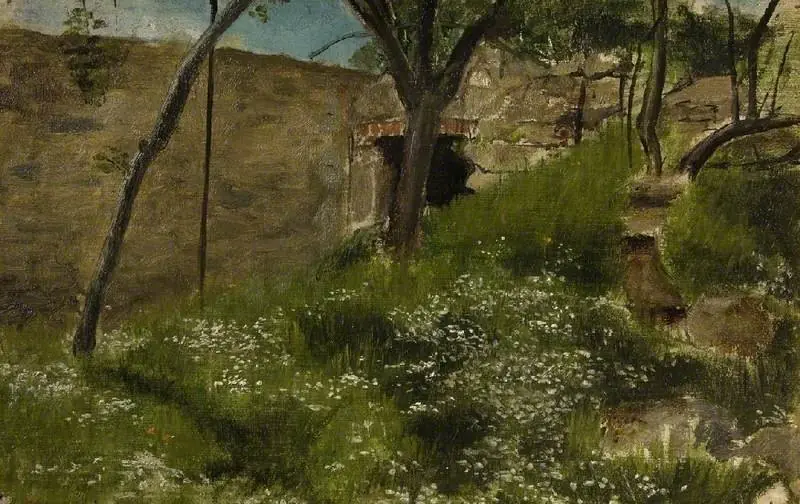
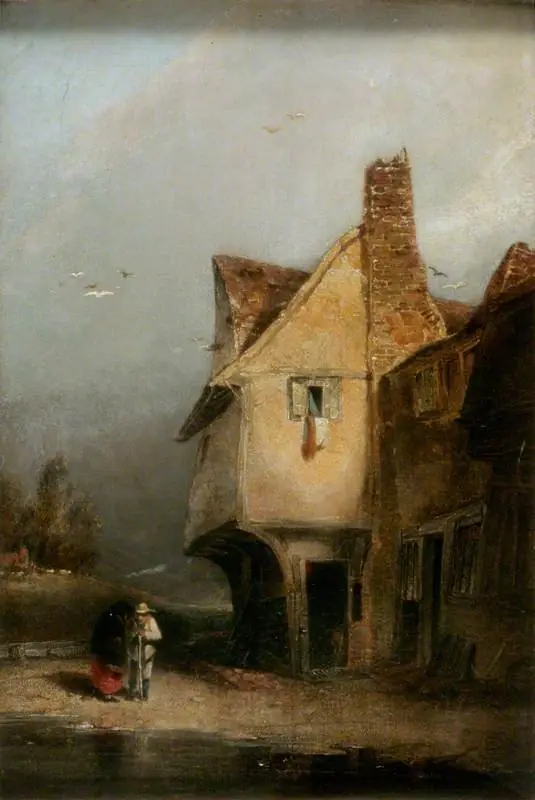
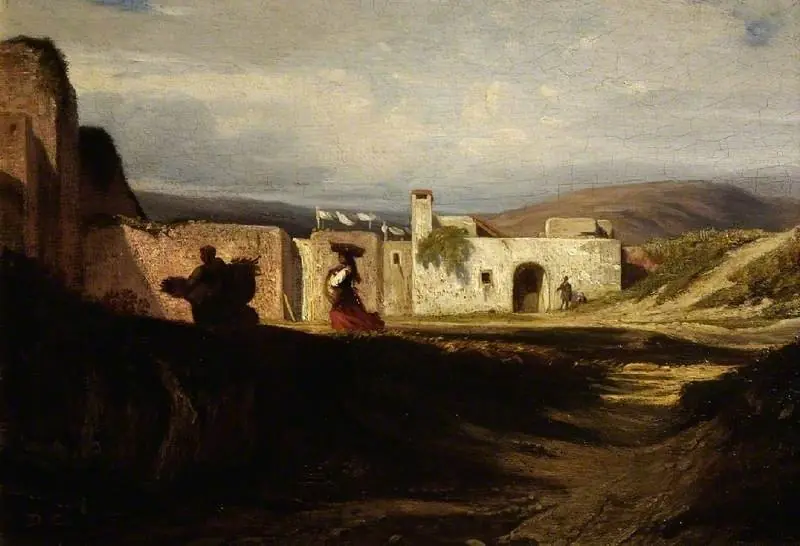
Sketch of a Doorway with a Water Barrel
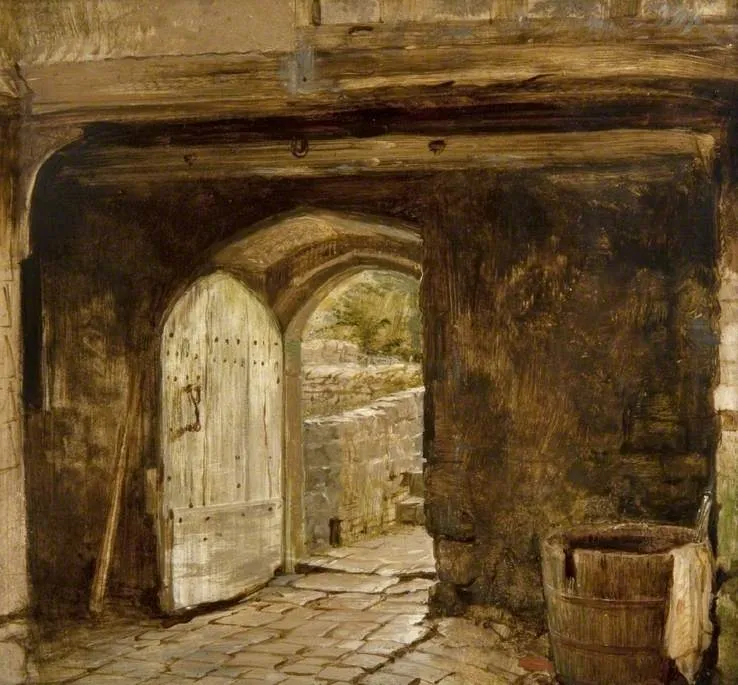
Sketch of a Doorway with a Water Barrel is an unspecified painting by the British Romanticist artist William Dyce. It dates from 1835 and is held in the collection of the Kelvingrove Art Gallery and Museum.
About this work
Overview
Sketch of a Doorway with a Water Barrel (1835) is a painting by Scottish artist William Dyce, created during his association with influences akin to the Pre-Raphaelite Brotherhood. The work exemplifies the British Romantic movement’s focus on ordinary scenes and atmospheric nuance.
Subject & Meaning
The painting captures a humble, everyday setting: a partially open wooden door within a stone archway, alongside a water barrel draped with a white cloth. This portrayal of mundane detail reflects Romanticism’s emphasis on the beauty in common subjects.
Technique & Style
Executed in muted browns, grays, and subtle color tones, the sketch conveys a sense of quiet simplicity. Dyce’s use of chiaroscuro (strong contrasts between light and dark) enhances the tranquil, inviting atmosphere, drawing the viewer into the scene.
History & Provenance
Created in 1835, the painting is part of Dyce’s oeuvre from a period when he was connected to early Pre-Raphaelite influences. Dyce (1806-1864) was a key figure in UK public art education, notably with the South Kensington Schools.
Artist & collection
Artist
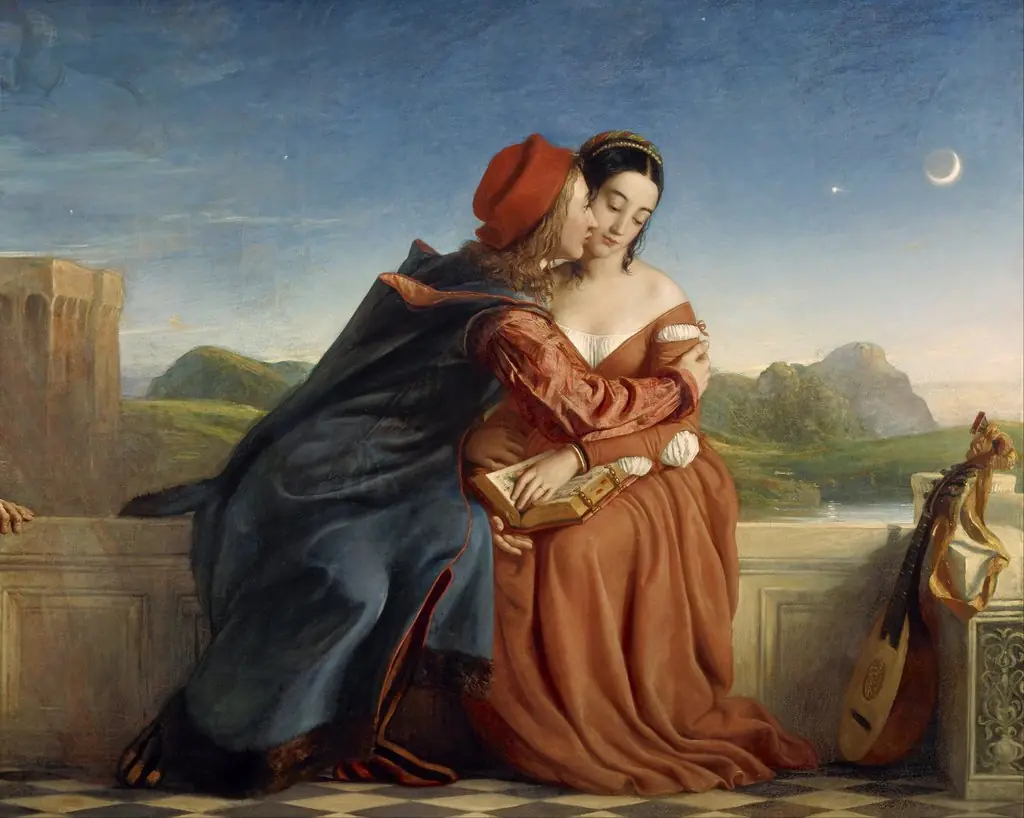
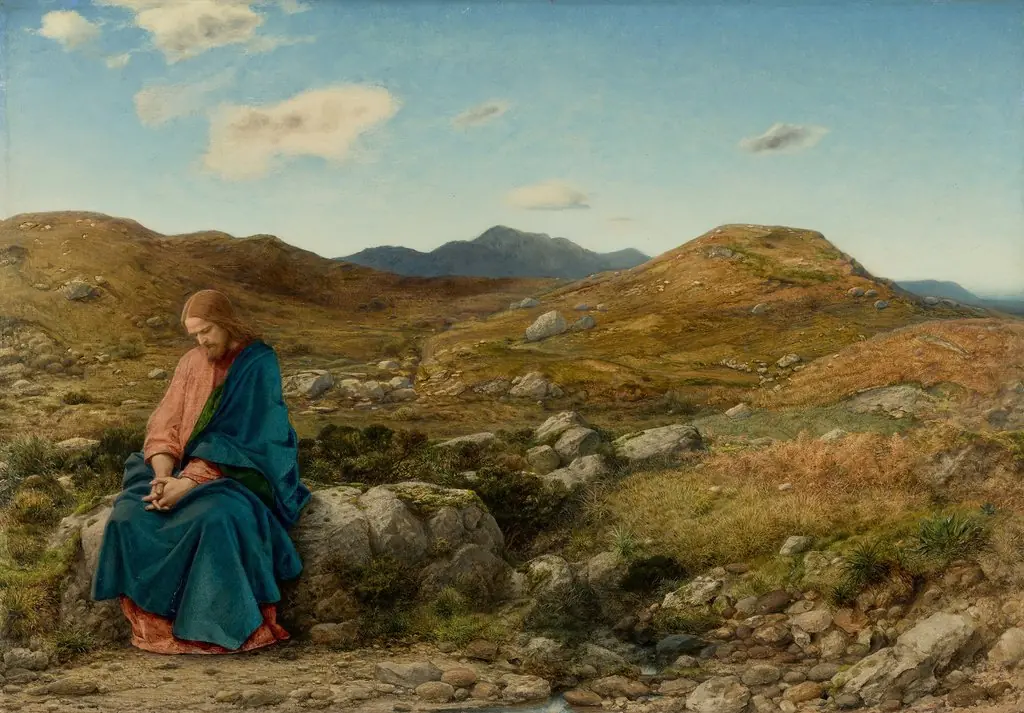
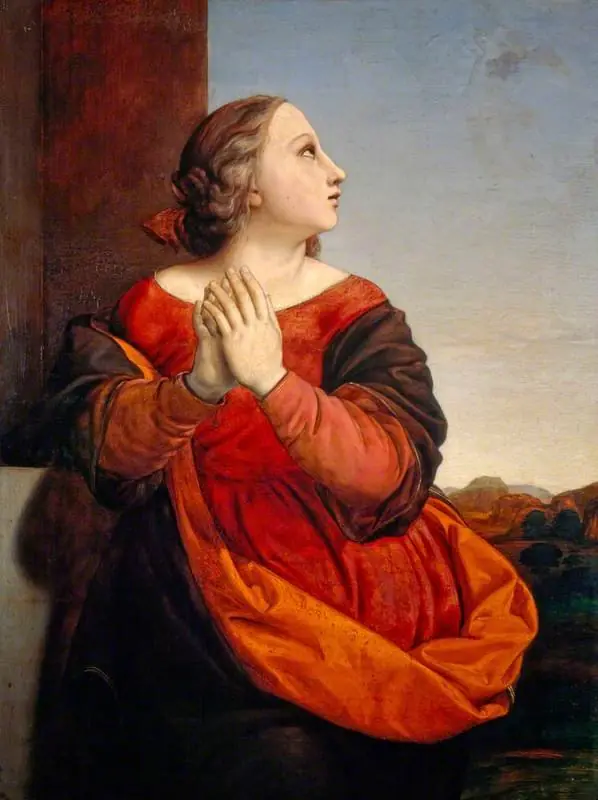
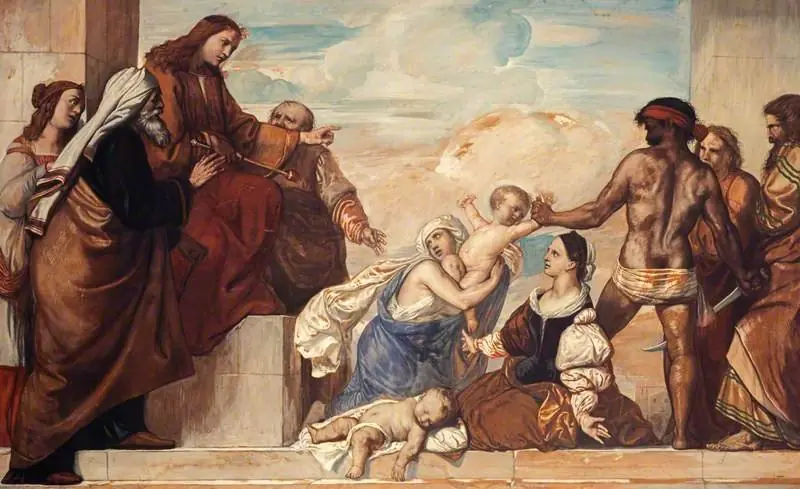
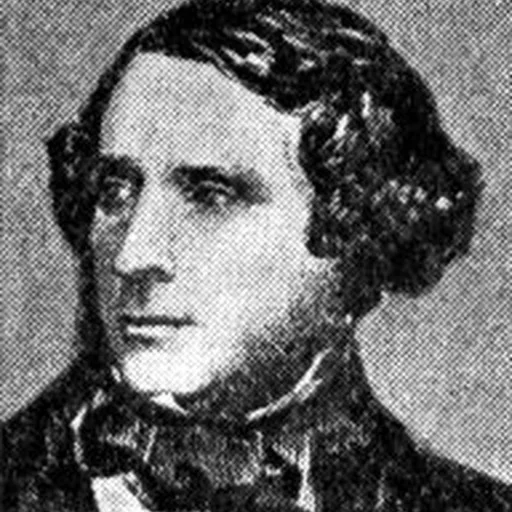
William Dyce (; 19 September 1806 in Aberdeen – 14 February 1864) was a Scottish painter, who played a part in the formation of public art education in the United Kingdom, and the South Kensington Schools system.