Artwork
The Infant Hercules
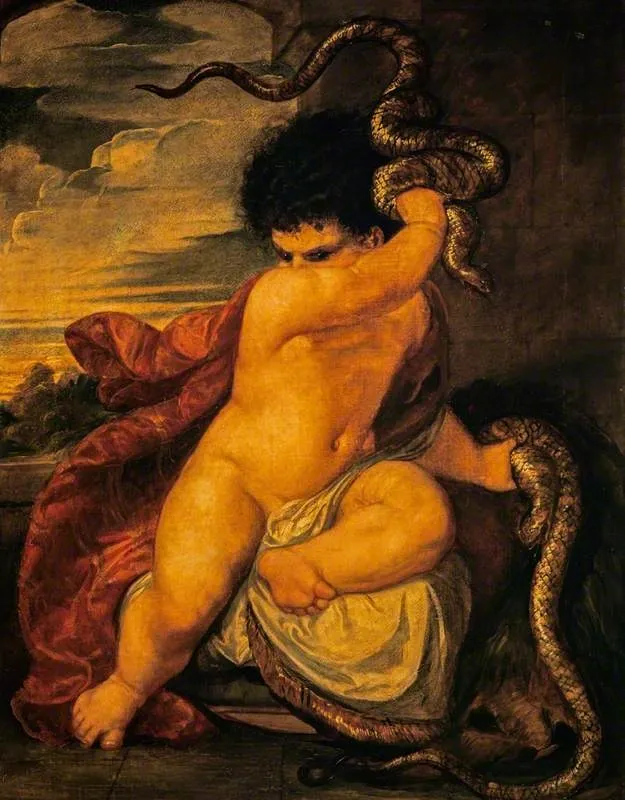
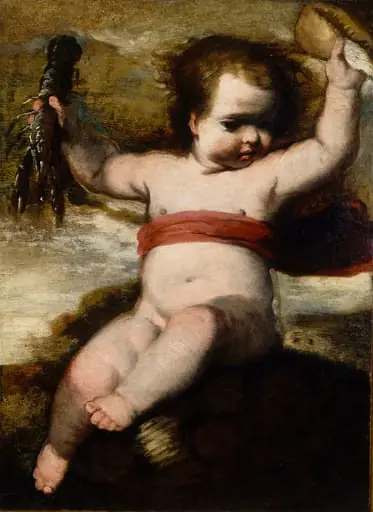
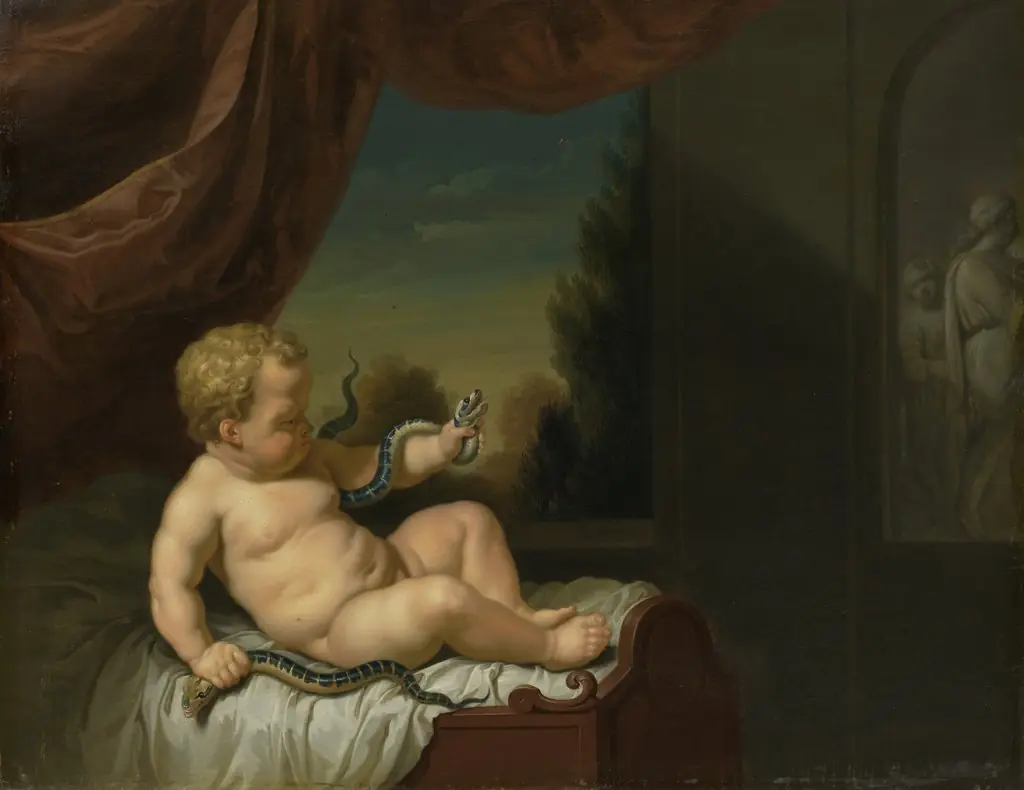
The Infant Hercules is an oil painting by the British Romanticist artist William Dyce. It dates from 1824 and is held in the collection of the National Galleries Scotland.
About this work
Overview
William Dyce’s 1824 oil work titled *The Infant Hercules* presents a youthful, unclothed figure seated on a stone, clutching a coiled serpent. The child’s calm expression contrasts with the tension of the snake, whose scales catch the light against a brooding sky. A red drapery unfurls behind him, suggesting a makeshift cape, while distant hills are hinted through the cloud‑filled atmosphere.
Subject & Meaning
The composition draws on the Greek legend of infant Heracles, who as a baby strangled a venomous snake sent by Hera to thwart his future greatness. By portraying the hero at a tender age, Dyce emphasizes the innate strength and destiny of the figure, while the serene demeanor of the boy hints at an effortless triumph over danger.
Technique & Style
Executed in oil on canvas, the painting employs a muted palette of earth tones punctuated by the vivid red of the cloth.
Executed in oil on canvas, the painting employs a muted palette of earth tones punctuated by the vivid red of the cloth. Dyce renders the serpent’s texture with fine, layered brushwork that catches reflected light, while the boy’s flesh is modeled with warm, blended tones that stand out against the darker, atmospheric background. The overall effect reflects Romantic interest in dramatic narrative and naturalistic detail.
History & Provenance
Created early in Dyce’s career, the work predates his later involvement with the Pre‑Raphaelites and his contributions to public art education in Britain. After its completion, the painting entered private collections before being acquired by the Scottish National Gallery, where it remains part of the museum’s permanent collection.
Context
Produced during the British Romantic period, the piece aligns with contemporary fascination for classical mythology as a vehicle for exploring human emotion and moral themes. Dyce’s choice of a mythic subject reflects the era’s broader artistic turn toward narrative depth, while his Scottish background situates the work within the nation’s emerging 19th‑century art scene.
Artist & collection
Artist
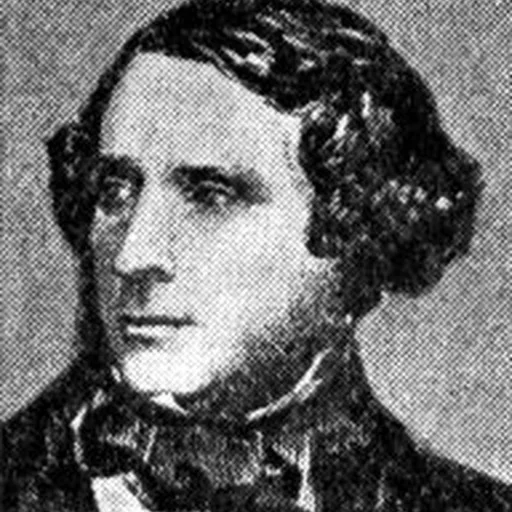
William Dyce (; 19 September 1806 in Aberdeen – 14 February 1864) was a Scottish painter, who played a part in the formation of public art education in the United Kingdom, and the South Kensington Schools system.