Artwork
A Floral bank
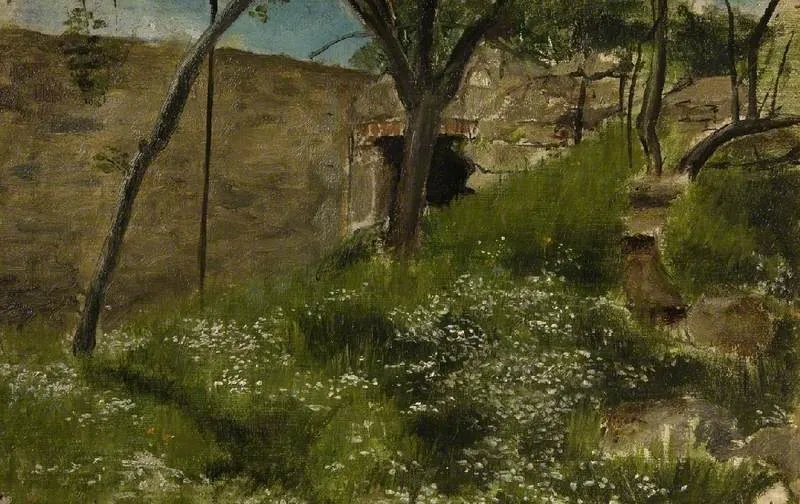
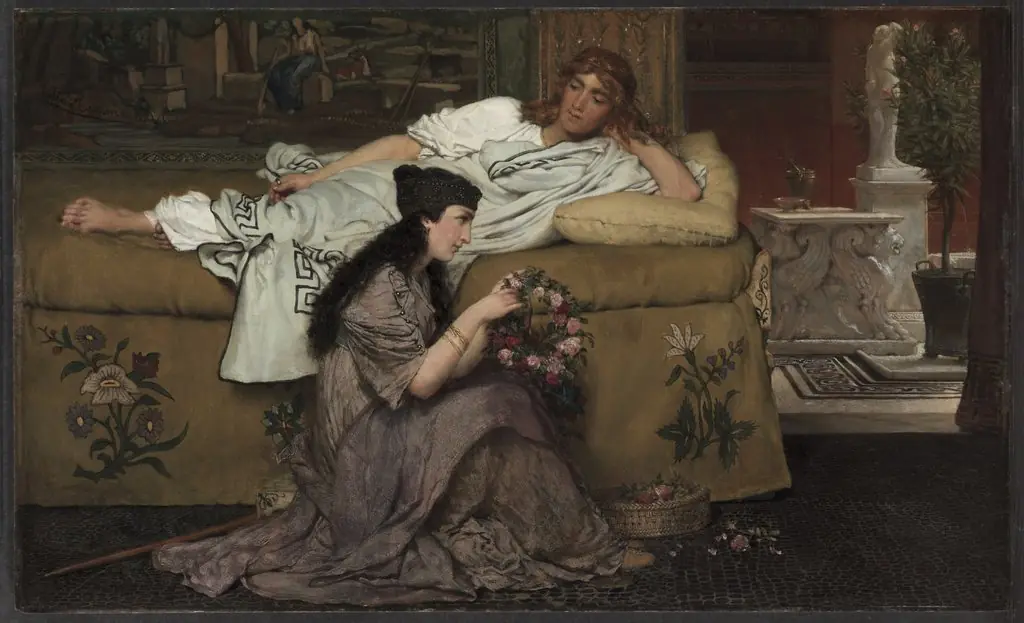
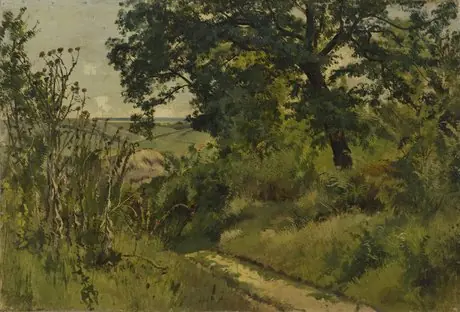
A Floral bank is an oil painting by Lawrence Alma-Tadema. It dates from 1870 and is held in the collection of the Fitzwilliam Museum.
About this work
Overview
A Floral Bank is an 1870 oil painting by Sir Lawrence Alma-Tadema, depicting a serene natural scene. Characterized by meticulous detail and muted colors, the work diverges from the artist's typical classical and Romanesque themes.
Subject & Meaning
The painting portrays a tranquil, flower-covered bank set against a stone or brick wall and a tree with sparse branches, under a blue sky with scattered clouds. The subject matter suggests a departure from Alma-Tadema's usual focus on luxury and decadence, instead emphasizing peaceful, natural beauty.
Technique & Style
Executed in oil paint, the work showcases Alma-Tadema's attention to detail, evident in the textured tree bark and delicate white flowers. The predominant use of greens and browns contributes to the overall sense of calm, reflecting a more subdued aspect of the artist's style.
History & Provenance
Created in 1870, the same year Alma-Tadema settled in London, A Floral Bank is now part of the Fitzwilliam Museum's collection.
Context
While Alma-Tadema is renowned for his classical subjects, A Floral Bank's natural theme may reflect the influence of his new London environment or a temporary exploration of alternative subjects.
Legacy
As a less characteristic work by Alma-Tadema, A Floral Bank offers insight into the artist's versatility beyond his signature Romanesque scenes, though its impact on his overall legacy remains nuanced.
Artist & collection
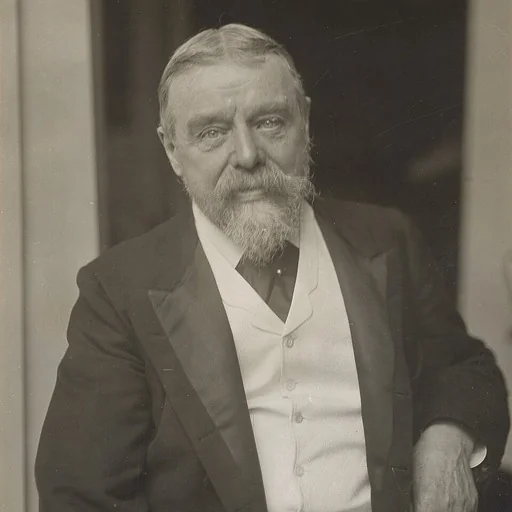
Artist
Sir Lawrence Alma-Tadema ( AL-mə TAD-ay-mə; born Lourens Alma Tadema, Dutch: ; 8 January 1836 – 25 June 1912) was a Dutch painter who later settled in the United Kingdom, becoming the last officially recognised denizen in 1873.


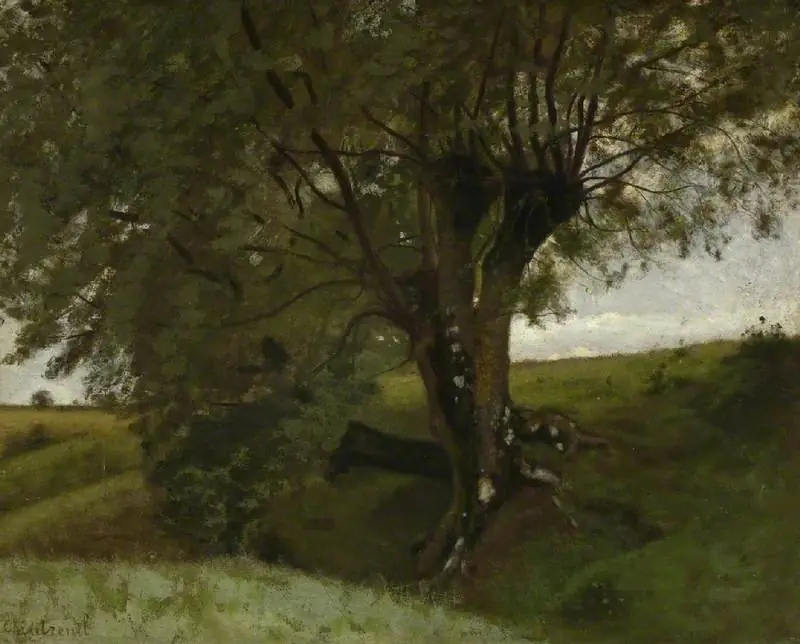 Landscape with an ash tree
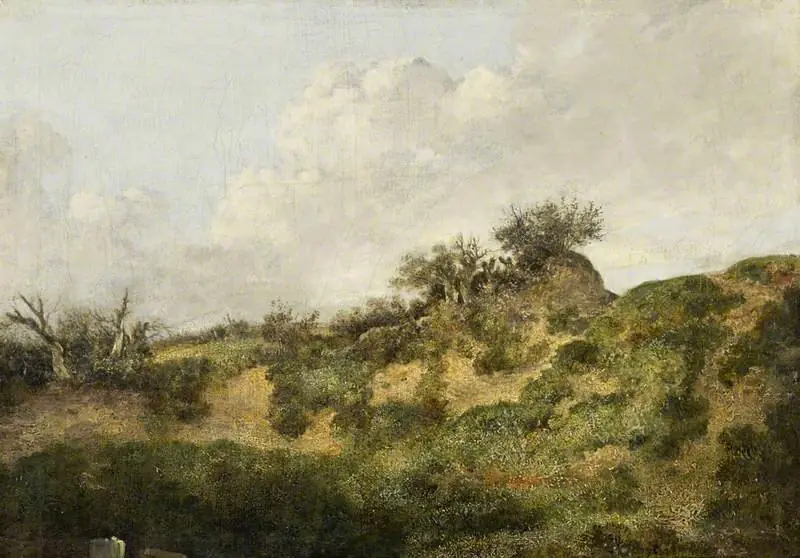 A Sandy Bank
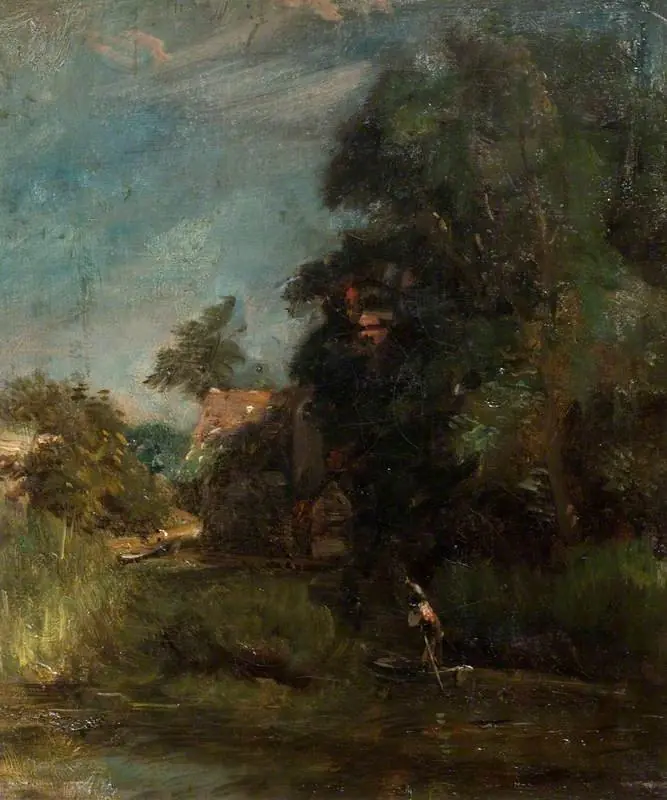 The Valley Farm (sketch)
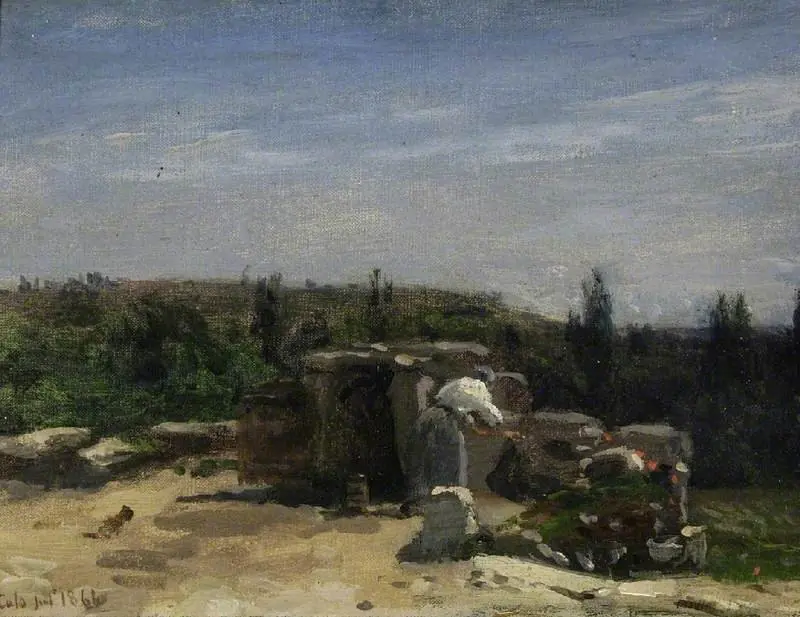 The well in rue Montlaville, Orrouy, viewed from the east
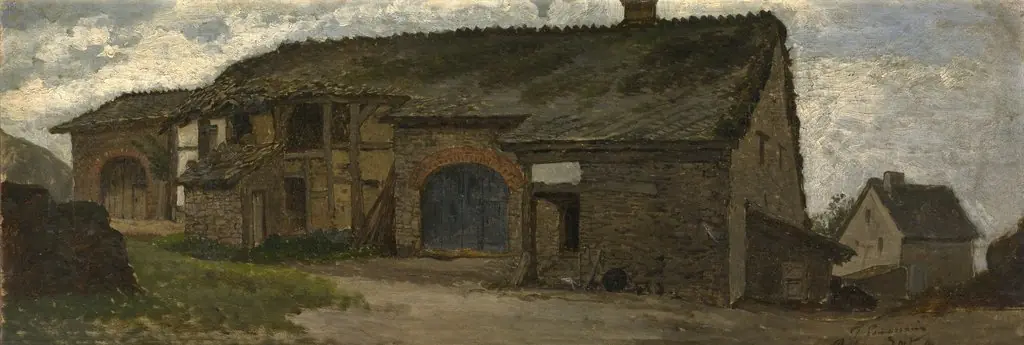 Farm in Rahier
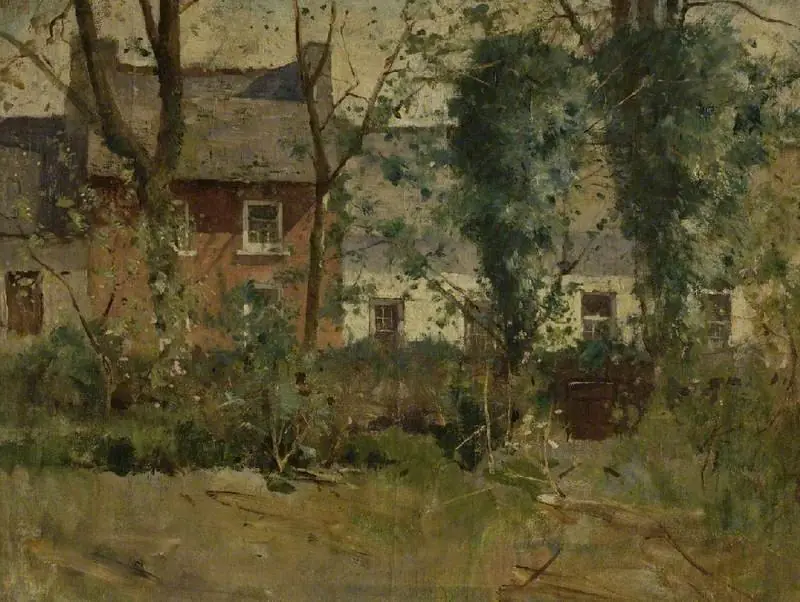 The Mall from Malmaison, Castletownshend, c. 1900
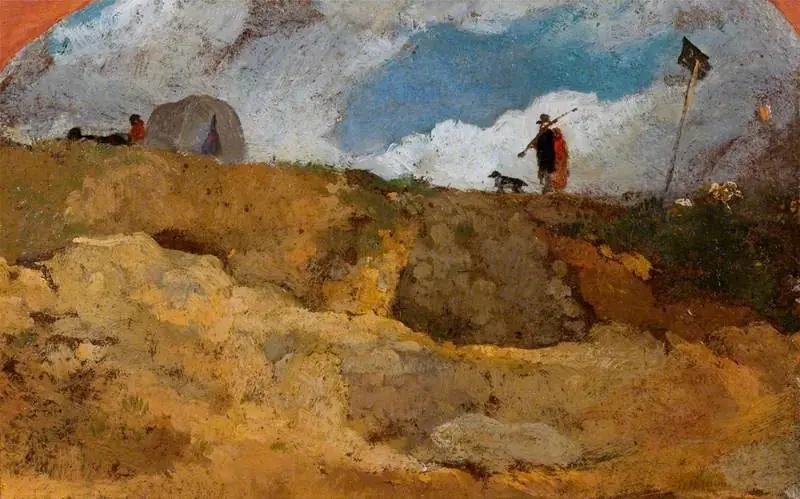 Hampstead Heath
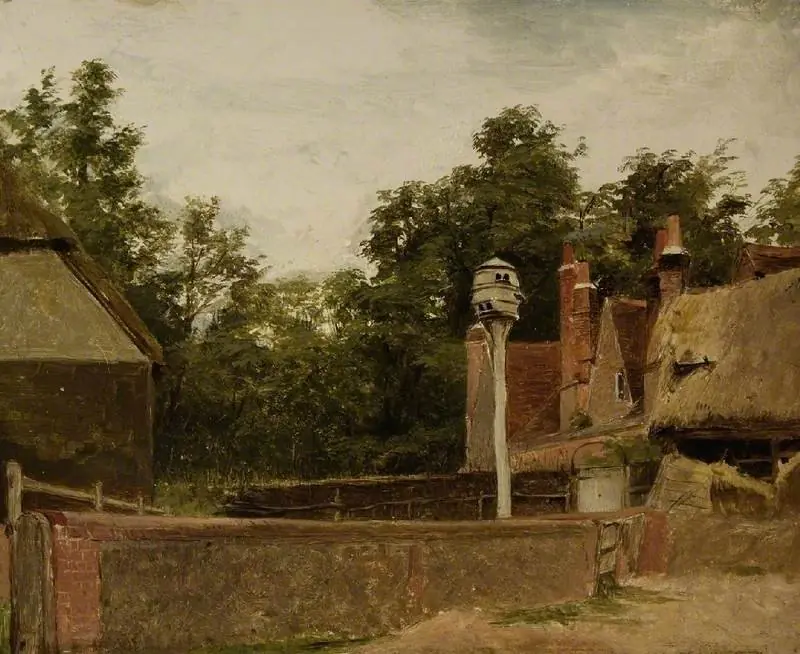 The Farmyard
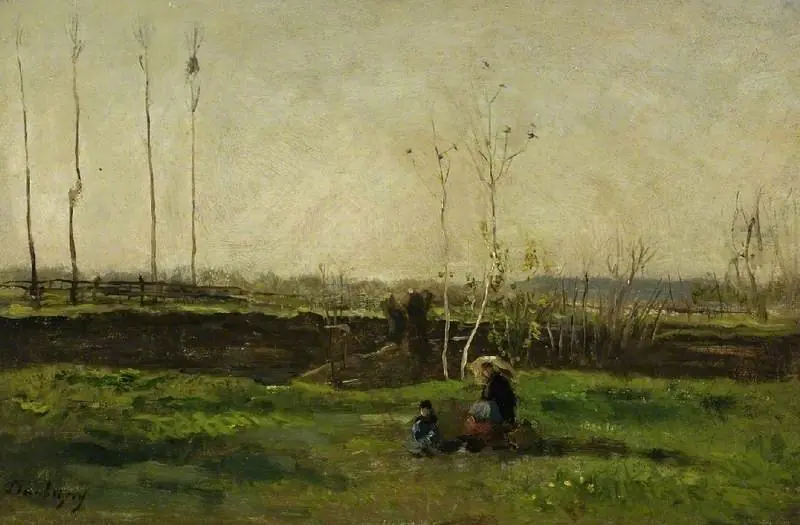 La famille du peintre en campagne
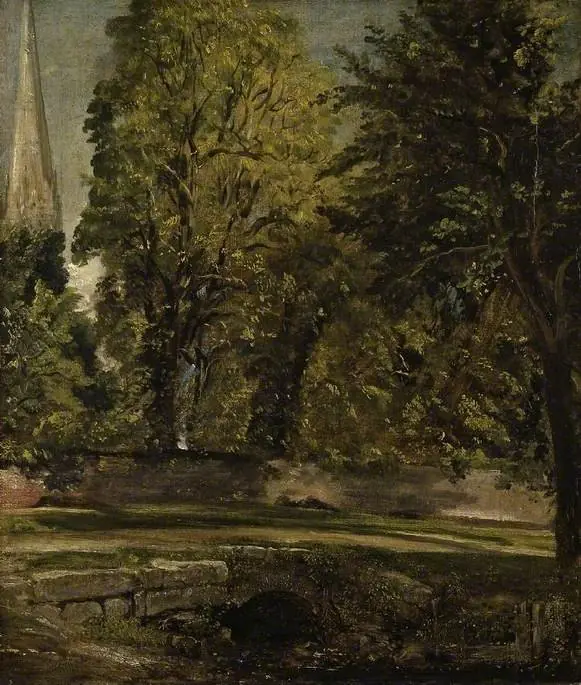 Salisbury
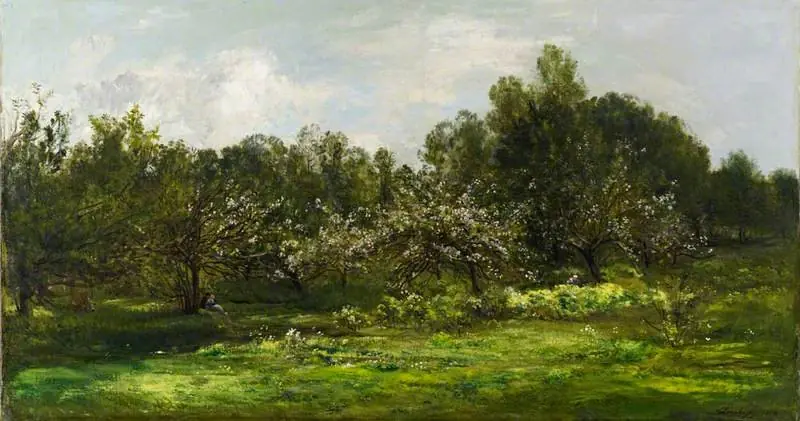 Orchard in Blossom (Les Pommiers en Fleur)
 Landscape. Study