Artwork
The Island of Philae
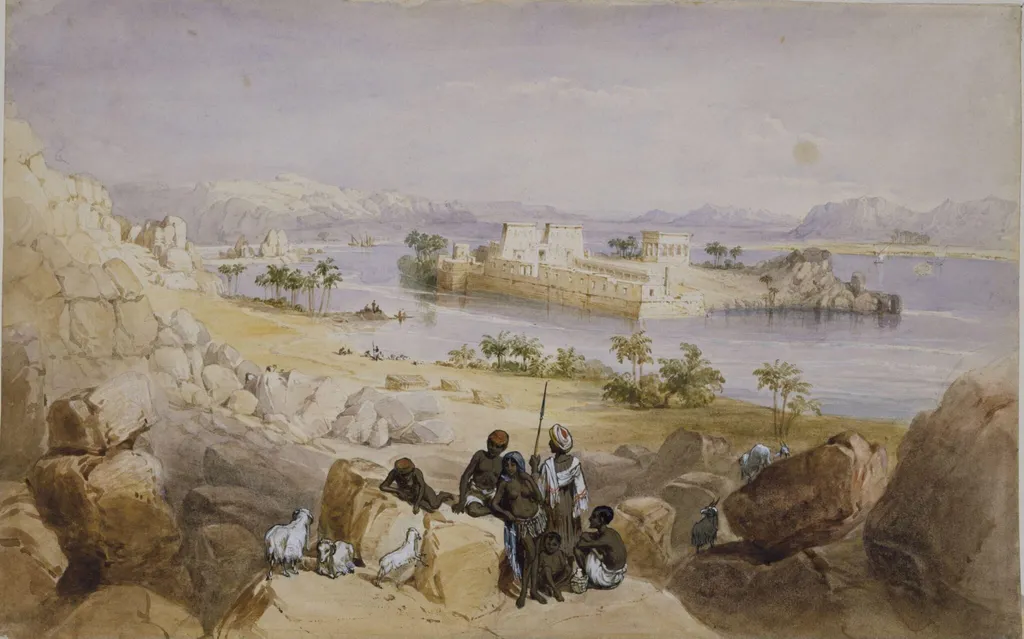
The Island of Philae is a watercolor work on paper by the Romanticist artist William Henry Bartlett. It dates from 1842 and is held in the collection of the Victoria and Albert Museum.
About this work
Overview
This watercolour captures a quiet moment on the Island of Philae, a small landmass in the Nile. The composition centers on a rocky shoreline where figures and goats rest beneath sparse palm trees. Beyond, the island’s architecture rises gently against a still expanse of water, framed by distant hills. The palette favors muted, harmonious tones, evoking stillness rather than action.
Subject & Meaning
The scene presents daily life on Philae without narrative drama. People and animals appear in repose, suggesting routine rather than ritual. The white structure on the island hints at religious or administrative use, common on Philae due to its historical role as a temple site. The absence of movement or conflict underscores a contemplative, almost timeless quality.
Technique & Style
Soft washes of watercolour create subtle gradations in sky, water, and stone. Warm ochres and earth tones ground the foreground, while cool blues and greys recede into the distance. Delicate brushwork defines palm fronds and architectural details without sharp lines, reinforcing the hushed mood. The medium’s transparency enhances the sense of light and air.
History & Provenance
Philae was a significant religious center in antiquity, later a tourist destination in the 19th century. This watercolour likely stems from that era, when European artists documented Egypt’s landscapes. Its modest scale and medium suggest it was made for private study or travel documentation, not public exhibition.
Context
Created during a period of growing European interest in Egypt’s antiquities, the work aligns with Romantic-era sensibilities that valued solitude and natural beauty over grandeur. Unlike grand historical paintings, it focuses on quiet observation, reflecting a shift toward intimate, personal responses to ancient sites.
Legacy
As a modest watercolour, it contributes to a broader archive of 19th-century travel art that shaped Western perceptions of Egypt. Its quiet tone distinguishes it from more dramatic depictions, offering a quieter counterpoint to the era’s fascination with the exotic. It remains a record of place, not spectacle.
Artist & collection
Artist
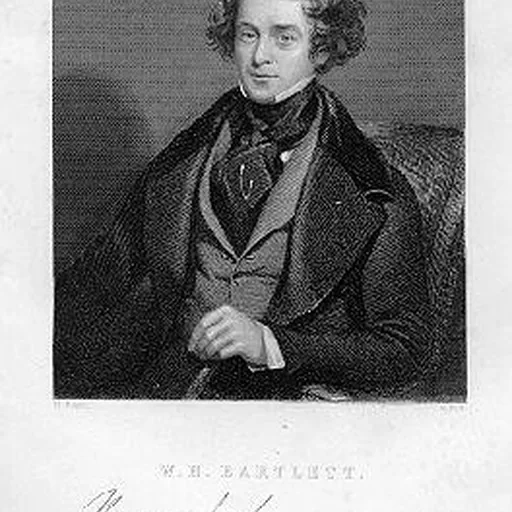
William Henry Bartlett (26 March 1809 – 13 September 1854) was a British artist, best known for his numerous drawings rendered into steel engravings.

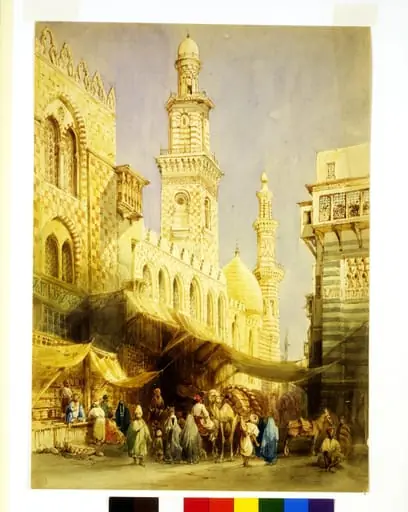
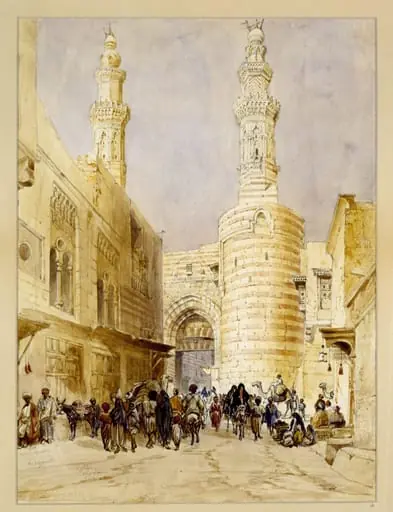
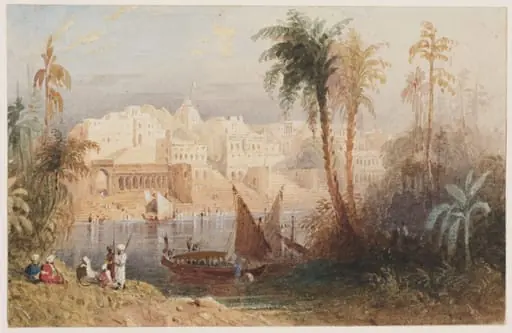 A view of an Indian city beside a river
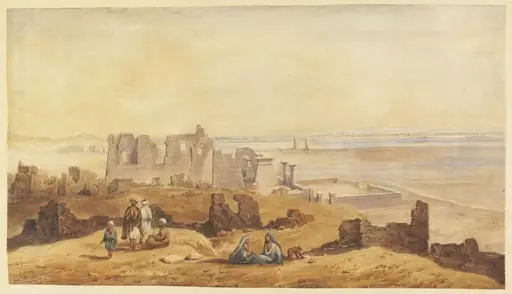 Luxor: the West Bank, with the Temple of Ramesses III at Madinat Habu; looking east towards the Nile
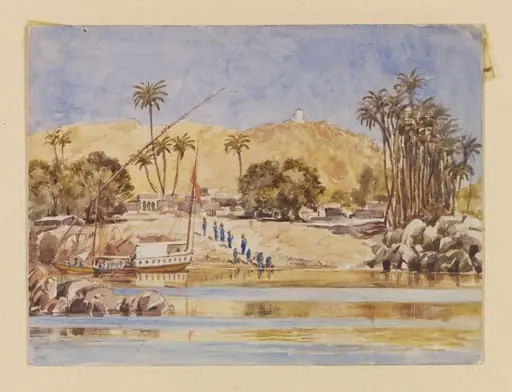 View on the Nile, opposite Aswan
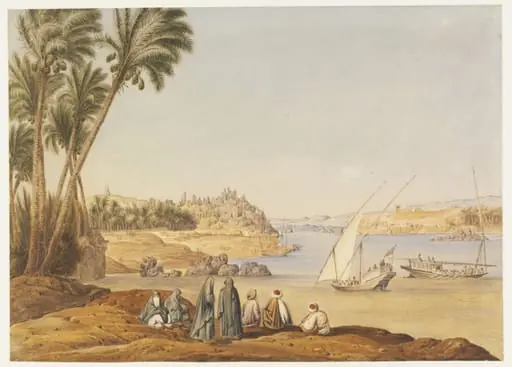 Aswan; looking south up the Nile
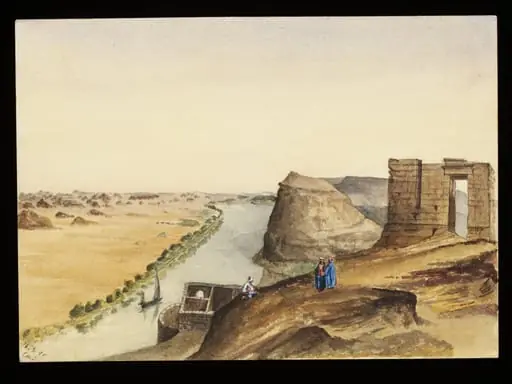 `Ibreem - The Ancient Castle of Premnis (parva) Nubia. Frontier Cantonment of the Romans "On the Nile"
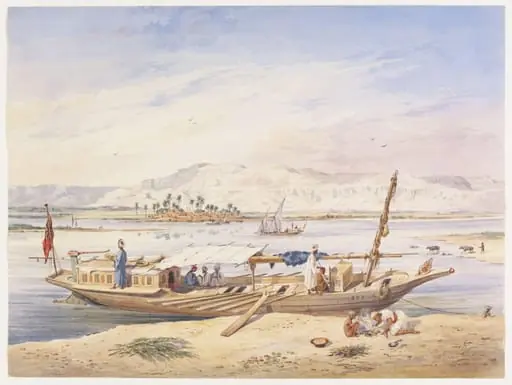 J.W.P.'s Kanja moored beside the East bank of the Nile at Luxor
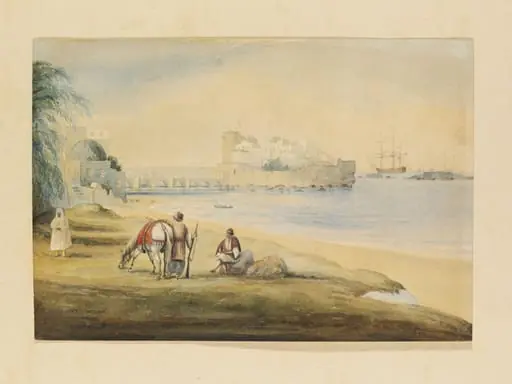 View of the Sea Castle (Sidon)
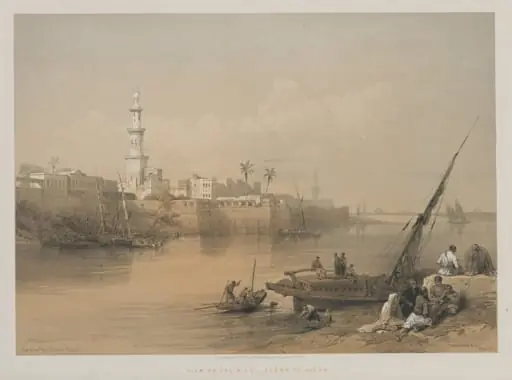 Egypt and Nubia, Volume III: View on the Nile, Ferry to Gizeh