Artwork
Convent of St. Catherine, Mount Sinai
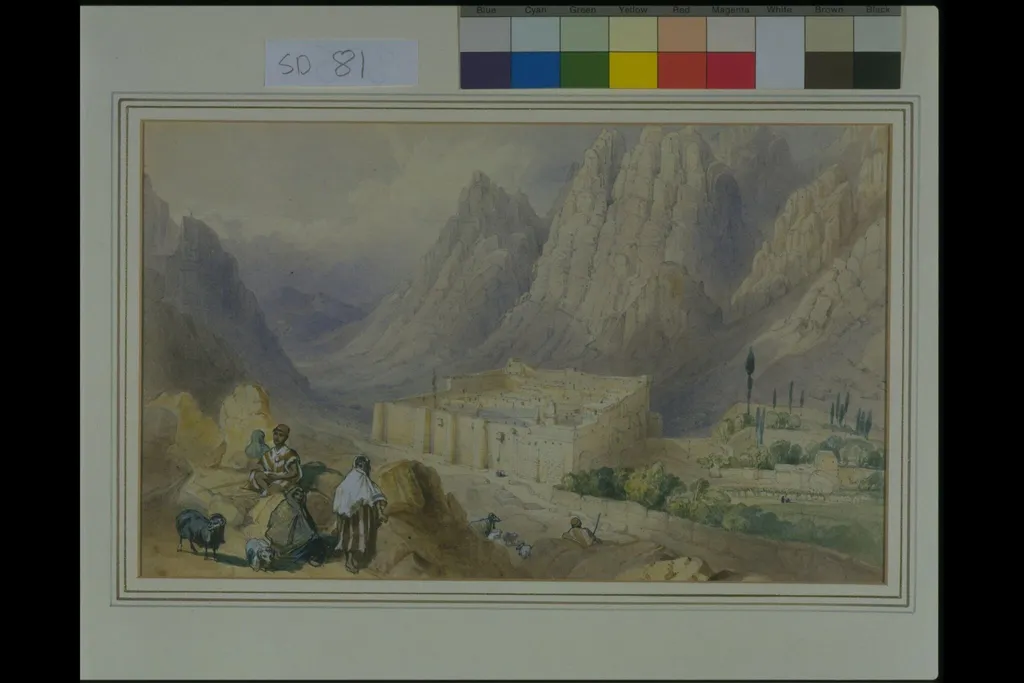
Convent of St. Catherine, Mount Sinai is a watercolor work on paper by the Romanticist artist William Henry Bartlett. It dates from 1842 and is held in the collection of the Victoria and Albert Museum.
About this work
Overview
The composition centers a substantial stone complex surrounded by rugged mountains, with figures and livestock in the foreground and a cloud‑filled sky beyond.
William Henry Bartlett’s 1842 watercolour portrays the Convent of St. Catherine, perched on the desert slopes beneath the twin peaks traditionally identified as Mount Sinai and Mount Horeb. The composition centers a substantial stone complex surrounded by rugged mountains, with figures and livestock in the foreground and a cloud‑filled sky beyond. Bartlett’s rendering captures both the architectural presence and the surrounding arid landscape.
Subject & Meaning
The drawing emphasizes the convent’s role as a longstanding pilgrimage site, linking the physical structure to its biblical associations with the mountains of Moses. By situating the building within a stark desert environment, Bartlett underscores the spiritual isolation and enduring religious significance of the location, inviting contemplation of its historic function as a refuge for monastic life.
Technique & Style
Executed in watercolour, the work employs layered washes to convey atmospheric depth, allowing distant mountains to recede into muted tones while the foreground retains richer hues. Bartlett’s handling of light creates a subtle gradation between sky and land, and the delicate detailing of figures and animals adds narrative texture without detracting from the overall sense of place.
History & Provenance
Bartlett visited the convent in October 1845 while traveling from Egypt to Petra, though the watercolour dates to 1842. The image later appeared as an engraving by E. Brandard in Bartlett’s volumes *Forty Days in the Desert* (1848) and *Scripture Sites and Scenes* (1849). The original was auctioned at Christie’s in 1976 and is thought to have been part of Bartlett’s studio sale of 1855.
Context
Created during the height of 19th‑century interest in biblical geography, the drawing reflects the Romantic fascination with exotic landscapes and sacred history. Bartlett’s documentation of remote sites catered to a European audience eager for visual accounts of holy places, aligning his work with contemporary travel literature and the era’s broader cultural curiosity about the Near East.
Artist & collection
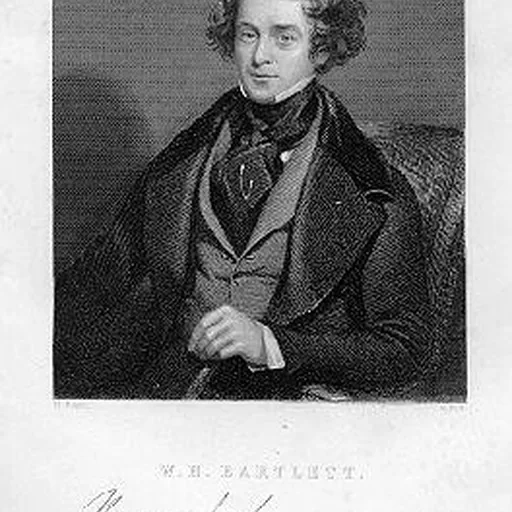
Artist
William Henry Bartlett (26 March 1809 – 13 September 1854) was a British artist, best known for his numerous drawings rendered into steel engravings.

 Chinese Temple, Evening
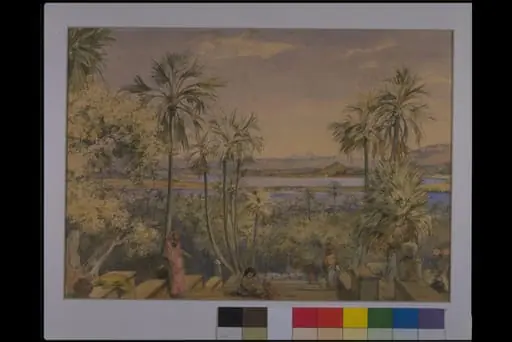 View eastwards from the steps behind Mount Mary Church, Bandra, Bombay
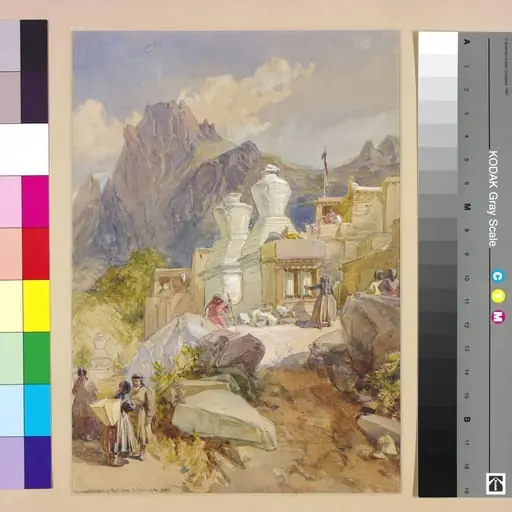 Praying cylinders in the village of Kulsi on the Indus
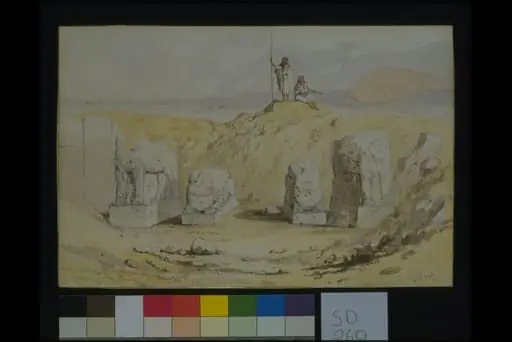 Entrance South West Palace Nimroud
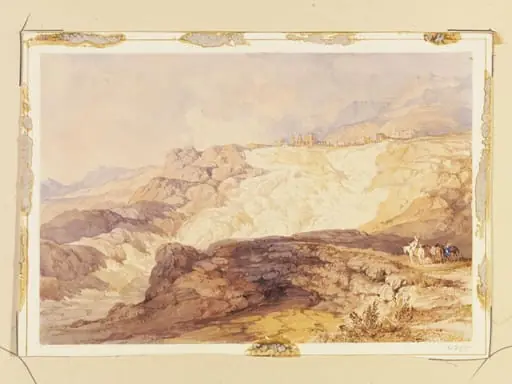 The Ruins of Hierapolis
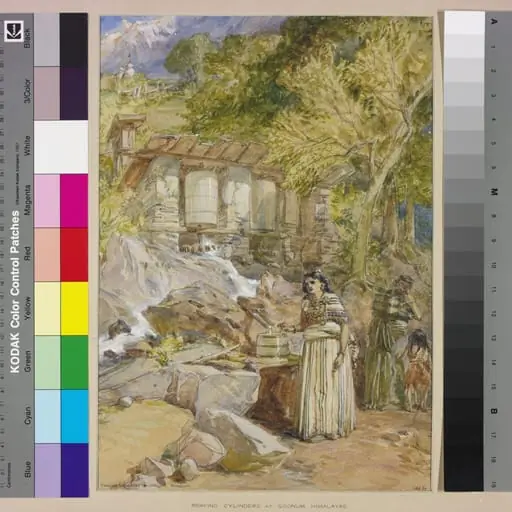 Praying cylinders at Soonum, Himalayas
 View in the Island of Elba
 The Town and Bay of Beirut
 On the Wharfe, Yorkshire