Artwork
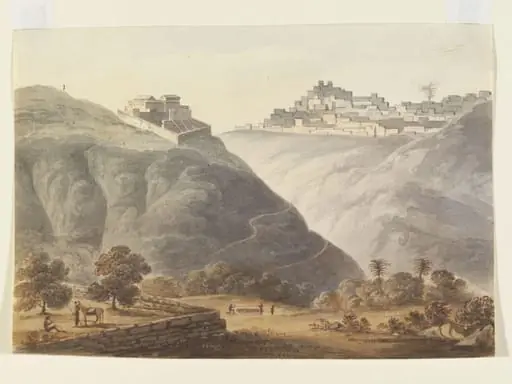
Djouni. The Residence of Lady Hester Stanhope
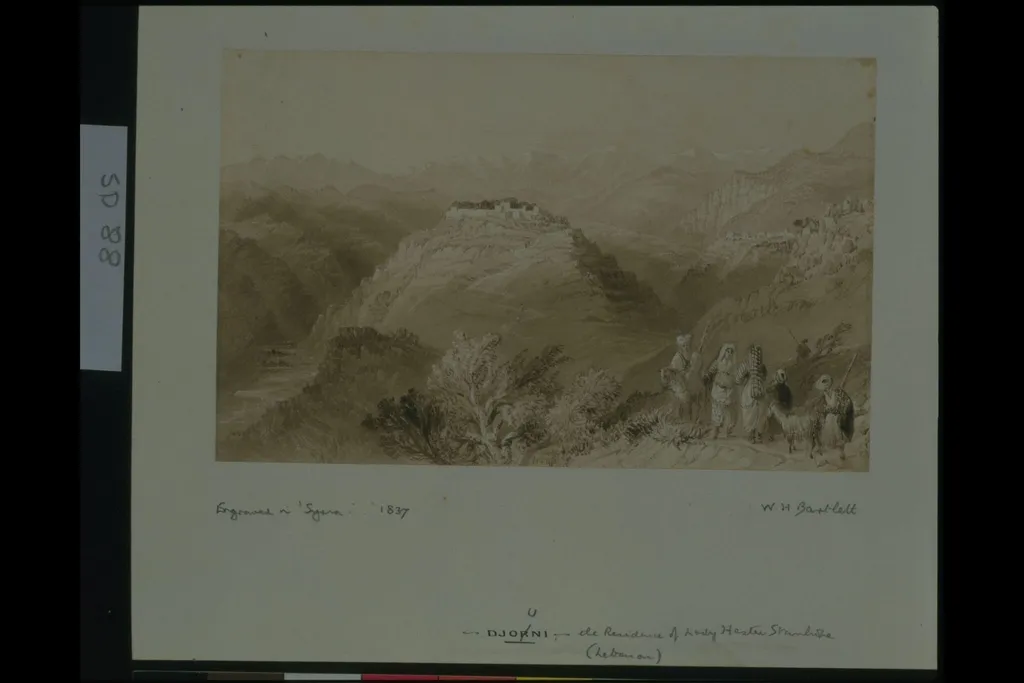
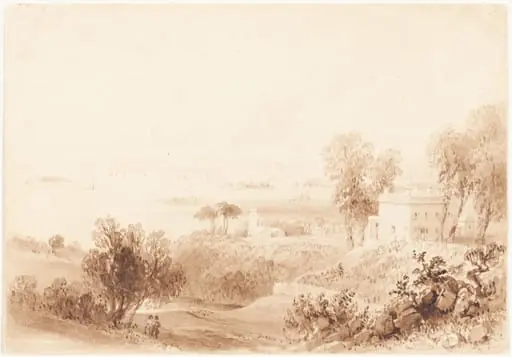
Djouni. The Residence of Lady Hester Stanhope is a watercolor work on paper by the Romanticist artist William Henry Bartlett. It dates from 1835 and is held in the collection of the Victoria and Albert Museum.
About this work
Overview
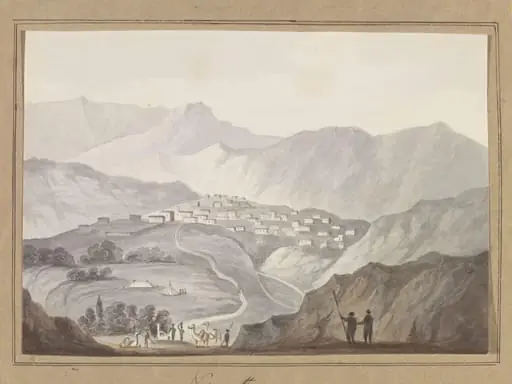
William Henry Bartlett’s watercolour depicts the residence of Lady Hester Stanhope at Djouni in the Lebanese mountains. Executed during Bartlett’s 1834 visit, the work records the building’s outline amid surrounding trees, rendered with the precision typical of his topographical sketches.
Subject & Meaning
The composition centers on the modest stone house where the British explorer Lady Hester Stanhope lived in exile. By presenting the dwelling within its natural setting, Bartlett emphasizes the interplay between human habitation and the rugged Levantine landscape, offering a visual record of Stanhope’s remote sanctuary.
Technique & Style
Created in watercolor, the piece employs fine linear detail to delineate architectural elements and foliage. Bartlett’s handling of light and shadow, though restrained, suggests a subtle chiaroscuro effect that gives depth to the structures and trees without sacrificing the clarity required for a topographical illustration.
History & Provenance
Bartlett, a prolific travel illustrator, produced the drawing while traveling through the Middle East on his seventh North African and Levantine tour. The watercolour was later incorporated into several travel publications of the 1830s and 1840s, reflecting the period’s appetite for visual accounts of distant locales.
Artist & collection
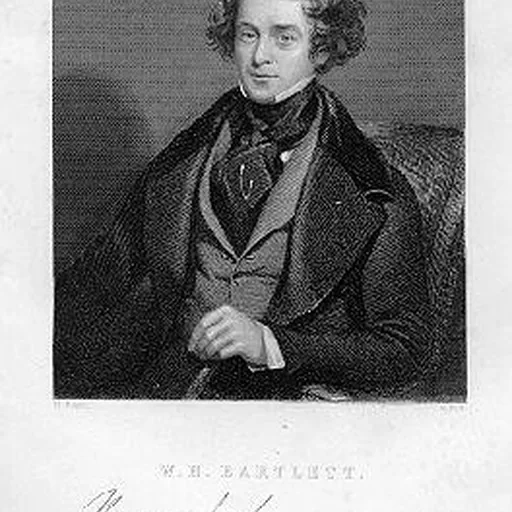
Artist
William Henry Bartlett (26 March 1809 – 13 September 1854) was a British artist, best known for his numerous drawings rendered into steel engravings.