Artwork
Industry and Idleness: The Industrious Prentice Performing the Duty of a Christian
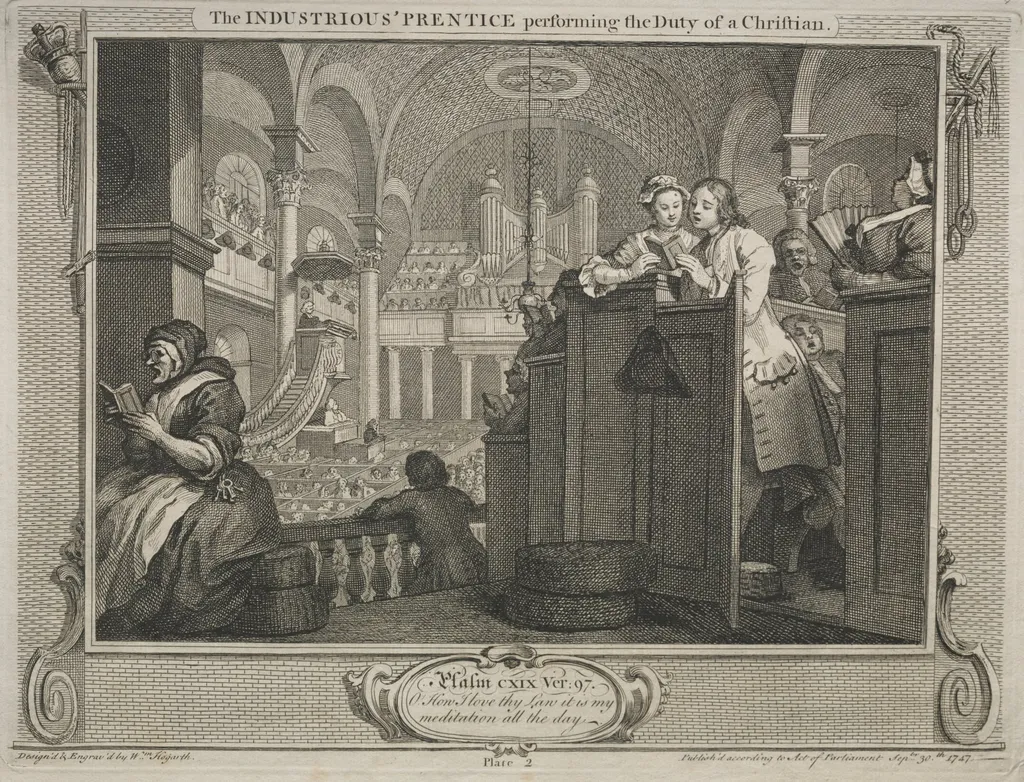
Industry and Idleness: The Industrious Prentice Performing the Duty of a Christian is a print by the Baroque artist William Hogarth. It dates from 1747 and is held in the collection of the Cleveland Museum of Art.
About this work
Overview
The print was widely circulated as both art and instruction, reflecting 18th-century concerns about virtue, labor, and religious duty.
Created in 1747, this engraving is the seventh plate in William Hogarth’s twelve-part series Industry and Idleness. It illustrates the moral trajectory of a hardworking apprentice, contrasting his path with that of a reckless peer. Hogarth used sequential imagery to depict social behavior as a moral narrative, blending realism with didactic intent. The print was widely circulated as both art and instruction, reflecting 18th-century concerns about virtue, labor, and religious duty.
Subject & Meaning
The scene portrays a young apprentice reading scripture with two companions in a workshop, emphasizing piety as an extension of diligence. The girl pointing at the text suggests active learning and shared moral instruction, reinforcing the idea that industriousness includes spiritual responsibility. The calm interior contrasts with the disorder beyond the window, symbolizing the inner order cultivated by virtue. The title explicitly links the apprentice’s conduct to Christian duty, framing labor as sacred.
Technique & Style
Hogarth employed fine-line engraving to render detailed interiors and bustling street scenes with clarity. Figures are rendered with subtle gestures—posture, gaze, and hand placement convey narrative without overt drama. The composition directs attention to the central group around the book, while the background street remains slightly blurred, reinforcing the moral focus on quiet devotion over external chaos. The style is grounded in realism, avoiding idealization in favor of observed social detail.
History & Provenance
The print was originally issued as part of a subscription series, sold to a middle-class audience interested in moral improvement. It entered the Cleveland Museum of Art’s collection as part of a broader acquisition of Hogarth’s graphic works. The series was reprinted multiple times during the 18th century, reflecting its popularity as both art and social commentary. Its preservation reflects its significance in the history of British print culture.
Context
In mid-18th-century England, rising urbanization and commercial growth intensified debates about work ethic and moral conduct. Hogarth’s series responded to anxieties about social decay, promoting Protestant values of discipline and self-improvement. The depiction of literacy and shared study among apprentices and a girl reflects growing access to education and the role of print in shaping public morality. The work aligns with broader evangelical movements emphasizing personal piety.
Legacy
Industry and Idleness influenced later narrative art and social realism, establishing a model for visual storytelling that combined moral instruction with everyday observation. Hogarth’s use of sequential imagery prefigured modern comics and illustrated journalism. The series remains a key reference in studies of 18th-century British society, illustrating how art could function as both record and reform tool, shaping public perception of virtue and vice.
Artist & collection
Artist
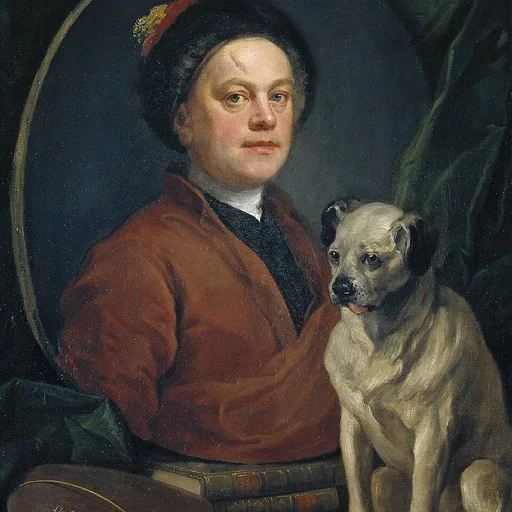
William Hogarth (; 10 November 1697 – 26 October 1764) was an English painter, engraver, satirist, cartoonist and writer.

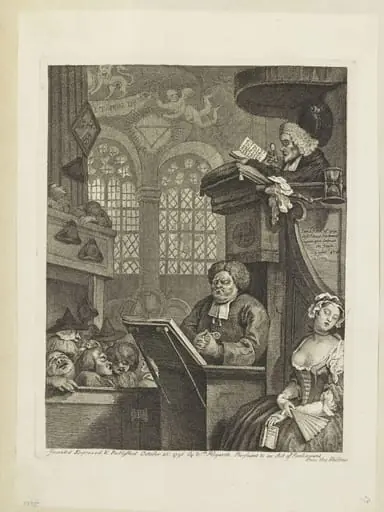 The Sleeping Congregation
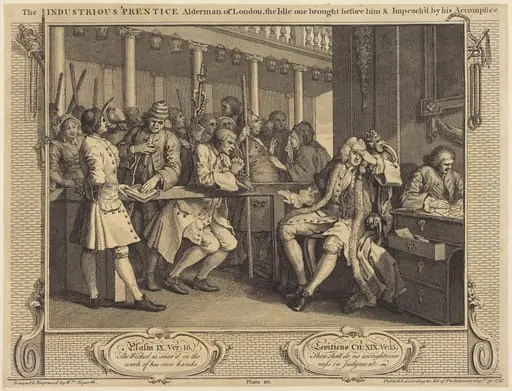 The Industrious 'Prentice Alderman of London,the Idle one brought before him & impea ch'd by his Accomplice
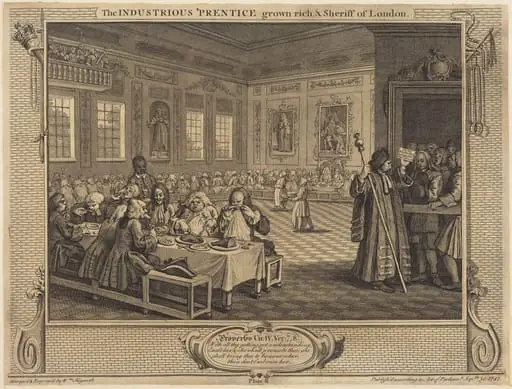 The Industrious 'Prentice grown rich & Sheriff of London
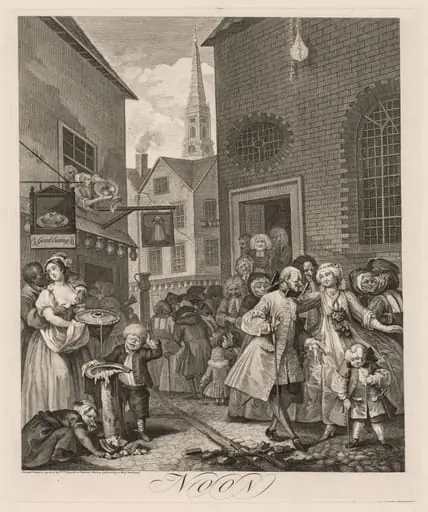 The Four Times of Day: Noon
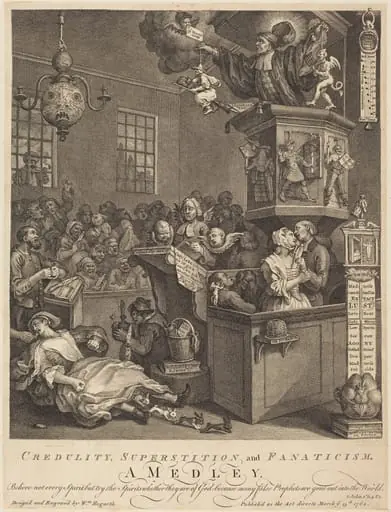 Credulity, Superstition, and Fanaticism
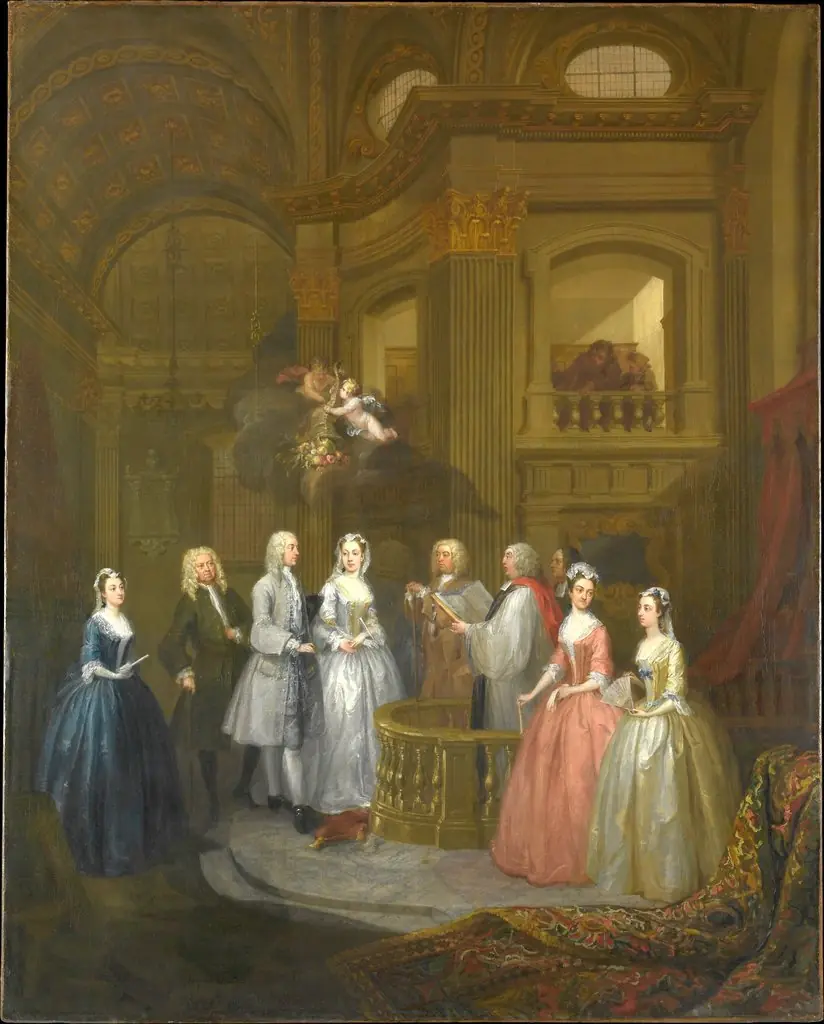
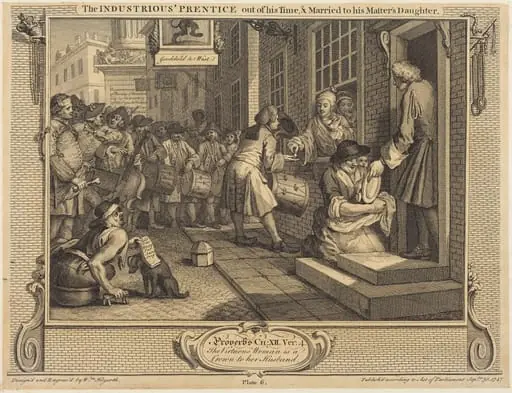 The Industrious 'Prentice out of his Time, and Married to his Master's Daughter
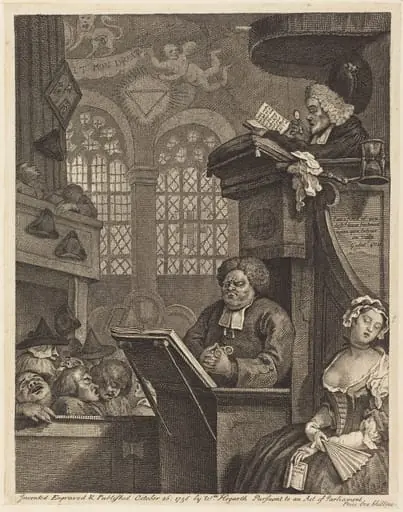 The Sleeping Congregation