Artwork
The Sleeping Congregation
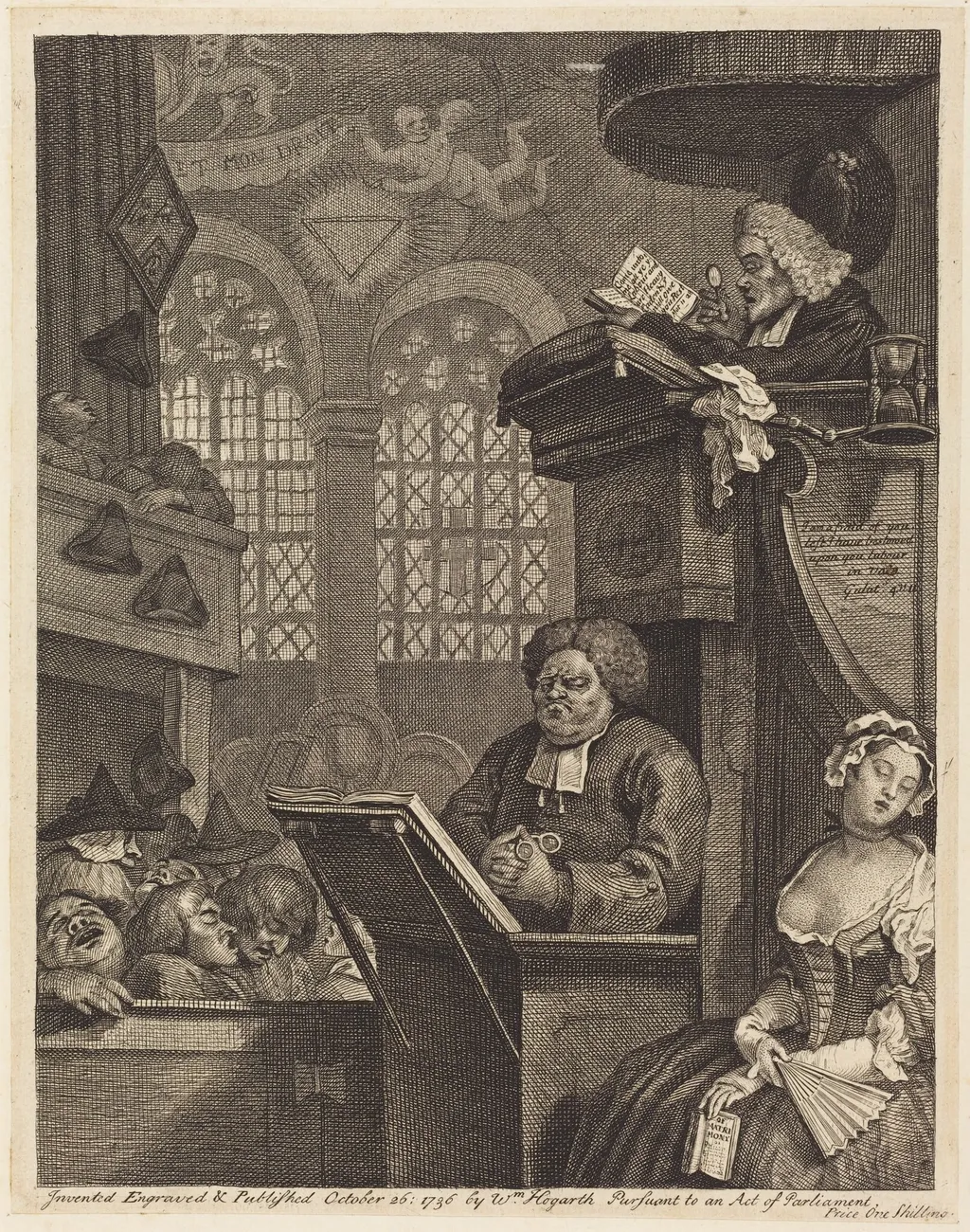
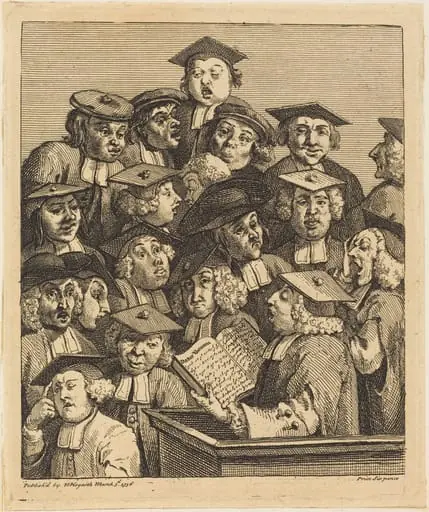
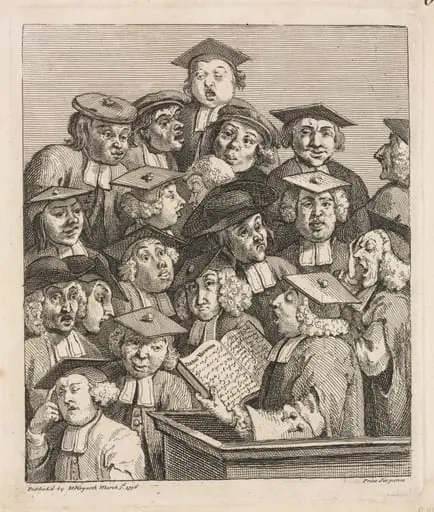
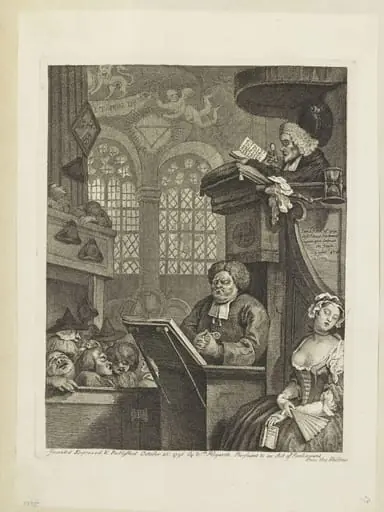
The Sleeping Congregation is an ink print by the Baroque artist William Hogarth. It dates from 1736 and is held in the collection of the Rosenwald Collection.
About this work
Overview
Unlike his narrative series, this piece stands alone as a single scene, capturing a moment of moral neglect within a religious setting.
Created in 1736, *The Sleeping Congregation* is a print by William Hogarth, executed through etching and engraving. It belongs to a body of work in which Hogarth used graphic satire to expose societal flaws. Unlike his narrative series, this piece stands alone as a single scene, capturing a moment of moral neglect within a religious setting. The work reflects his interest in everyday human behavior and institutional hypocrisy.
Subject & Meaning
The scene portrays a church service in which most attendees are disengaged: some sleep, others read or converse, while the preacher stands isolated at the pulpit, visibly frustrated. The contrast between the solemnity of the setting and the congregation’s indifference underscores a critique of hollow religious observance. Formal attire and an ornate interior suggest outward piety, yet behavior reveals spiritual apathy.
Technique & Style
Hogarth employed fine lines of etching and engraving to render detailed textures—the folds of fabric, the grain of wood, the play of light through stained glass. His precise draftsmanship heightens the irony: every element of the church’s grandeur is rendered with care, while the congregation’s neglect is rendered with biting clarity. The composition directs attention to the preacher’s isolation, reinforcing the satirical tone.
History & Provenance
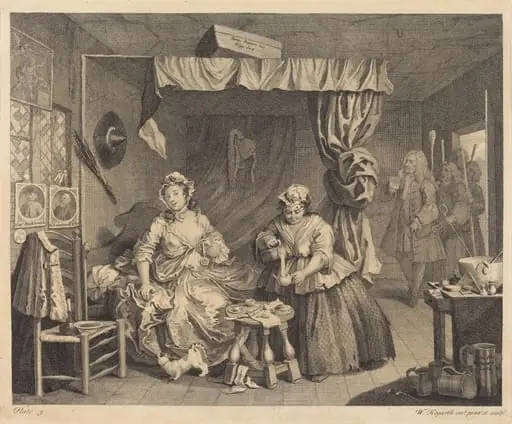
The print was produced during Hogarth’s most active period as a printmaker, following the success of *A Harlot’s Progress*. It was widely distributed as a standalone image, appealing to a literate public familiar with religious and moral debates. No early ownership records are prominent, but its popularity ensured multiple reprints in the decades after its creation.
Context
In early 18th-century England, religious attendance was often a social ritual rather than a spiritual practice. The Church of England faced criticism for declining fervor and clerical complacency. Hogarth’s image taps into broader cultural anxieties about moral decay, aligning with Enlightenment-era scrutiny of institutional authority and public conduct.
Legacy
Though less famous than Hogarth’s narrative series, *The Sleeping Congregation* influenced later satirical prints and social commentary in visual art. It exemplifies how printmaking could reach a broad audience with critical messages. Its enduring relevance lies in its unflinching depiction of human distraction—themes that continue to resonate in discussions of ritual, attention, and institutional credibility.
Artist & collection
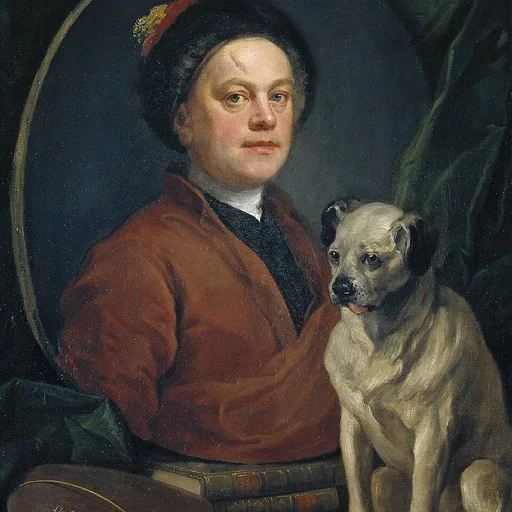
Artist
William Hogarth (; 10 November 1697 – 26 October 1764) was an English painter, engraver, satirist, cartoonist and writer.