Artwork
Semur, France
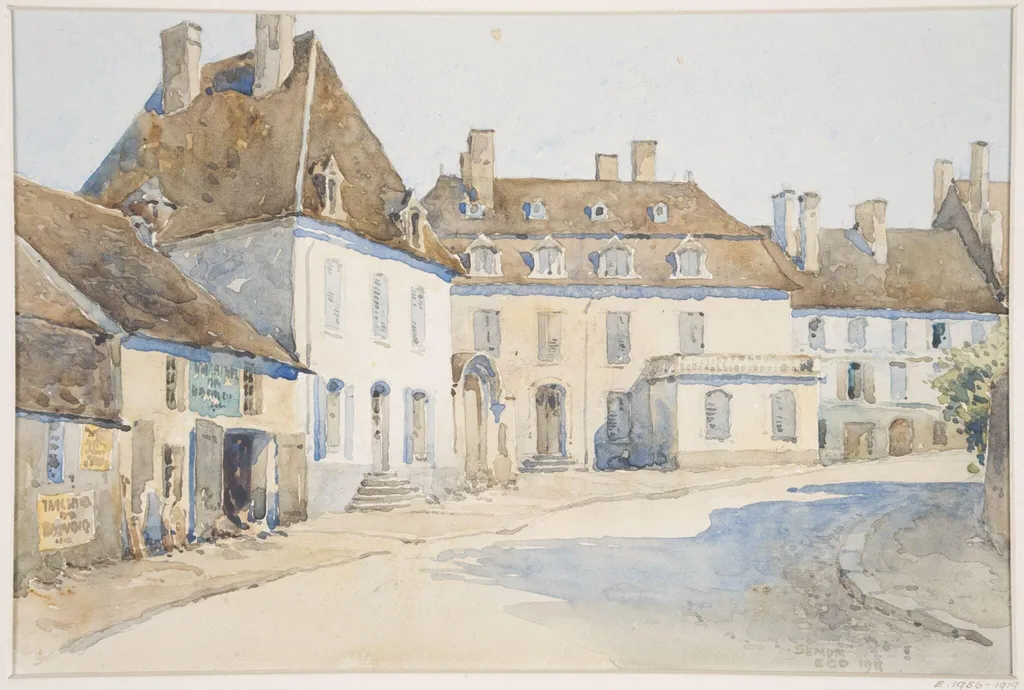
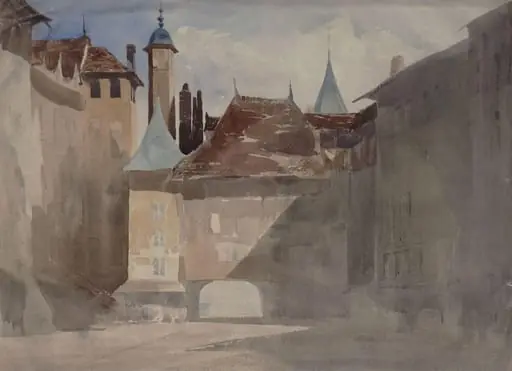
Semur, France is a drawing by E. Guy Dawber. It dates from 1911 and is held in the collection of the Victoria and Albert Museum. E.
About this work
Overview
E. Guy Dawber’s 1911 watercolor presents a quiet street in the French town of Semur. Rendered in a restrained palette of browns, beiges and greys, the work captures the town’s characteristic steep roofs and chimneys. The composition leads the eye down the empty lane toward a vanishing point, emphasizing the calm of an unpopulated urban space.
Subject & Meaning
The drawing focuses on the built environment rather than its inhabitants, suggesting a moment of stillness in everyday life. By omitting figures and vehicles, Dawber highlights the architectural forms and the atmospheric quality of light and shadow, inviting contemplation of the town’s historic charm and the quiet rhythm of small‑town France.
Technique & Style
Executed in watercolor, the piece relies on subtle tonal shifts and delicate washes to convey texture and depth. Dawber’s handling of pigment creates a sense of volume in the rooftops and stone facades, while the muted hues reinforce a subdued, almost nostalgic mood. The careful modulation of tone guides the viewer through the receding perspective.
History & Provenance
Created in 1911, the work reflects Dawber’s interest in European locales during a period of extensive travel. The drawing has been retained within the artist’s estate before entering public collections, where it serves as a visual record of early twentieth‑century French townscapes.
Artist & collection
Artist
E. Guy Dawber never left home without a sketchbook, filling them with quick, smudged lines wherever he wandered—train stations, teashops, back alleys. He had a knack for catching how light puddled on cobblestones or how…

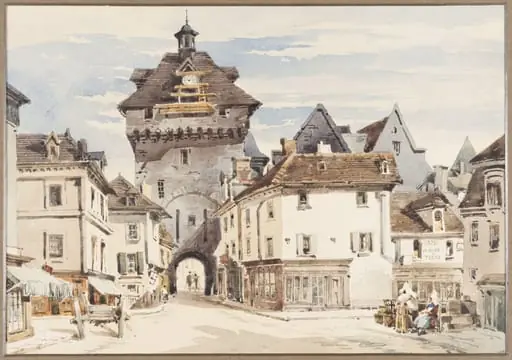 Street Scene in Loches, France
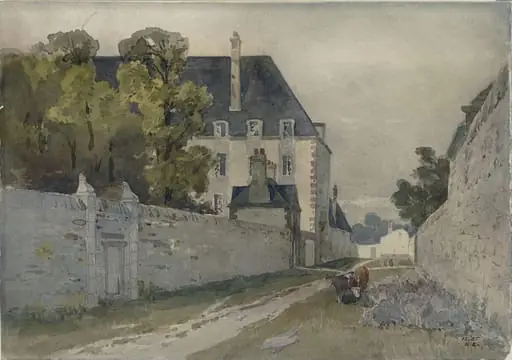 Barracks at St. Servan
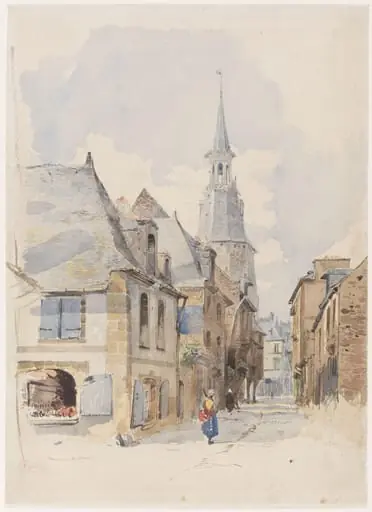 Street in Dinan
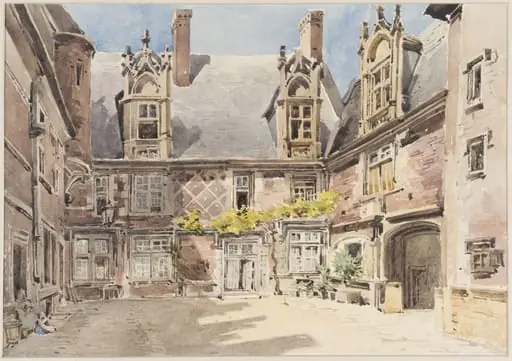 The Gendarmerie at Bourges
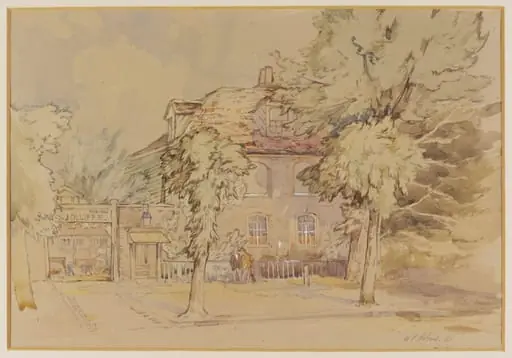 Elm Hall, Wanstead
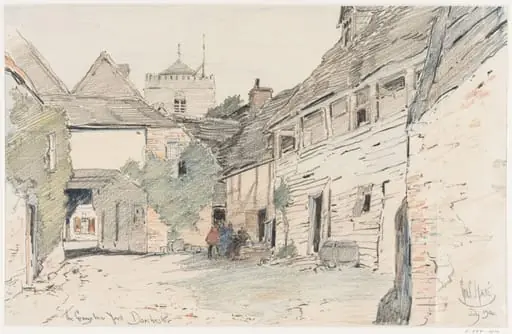 The George Inn Yard, Dorchester.
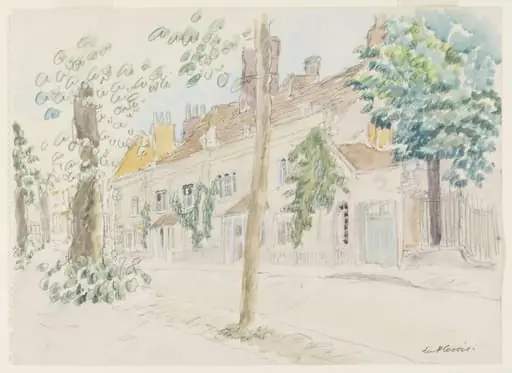 Shelley House, Marlow
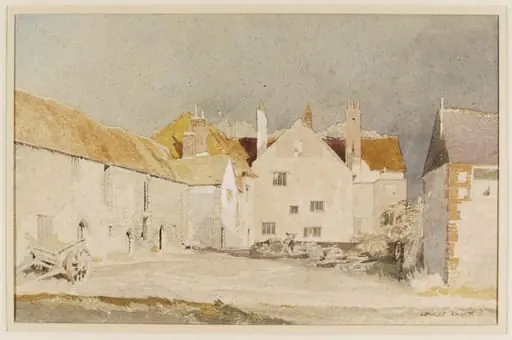 Hangleton Manor, near Brighton
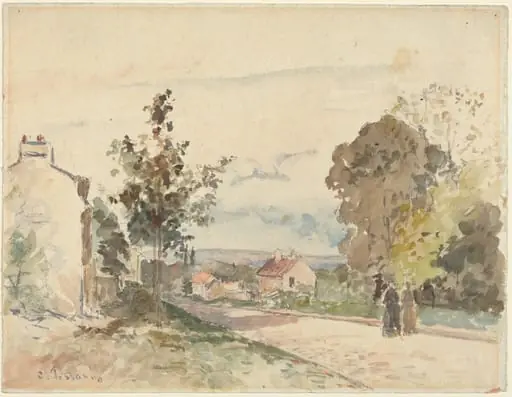 The Road from Versailles to Louveciennes
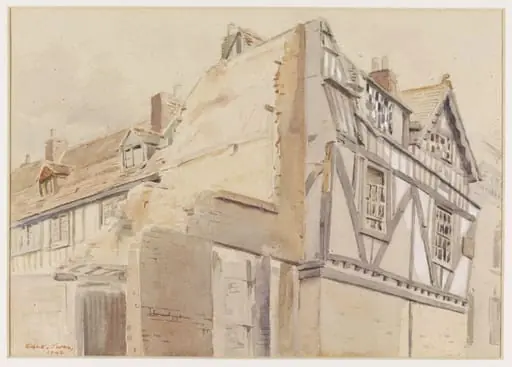 Raven Inn, Gloucester
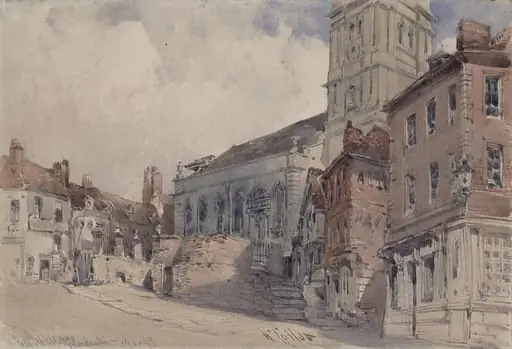 All Hallows Church, Worcester
 La Place du Molard, Geneva