Artwork
Characters of Romance: Commodore Trunnion
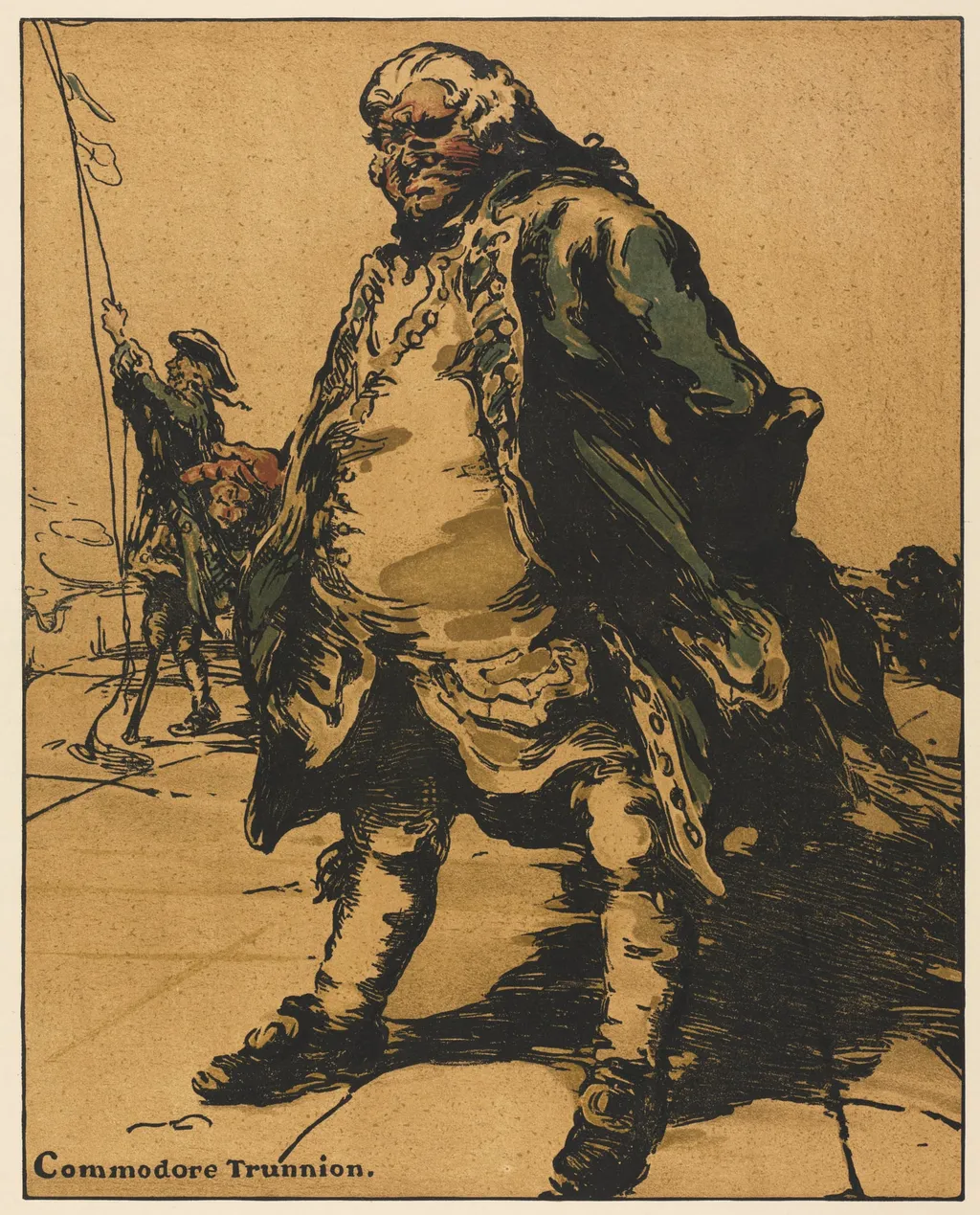
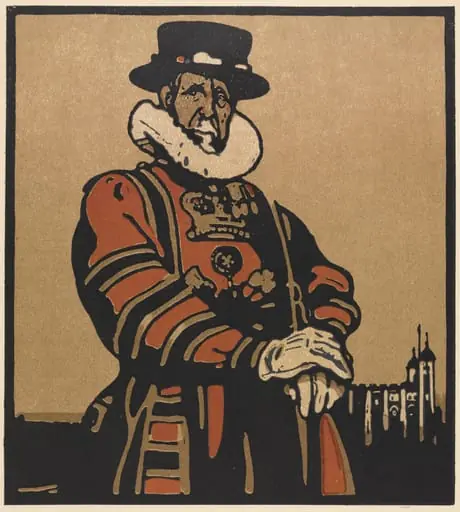
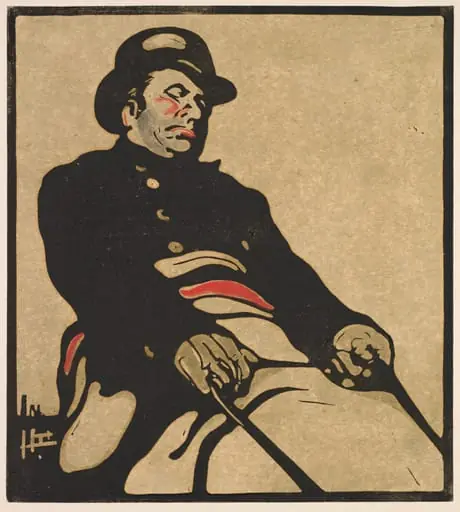
Characters of Romance: Commodore Trunnion is a print by William Nicholson. It dates from 1900 and is held in the collection of the Cleveland Museum of Art.
About this work
Overview
A British artist active in multiple mediums, Nicholson used this print to explore archetypal figures drawn from literary tradition.
William Nicholson created *Characters of Romance: Commodore Trunnion* in 1900 as part of a series of printed character studies. A British artist active in multiple mediums, Nicholson used this print to explore archetypal figures drawn from literary tradition. The work blends illustration with fine art printmaking, reflecting his interest in narrative and visual economy. Its rough execution and muted palette distinguish it from polished academic portraiture of the era.
Subject & Meaning
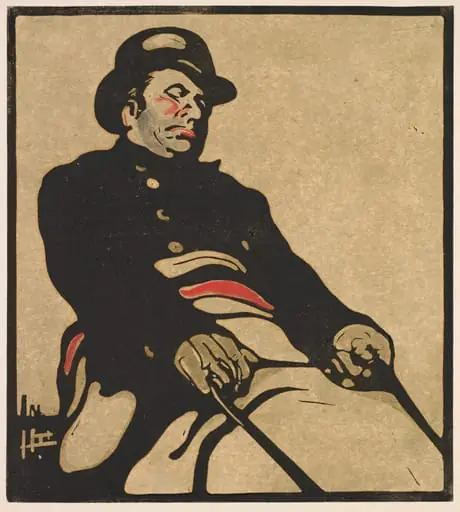
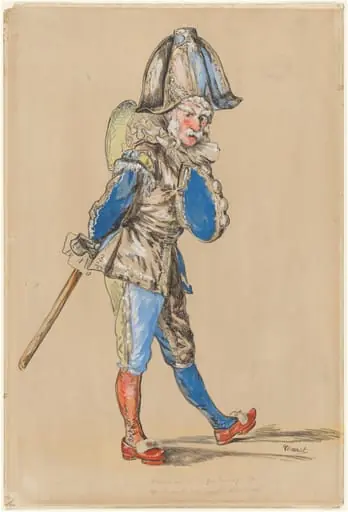
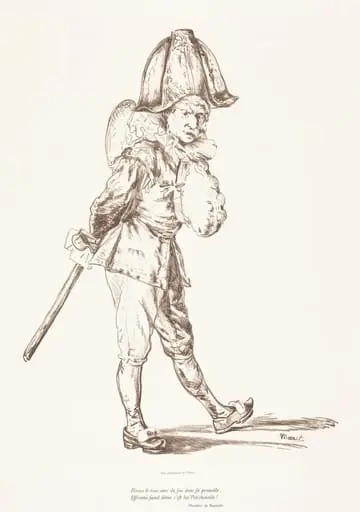
The figure represents Commodore Trunnion, a character from 18th-century literature known for his bluster and physical decline. Nicholson depicts him as a weary, corpulent man leaning on a cane, his flushed face and slumped posture suggesting exhaustion. Behind him, a rigid attendant holds a flagpole, reinforcing the theme of faded authority. The scene evokes nostalgia for bygone naval heroism, now rendered as caricature rather than celebration.
Technique & Style
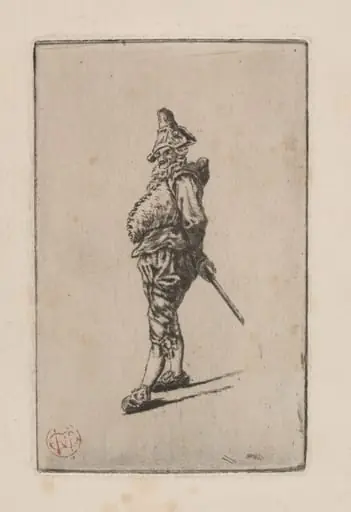
Nicholson employed a drypoint etching technique, using incised lines to create a textured, scratchy surface. The ink is applied unevenly, producing muddy tones and irregular edges that enhance the figure’s disheveled presence. Background elements are deliberately blurred, reducing spatial clarity and focusing attention on the central figure. This deliberate roughness rejects fine detail in favor of expressive immediacy and emotional tone.
History & Provenance
The print was produced in 1900 as part of Nicholson’s *Characters of Romance* series, published in limited editions. It was likely circulated among collectors and art societies interested in modern graphic art. While not widely exhibited at the time, it was recognized within artistic circles for its departure from traditional portraiture. Its provenance traces through private British collections and later institutional acquisitions focused on early 20th-century printmaking.
Context
Nicholson’s work emerged during a period when British artists were redefining illustration as fine art. Literary characters like Trunnion, drawn from older novels, offered rich material for visual reinterpretation. The print reflects broader cultural interest in nostalgia and satire, as well as the influence of Japanese woodcuts and Post-Impressionist simplification. It stands apart from the ornate aesthetics of Victorian illustration, favoring restraint and psychological suggestion.
Legacy
Though not among Nicholson’s most famous works, *Commodore Trunnion* exemplifies his contribution to the revival of printmaking in early 20th-century Britain. Its unpolished aesthetic influenced later artists exploring character and mood through graphic means. The print remains a reference point in studies of literary illustration and the transition from narrative realism to expressive abstraction in British art.
Own this work as a print
Artist & collection
Artist
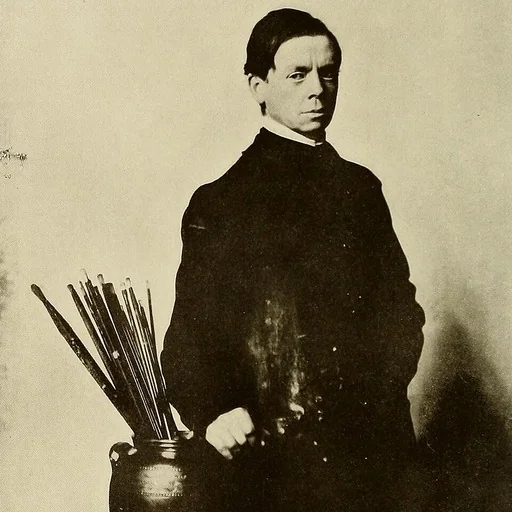
Sir William Newzam Prior Nicholson (5 February 1872 – 16 May 1949) was a British painter of still-life, landscape and portraits.