Artwork
Characters of Romance: Gargantua
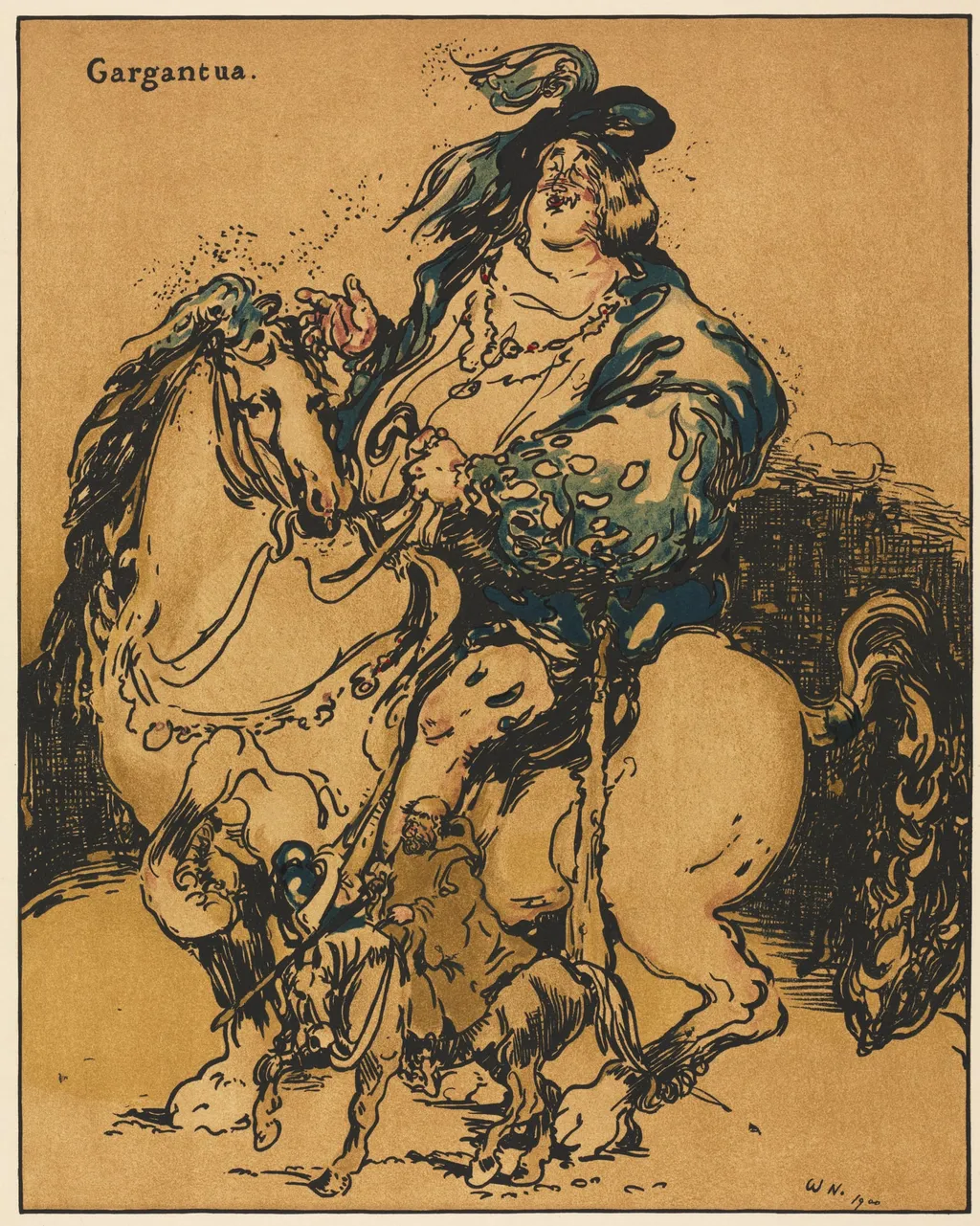
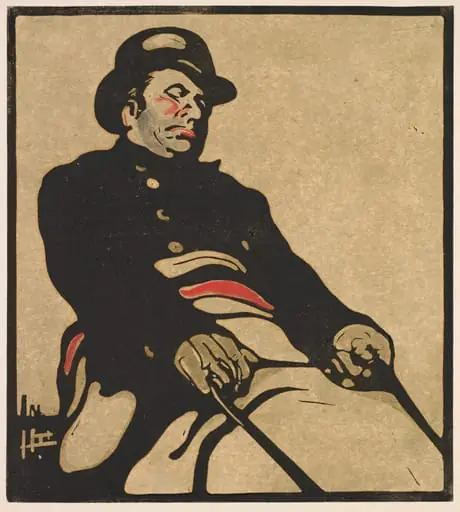
Characters of Romance: Gargantua is a print by William Nicholson. It dates from 1900 and is held in the collection of the Cleveland Museum of Art.
About this work
Overview
William Nicholson’s 1900 woodcut *Characters of Romance: Gargantua* is part of a series illustrating literary figures through graphic means.
William Nicholson’s 1900 woodcut *Characters of Romance: Gargantua* is part of a series illustrating literary figures through graphic means. As a British artist active in multiple media, Nicholson turned to wood engraving for its capacity to produce sharp, reproducible images. This print exemplifies his interest in narrative subjects drawn from literature, rendered with a distinctive emphasis on line and form rather than tonal modeling.
Subject & Meaning
The print portrays Gargantua, the giant from François Rabelais’s 16th-century satirical novels, depicted mid-motion atop a rearing horse. His wide-open mouth and clenched eyes suggest a moment of visceral exertion or rage, aligning with the character’s larger-than-life, often absurdly violent persona. The image captures not just physical scale but emotional turbulence, reflecting the grotesque humor and bodily excess central to Rabelais’s storytelling.
Technique & Style
Nicholson used wood engraving to achieve bold, incised lines that define form with clarity and rhythm. The composition relies on strong contours and minimal shading, avoiding the chiaroscuro effects sometimes associated with his paintings. The horse’s arched neck and the figure’s flowing robe are rendered through rhythmic, angular strokes, creating a sense of kinetic energy. Color is absent; the work’s impact stems from contrast and linear precision.
History & Provenance
Created in 1900, the print was produced as part of Nicholson’s *Characters of Romance* series, published in limited editions. It was likely intended for book illustration or as a standalone graphic work, reflecting the early 20th-century revival of interest in woodcut as a fine art medium. The print entered public collections in the decades following its creation, primarily through acquisitions by British institutions focused on graphic arts.
Context
Nicholson’s work emerged during a period when British artists were re-engaging with medieval and Renaissance print traditions. His choice of Gargantua—a figure from a subversive, earthy literary canon—aligned with contemporary interests in satire and the grotesque. The print also reflects broader European trends in graphic design, where illustrators sought to merge literary themes with modernist simplification of form.
Legacy
Though not among Nicholson’s most widely known works, *Gargantua* remains a significant example of his graphic output and the revival of wood engraving in early 20th-century Britain. It demonstrates his ability to translate literary intensity into visual language without reliance on color or detail. The print continues to be studied for its formal economy and its role in bridging narrative illustration with fine art printmaking.
Artist & collection
Artist
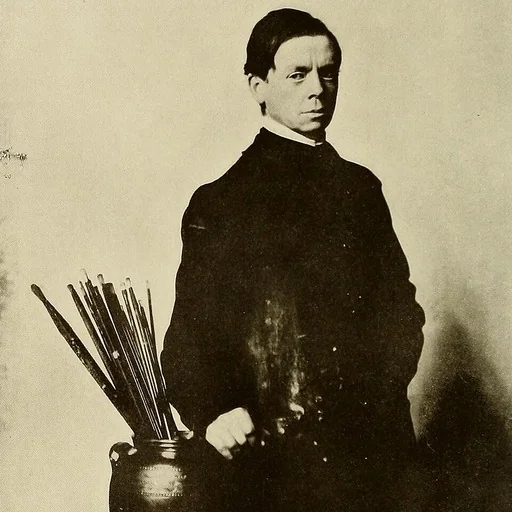
Sir William Newzam Prior Nicholson (5 February 1872 – 16 May 1949) was a British painter of still-life, landscape and portraits.

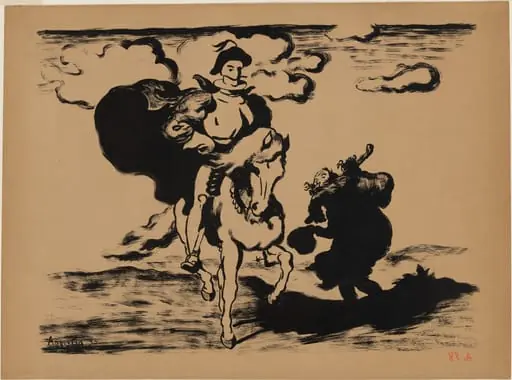 The Horseman and the Beggar (Le Cavalier et le mendiant)
 H Beard Print Collection
 Untitled
 The Jester
 Vows of Jan Kazimierz
 Polichinelle
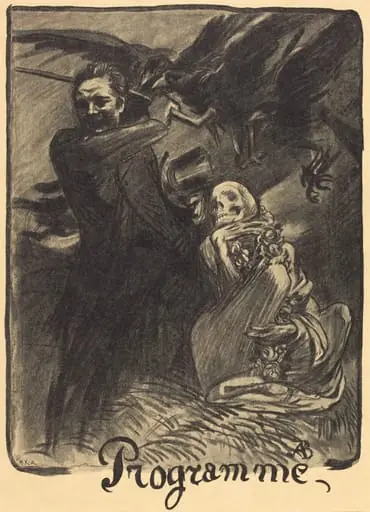 Les Honnêtes femmes; Conférence, Poésies inédites d'Henry Becque; La Parisienne
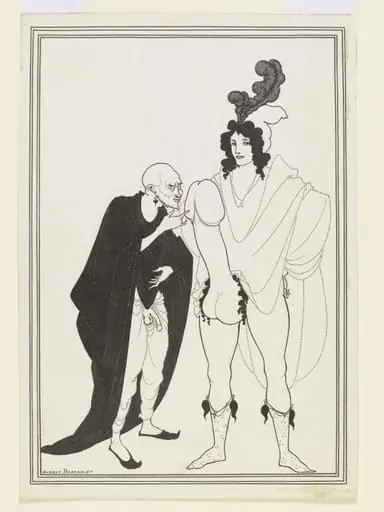 The Examination of the Herald
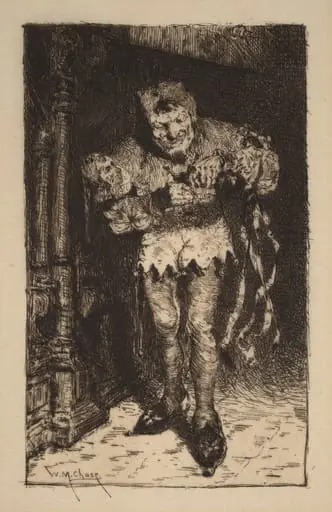 Keying Up: The Court Jester
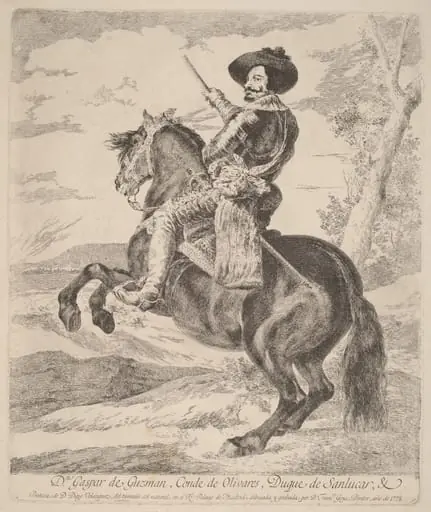 Gaspar de Guzman, Conde Duque de Olivares