Artwork
A view of the Four Courts and Richmond Bridge
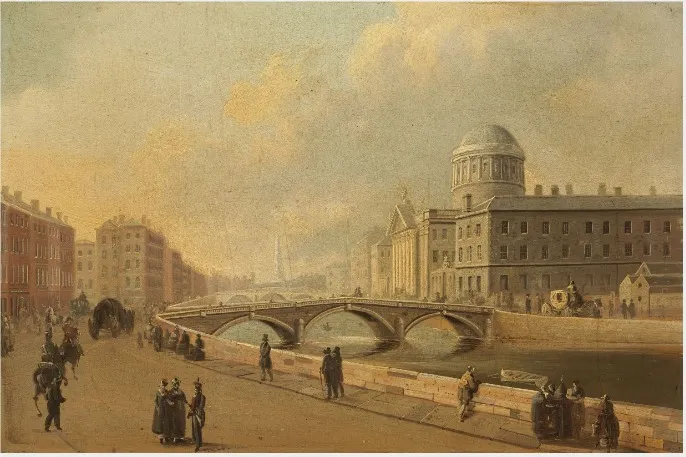
A view of the Four Courts and Richmond Bridge is an unspecified painting by William Sadler. It dates from 1820 and is held in the collection of the National Gallery of Ireland.
About this work
Overview
The painting belongs to the National Gallery of Ireland’s collection, reflecting its significance as a record of early 19th-century Dublin’s civic landscape.
Painted around 1820 by William Sadler II, this work presents a quiet urban vista of Dublin’s Four Courts and Richmond Bridge. Sadler, an Irish artist known for topographical accuracy, rendered the scene with attention to architectural detail and atmospheric nuance. The painting belongs to the National Gallery of Ireland’s collection, reflecting its significance as a record of early 19th-century Dublin’s civic landscape.
Subject & Meaning
The painting captures two key civic structures: the neoclassical Four Courts, symbolizing legal authority, and Richmond Bridge, a vital transport link. Figures on the bridge and streets suggest daily life unfolding against institutional grandeur. The absence of dramatic action conveys a sense of order and stability, aligning with the era’s ideals of public function and urban harmony.
Technique & Style
Sadler employed a restrained palette of gray, blue, and earth tones to evoke a overcast Dublin sky and weathered stone architecture. Brushwork is precise yet unobtrusive, emphasizing structural clarity over expressive flourish. Light is diffused, softening edges and unifying the scene, while subtle gradations in tone create depth without dramatic contrast.
History & Provenance
Created during a period of architectural consolidation in Dublin, the painting reflects post-Union efforts to project civic dignity through built form. It entered the National Gallery of Ireland’s collection in the 19th century, likely acquired as part of a broader initiative to document national heritage. Its preservation underscores its value as a documentary record rather than a decorative piece.
Context
In the early 1800s, Dublin was reshaping its urban identity following the Acts of Union. The Four Courts, completed in 1796, stood as a symbol of centralized law, while Richmond Bridge, opened in 1794, improved access to the city’s south. Sadler’s depiction aligns with a growing interest in recording Ireland’s evolving public spaces during a time of political and social transition.
Legacy
Though not widely exhibited beyond national collections, the painting remains a key example of Irish topographical art from the period. It contributes to the understanding of how artists documented civic infrastructure with quiet fidelity, offering later generations a visual archive of Dublin’s architectural and social fabric before industrial modernization.
Artist & collection
Artist
William Sadler II (c. 1782 – 1839), also known as William Sadler the Younger, was an Irish painter. He was a noted landscape painter who is known for his depiction of the Battle of Waterloo.


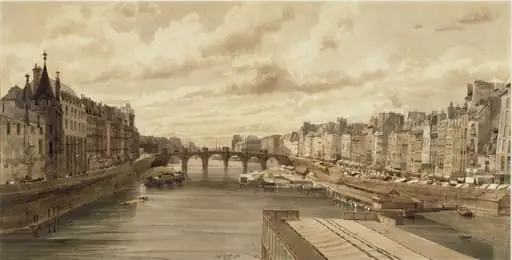 The Pont Neuf, Paris
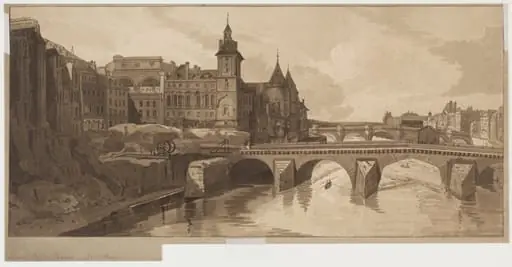 Selection of Twenty of the Most Picturesque Views in Paris:View of Pont au Change
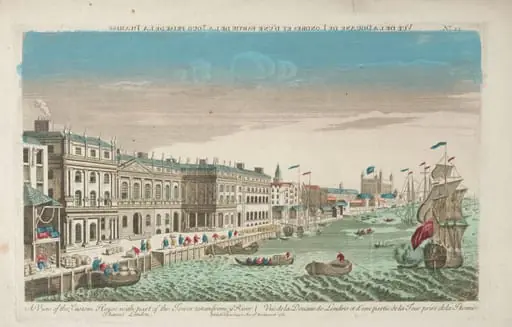 View of the Custom House and Douana of London
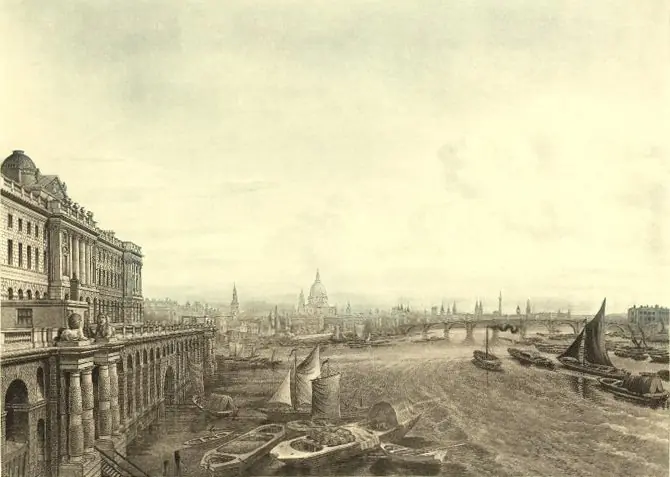 A South View of Somerset House, from Waterloo Bridge
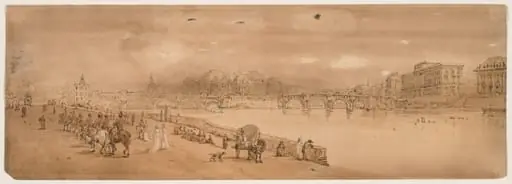 A Selection of Twenty of the Most Picturesque Views in Paris: View of Pont Neuf, and the Mint
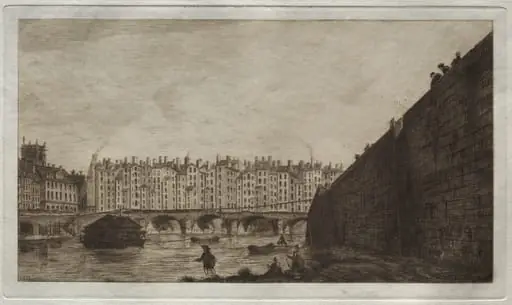 Le Pont-au-change, Paris, vers 1784
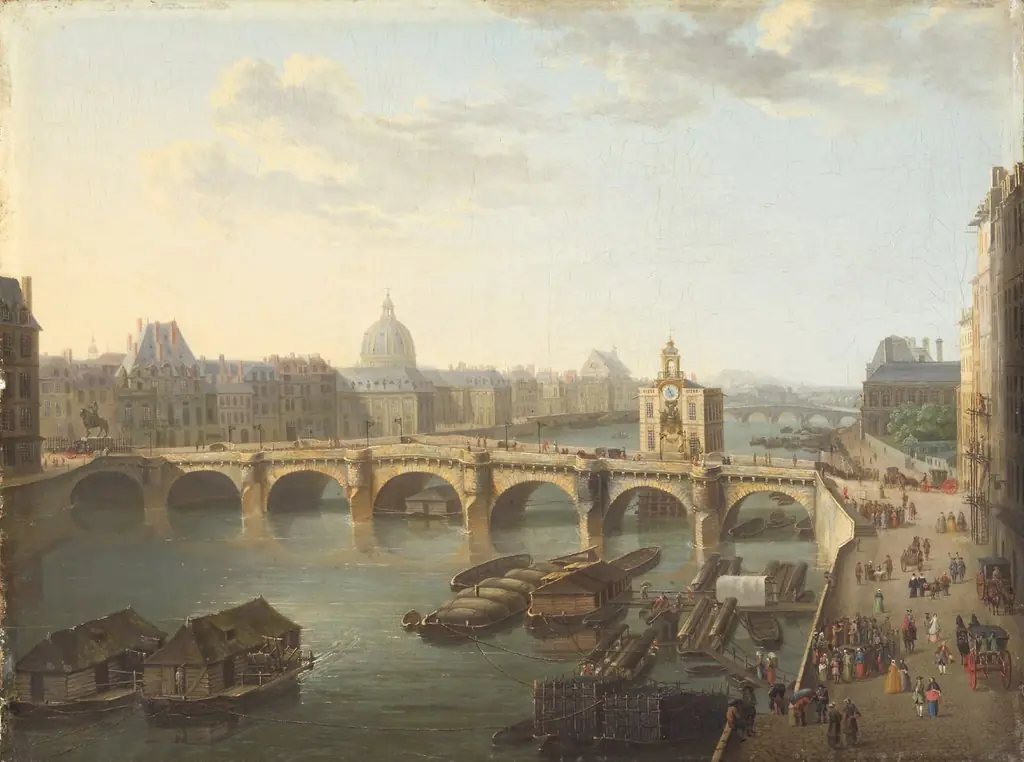 View of the Pont-Neuf in Paris from the Quai de la Mégisserie
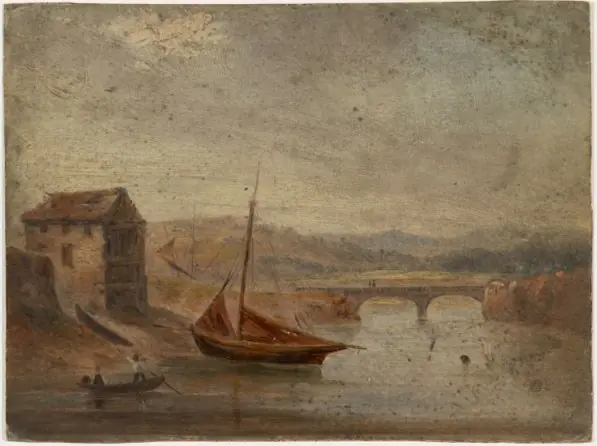 Near Plymouth, Devon
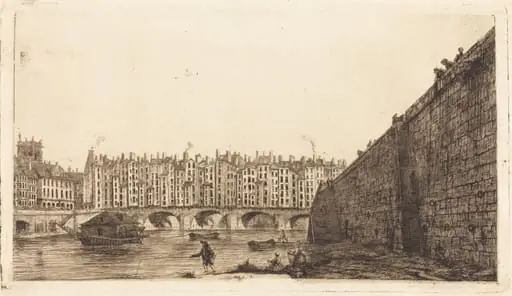 Le Pont-au-Change, Paris, vers 1784
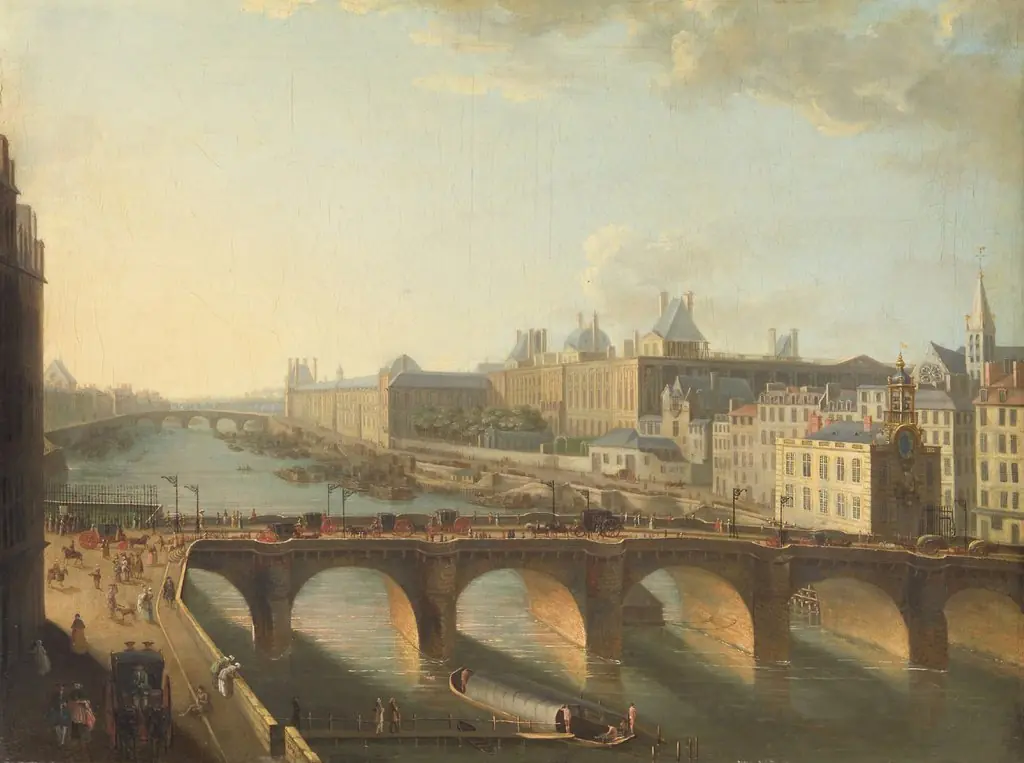 View of the Pont-Neuf in Paris from the Quai de la l’Horloge
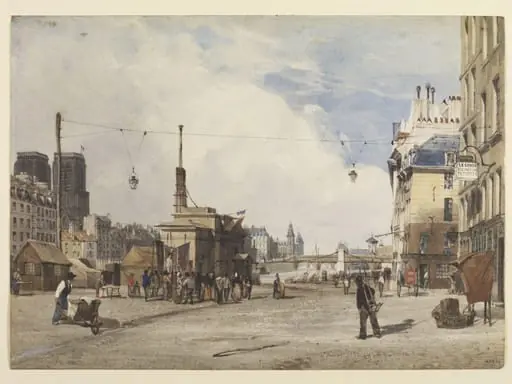 Quai de la Greve, Paris