Artwork
Draped Figure Seated
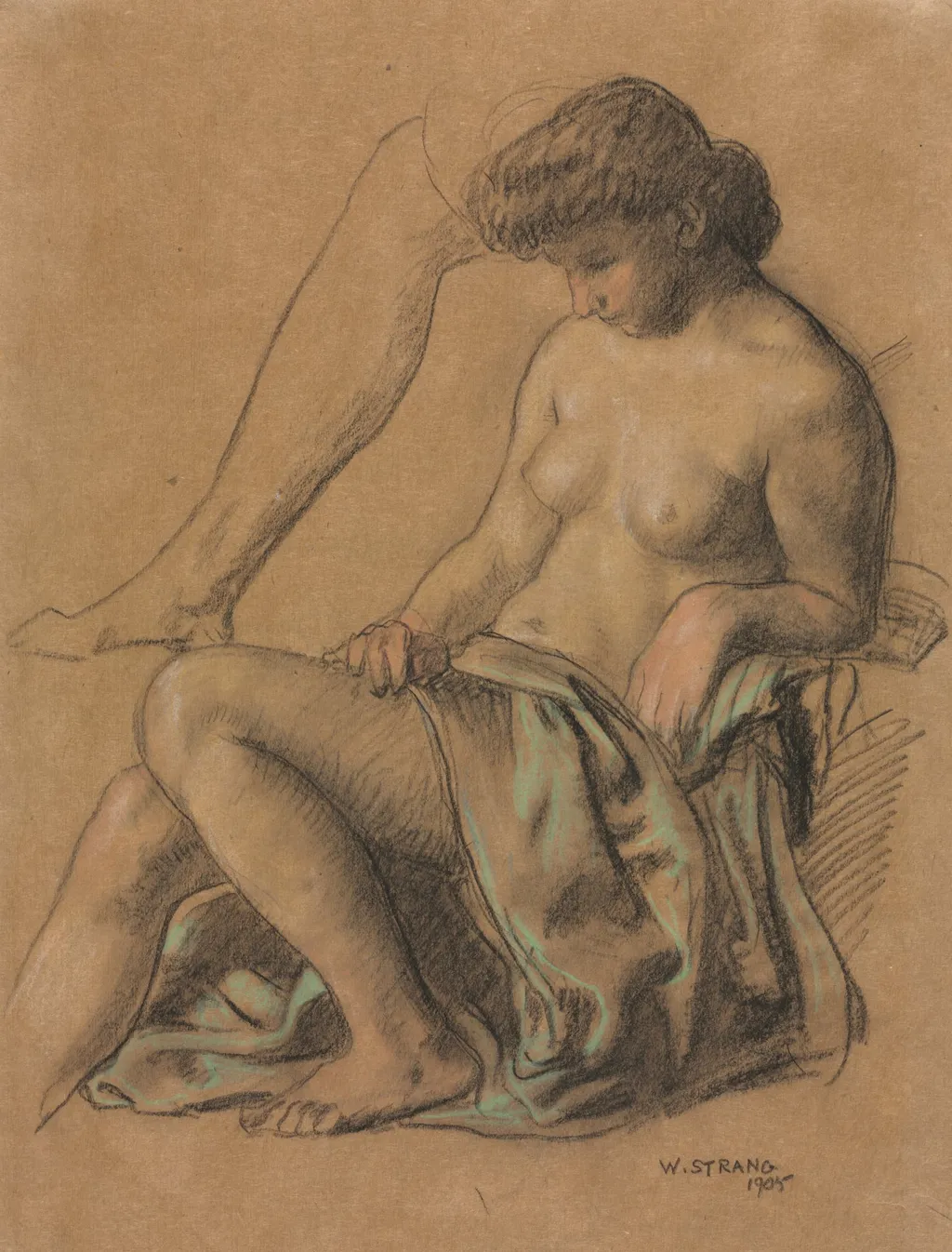
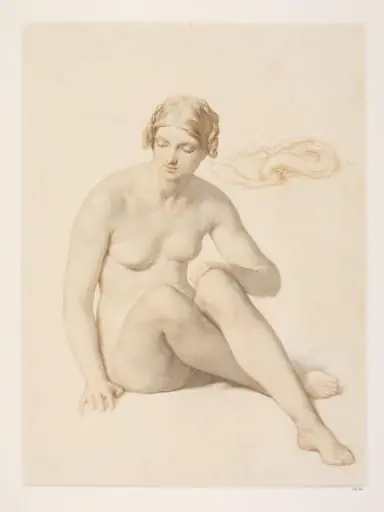
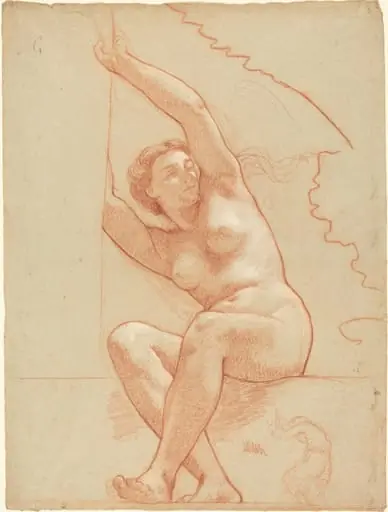
Draped Figure Seated is a drawing by William Strang. It dates from 1905 and is held in the collection of the Cleveland Museum of Art.
About this work
Overview
Created in 1905 by William Strang, this drawing captures a seated figure in a spontaneous, intimate pose.
Created in 1905 by William Strang, this drawing captures a seated figure in a spontaneous, intimate pose. Executed on warm-toned paper, the work reflects Strang’s interest in quiet, everyday moments. The medium is rendered with minimal strokes, emphasizing gesture over detail. It resides in The Cleveland Museum of Art’s collection, where it exemplifies the artist’s approach to figure studies as exercises in observation rather than finished compositions.
Subject & Meaning
The figure, seated with legs crossed and arms resting on the knees, conveys stillness and inward focus. The draped fabric suggests modesty or casual repose, while the turned head introduces a subtle sense of detachment. There is no narrative context, and the absence of facial detail invites contemplation rather than identification. The work prioritizes mood over identity, reflecting a broader early 20th-century interest in the expressive potential of the unadorned human form.
Technique & Style
Strang employed swift, fluid lines and soft tonal gradations to suggest volume without heavy modeling. Light green accents on the fabric hint at ambient light or atmospheric tone, adding subtle chromatic nuance. The warm brown paper serves as a mid-tone ground, allowing highlights and shadows to emerge through sparse, deliberate marks. The sketch’s looseness reflects a focus on immediacy, capturing the essence of the pose rather than its anatomical precision.
History & Provenance
The drawing entered The Cleveland Museum of Art’s collection as part of a broader acquisition of Strang’s graphic works. Its provenance traces back to the artist’s personal archive, suggesting it was retained as a study rather than a saleable piece. No record indicates public exhibition prior to its museum acquisition, reinforcing its role as an intimate, working drawing rather than a public-facing artwork.
Context
Created during a period when European artists increasingly turned to informal figure studies, this drawing aligns with trends favoring spontaneity over academic finish. Strang, known for etchings and illustrations, used such sketches to refine his understanding of form and posture. The work reflects influences from French and British drawing traditions, where quick studies were valued as tools for artistic development and personal expression.
Legacy
Though not widely reproduced, this drawing contributes to the understanding of Strang’s graphic practice and the role of sketching in early modern art. It stands as an example of how artists used informal studies to explore posture, drapery, and presence without the constraints of commission or display. Its preservation in a major museum underscores the value placed on such works as records of artistic process.
Own this work as a print
Artist & collection

Artist
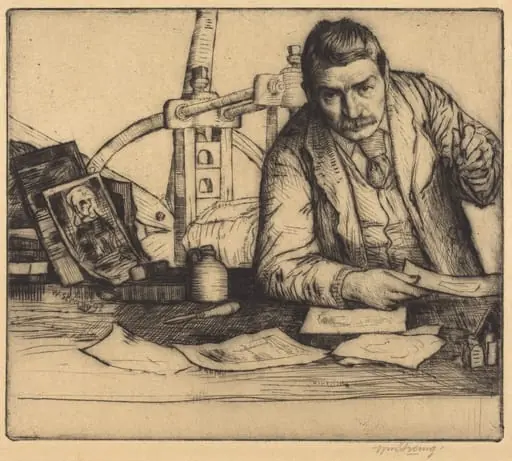
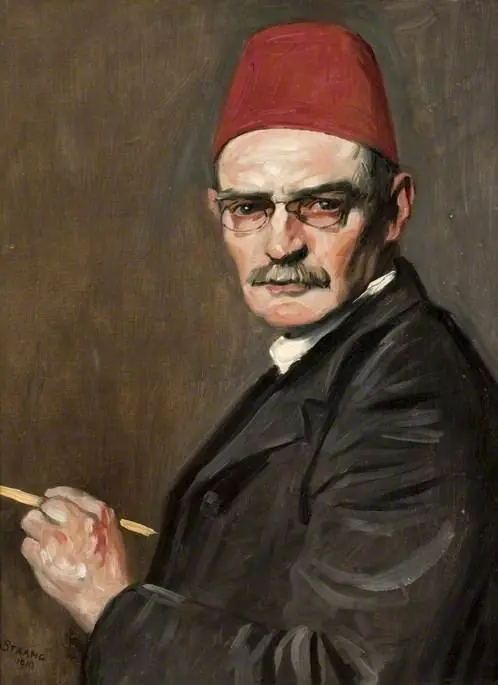
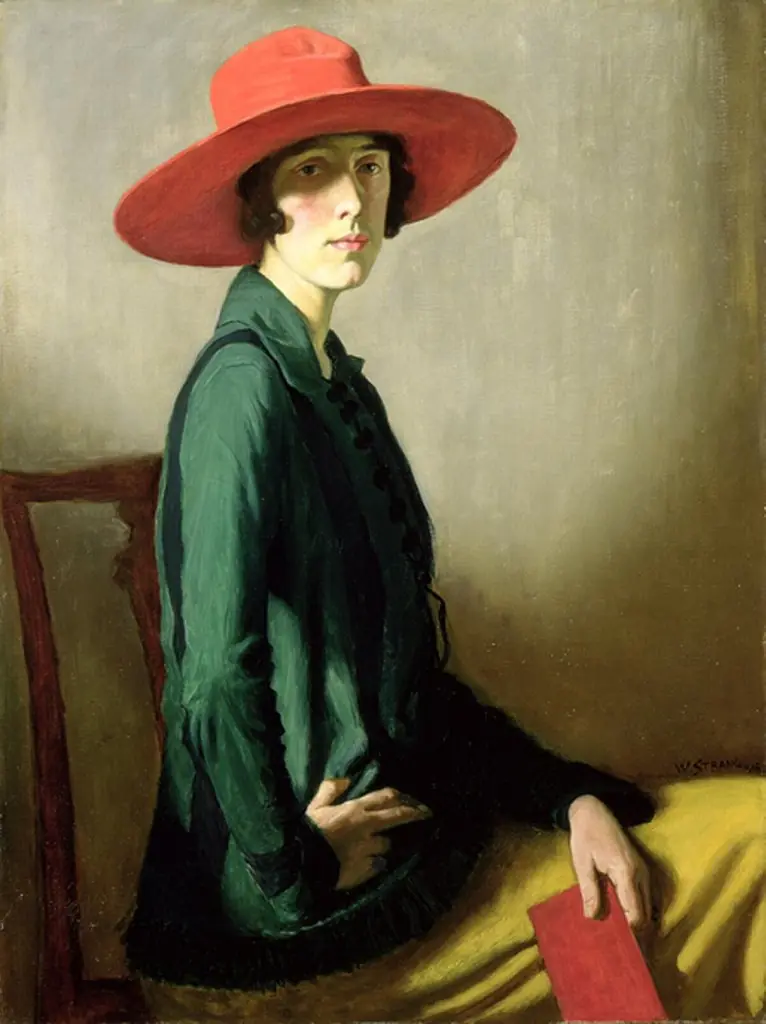
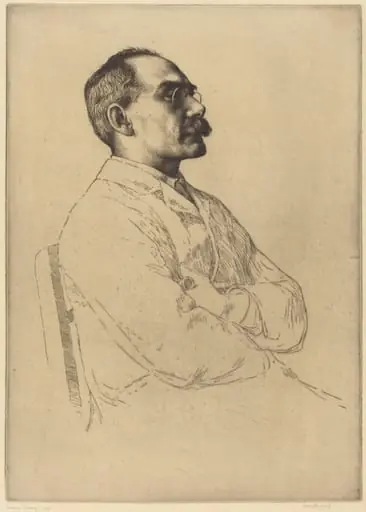
William Strang (13 February 1859 – 12 April 1921) was a Scottish painter and printmaker, notable for illustrating the works of Bunyan, Cervantes, Coleridge, Kipling, and others.

![Nude Female Figure [verso], by Italian 17th Century](https://artifactworldgallery.com/img/italian-17th-century--nude-female-figure-verso--6445c1e7fff03965-w320.webp)