Artwork
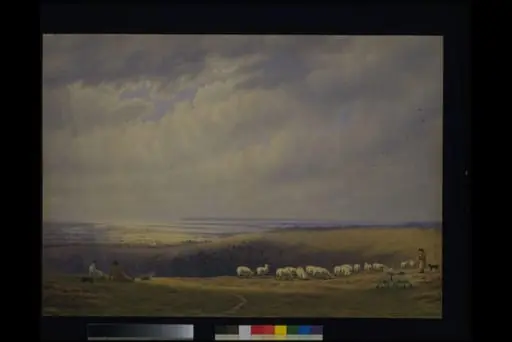
Shanklin, Isle of Wight. A shepherd and his flock
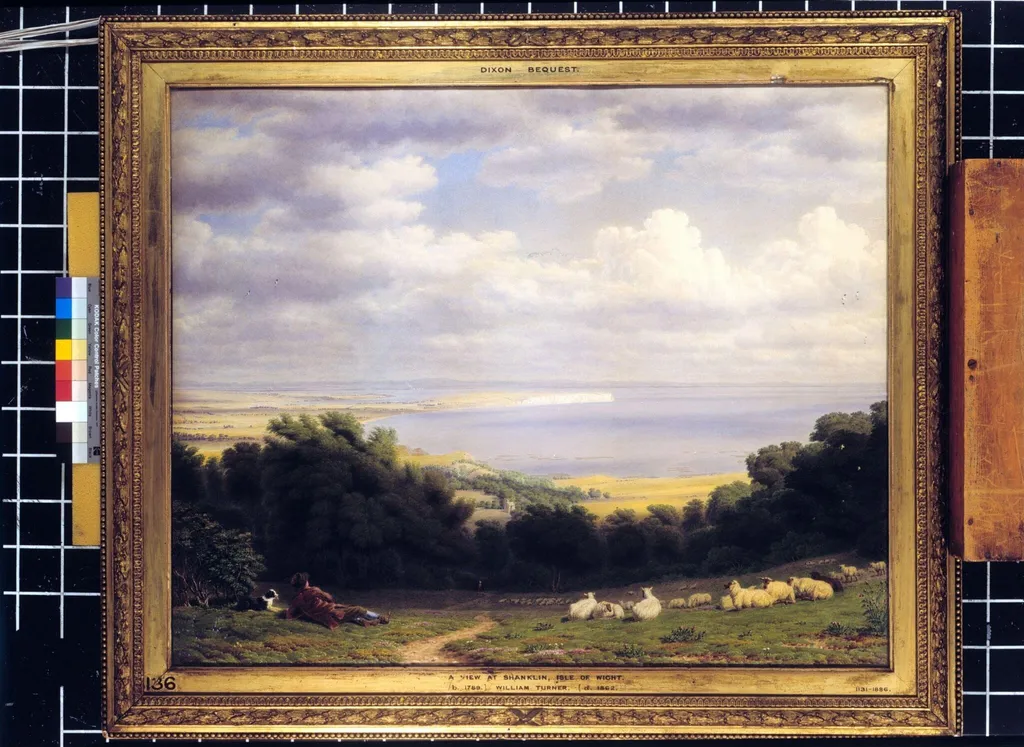
Shanklin, Isle of Wight. A shepherd and his flock is a watercolor work on paper by the Romanticist artist William Turner. It dates from 1815 and is held in the collection of the Victoria and Albert Museum. Painted in 1815, this watercolour by J.
About this work
Overview
The scene presents a solitary shepherd seated among his flock on a gentle slope, framed by rolling terrain and a hazy horizon.
Painted in 1815, this watercolour by J.M.W. Turner captures a quiet moment on the Isle of Wight near Shanklin. The scene presents a solitary shepherd seated among his flock on a gentle slope, framed by rolling terrain and a hazy horizon. Executed in transparent washes, the work reflects Turner’s early mastery of atmospheric light and natural observation, grounded in direct study of the English countryside.
Subject & Meaning
The shepherd and his sheep occupy the foreground, their stillness contrasting with the shifting sky above. No narrative action is depicted—only presence and endurance. The figure, small yet deliberate, suggests harmony with the land rather than dominion over it. The composition invites contemplation of rural life, not as idealized pastoral fantasy, but as quiet, unremarkable continuity.
Technique & Style
Turner employed thin layers of watercolour to build subtle gradations of tone and light. Clouds are rendered with soft washes, allowing the paper’s white to suggest brightness breaking through. The landscape recedes with minimal detail, relying on hue and value to convey depth. His brushwork is restrained, avoiding dramatic flourish in favor of atmospheric cohesion and tonal nuance.
History & Provenance
Created during Turner’s frequent travels across southern England, this work was likely made on-site, as part of his practice of sketching from nature. It remained in private hands until entering a public collection in the 20th century. The artist’s signature, faint but legible, confirms authorship and aligns with his habit of marking early works for personal reference.
Context
In 1815, Turner was refining his landscape style amid rising interest in Romantic sensibilities. While contemporaries emphasized emotion or drama, Turner focused on subtle interactions between light, land, and human presence. This piece reflects a broader cultural shift toward valuing quiet, observed moments in nature, distinct from grand historical or mythological themes.
Legacy
Though less celebrated than his later seascapes, this watercolour exemplifies Turner’s foundational approach: observing the ordinary with precision and reverence. It influenced later British watercolourists who sought authenticity in landscape, prioritizing mood over spectacle. Its quietude endures as a testament to his belief in nature’s inherent dignity.
Artist & collection

Artist
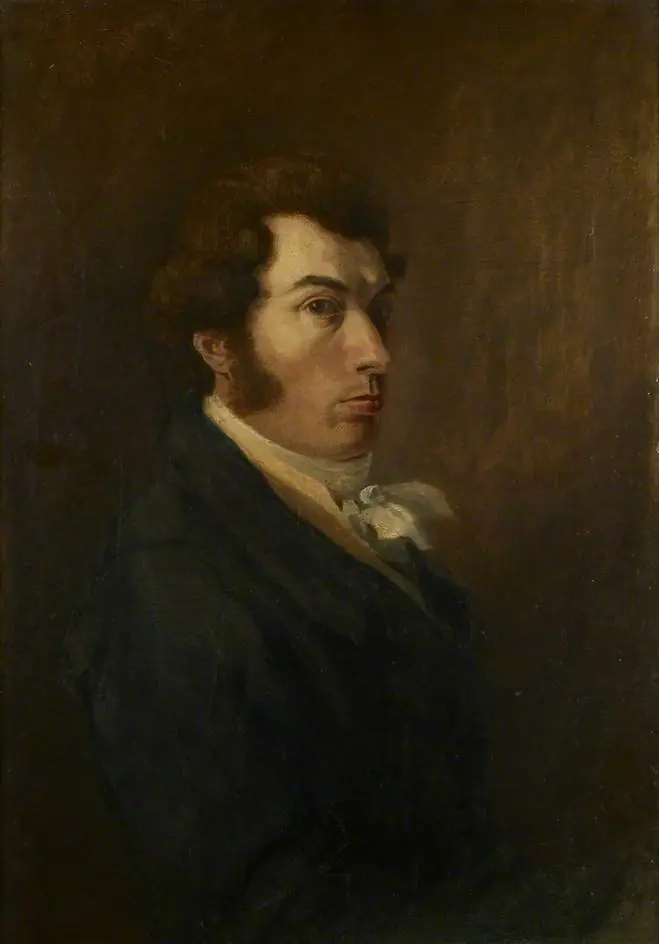
William Turner was a British painter who specialised in watercolour landscapes. He is often known as William Turner of Oxford or just Turner of Oxford to distinguish him from his contemporary, J. M. W. Turner. Many of…

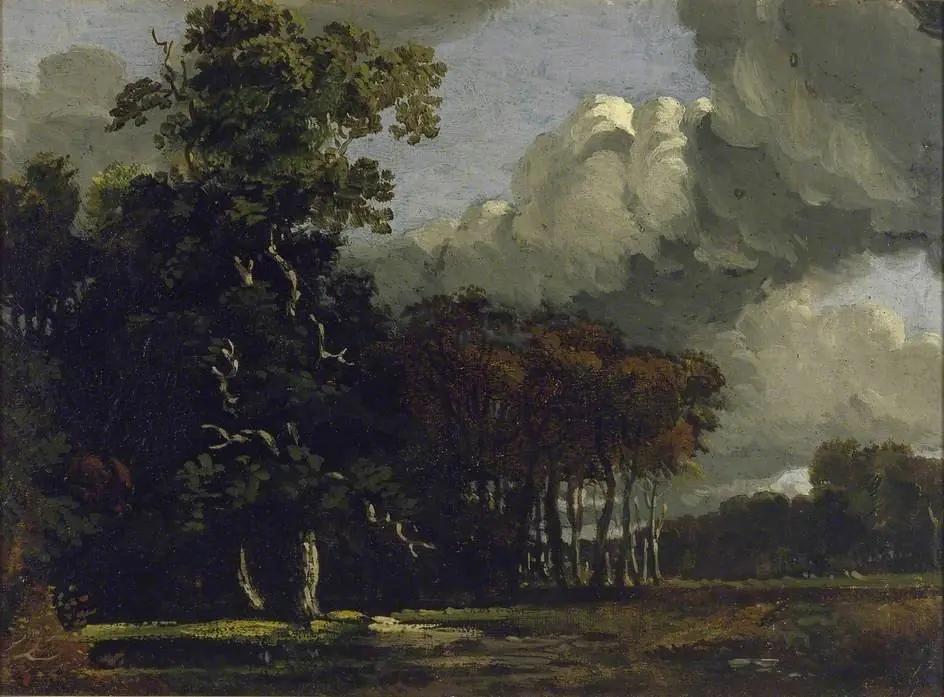
 Kingly Bottom, Sussex
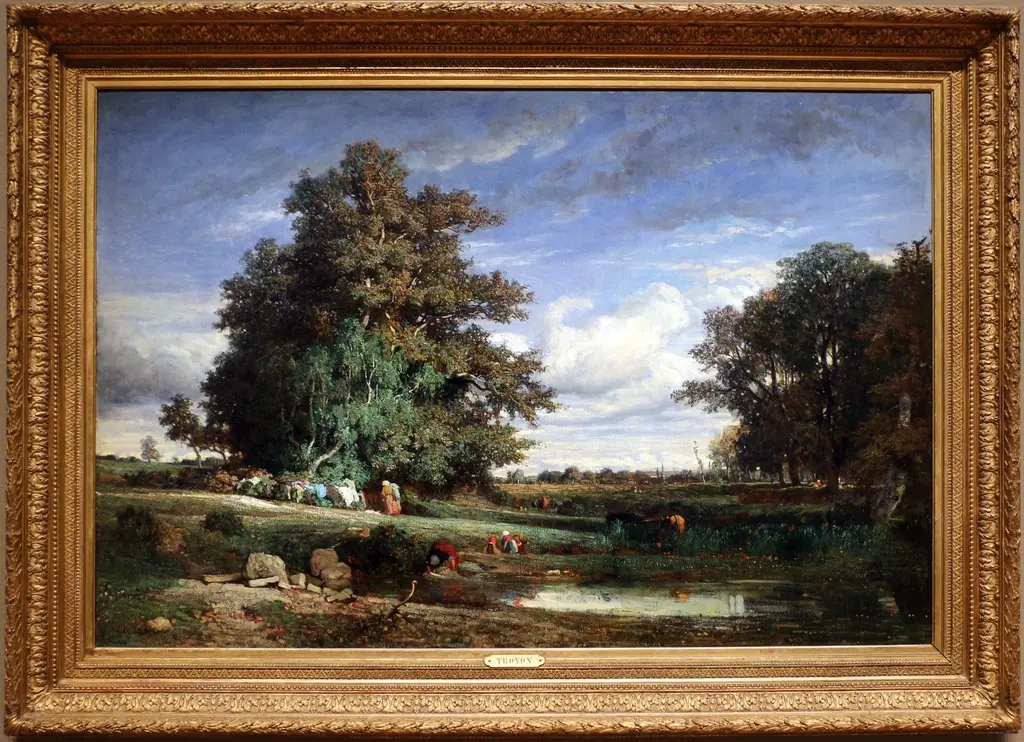 The Swamp
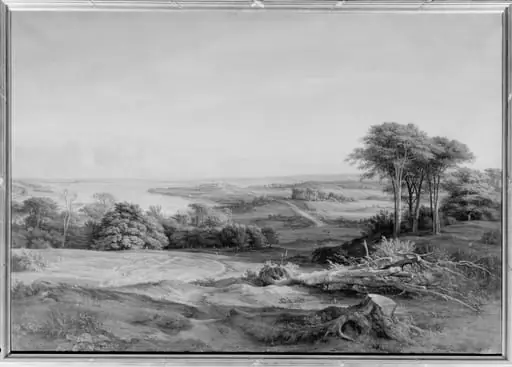 Udsigt over Skanderborg fra Edelsborgmark
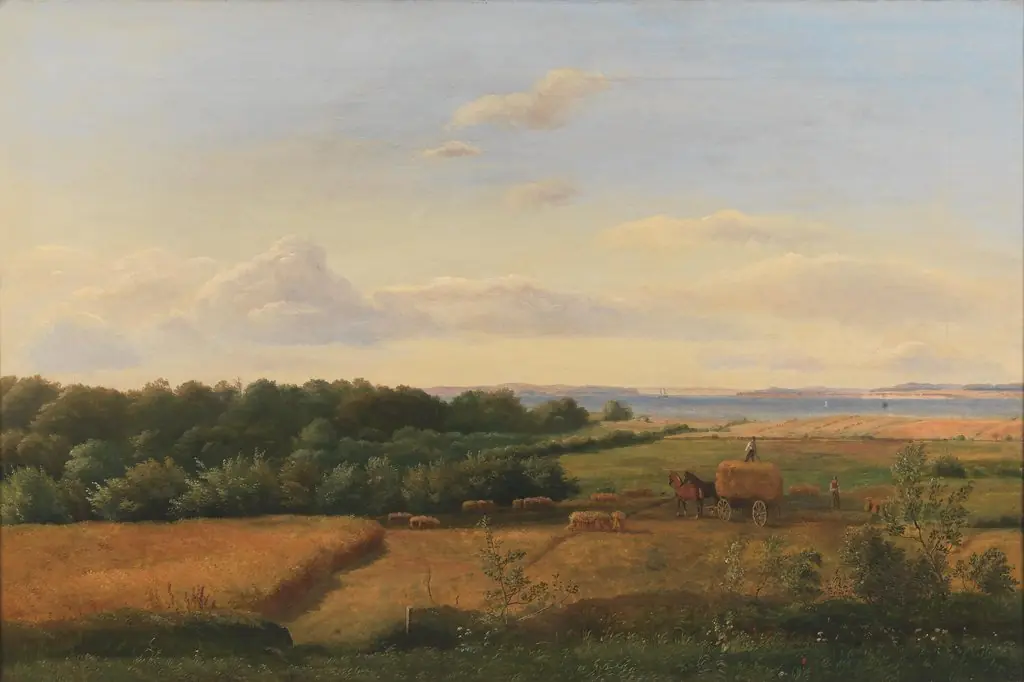 A Funen Landscape at Harvest Time with Wedellsborghoved in the Background
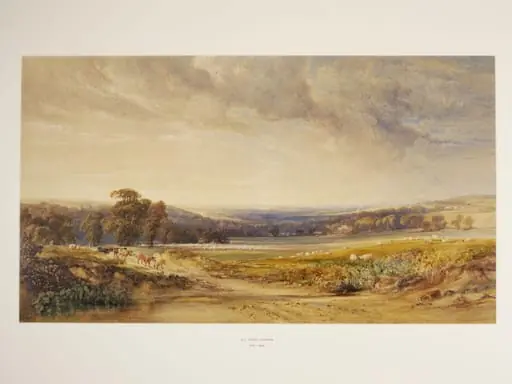 Vale of Irthing, Cumberland
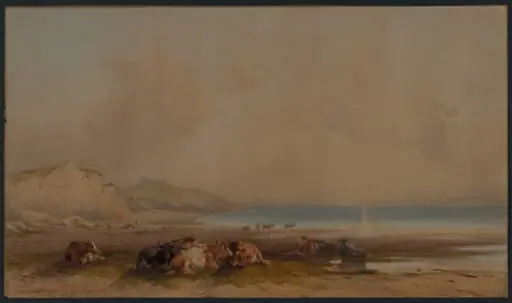 Landscape
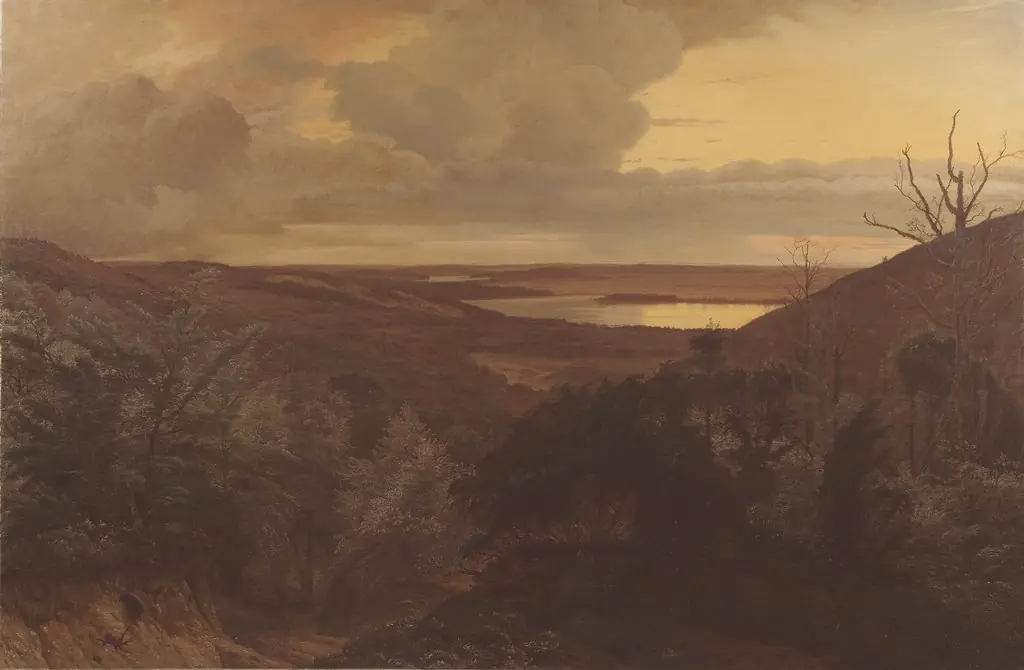 Late Evening near Himmelbjerget, Jutland
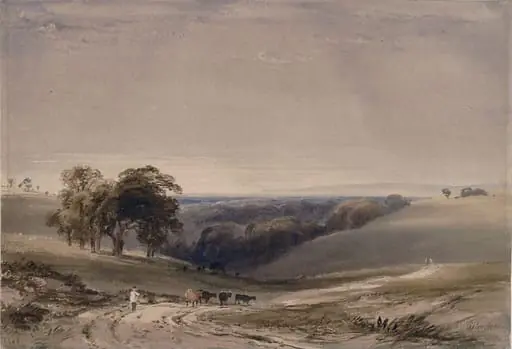 Ecclesbourne Glen
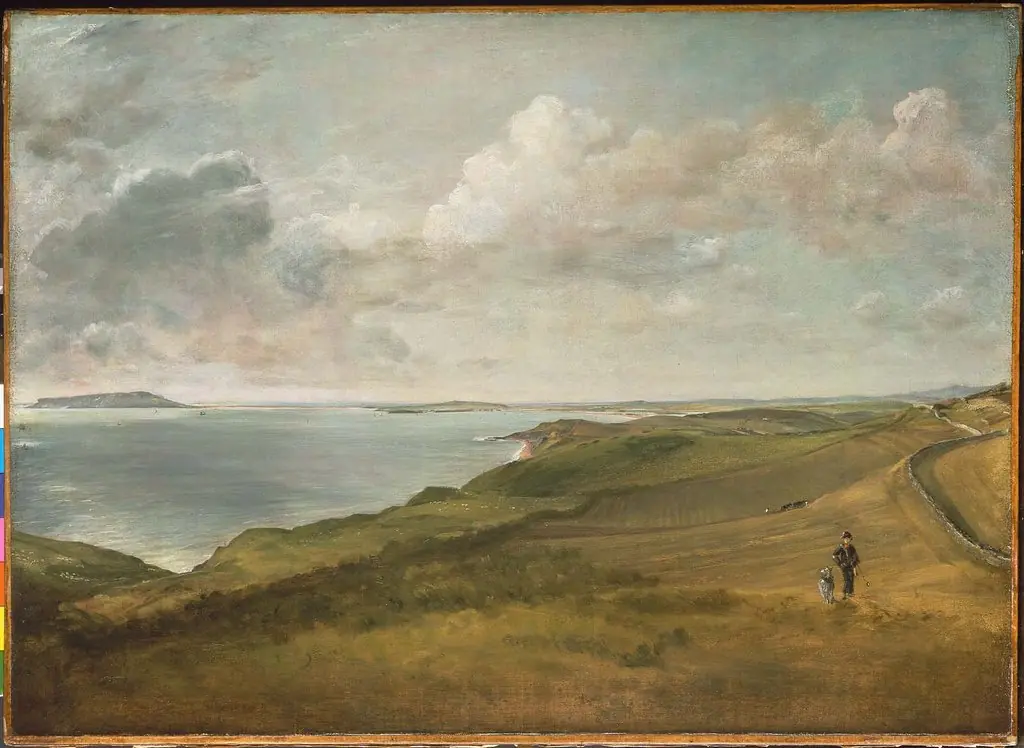 Weymouth Bay from the Downs above Osmington Mills
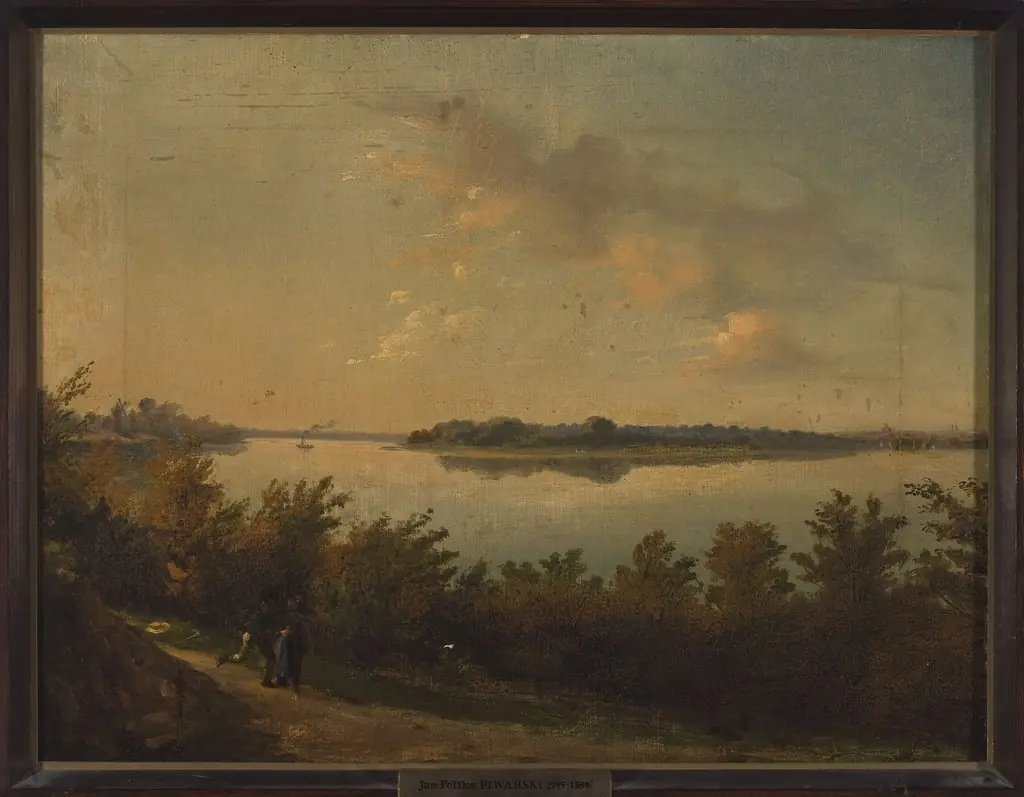 Saska Kępa – Landscape at sunset
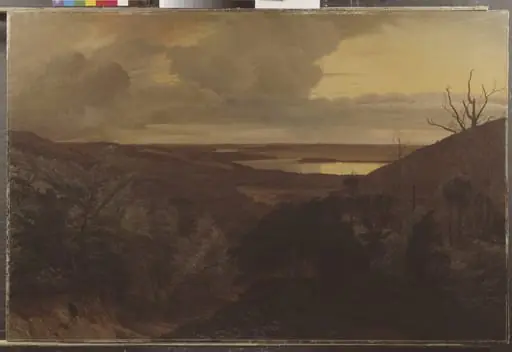 Late Evening near Himmelbjerget, Jutland
 The Pond (La Mare)