Artwork
The Waterfall and Town of Tivoli
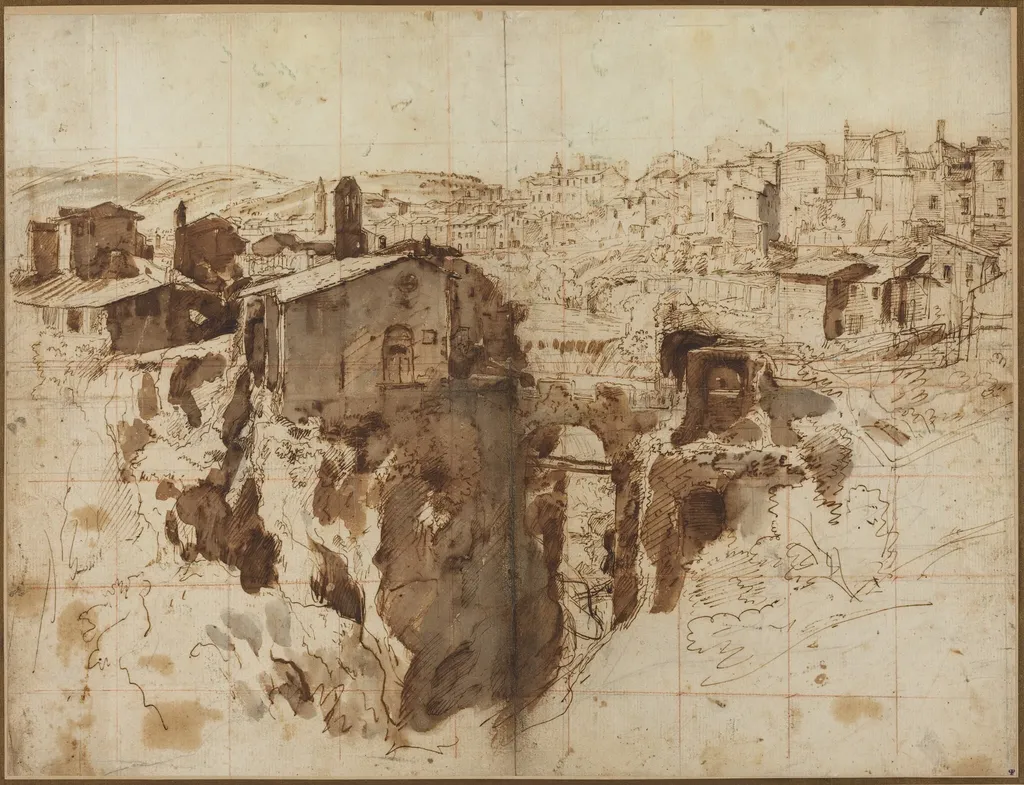
The Waterfall and Town of Tivoli is an ink drawing by the Baroque artist Gaspar van Wittel. It dates from 1694 and is held in the collection of the National Gallery of Art.
About this work
Overview
The paper, laid and textured, bears faint squared lines in red chalk, indicating preparation for transfer or enlargement.
Created in 1694, this drawing by Caspar van Wittel captures the waterfall and town of Tivoli using pen and brown ink with washes of brown and gray over a black chalk underdrawing. The paper, laid and textured, bears faint squared lines in red chalk, indicating preparation for transfer or enlargement. Wittel, a Dutch artist based in Rome, employed precise draftsmanship to record Italian scenery with topographical accuracy, laying groundwork for the veduta tradition.
Subject & Meaning
The scene depicts Tivoli’s natural cascade and its clustered buildings nestled in the hills, framed by trees and rocky outcrops. No human figures animate the view; instead, the focus lies in the relationship between water, stone, and architecture. The composition conveys a quiet reverence for the landscape’s enduring structure, reflecting an emerging interest in documenting place as an object of observation rather than narrative.
Technique & Style
Wittel layered pen lines with graded washes to model form and suggest atmospheric depth. Black chalk established the foundational contours, while brown ink defined architectural details and water flow. Gray washes softened distant hills and shadows, creating a tonal hierarchy. The use of squared grids reveals a methodical approach, likely intended for replication or architectural planning, underscoring his role as both artist and documentarian.
History & Provenance
Wittel settled in Rome around 1675 and spent over five decades producing topographical views for patrons across Europe. This drawing, dated 1694, belongs to a series of Italian landscapes he compiled during his tenure in the Papal States. While its early ownership is unrecorded, it entered institutional collections in the 19th century, where its technical precision secured its place among key examples of early veduta.
Context
In late 17th-century Rome, there was growing demand among travelers and collectors for accurate depictions of ancient and contemporary sites. Wittel’s work responded to this trend, bridging cartographic precision and artistic composition. His drawings influenced later vedutisti like Canaletto, helping shift landscape representation from idealized fantasy toward empirical observation rooted in place.
Legacy
Wittel’s systematic approach to recording Italian towns and waterways established a visual language for topographical drawing that endured into the 18th century. His use of wash and ink to convey spatial depth became a model for subsequent artists. Though less celebrated than his successors, his disciplined technique preserved a documentary record of Rome’s surroundings at a time of increasing cultural interest in landscape as subject.
Artist & collection
Artist
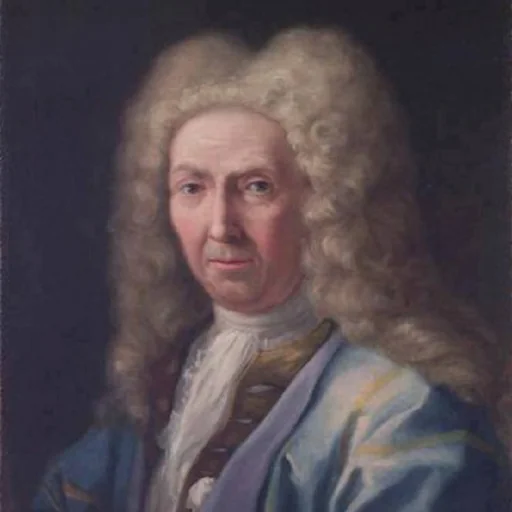
Caspar van Wittel or Gaspar van Wittel (Dutch: ; born Jasper Adriaensz van Wittel; 1652 or 1653 – 13 September 1736), known in Italian as Gaspare Vanvitelli (IPA: ) or Gasparo degli Occhiali (IPA: ), was a Dutch painter…

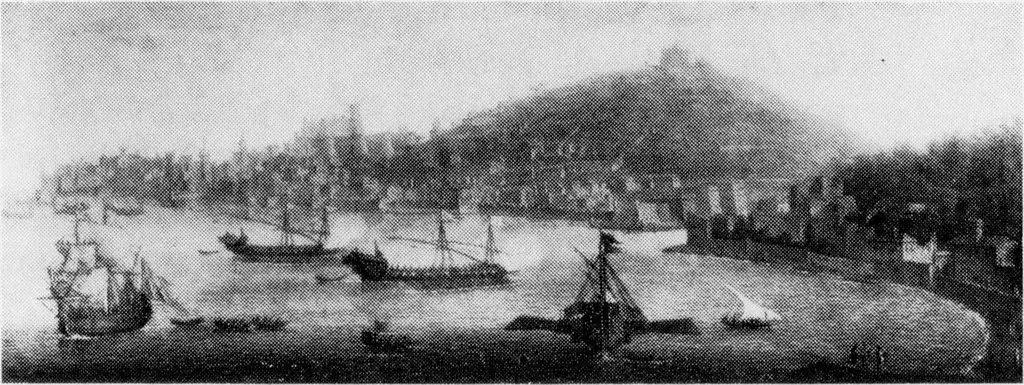
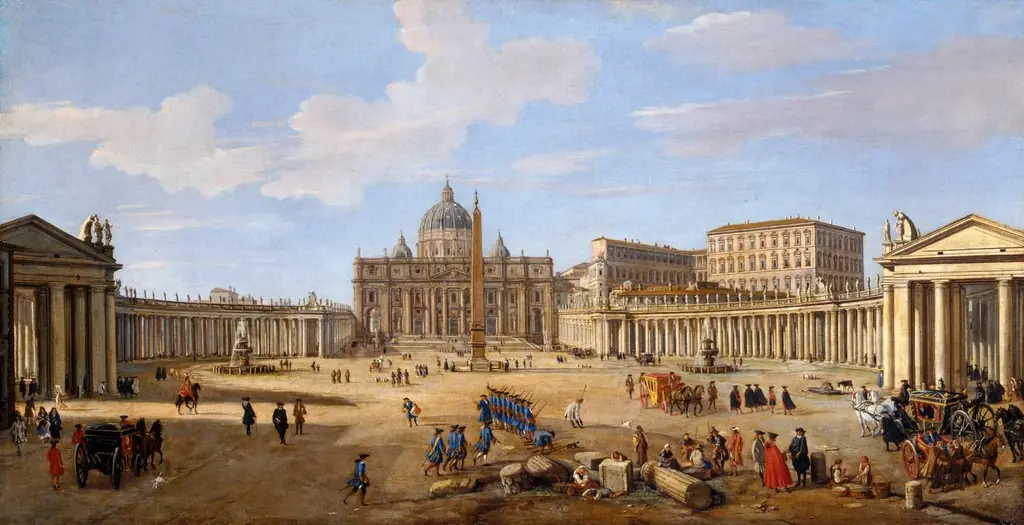
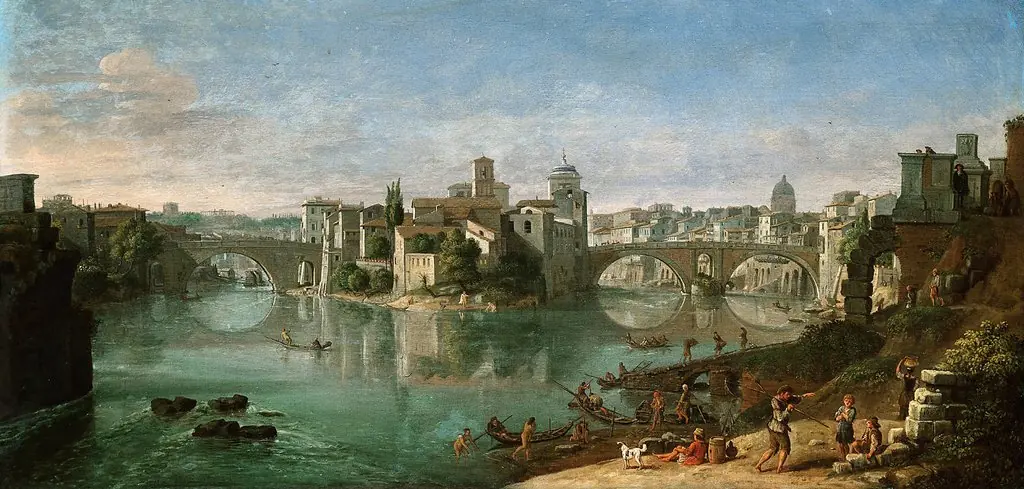
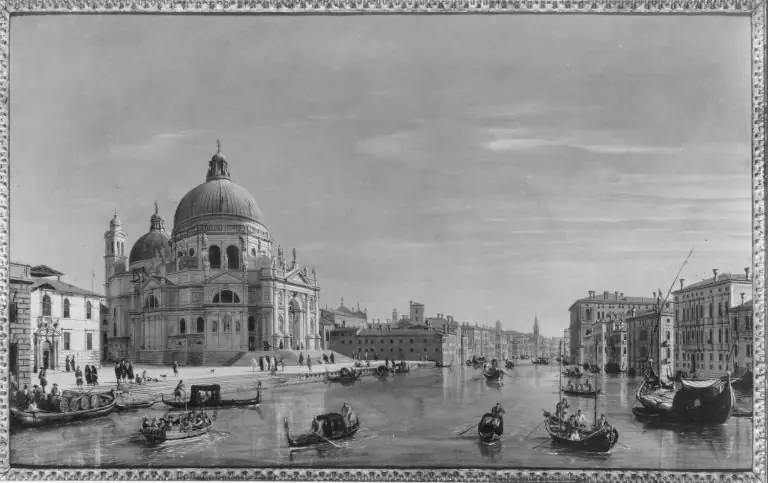
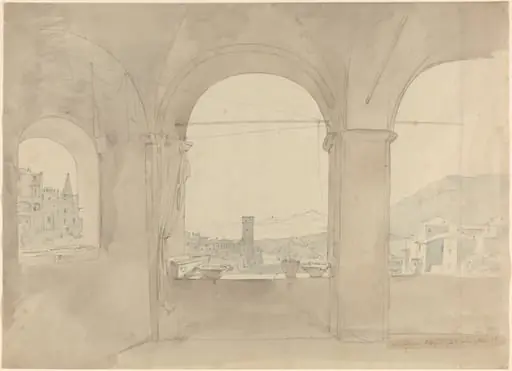 Panorama of Tivoli from a Loggia
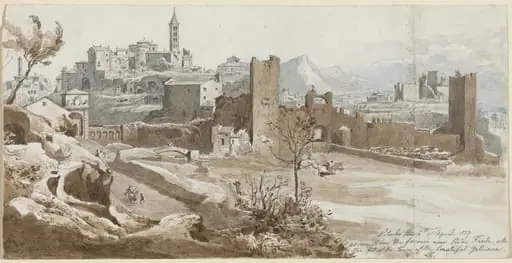 Viterbo
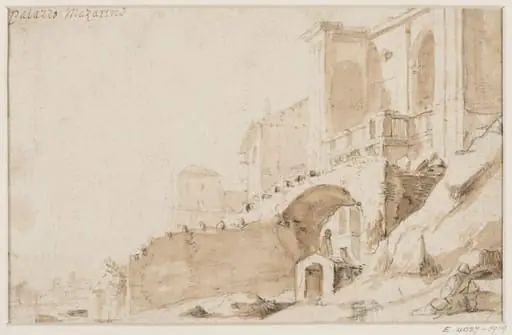 Palazzo Mazzarini, Rome
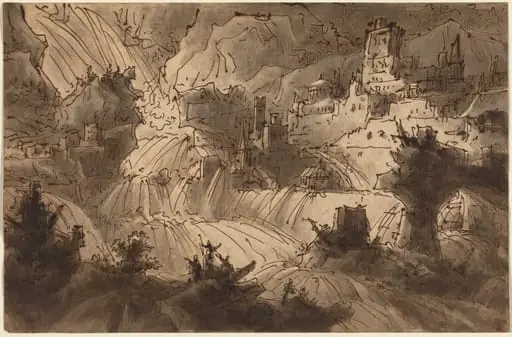 Mountain Torrents Flooding a City
![The Fantastic Rocks and Castle at Bomarzo [recto], by Bartholomeus Breenbergh](https://artifactworldgallery.com/img/bartholomeus-breenbergh--the-fantastic-rocks-and-castle-at-bomarzo-recto--e05f03da6f1f9c0a-w320.webp) The Fantastic Rocks and Castle at Bomarzo [recto]
The Fantastic Rocks and Castle at Bomarzo [recto]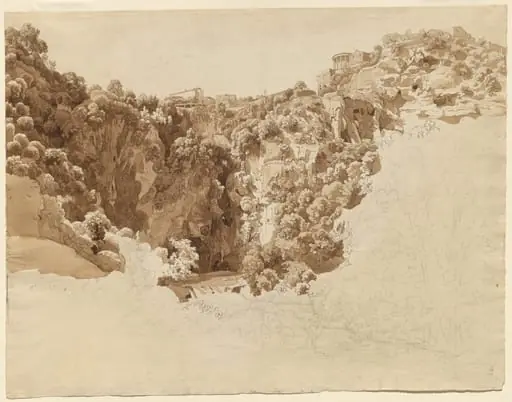 Tivoli and the Temple of the Sibyl above the Aniene Gorge
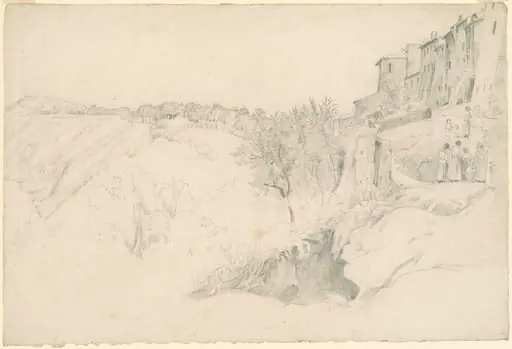 Hillside with Houses and Figures
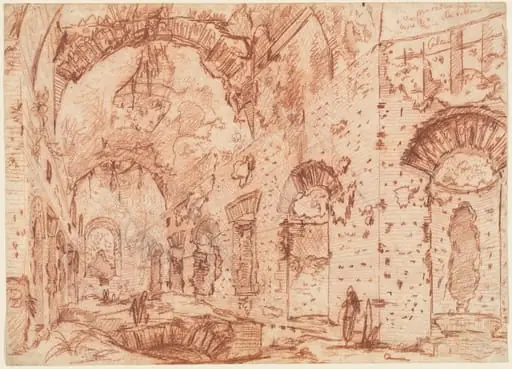 The "Canopus" of the Villa Adriana at Tivoli
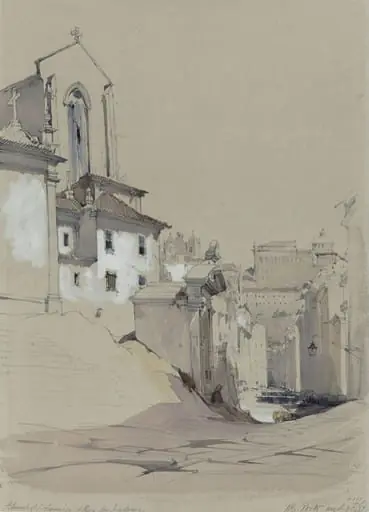 Church of San Francisco and Rua dos Ingleses, Oporto
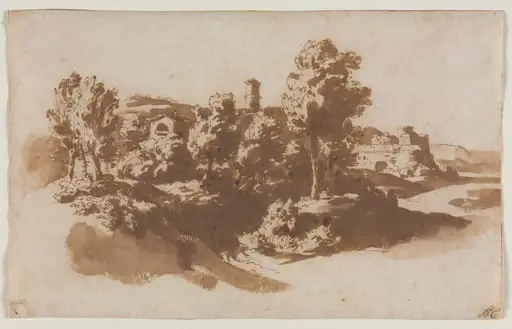 Landscape with Fortification Between Marino and Frascati
![Ruins of a Fortified Tower among Wooded Hills [recto], by Friedrich Salathé](https://artifactworldgallery.com/img/friedrich-salathe--ruins-of-a-fortified-tower-among-wooded-hills-recto--b1cfbca521a1183a-w320.webp) Ruins of a Fortified Tower among Wooded Hills [recto]
Ruins of a Fortified Tower among Wooded Hills [recto]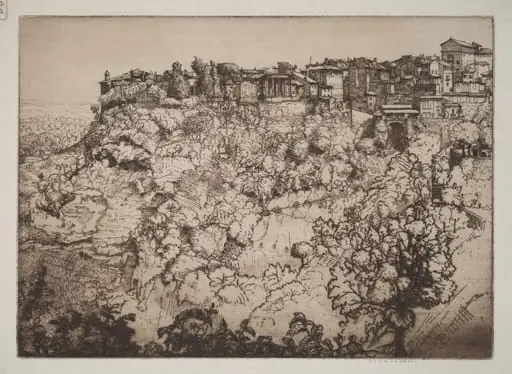 Tivoli