Artwork
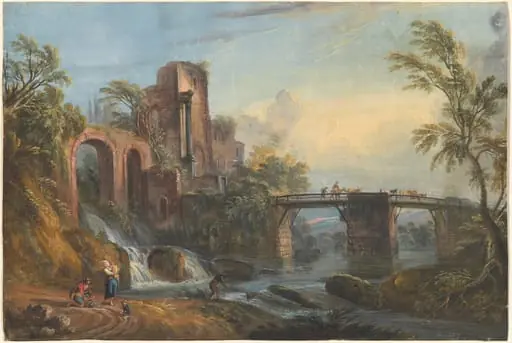
Architectural Fantasy of Antique Ruins with a Watermill
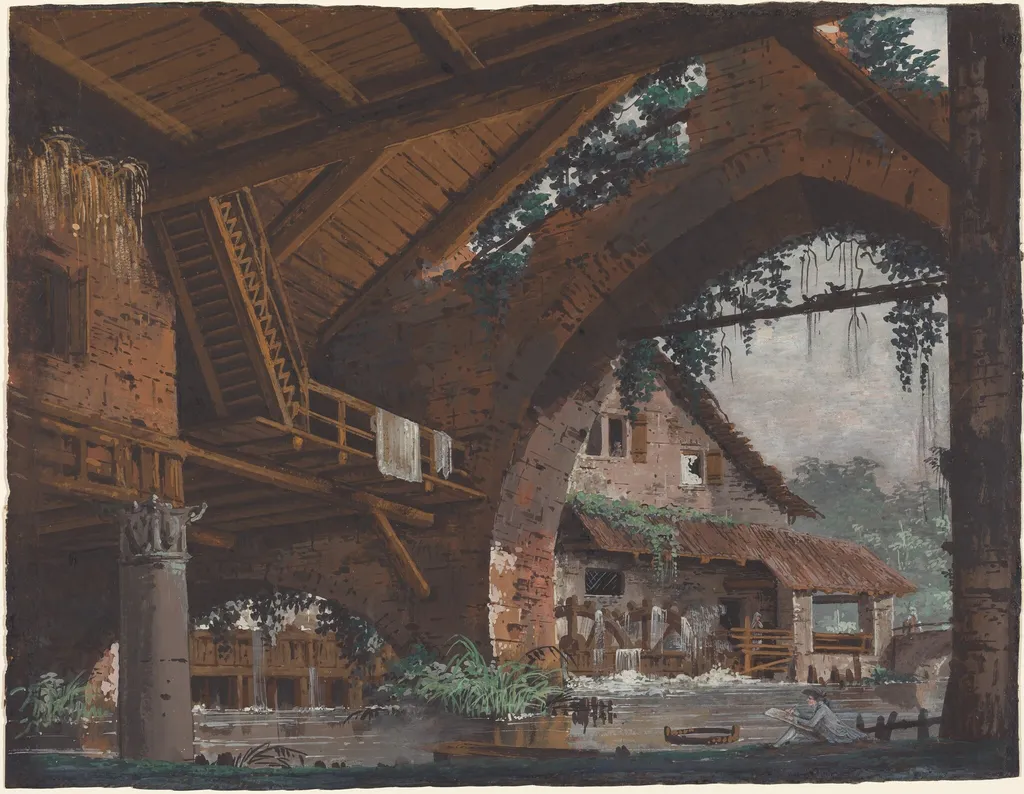
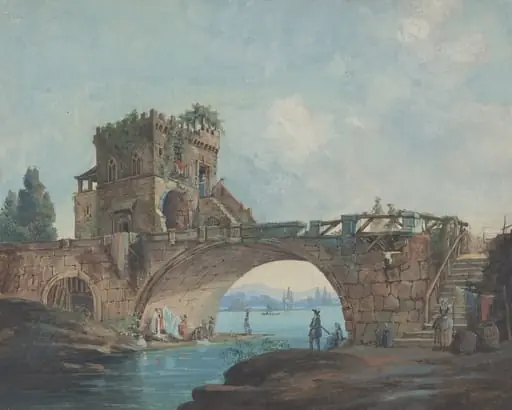
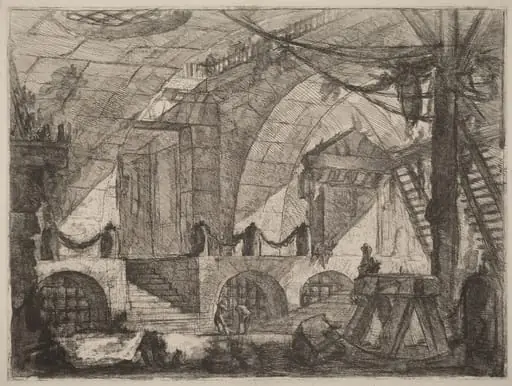
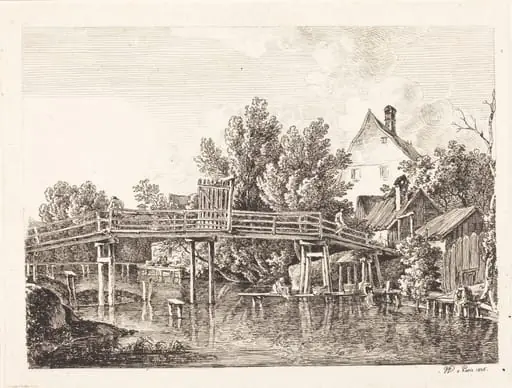
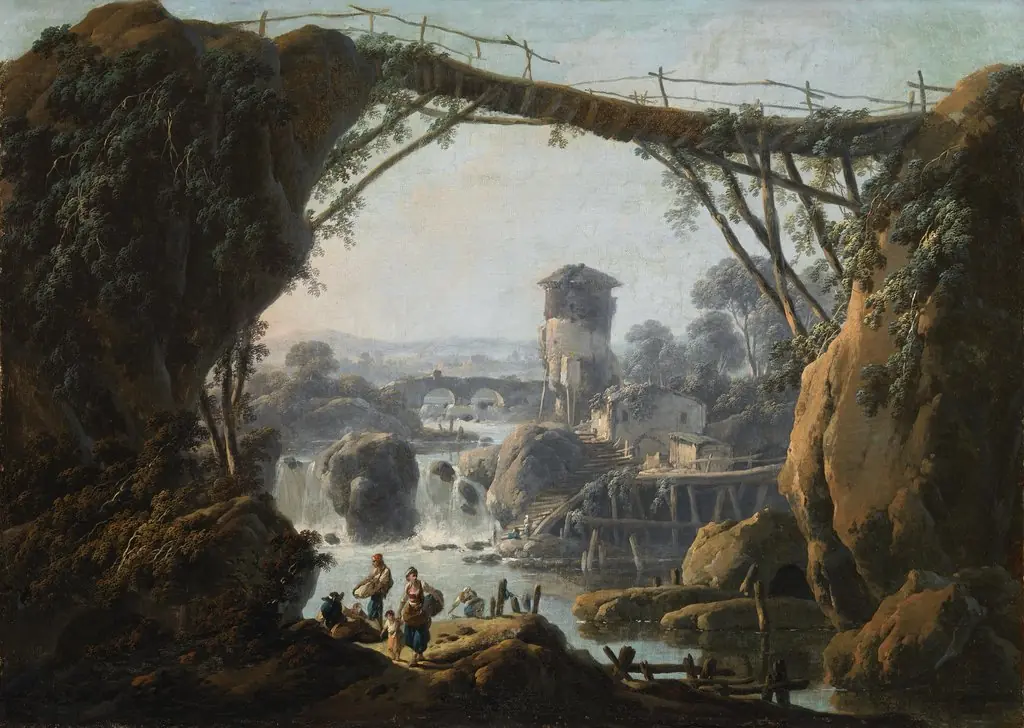
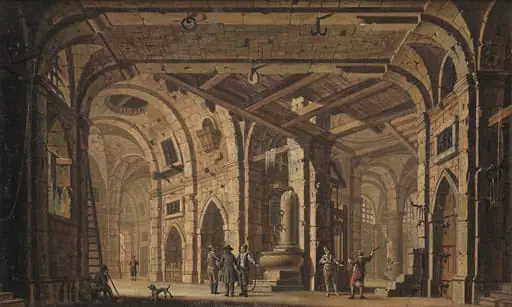
Architectural Fantasy of Antique Ruins with a Watermill is a gouache drawing by the Baroque artist Caspar Wolf. It dates from 1764 and is held in the collection of the National Gallery of Art. Created circa 1764, this gouache drawing on laid paper presents an imagined ruin paired with a modest watermill.
About this work
Overview
Muted earth tones dominate, punctuated by touches of green where vegetation clings to the decaying structures, giving the scene a quiet, melancholic atmosphere.
Created circa 1764, this gouache drawing on laid paper presents an imagined ruin paired with a modest watermill. The composition merges weathered stone arches and a sagging timber roof with a partially overtaken mill, its wheel idle amid encroaching vines. Muted earth tones dominate, punctuated by touches of green where vegetation clings to the decaying structures, giving the scene a quiet, melancholic atmosphere.
Subject & Meaning
The work juxtaposes classical architectural fragments—crumbling arches and columnar forms—with a rustic mill, suggesting a dialogue between antiquity and everyday labor. By rendering the ruin as a dreamlike, almost fictional space, the artist invites contemplation of the passage of time and the fragile endurance of human constructions amid nature’s reclaiming force.
Technique & Style
Executed in gouache, the artist employs opaque, soft pigments that flatten the surface and mute contrasts, enhancing the ethereal quality of the scene. Rapid, sketch‑like brushwork conveys the texture of decay without meticulous detail, allowing the viewer’s imagination to fill in the missing specifics. The laid paper’s subtle texture contributes to the overall sense of antiquity.
History & Provenance
The drawing is attributed to Caspar Wolf, a Swiss painter best known for his dramatic Alpine vistas. After an early career as a decorative painter in southern Germany, Wolf turned to landscape subjects, drawing inspiration from contemporary literary currents. The piece entered the museum’s collection through a 19th‑century acquisition of Wolf’s drawings, though its exact ownership trail prior to that remains undocumented.
Context
Produced during the height of the Sturm und Drang movement, the image reflects the era’s fascination with emotional intensity and the sublime. Literary influences, particularly the Alpine poetry of Albrecht von Haller, encouraged artists to explore rugged, untamed settings. Wolf’s integration of classical ruin motifs aligns with the period’s broader interest in antiquity as a symbol of transience.
Artist & collection

Artist
Caspar Wolf (Muri, Aargau, 3 May 1735 – Heidelberg, 6 October 1783) was a Swiss painter, known mostly for his dramatic paintings of the Alps.