Artwork
Landscape with a Large Lake at Center
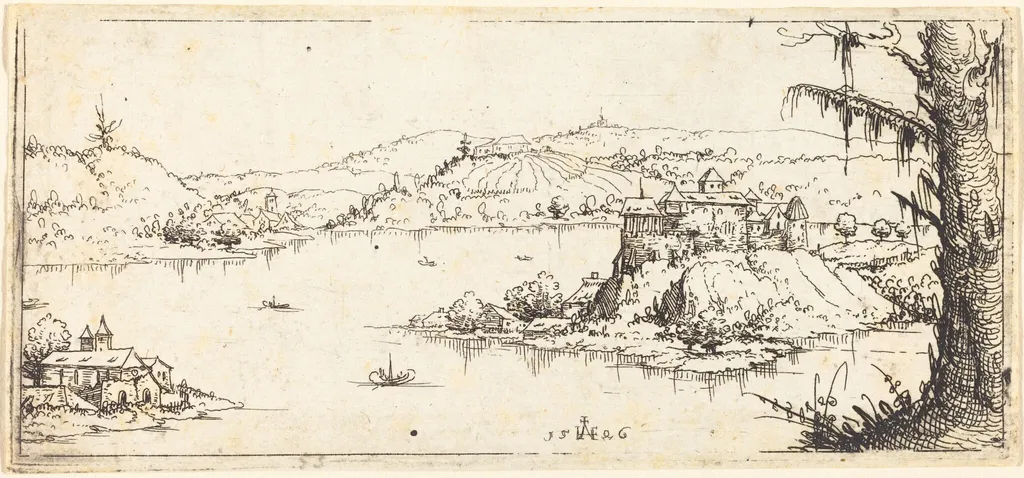
Landscape with a Large Lake at Center is an ink print by the Renaissance artist Augustin Hirschvogel. It dates from 1546 and is held in the collection of the National Gallery of Art.
About this work
Overview
Created in 1546 by the German artist Augustin Hirschvogel, this etching is one of thirty-five landscape prints produced between 1545 and 1549.
Created in 1546 by the German artist Augustin Hirschvogel, this etching is one of thirty-five landscape prints produced between 1545 and 1549. It reflects his engagement with the natural world through precise, linear draftsmanship. Unlike grand historical or religious scenes common at the time, this work focuses on quiet, observed terrain, marking a shift toward secular landscape as a subject in its own right.
Subject & Meaning
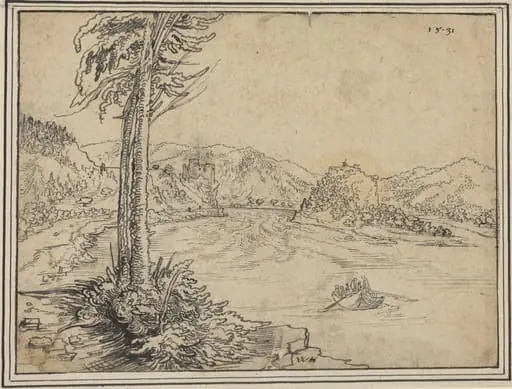
The composition centers on a broad, still lake, flanked by low hills, scattered dwellings, and clusters of trees. A single large tree on the right extends beyond the frame, suggesting an uncontained natural world. Tiny boats on the water imply human presence without narrative, emphasizing stillness and spatial depth. The scene conveys contemplative observation rather than symbolic meaning, aligning with early modern interest in direct natural representation.
Technique & Style
Hirschvogel used etching to create fine, incised lines that mimic the spontaneity of a sketch. The surface texture arises from the acid-bitten plate, producing a grainy, tactile quality. Lines are economical and unembellished, avoiding heavy shading or dramatic contrast. This restrained approach reflects his background in mathematics and cartography, where clarity and measured observation took precedence over expressive flourish.
History & Provenance
Hirschvogel produced this print during a brief but significant period of landscape etching, following his work as a draftsman and instrument maker. The print circulated among collectors and scholars in southern Germany and Austria, where his technical precision was valued. No early ownership records are widely documented, but its inclusion in later print collections confirms its recognition within artistic circles of the late 16th century.
Context
This work emerged alongside other artists in the Danube School, who explored the natural landscapes of Bavaria and Austria with fresh attention to topography and atmosphere. Unlike Italian Renaissance landscapes, which often idealized nature, Hirschvogel’s etchings captured local terrain with observational accuracy. His prints contributed to a growing interest in landscape as a subject independent of religious or mythological context.
Legacy
Hirschvogel’s etchings, including this one, influenced later Northern European printmakers who sought to depict nature with precision rather than ornament. Though not widely known today, his technical discipline and quiet compositions helped lay groundwork for the development of topographical printmaking in the 17th century. His work remains a quiet example of how scientific observation shaped artistic practice in the Renaissance.
Artist & collection
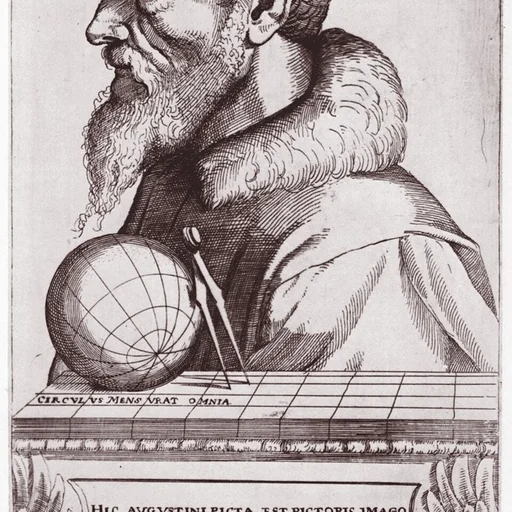
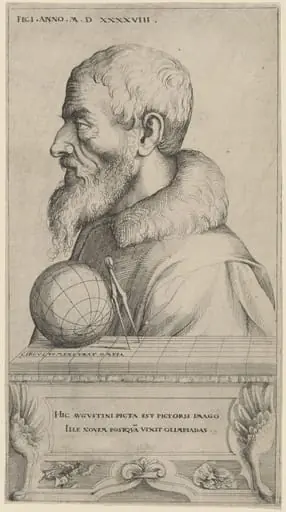
Artist
Augustin Hirschvogel (1503 – February 1553) was a German artist, mathematician, and cartographer known primarily for his etchings.

![Landscape with Sail Boats [bottom plate], by Augustin Hirschvogel](https://artifactworldgallery.com/img/augustin-hirschvogel--landscape-with-sail-boats-bottom-plate--80a2ff7dde9c982b-w320.webp) Landscape with Sail Boats [bottom plate]
Landscape with Sail Boats [bottom plate]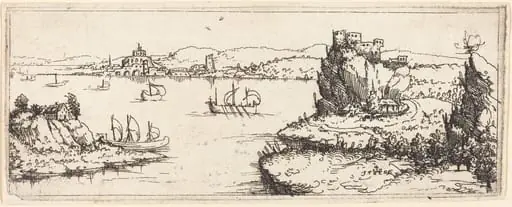 Landscape with Sail Boats
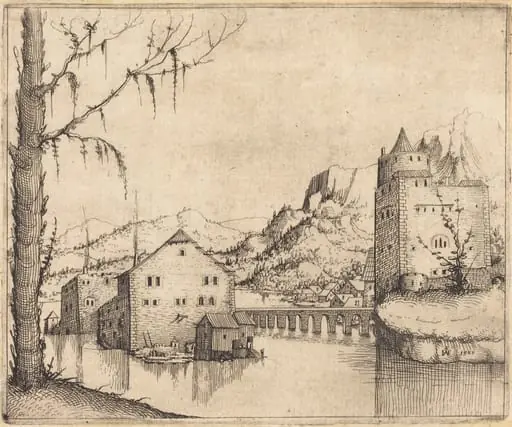 River Landscape with Two Buildings
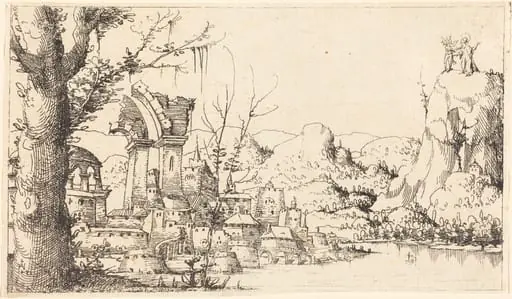 River Landscape with the Temptation of Christ
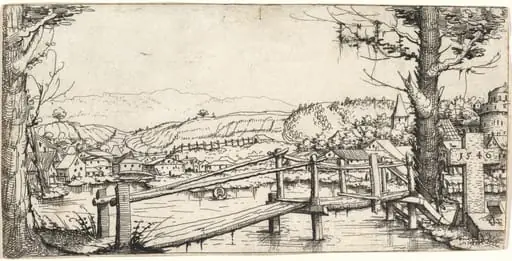 River Landscape with a Footbridge
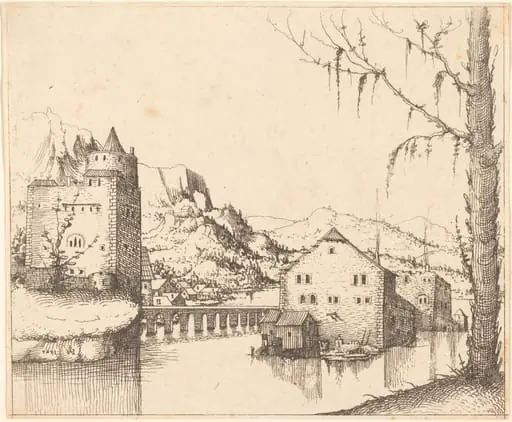 River Landscape with Two Buildings
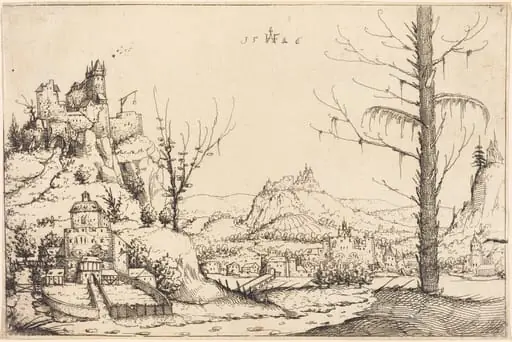 Landscape with High Cliffs, River, and City
 The Rapids of the Danube near Grein
 Valley in Bourgogne (Une vallee en Bourgogne)