Artwork
Hilltop Castles
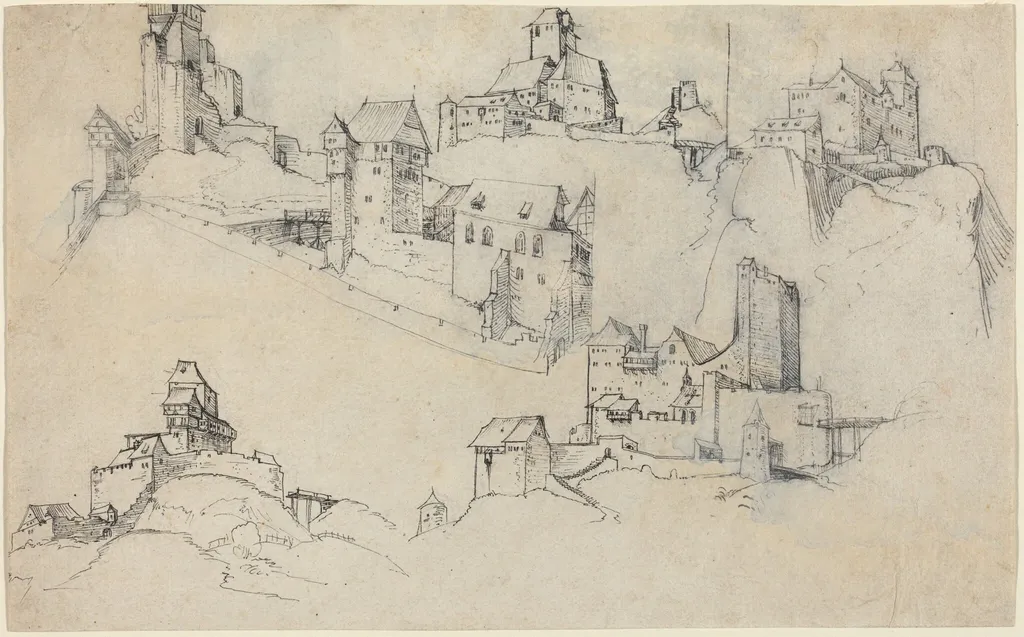
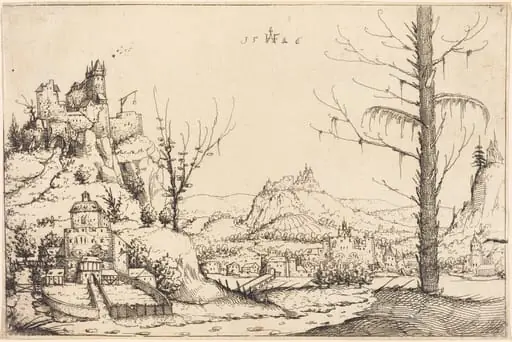
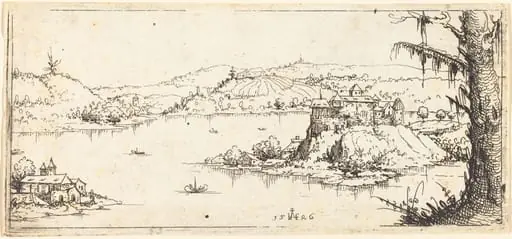
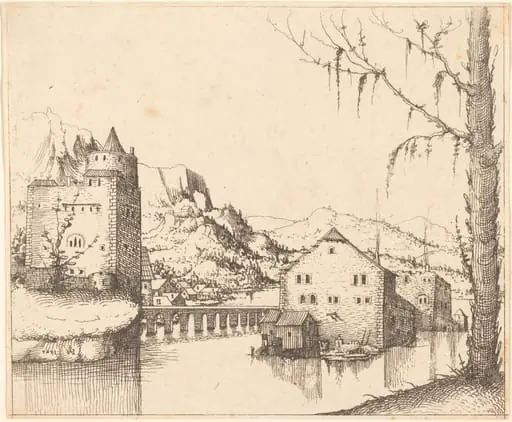
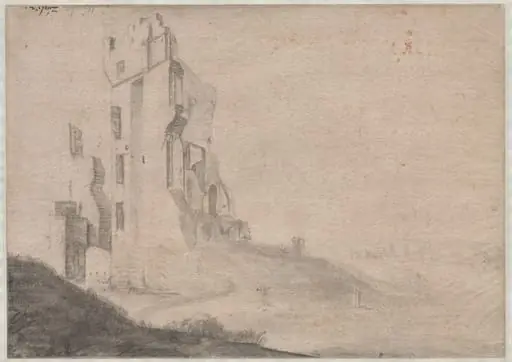
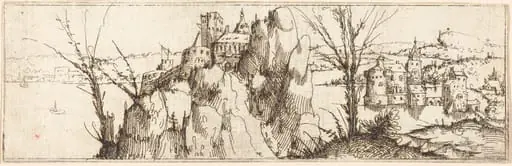
Hilltop Castles is an ink drawing by the Renaissance artist Augustin Hirschvogel. It dates from 1546 and is held in the collection of the National Gallery of Art.
About this work
Overview
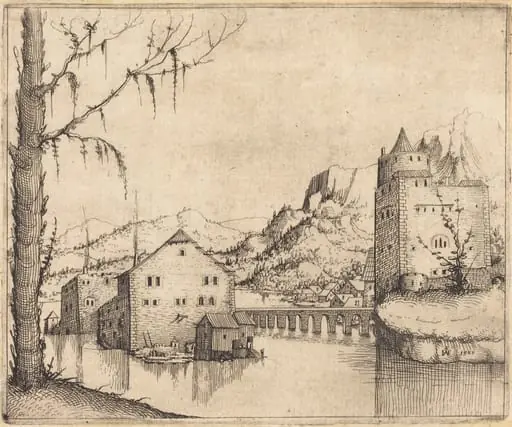
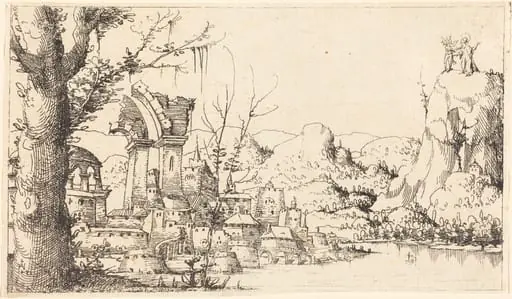
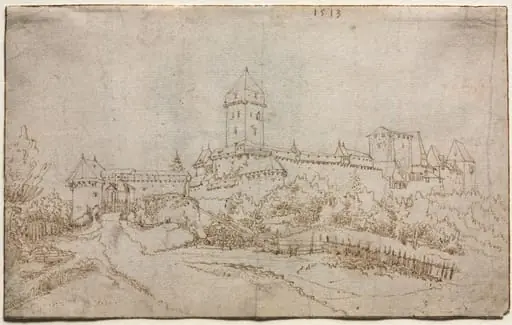
Created circa 1546, *Hilltop Castles* is a pen-and-ink drawing on laid paper by the German polymath Augustin Hirschvogel. The work presents a series of fortified buildings perched on a series of rolling hills, rendered with meticulous line work that emphasizes both architectural detail and natural terrain.
Subject & Meaning
The composition focuses on several medieval strongholds, each perched atop a distinct rise. By situating the castles within a broader landscape of trees, rocks, and undulating ground, the drawing underscores the relationship between human fortification and the surrounding environment, a common preoccupation of 16th‑century Northern European art.
Technique & Style
Hirschvogel employs fine, controlled ink lines and cross‑hatching to model surfaces, creating a sense of depth and texture. The use of laid paper, with its visible ribbed pattern, adds a subtle tonal quality. The precise, almost topographic rendering aligns with his background in cartography and the detailed aesthetic of the Danube School.
History & Provenance
The drawing originates from Hirschvogel’s productive period in the mid‑16th century, when he was active as a cartographer, mathematician, and printmaker. It reflects his involvement with the Danube School, a loose group of artists working in Bavaria and Austria who shared an interest in landscape and natural observation.
Context
During the Renaissance, Northern Europe saw a growing interest in realistic landscape depiction and the documentation of architectural forms. Hirschvogel’s work bridges artistic practice and scientific observation, illustrating how cartographic precision influenced visual art in this era.
Legacy
*Hilltop Castles* exemplifies the integration of detailed topographical study with artistic representation, a hallmark of Hirschvogel’s oeuvre. The drawing continues to inform scholars of the Danube School’s approach to landscape and the broader development of early modern visual documentation.
Artist & collection
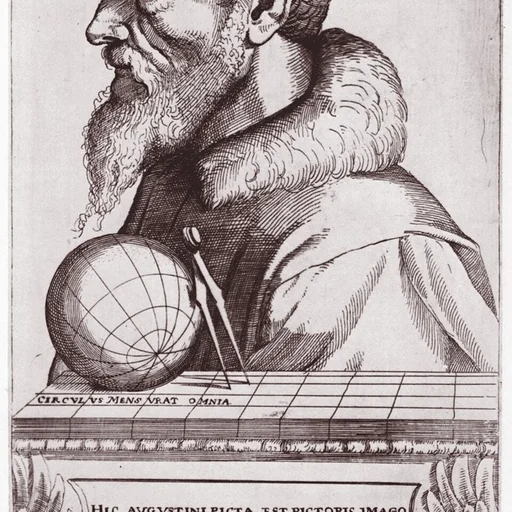
Artist
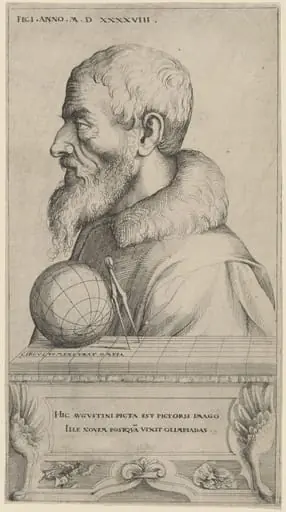
Augustin Hirschvogel (1503 – February 1553) was a German artist, mathematician, and cartographer known primarily for his etchings.