Artwork
Diptych with Twelve Apostles & St. Paul
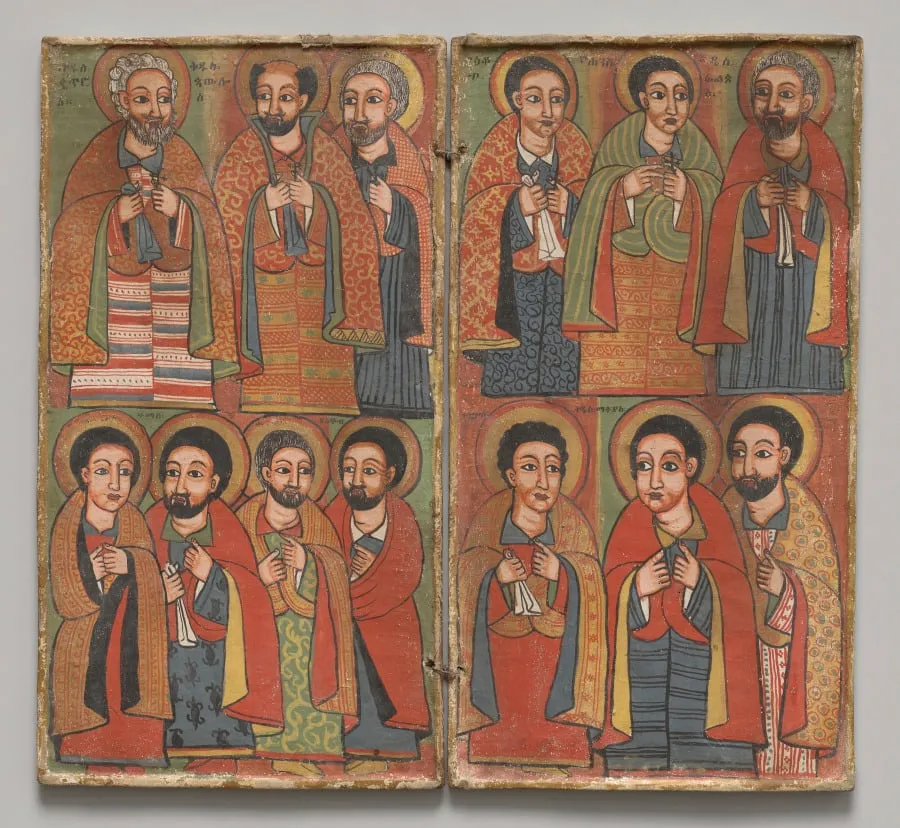
Diptych with Twelve Apostles & St. Paul is an unspecified painting by the Baroque artist Workshop or Circle of Wäldä Maryam. It dates from 1700 and is held in the collection of the Cleveland Museum of Art. The work consists of two wooden panels forming a diptych that presents thirteen figures identified as the twelve apostles and Saint Paul.
About this work
Overview
The work consists of two wooden panels forming a diptych that presents thirteen figures identified as the twelve apostles and Saint Paul. Each figure is rendered in vivid attire, holding a book or staff, and is labeled in Ge’ez script. The composition is intended for display in an Ethiopian Orthodox setting, such as a church sanctuary or a wealthy household.
Subject & Meaning
Individual facial details and hairstyles differentiate each apostle, allowing viewers to recognize specific holy men despite their uniform, solemn expressions.
The painted saints represent the core disciples of Christ, with Saint Paul added to complete the apostolic circle. By portraying them together, the artist underscores the theological continuity of the early church and its relevance to Ethiopian worship. Individual facial details and hairstyles differentiate each apostle, allowing viewers to recognize specific holy men despite their uniform, solemn expressions.
Technique & Style
Executed in the richly colored manner typical of Ethiopian royal workshops from the early seventeenth to mid‑eighteenth centuries, the diptych employs tempera on wood with fine brushwork. The figures wear elaborate garments and turbans that reflect Indian textile influences, demonstrating the artist’s skill in integrating foreign patterns within a local aesthetic. Linear arrangement and balanced composition convey a formal, courtly portraiture.
History & Provenance
Attributed to the painter Wäldä Maryam or a disciple from his workshop, the piece likely originated in the early eighteenth century. Its creation aligns with a period when Ethiopian courts commissioned religious art for elite patrons. The diptych has remained within the region’s ecclesiastical collections, passing through private and institutional hands before entering its present museum context.
Context
The inclusion of Indian‑derived fabrics illustrates the extensive trade networks that linked the Horn of Africa to the Indian Ocean world during the 1700s. While European religious paintings of the era favored Baroque realism, this work adheres to indigenous visual conventions, merging local devotional practice with cosmopolitan material culture.
Artist & collection
Artist
Workshop or Circle of Wäldä Maryam
Workshop or Circle of Wäldä Maryam (1600–1700) was a workshop or firm.

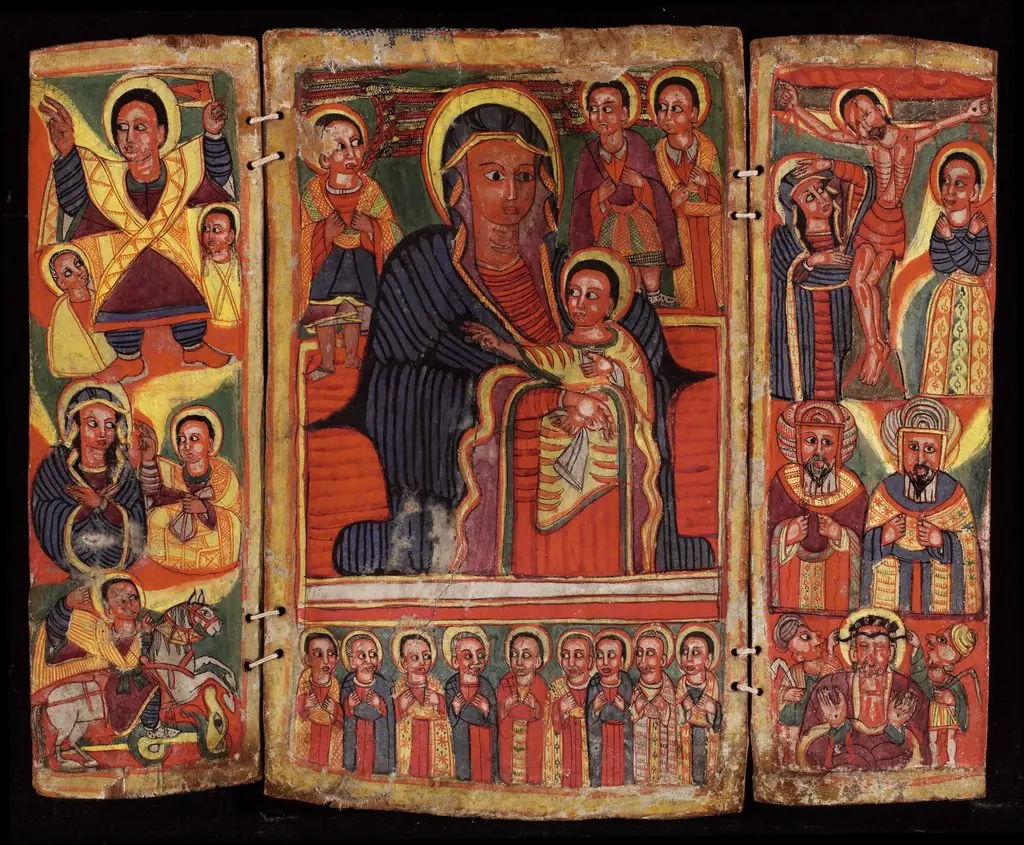 Triptych: Icon of the Virgin Mary
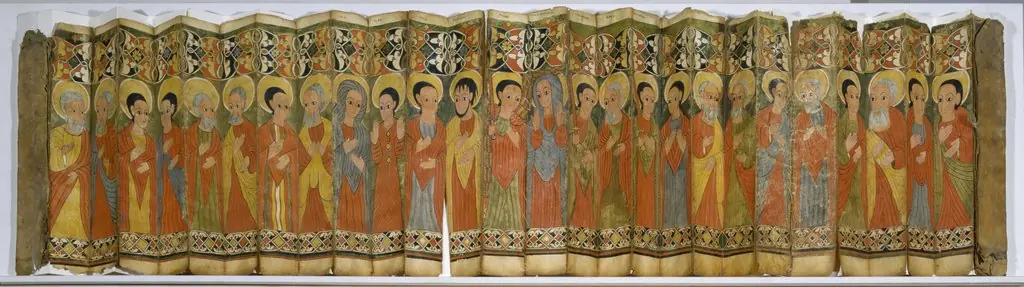 Folds from Ethiopian Processional Icon
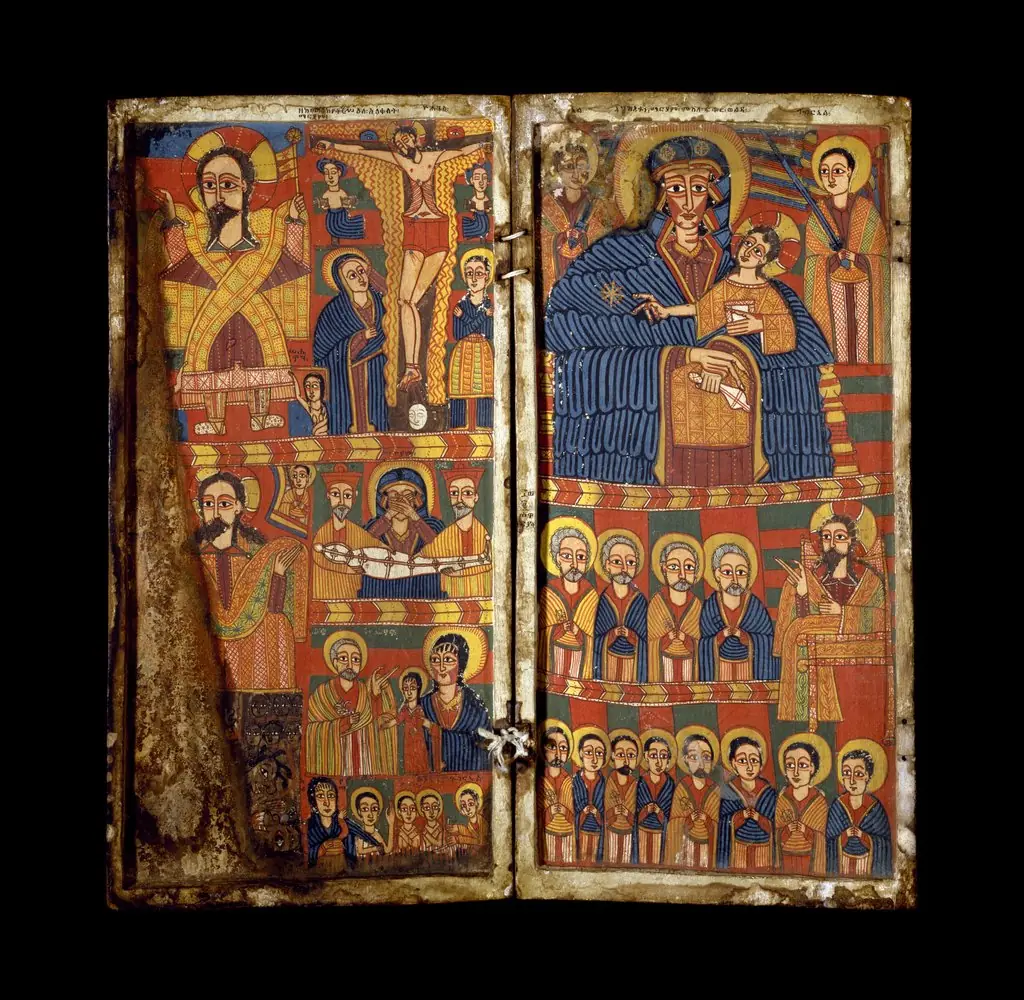 Christ Teaching the Disciples
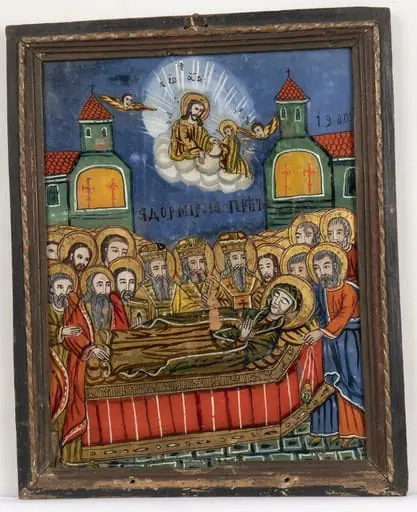 Adormirea Maicii Domnului
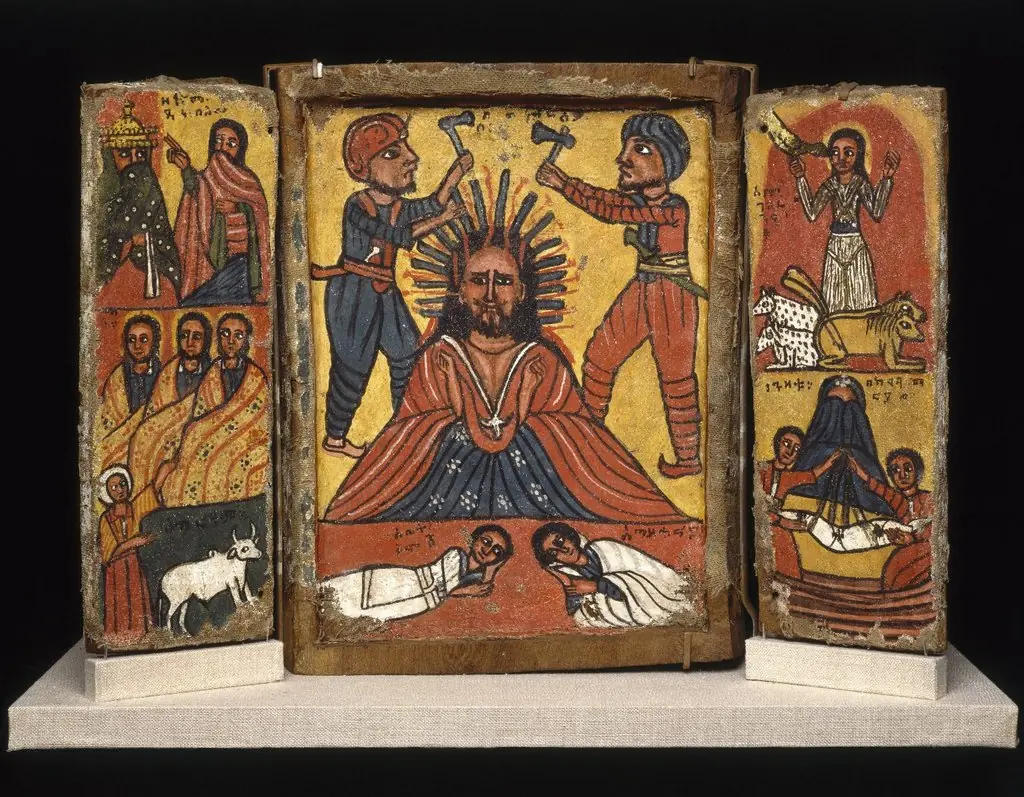 Tormenting of Christ
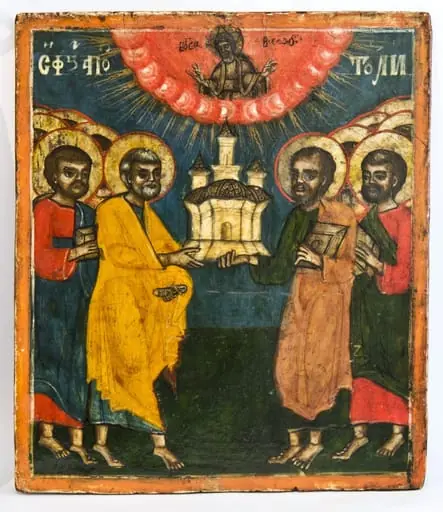 Sf. Petru și Pavel; Duminica Tuturor Sfințilo
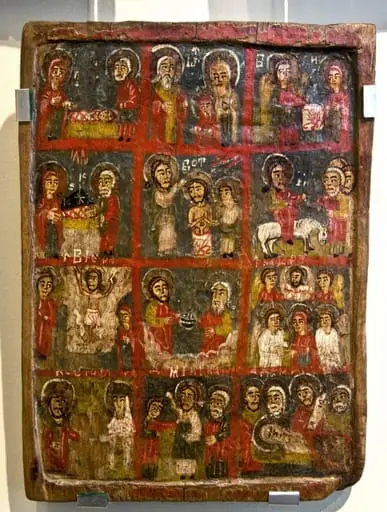 Prăznicar – Scene din Viața lui Iisus; Dodekaortion
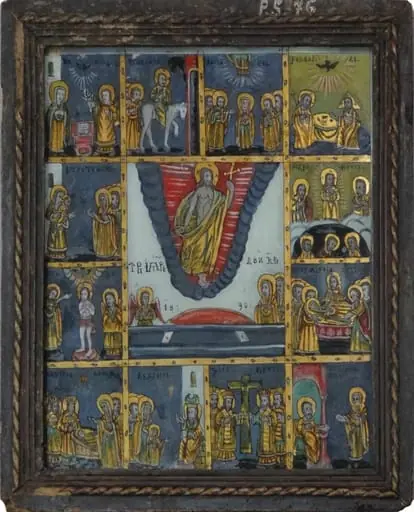 Învierea lui Iisus, cu 12 scene de praznic
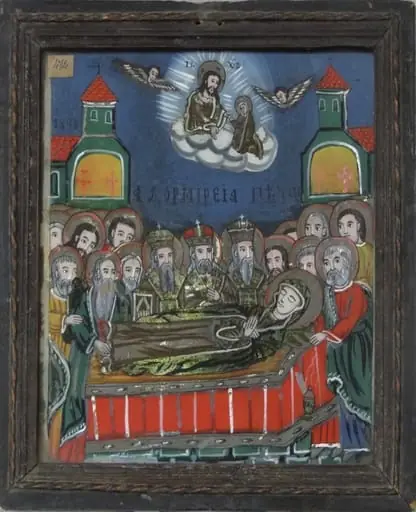 Adormirea Maicii Domnului
 Compului