Artwork
Triptych: Icon of the Virgin Mary
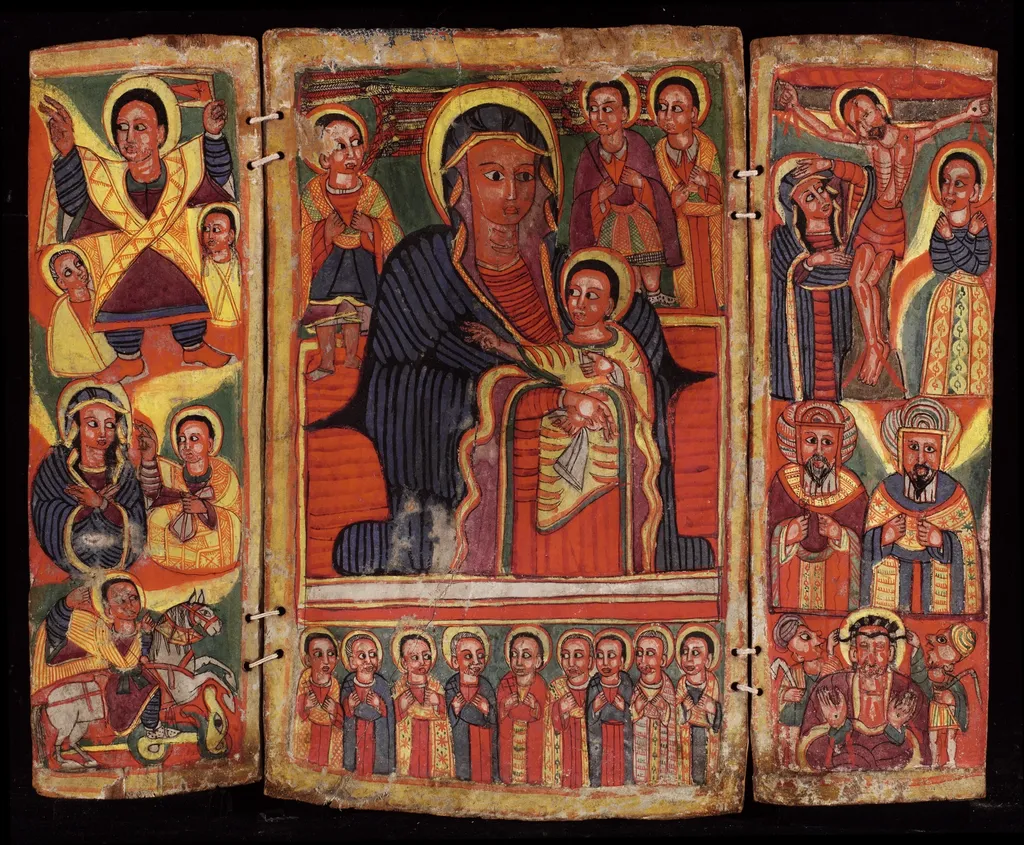
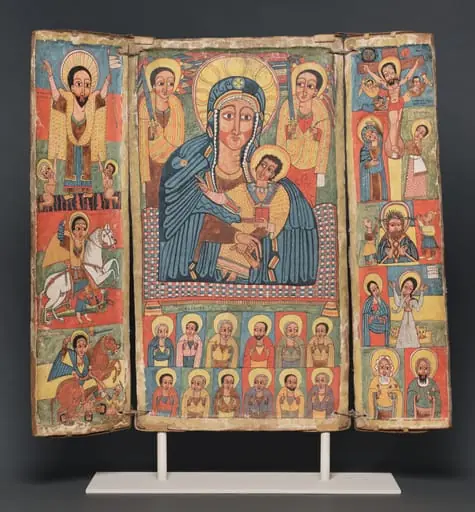
Triptych: Icon of the Virgin Mary is an unspecified painting by Unknown. It dates from 1850 and is held in the collection of the Detroit Institute of Arts. This three-panel painted altarpiece depicts religious figures in a traditional Byzantine-influenced style.
About this work
Overview
This three-panel painted altarpiece depicts religious figures in a traditional Byzantine-influenced style. Despite significant age and visible wear, the pigments remain vivid and the intricate details intact. The work’s origin and maker are undocumented, but its craftsmanship suggests it was created for devotional use in a religious setting, likely during the late medieval period.
Subject & Meaning
The central panel portrays the Virgin Mary seated with the infant Christ, flanked by saints or angels. Side panels extend the narrative, featuring additional holy figures in static, hieratic poses. The composition follows liturgical conventions of the time, emphasizing reverence and divine presence rather than naturalism, serving as a focus for prayer and veneration.
Technique & Style
The panels are executed in tempera on wood, with gold leaf accents highlighting halos and decorative borders. Figures are rendered with elongated proportions and stylized drapery, typical of Eastern Christian iconography. Despite centuries of handling, the colors—especially blues and reds—retain intensity, suggesting high-quality pigments and careful preservation.
History & Provenance
The triptych’s early history is unknown; no records confirm its place of origin or initial commission. It entered the collection of the Detroit Institute of Arts in the 20th century, likely through acquisition from a European source. Its condition indicates prolonged exposure to environmental and physical stress, yet it survived without major restoration.
Context
Created during a period when religious imagery dominated ecclesiastical art, this triptych reflects the devotional practices of Orthodox or Catholic communities in the Balkans or Italy. Its portable format suggests use in private chapels or processions. Similar works were common in regions where icon painting persisted alongside evolving Western styles.
Legacy
The triptych remains a rare surviving example of pre-modern devotional art in a North American collection. Its endurance offers insight into medieval artistic priorities: spiritual symbolism over realism, durability over novelty. It continues to serve as a quiet testament to the enduring role of sacred imagery in personal and communal worship.
Artist & collection

 Domestic Scene
 Giacomo and Cardinal Marco, investing Andrea, Abbot of San Zeno, with his Benefice
 The Nymph of Fontainebleau
 Portrait of a Woman
 Madonna and Child with Saints in the Enclosed Garden
 Venus and Minerva
 Family Group of Four on Sofa
 Wall painting from Room H of the Villa of P. Fannius Synistor at Boscoreale
 Christ Teaching the Disciples
 Diptych with Twelve Apostles & St. Paul
 Mary and Child Double Triptych
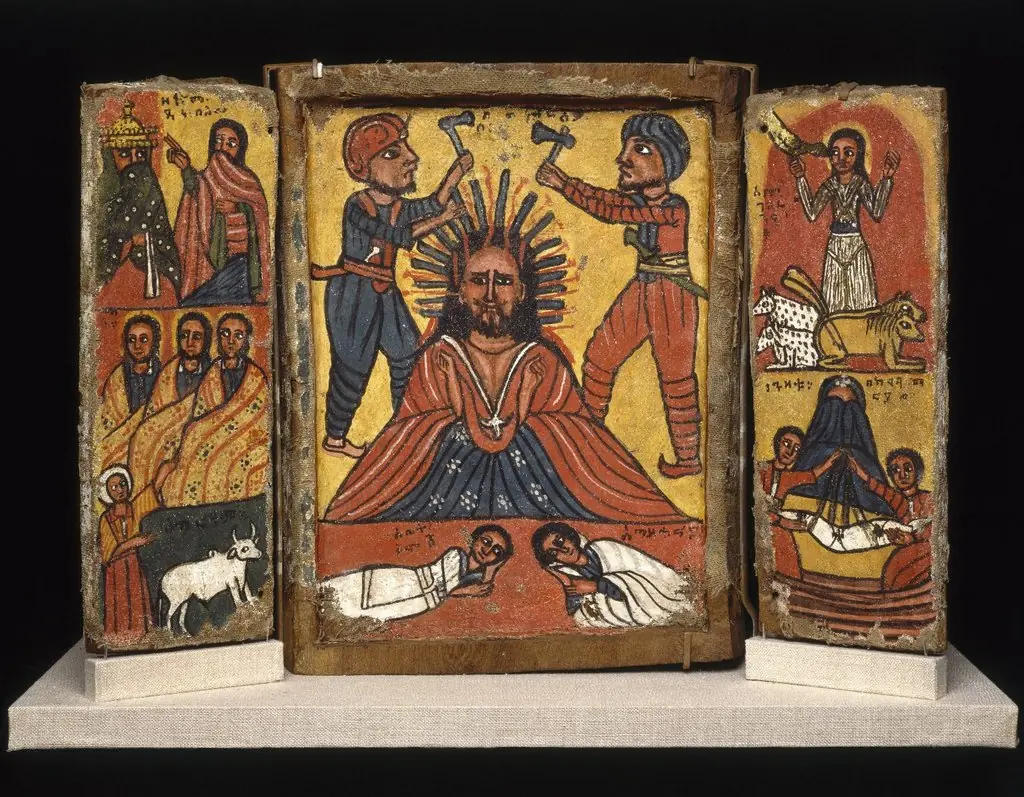 Tormenting of Christ
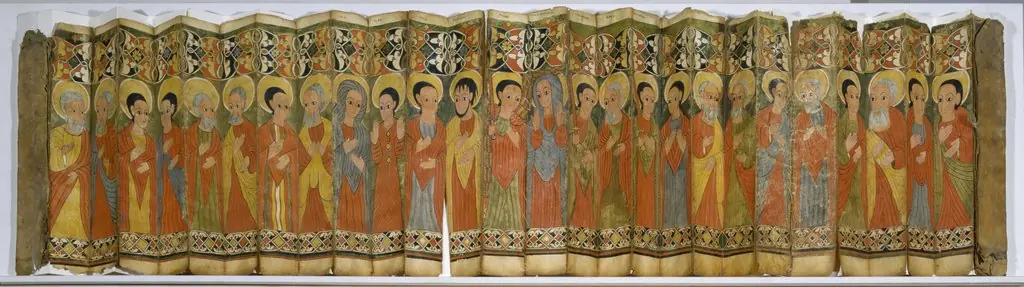 Folds from Ethiopian Processional Icon
 Icoan in
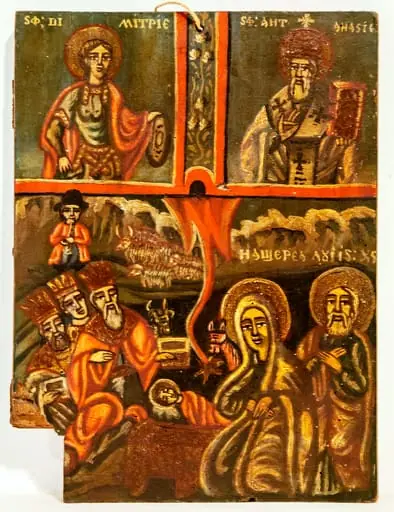 Câmpul icoanei împărțit în 2 registre orizontale inegale(cel de se 1/3 din suprafața icoanei, la rândul lui împărțit în 2 casete separate de o bandă verticală pe care este pictat un lujer cu flori albe. În registru inferior: Nașterea Domnului. În prim plan, Maria si Iosif îngenuncheați, central Pruncul Isus înfășat, așezat în iesle, în stânga lui cei trei magi, cu coroane împărătești pe cap, aducându-i daruri, în plan îndepărtat un cioban(în veșminte orășenești, cu pălărie neagră pe cap, cântând din fluier turmei de oi. În spatele Pruncului se văd capetele animalelor din grajd și o iesle. Steaua își revarsă razele asupra Pruncului(zonă incandescentă, terminată cu o stea deasupra acestuia). Pe fundalul întunecat, nori cu marginile albe. Sfinții din registrul superior sunt redați 3/4, sfântul Dimitrie tânăr, în veșminte militare, lorică, mantie roșie, scut în stânga, suliță în dreapta, Sfântul Atanasie, în veșminte arhierești, binecuvintează cu dreapta, în stânga ține cartea Evangheliilor ridicată. Părul și barba albe, mustățile lungi, veșmintele deschise la culoare, mitra înaltă, surmontată de o cruce albă. Cromatica: roșu, brun, alb, albastru, galben. Colț stânga jos lipsă. Stil naiv, popular.
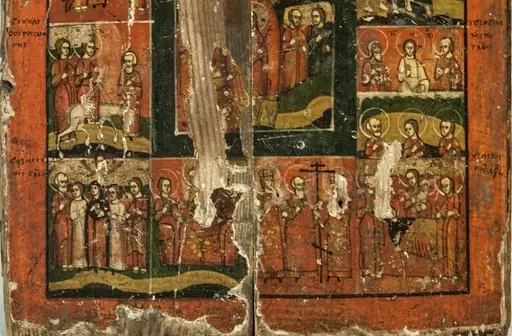 Compului
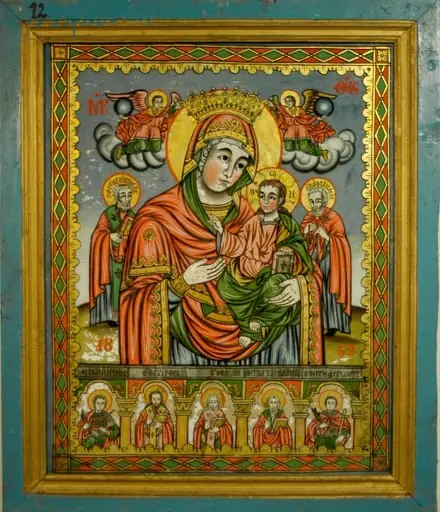 Maica Domnului cu Pruncul
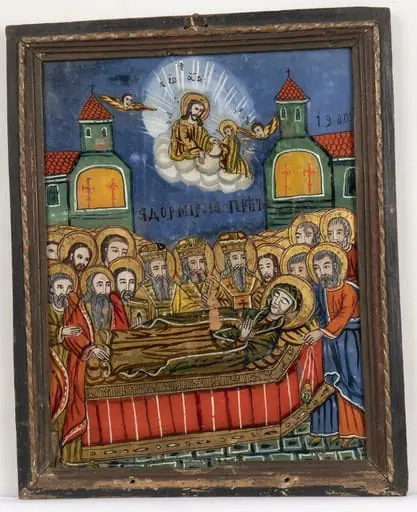 Adormirea Maicii Domnului
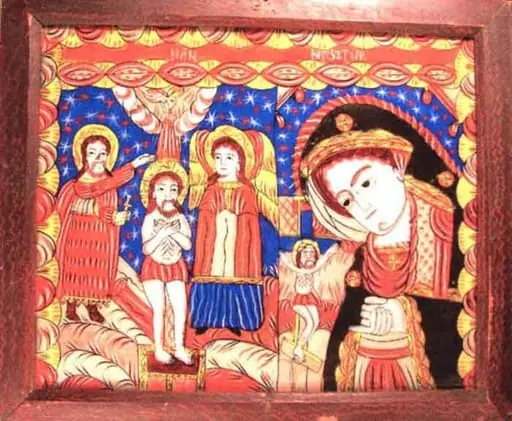 Maica Domnului Îndurerată (Botezul Domnului)
 Triptych Icon