Artwork
Bacon
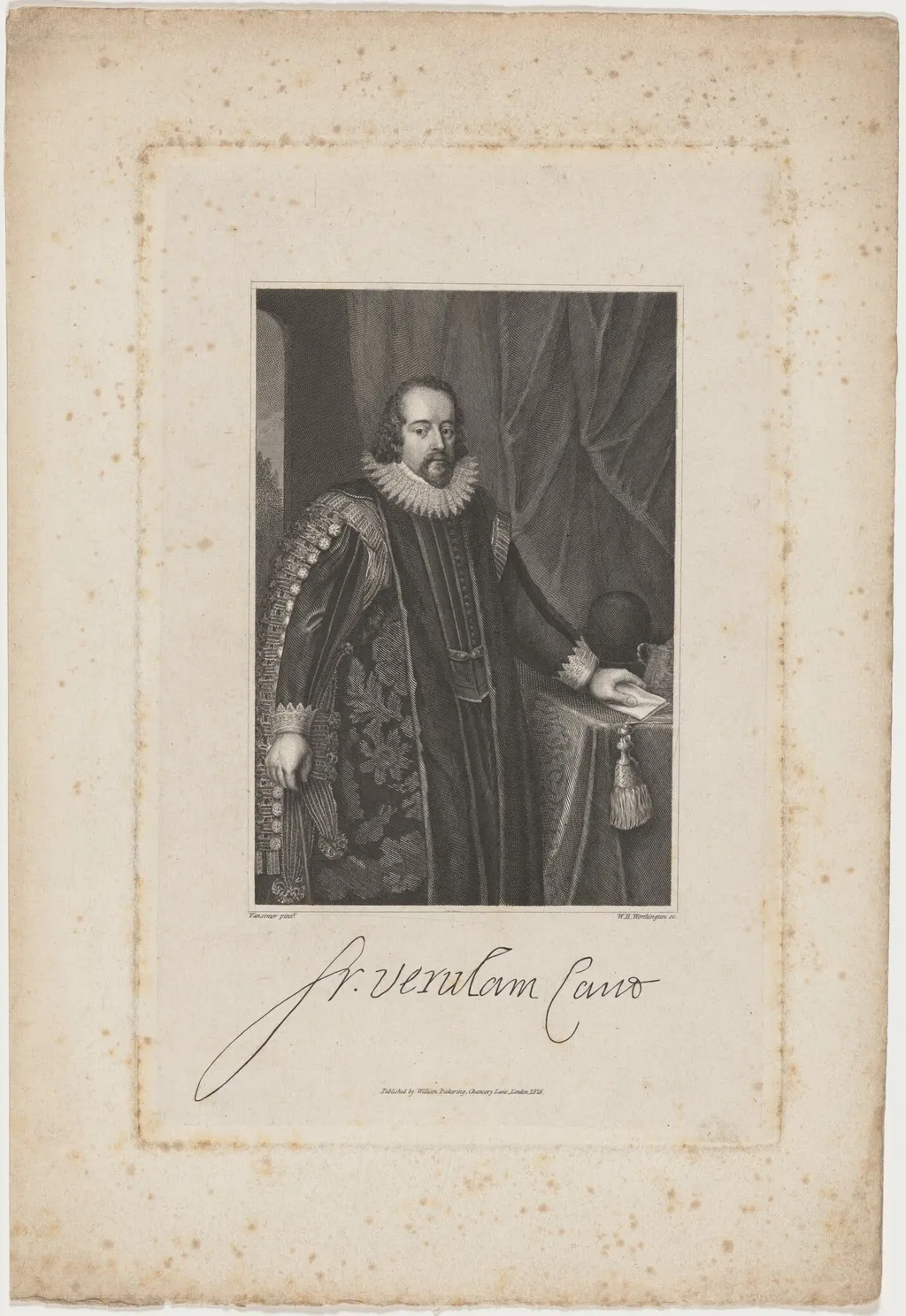
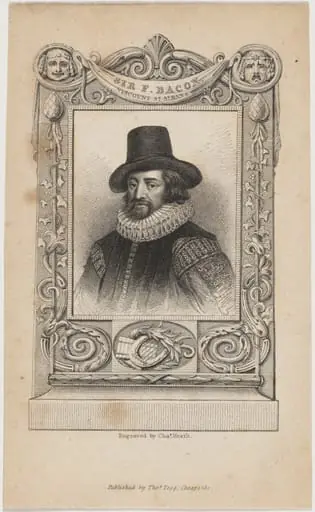
Bacon is an ink print by the Romanticist artist William Henry Worthington. It dates from 1825 and is held in the collection of the National Gallery of Art.
About this work
Overview
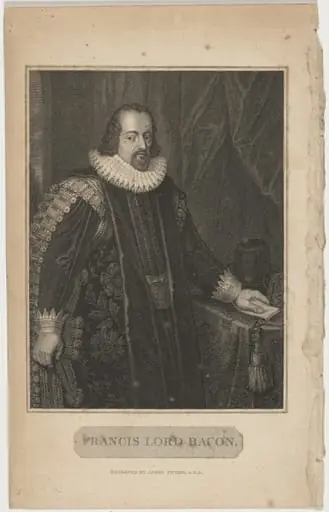
Bacon is an engraving attributed to William Henry Worthington, dated circa 1825. The work depicts a dignified figure in 17th-century attire, identified through the pseudonymous signature as inspired by Francis Bacon.
Subject & Meaning
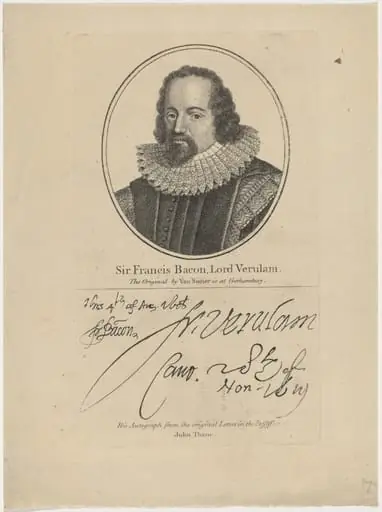
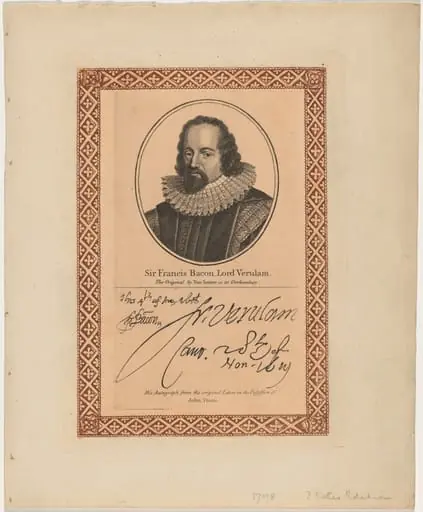
The subject, dressed in a long, gold-embroidered coat, ruffled collar, and chain, conveys an air of solemnity, enhanced by his serious expression and short beard. The pose, with one hand on a hat and the other holding a paper, suggests contemplation or intellectual pursuits, aligning with the association with Francis Bacon, implied by the signature 'Fr. Verulam Cavo'.
Technique & Style
Executed in black and white, the engraving showcases meticulous detail, particularly in the textures of the clothing and the subtle, draped background resembling a curtain. The medium's inherent linearity is balanced with nuanced shading, capturing the subject's introspective demeanor.
History & Provenance
Created around 1825, the engraving bears signs of aging, evident in the brown spots on the paper. The pseudonym 'Fr. Verulam Cavo' references Francis Bacon, suggesting a thematic or inspirational link rather than a direct portrait.
Context
Emerging in the early 19th century, this work reflects a continued interest in historical and intellectual figures from preceding centuries. The choice of engraving as a medium was practical for widespread reproduction and appreciation of such subjects.
Legacy
While not widely recognized as a landmark piece, 'Bacon' contributes to the broader corpus of 19th-century engravings that popularized historical portraits among a wider audience, preserving the legacy of figures like Francis Bacon through accessible art forms.
Artist & collection