Artwork
Chrysanthemums and Magpies
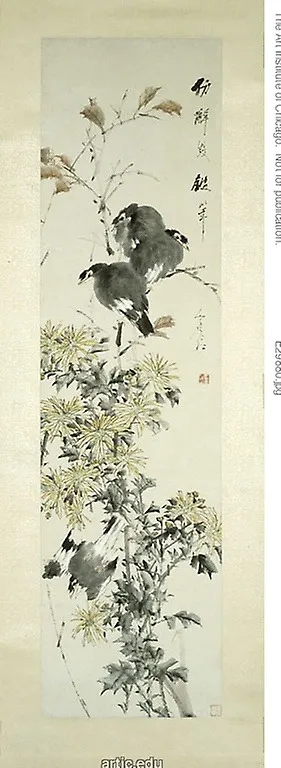
Chrysanthemums and Magpies is an unspecified painting by the Nihonga artist Xugu. It dates from 1896 and is held in the collection of the Art Institute of Chicago.
About this work
Overview
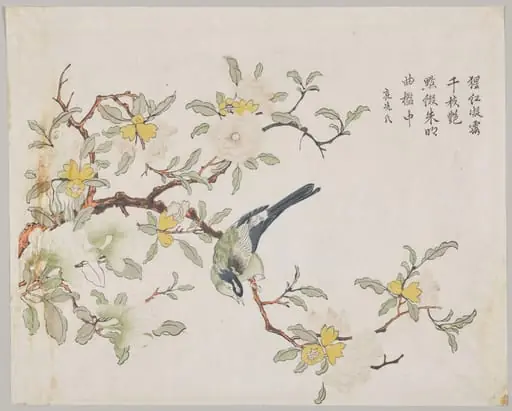
Created in 1896, *Chrysanthemums and Magpies* is a small-format painting that combines ink and light watercolor washes. The composition centers on a slender branch bearing bright yellow chrysanthemums, upon which three birds—two magpies and a third smaller bird—are perched. Vertical Chinese calligraphy runs along the right edge, adding a literary dimension to the visual scene.
Subject & Meaning
The work juxtaposes two traditional Chinese symbols: chrysanthemums, long associated with longevity and autumnal resilience, and magpies, whose lively calls have come to represent joy and good fortune. By placing these elements together, the artist evokes a harmonious wish for enduring happiness, a theme frequently explored in Qing‑era literati painting.
Technique & Style
Executed with fine, tapered brushstrokes, the branch and blossoms are rendered in delicate, translucent washes that suggest the fleeting quality of spring. The birds receive more precise detailing—visible feather texture and sharply defined beaks—creating a subtle contrast between the ethereal flora and the tangible fauna. A pale, almost monochrome background serves to isolate the central motif.
History & Provenance
Though primarily active in China, Xu participated in the broader nihonga movement, which encouraged a synthesis of native techniques with modern sensibilities.
The painting was produced by Xu Gu, a Qing‑dynasty painter‑poet known for integrating personal expression into conventional ink methods. Though primarily active in China, Xu participated in the broader nihonga movement, which encouraged a synthesis of native techniques with modern sensibilities. The work entered a private collection in the early 20th century before being acquired by its current museum in the 1970s.
Context
*Chrysanthemums and Magpies* belongs to the Chinese bird‑and‑flower genre, a lineage that dates back to the Song dynasty. During the late 19th century, artists like Xu Gu revisited these motifs to reaffirm cultural identity amid increasing foreign influence, often incorporating subtle literary references, as seen in the vertical inscription accompanying the image.
Artist & collection


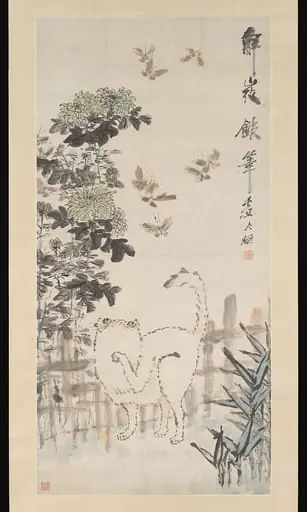 清 虛谷 蝶貓圖 軸|Cat and Butterfly
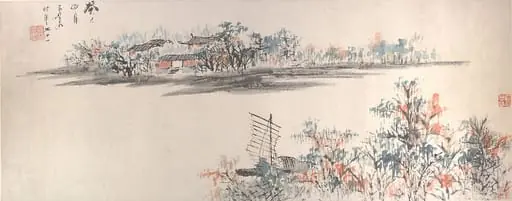 清 虛谷 秋帆圖 冊頁|Sailing in Autumn
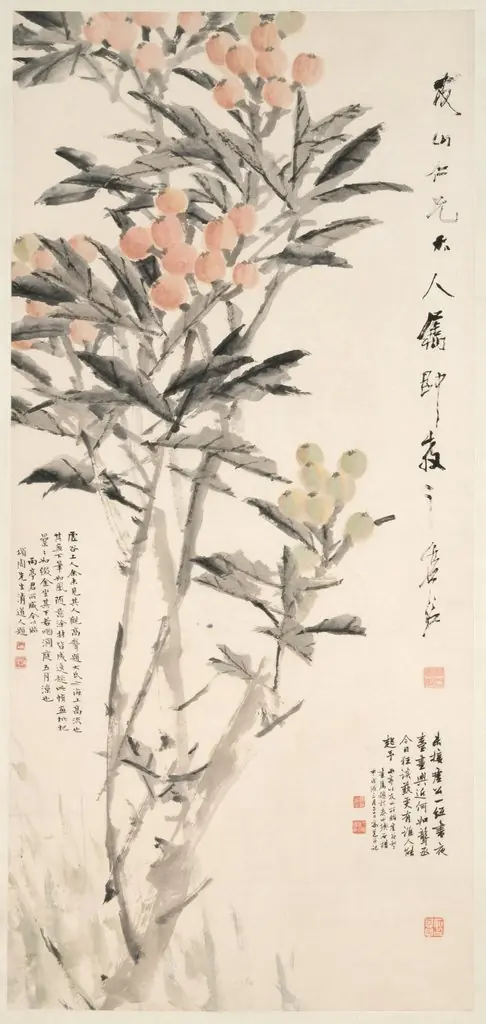 Pipa (Loquats)
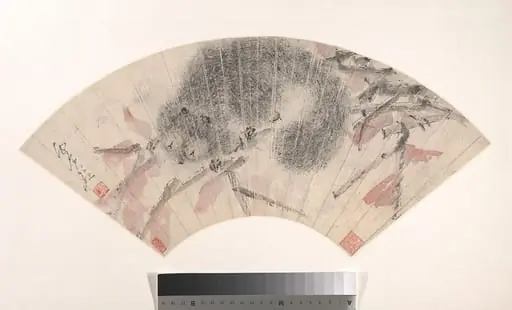 清 虛谷 松鼠 扇面|Squirrel on an Autumn Branch
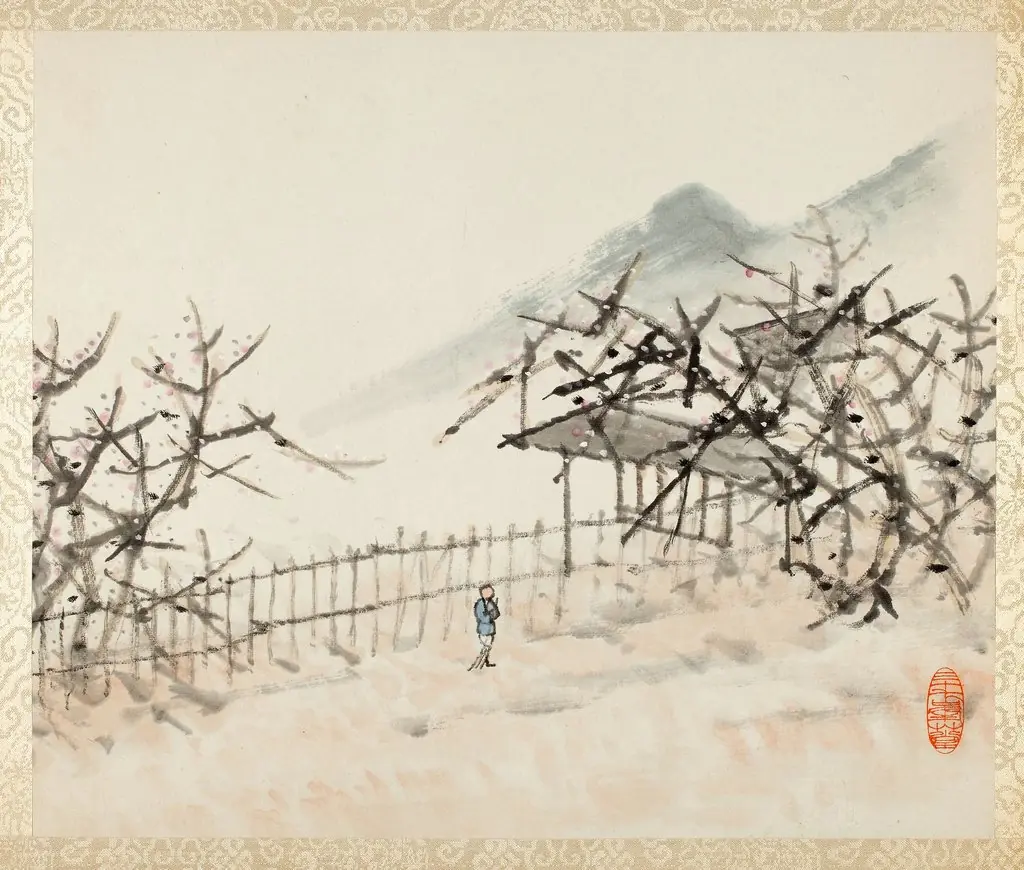 Landscapes for Liu Songfu
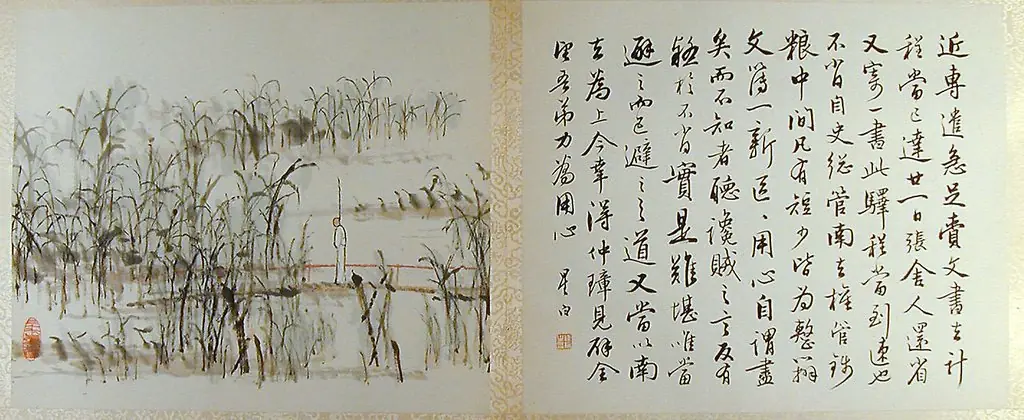 Bridge on a Reed Pond, from an album of Landscapes and Calligraphy for Liu Songfu
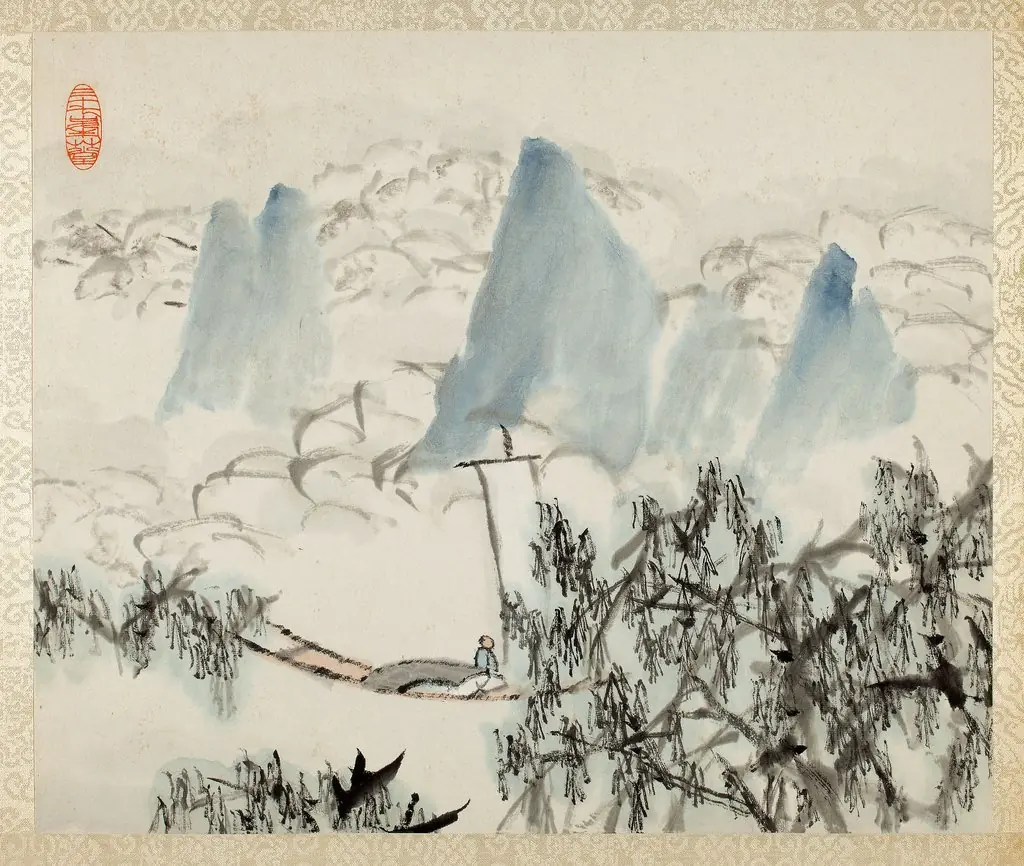 Landscape with Figure, from an album of Landscapes and Calligraphy for Liu Songfu
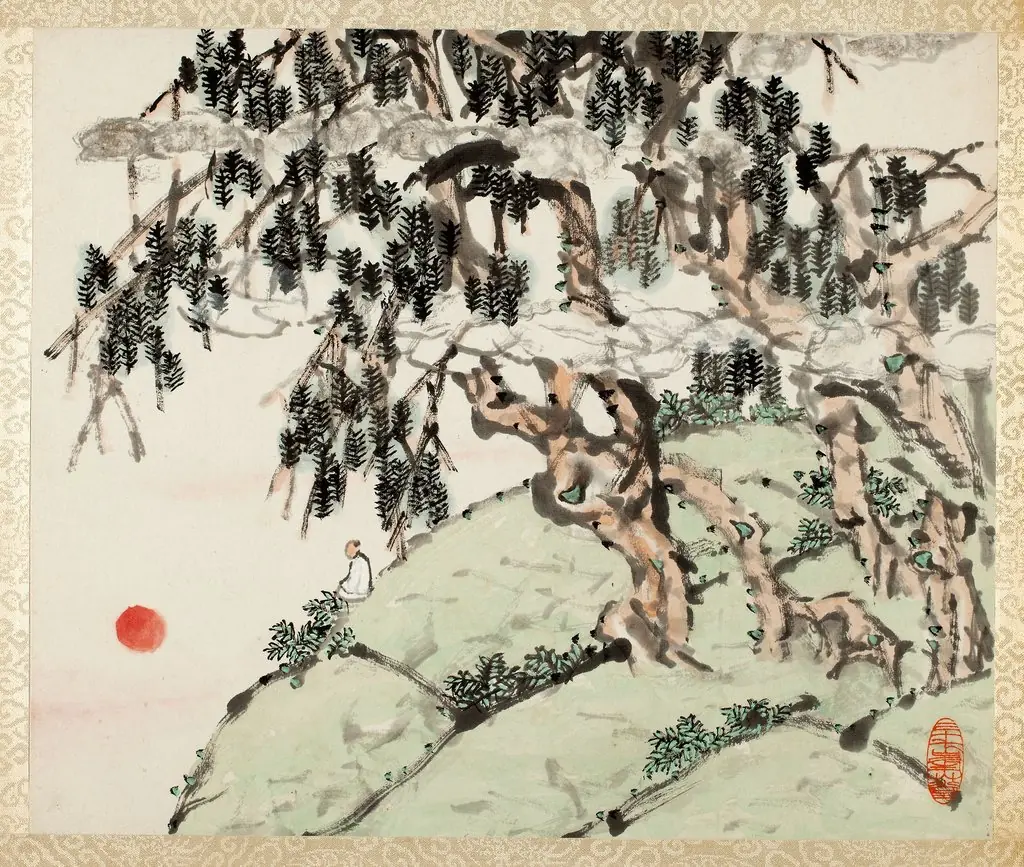 Landscape and Figure, from an album of Landscapes and Calligraphy for Liu Songfu
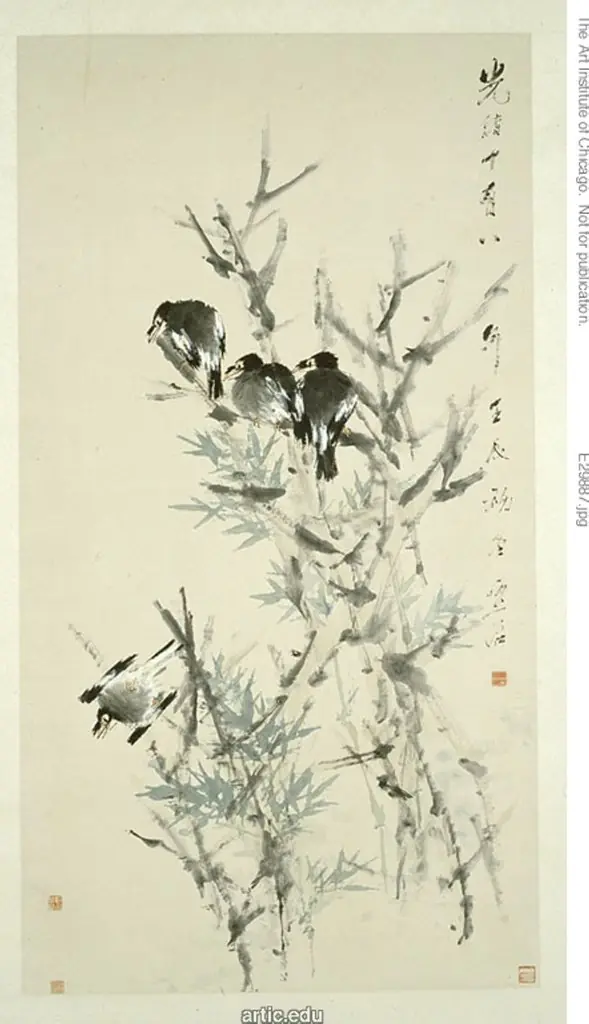 Black Birds
 西園方済筆 梅に叭叭鳥図|Mynah Bird on Plum Branch
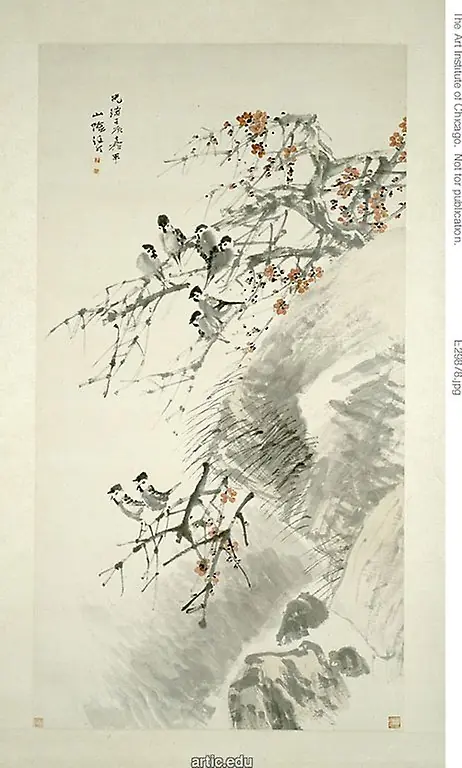 Birds on Red Plum
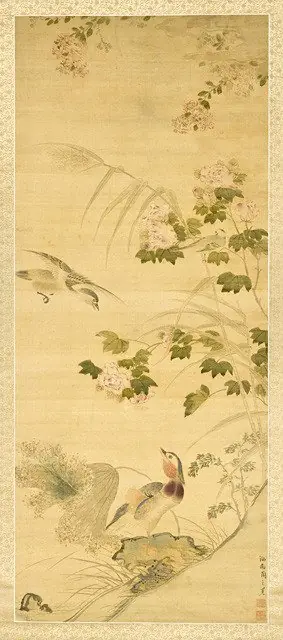 Flowers and Birds
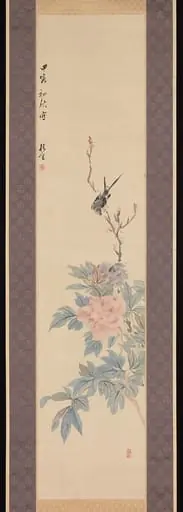 Untitled
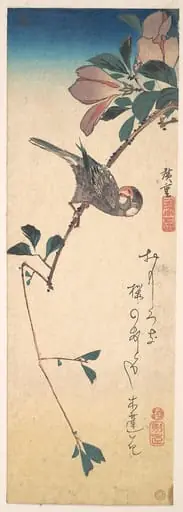 Untitled
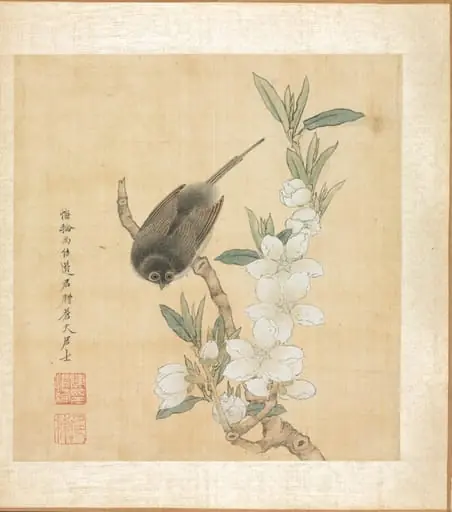 Paintings after Ancient Masters: A Bird and Peach-Blossom Branch
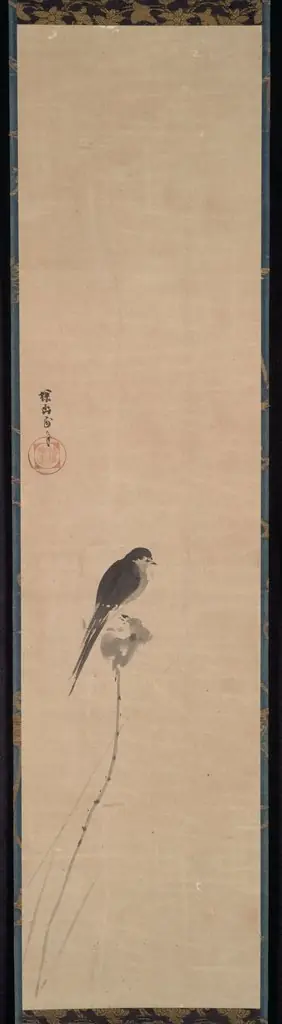 Bird on a Lotus Bud
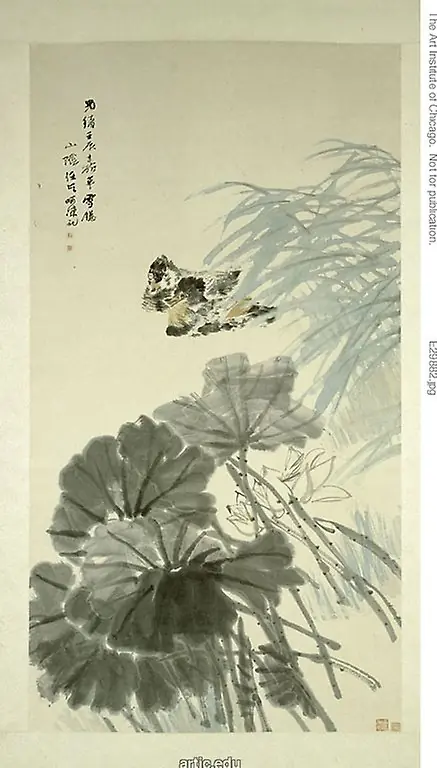 Mandarin Ducks and Lotus
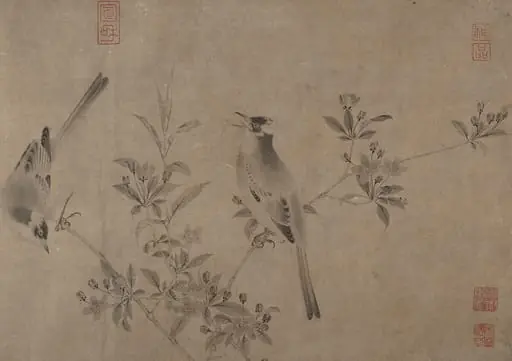 宋? 佚名 傳宋徽宗 白頭海棠圖 卷|Chinese Bulbuls on Flowering Cherry-Apple
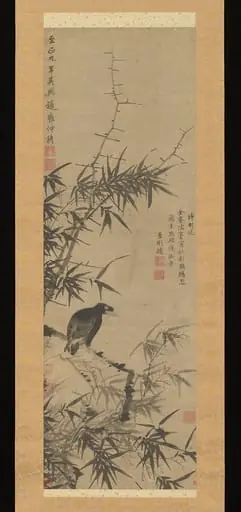 元 趙雍(款) 鸜鵒竹影圖 軸|Mynah Bird and Bamboo
 Bird on Pomegranate