Artwork
二品親王女三宮|The Third Princess and Kashiwagi, from Chapter 34, “New Herbs I (Wakana I)” (Nihon shinnō onna sannomiya)
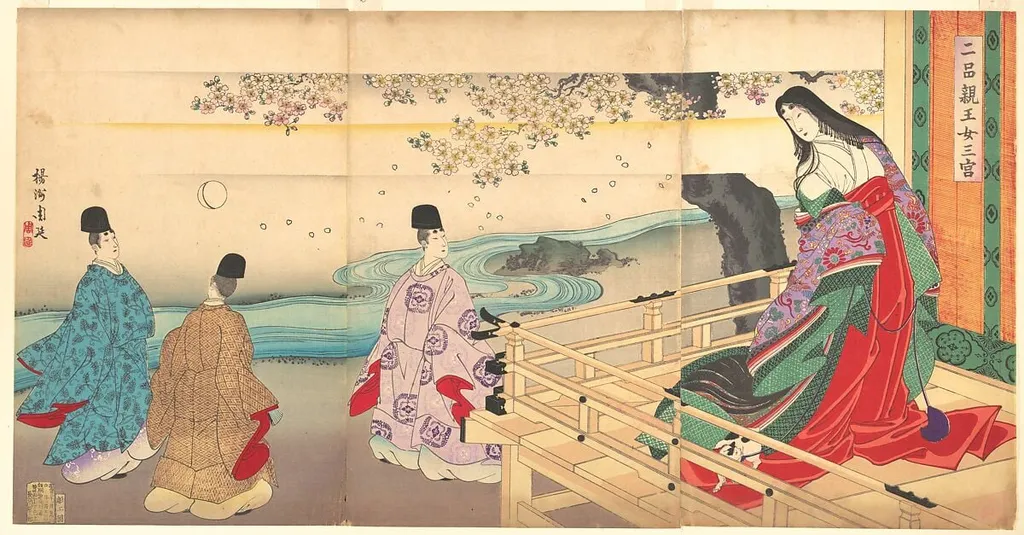
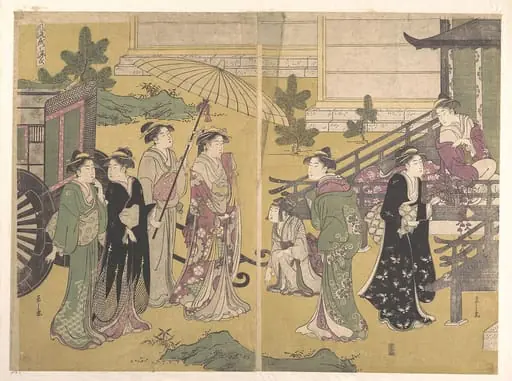
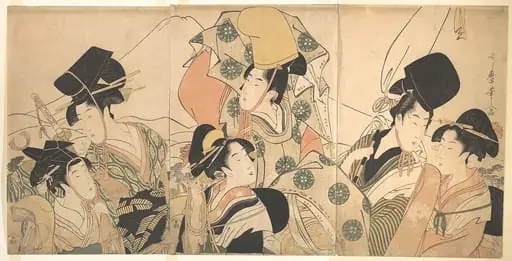
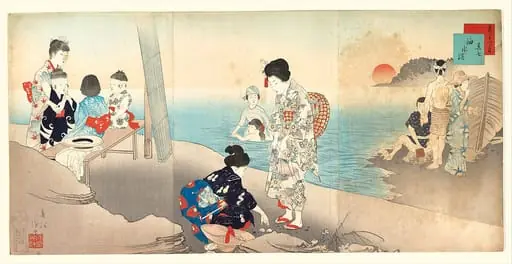
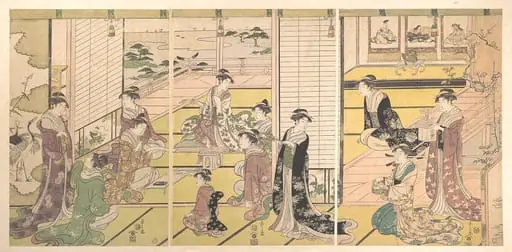
二品親王女三宮|The Third Princess and Kashiwagi, from Chapter 34, “New Herbs I (Wakana I)” (Nihon shinnō onna sannomiya) is an ink print by the Impressionist artist Yōshū (Hashimoto) Chikanobu. It dates from 1890 and is held in the collection of the Metropolitan Museum of Art.
About this work
Overview
Created in 1890 by the prolific ukiyo‑e artist Yōshū Chikanobu, this triptych of woodblock prints depicts a nocturnal balcony scene from Chapter 34, “New Herbs I (Wakana I),” of the narrative series Nihon shinnō onna sannomiya. Executed in ink and color on paper, the work is part of the Metropolitan Museum of Art’s collection.
Subject & Meaning
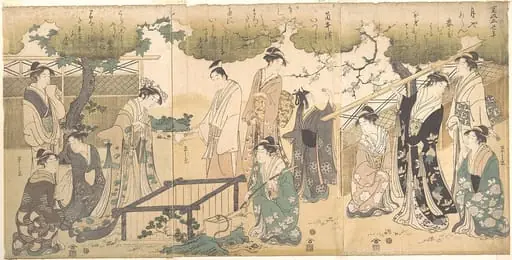
The composition presents three figures under a moonlit sky. Two men in formal court attire stand by a railing, gazing toward a dark river and distant hills, while a woman in vivid red and green robes sits behind them, her back turned to the viewers. The contrast of her bright garments against the muted night suggests a moment of quiet tension within a courtly setting.
Technique & Style
Chikanobu employs the characteristic ukiyo‑e approach of strong, clean outlines and flat areas of color, emphasizing narrative clarity over realistic shading. The triptych format allows a panoramic view, and the delicate rendering of drifting cherry blossoms adds a lyrical touch that balances the boldness of the figures’ costumes with the subtlety of the night atmosphere.
History & Provenance
Printed in Japan during the Meiji period, the work reflects the era’s fascination with historical romance and courtly drama. It entered the Metropolitan Museum of Art’s collection through acquisition in the early 20th century, where it remains displayed as an example of Chikanobu’s contribution to late‑period woodblock illustration.
Artist & collection


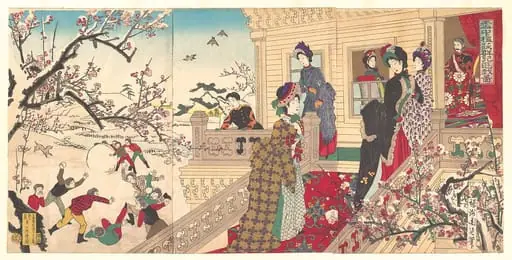 『雪中梅荘群児遊戯 図』|Children Playing in the Snow under Plum Trees in Bloom (Secchū baisō gunji yūgi zu)
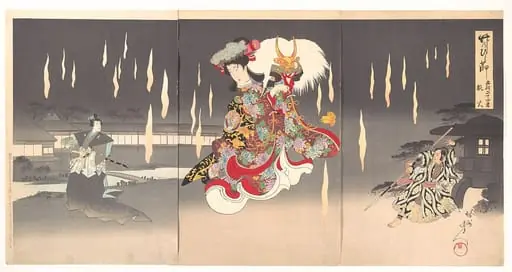 Untitled
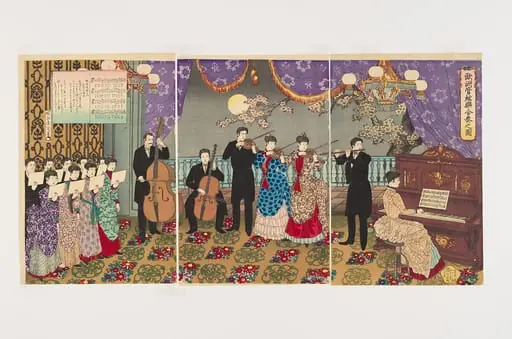 『欧州管絃楽合奏之図』|Concert of European Music (Ōshū kangengaku gassō no zu)
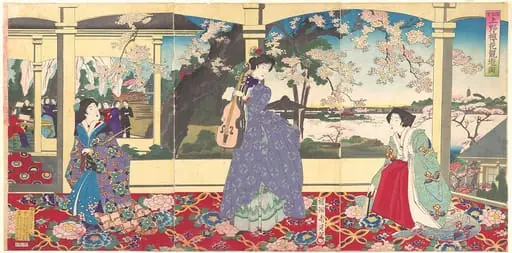 『踏舞会 上野桜花観 遊ノ図』|A Dance Party: Enjoying Cherry Blossom Viewing at Ueno (Tōbukai Ueno ōka yūran no zu)
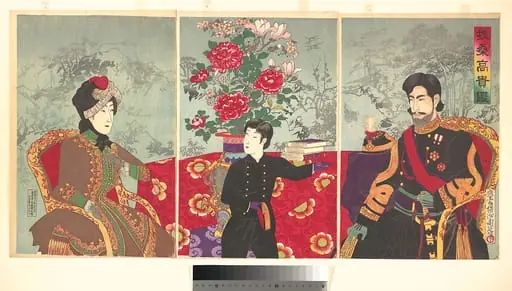 『扶桑高貴鑑』|A Mirror of Japan’s Nobility: The Emperor Meiji, His Wife, and Prince Haru (Fūsō kōki kagami)
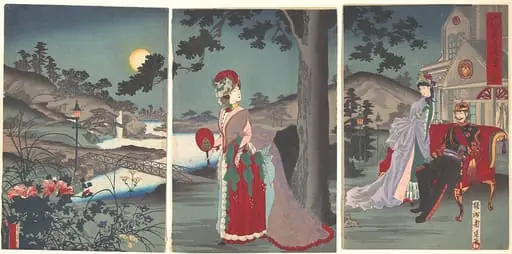 『高貴納涼ノ図』|Nobility in the Evening Cool (Koki nōryō no zu)
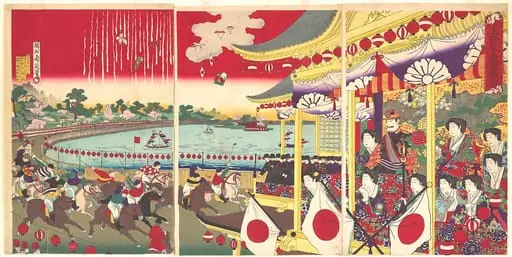 『上野不忍競馬図』|View of the Horse Track at Shinobazu in Ueno Park (Ueno shinobazu keiba zu)
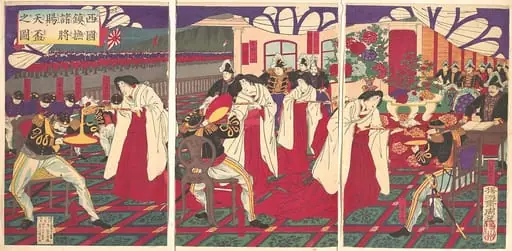 西国鎮静撫諸将天杯賜之図|Illustration of the Commanders who Pacified Western Japan, Receiving the Emperor's Gift Cups (Saigoku chinbu shoshō tenpai o tamau no zu)