Artwork
『雨過洗庭之図』|A Garden Refreshed by the Passing Rain (Ukasentei no zu)
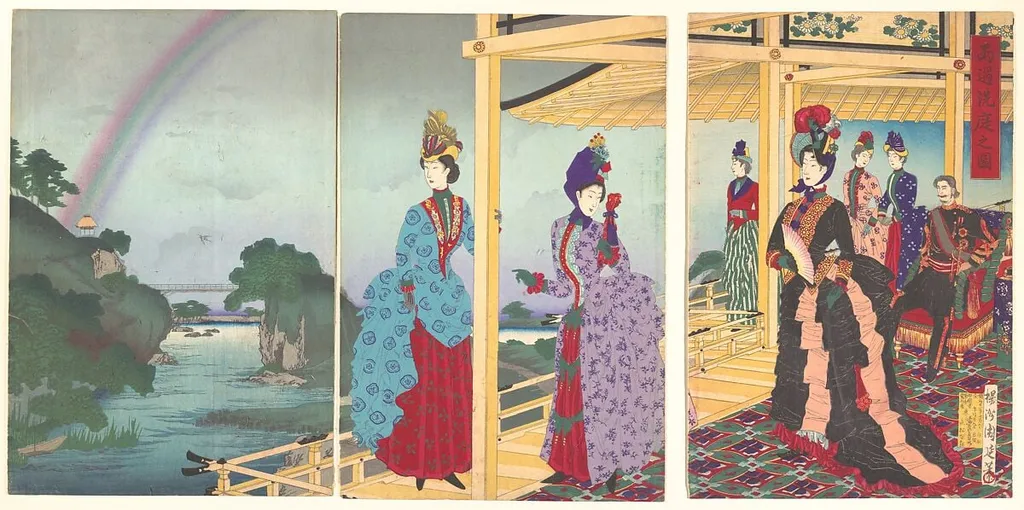
『雨過洗庭之図』|A Garden Refreshed by the Passing Rain (Ukasentei no zu) is an ink print by the Impressionist artist Yōshū (Hashimoto) Chikanobu. It dates from 1888 and is held in the collection of the Metropolitan Museum of Art.
About this work
Overview
A Garden Refreshed by the Passing Rain (Ukasentei no zu) is a woodblock print created by Yōshū Chikanobu in 1888, currently part of The Metropolitan Museum of Art's collection.
Subject & Meaning
The print depicts three distinct scenes of women in vibrant, patterned robes. The first woman stands before a misty river and trees under a rainbow, the second near an open door with a garden, and the third indoors with a group and a prominent red sign. These settings may symbolize transitions or moments of reflection after a rain.
Technique & Style
Chikanobu employed a striking contrast of bold, vibrant details against soft, dreamy backgrounds, as seen in the radiant rainbow, the deep purple dress, and the interplay of indoor and outdoor light.
History & Provenance
Created in 1888 by Yōshū Chikanobu, the print is now housed at The Metropolitan Museum of Art, with its provenance suggesting a journey from 19th-century Japan to a prominent Western museum collection.
Context
Part of the late 19th-century Japanese woodblock print tradition, this work reflects the era's aesthetic sensibilities, blending traditional themes with the artist's distinctive approach to color and composition.
Legacy
As part of Chikanobu's oeuvre, A Garden Refreshed by the Passing Rain contributes to the artist's reputation for striking, detailed prints, influencing the perception of Japanese art in the West during the late 19th and early 20th centuries.
Artist & collection


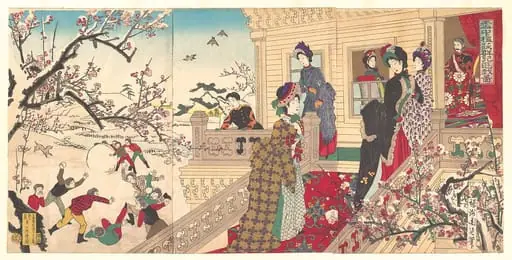 『雪中梅荘群児遊戯 図』|Children Playing in the Snow under Plum Trees in Bloom (Secchū baisō gunji yūgi zu)
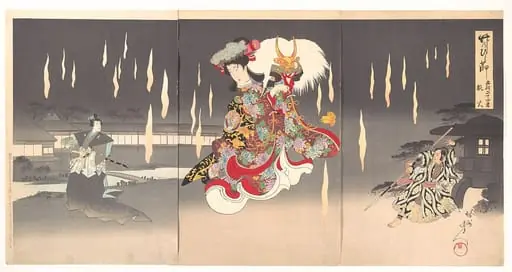 Untitled
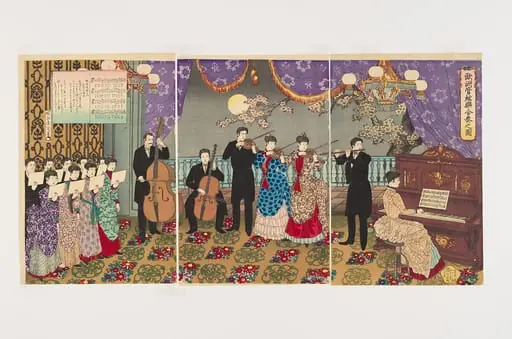 『欧州管絃楽合奏之図』|Concert of European Music (Ōshū kangengaku gassō no zu)
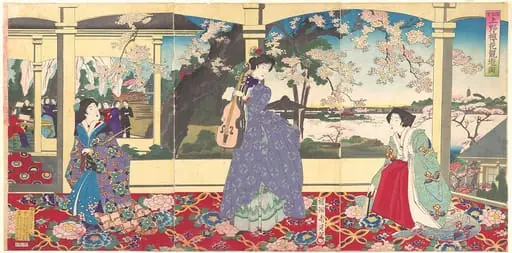 『踏舞会 上野桜花観 遊ノ図』|A Dance Party: Enjoying Cherry Blossom Viewing at Ueno (Tōbukai Ueno ōka yūran no zu)
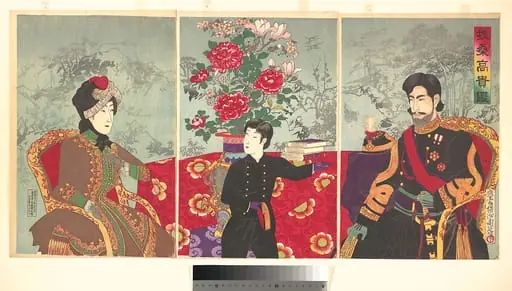 『扶桑高貴鑑』|A Mirror of Japan’s Nobility: The Emperor Meiji, His Wife, and Prince Haru (Fūsō kōki kagami)
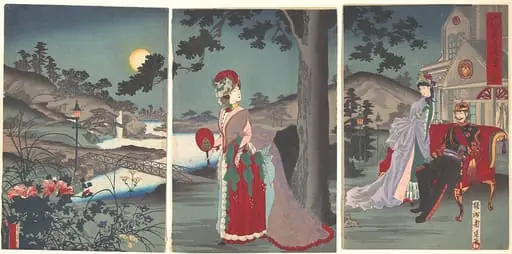 『高貴納涼ノ図』|Nobility in the Evening Cool (Koki nōryō no zu)
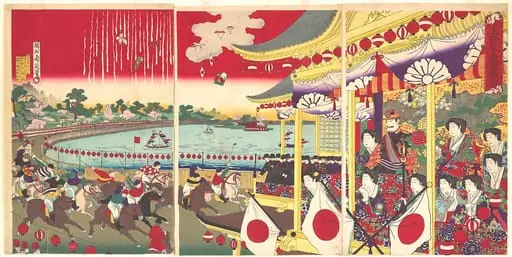 『上野不忍競馬図』|View of the Horse Track at Shinobazu in Ueno Park (Ueno shinobazu keiba zu)
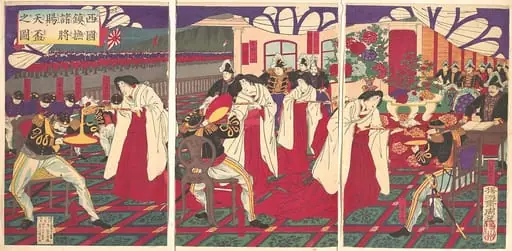 西国鎮静撫諸将天杯賜之図|Illustration of the Commanders who Pacified Western Japan, Receiving the Emperor's Gift Cups (Saigoku chinbu shoshō tenpai o tamau no zu)
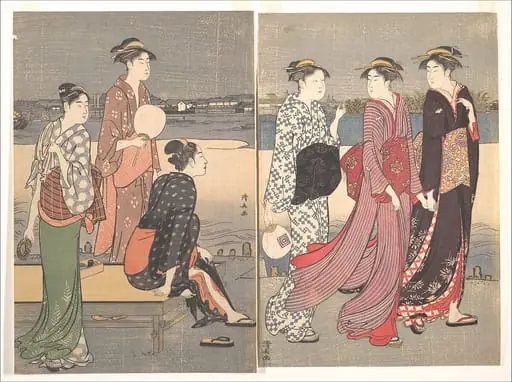 鳥居清長画 大川端の夕涼み|Enjoying the Evening Cool on the Banks of the Sumida River
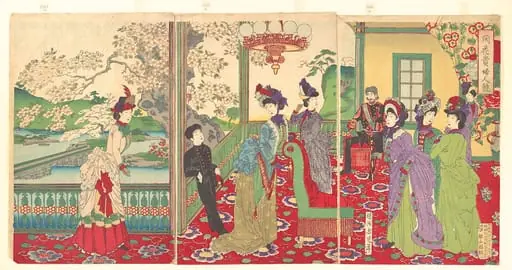 楊洲周延画 『開花貴婦人競』|A Contest of Elegant Ladies among the Cherry Blossoms (Kaika kifujin kisoi)
![南四季 夏景|The Four Seasons in Southern Edo: A Summer Scene (Minami shiki; Natsu [no] kei), by Utagawa Toyokuni I](https://artifactworldgallery.com/img/utagawa-toyokuni-i--the-four-seasons-in-southern-edo-a-summer-scene-minami-shiki--de8110e8ab2ddcb5-w320.webp) 南四季 夏景|The Four Seasons in Southern Edo: A Summer Scene (Minami shiki; Natsu [no] kei)
南四季 夏景|The Four Seasons in Southern Edo: A Summer Scene (Minami shiki; Natsu [no] kei)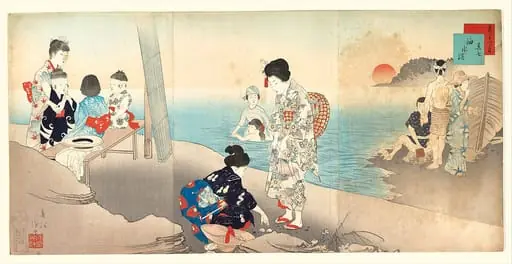 Untitled
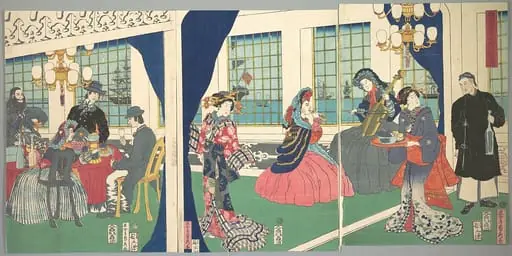 Untitled
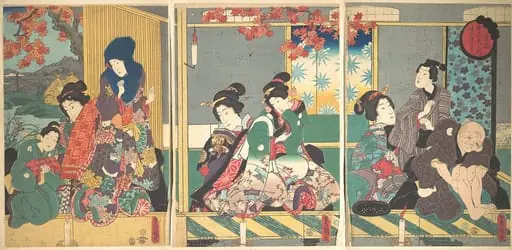 重陽後の月宴 十二月ノ内|Banquet of the Next Full Moon at the Chrysanthemum Festival, from the series The Twelve Months (Chōyō nochi no tsuki no en, Jūni tsuki no uchi)
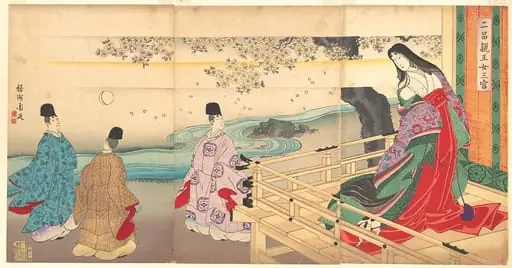 二品親王女三宮|The Third Princess and Kashiwagi, from Chapter 34, “New Herbs I (Wakana I)” (Nihon shinnō onna sannomiya)
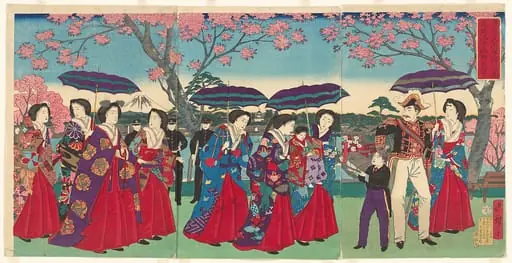 三代歌川広重画 『東京名所 従上野公園 不忍池中嶋弁天之景』|View of Benten Shrine on Nakanoshima Island in Shinobazu Pond, Ueno Park, from the series Famous Views of Tokyo (Tōkyō Tokyo meisho yori Ueno kōen Shinobazu no ike Nakanoshima Benten no kei)
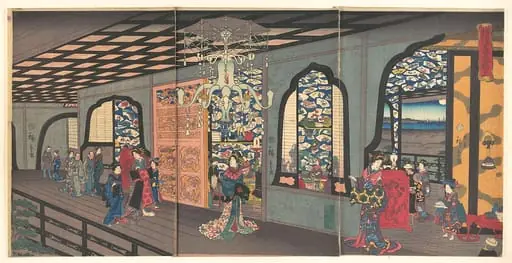 Yokohama Gankirō age|横浜岩亀楼上|Upper Floor of the Gankirō Tea House in Yokohama