Artwork
千代田の大奥|The Inner Palace of Chiyoda (Chiyoda no Ōoku)
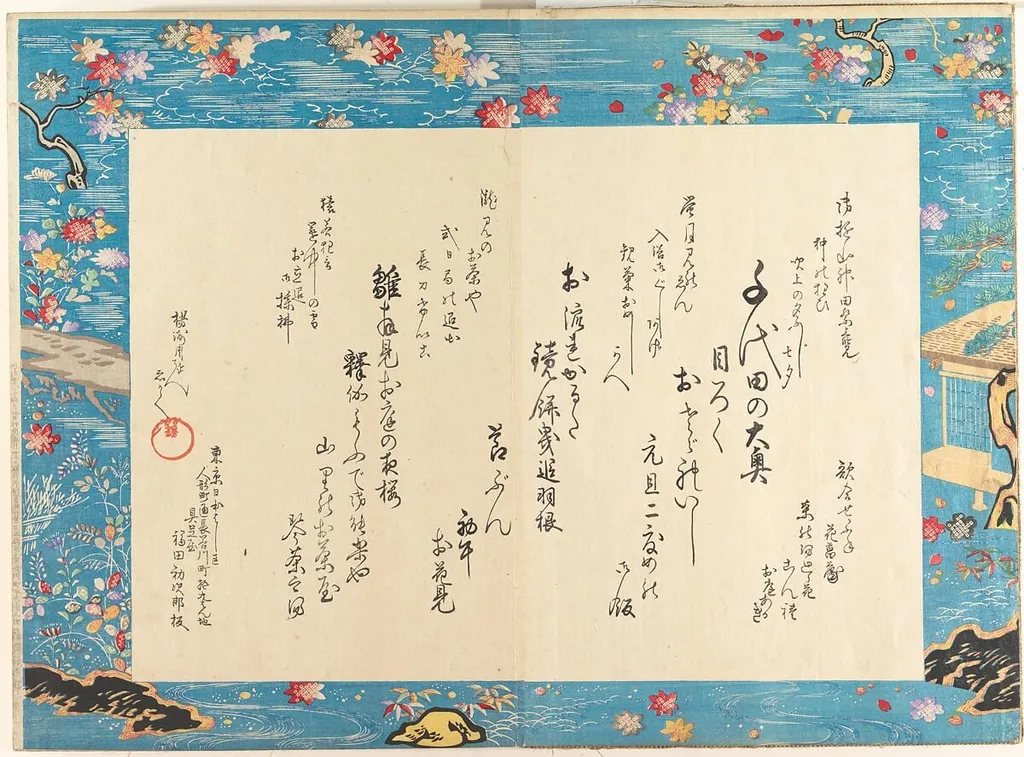
千代田の大奥|The Inner Palace of Chiyoda (Chiyoda no Ōoku) is an ink print by the Impressionist artist Yōshū (Hashimoto) Chikanobu. It dates from 1895 and is held in the collection of the Metropolitan Museum of Art.
About this work
Overview
Created in 1895 by the Japanese printmaker Yōshū Chikanobu, this diptych consists of two woodblock sheets printed with ink and color on paper. The work is part of the Metropolitan Museum of Art’s collection and exemplifies the vibrant, detailed style of late‑nineteenth‑century Japanese prints.
Subject & Meaning
The composition depicts an imagined interior of the Chiyoda palace, a setting associated with the imperial court. Along the top edge, stylized clouds and a profusion of flowers in red, pink, and yellow suggest a festive atmosphere, while a block of Japanese calligraphy below adds a poetic element typical of the genre.
Technique & Style
Chikanobu employed traditional ukiyo‑e woodblock techniques, using multiple blocks to achieve bright, saturated hues and fine line work. The print’s intricate architectural fragments and natural scenery are rendered with precise carving, allowing the delicate balance of foreground and background to emerge across the two panels.
History & Provenance
The diptych was produced during the Meiji period, a time when Japanese artists increasingly catered to both domestic and foreign audiences. It entered the Metropolitan Museum of Art’s holdings through acquisition in the early twentieth century, reflecting the museum’s early interest in Japanese printmaking.
Context
Printed at a time when Japan was opening to the West, Chikanobu’s work often blended traditional subjects with modern sensibilities. The inclusion of a formal seal in the lower left corner underscores the print’s official character, while the poetic inscription aligns it with the literary traditions that accompanied many ukiyo‑e prints.
Artist & collection


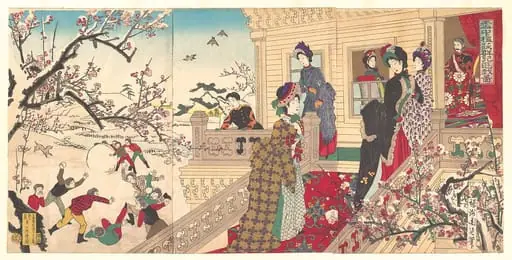 『雪中梅荘群児遊戯 図』|Children Playing in the Snow under Plum Trees in Bloom (Secchū baisō gunji yūgi zu)
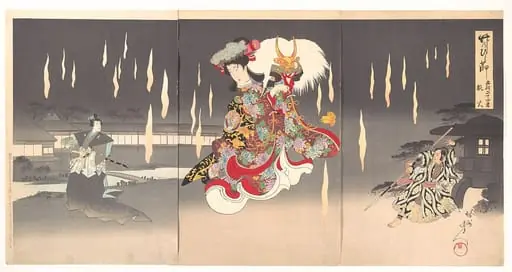 Untitled
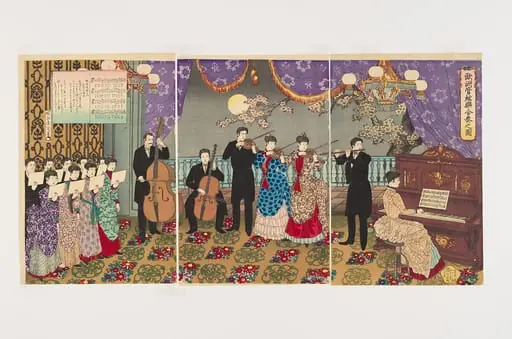 『欧州管絃楽合奏之図』|Concert of European Music (Ōshū kangengaku gassō no zu)
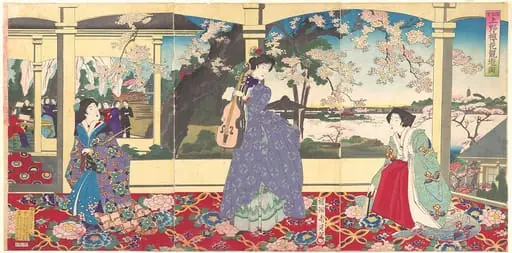 『踏舞会 上野桜花観 遊ノ図』|A Dance Party: Enjoying Cherry Blossom Viewing at Ueno (Tōbukai Ueno ōka yūran no zu)
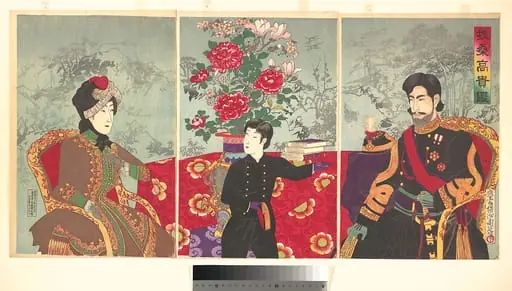 『扶桑高貴鑑』|A Mirror of Japan’s Nobility: The Emperor Meiji, His Wife, and Prince Haru (Fūsō kōki kagami)
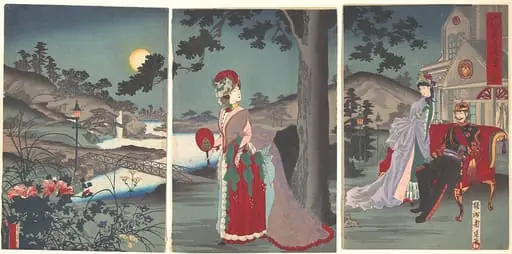 『高貴納涼ノ図』|Nobility in the Evening Cool (Koki nōryō no zu)
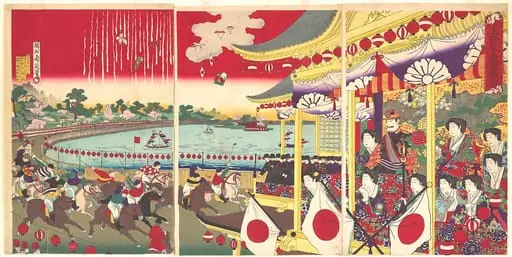 『上野不忍競馬図』|View of the Horse Track at Shinobazu in Ueno Park (Ueno shinobazu keiba zu)
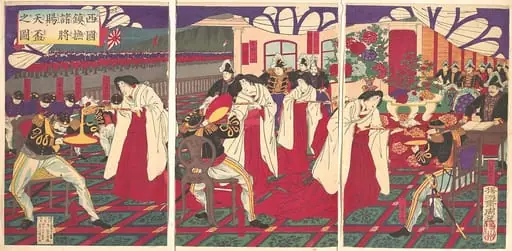 西国鎮静撫諸将天杯賜之図|Illustration of the Commanders who Pacified Western Japan, Receiving the Emperor's Gift Cups (Saigoku chinbu shoshō tenpai o tamau no zu)
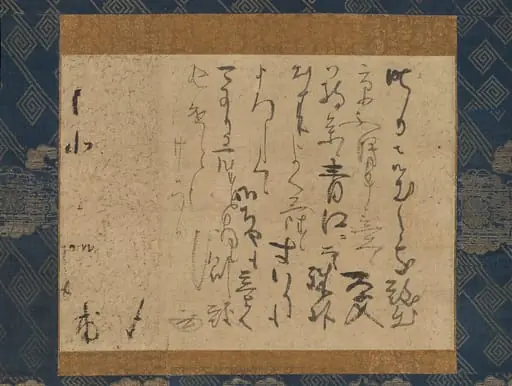 Untitled
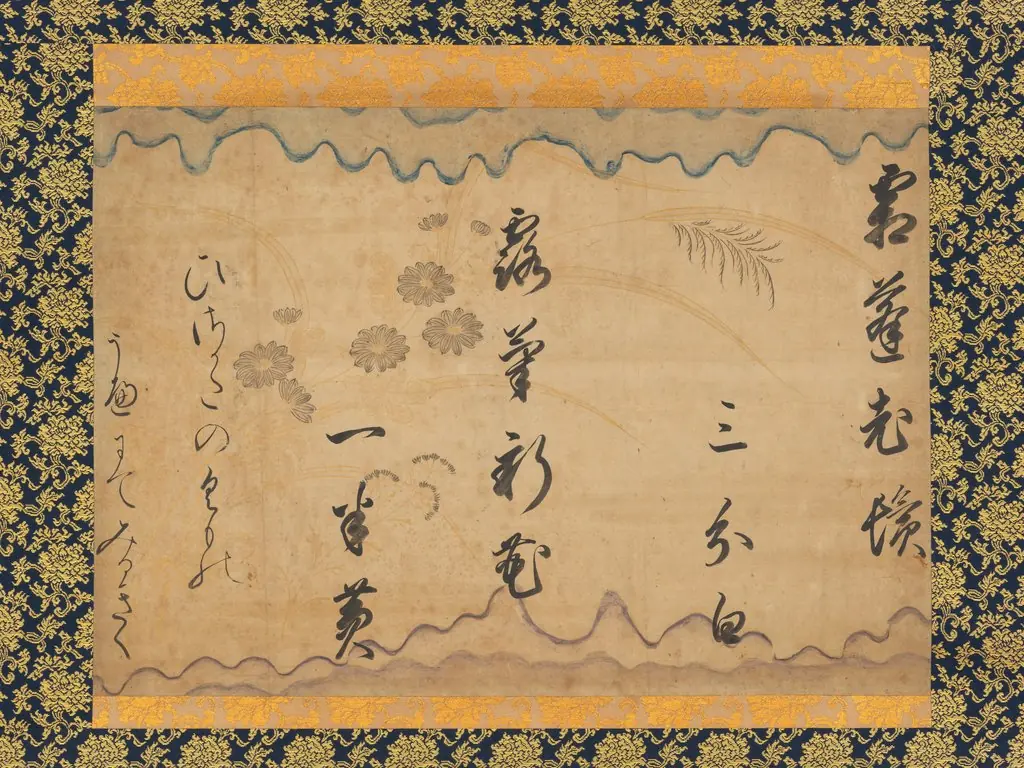 Chinese Couplet by Bai Juyi and Waka by Fujiwara no Toshiyuki (partial) from “Japanese and Chinese Poems to Sing” (Wakan rōeishū)
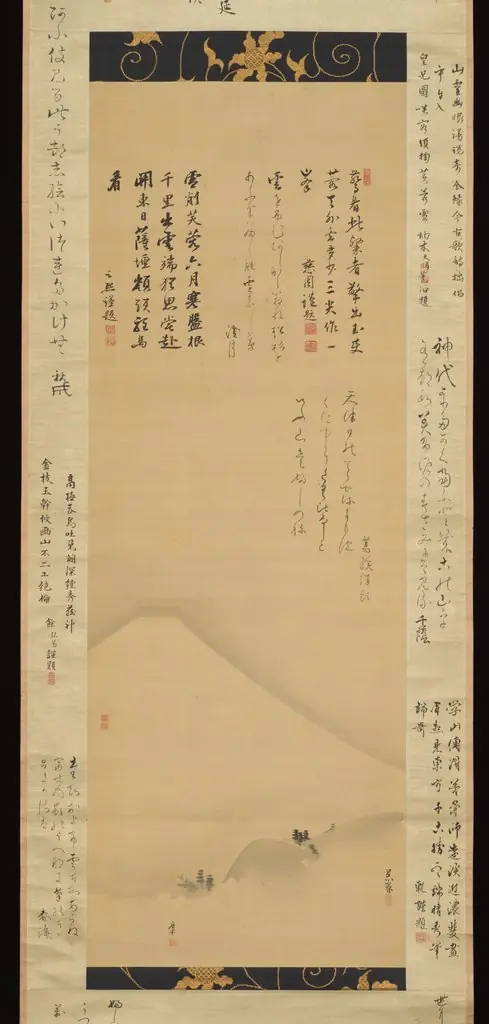 Gassaku: Mount Fuji 合作・富士山図 (Gassaku Fujisan zu)
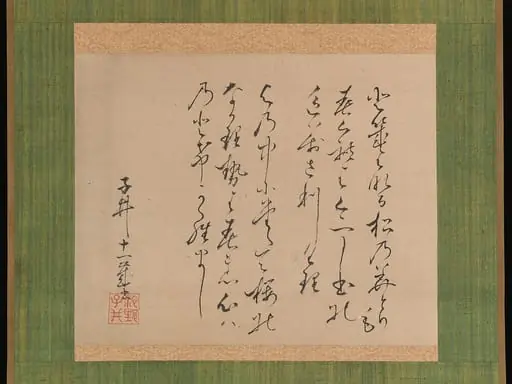 Untitled
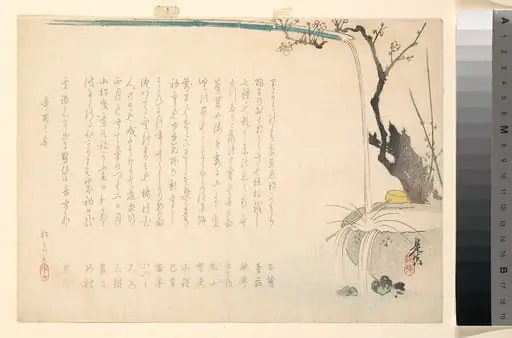 Untitled
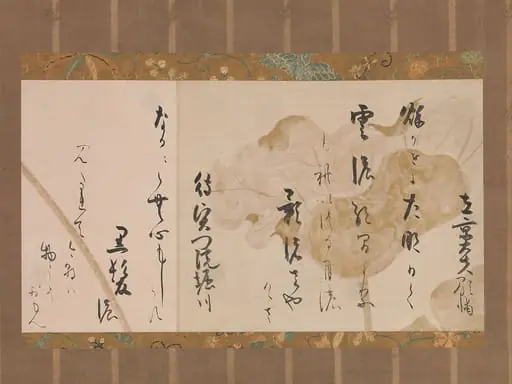 本阿弥光悦書・俵屋宗達下絵 小倉百人一首和歌巻断簡|Two Poems from One Hundred Poems by One Hundred Poets
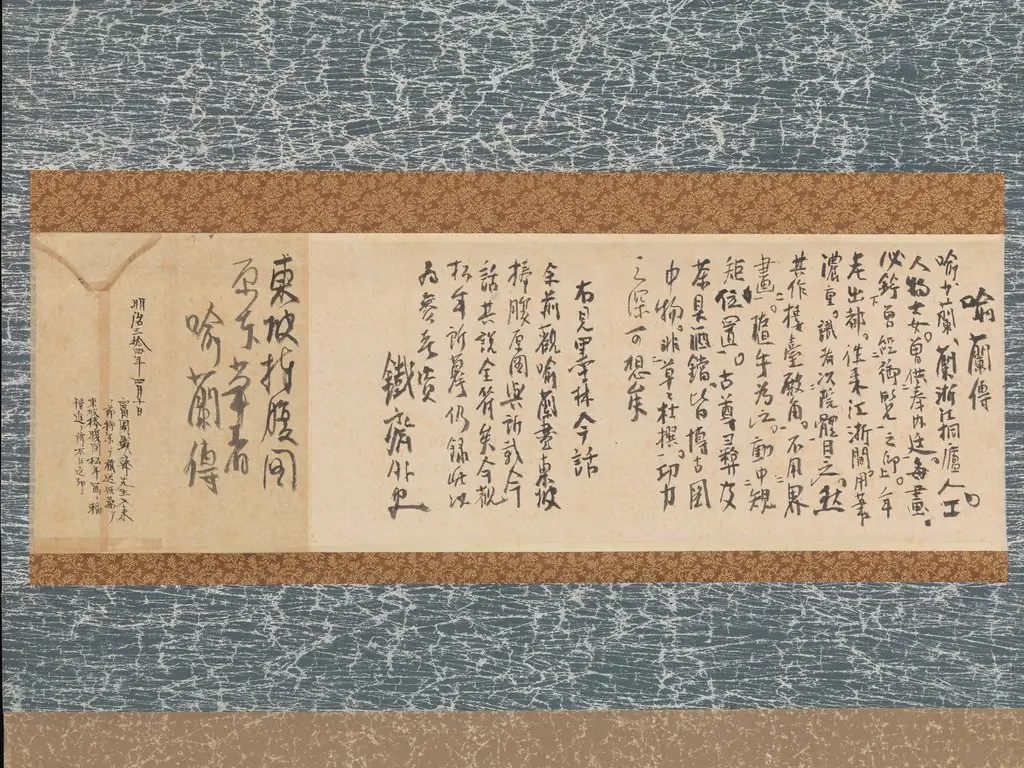 Su Dongpo Laughing
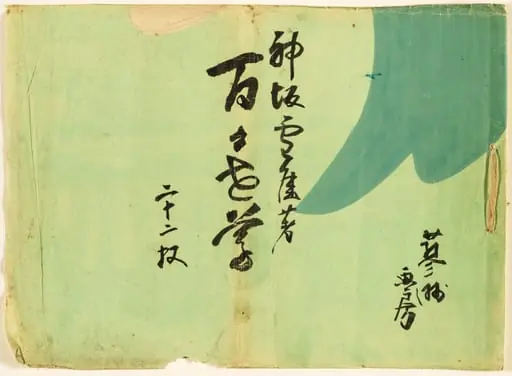 Flowers of a Hundred Worlds (Momoyogusa)
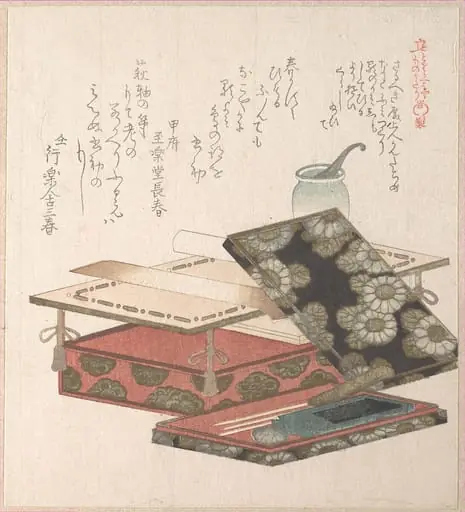 Untitled
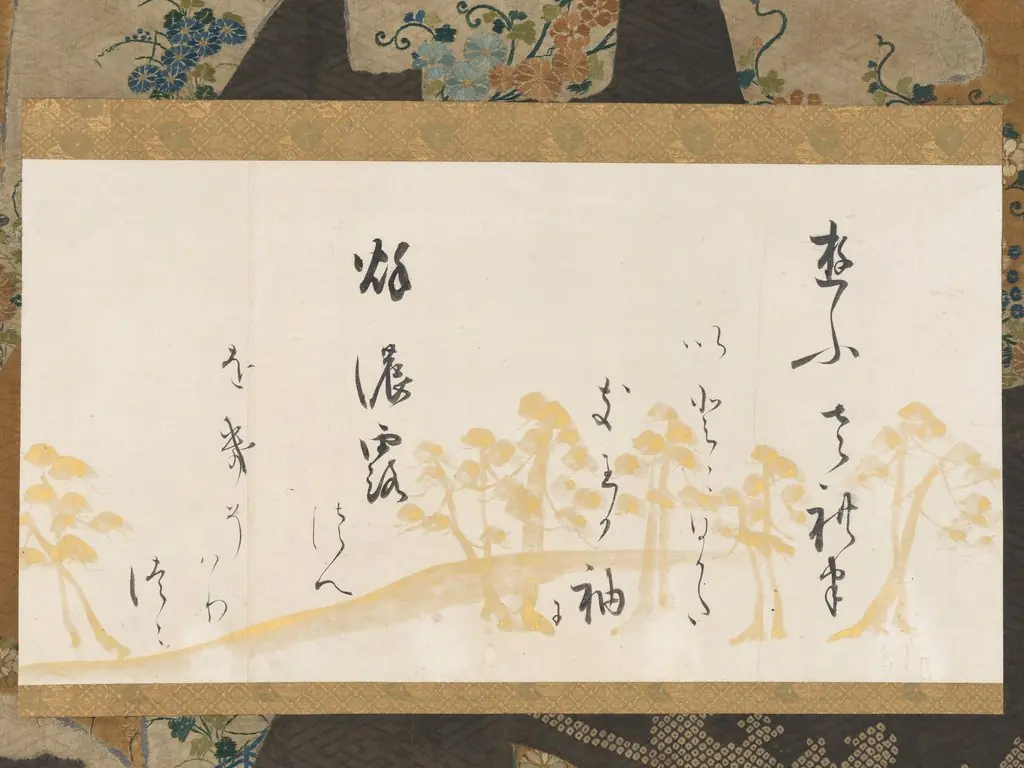 Section of a Handscroll with Waka and Underpainting of Pines