Artwork
Untitled
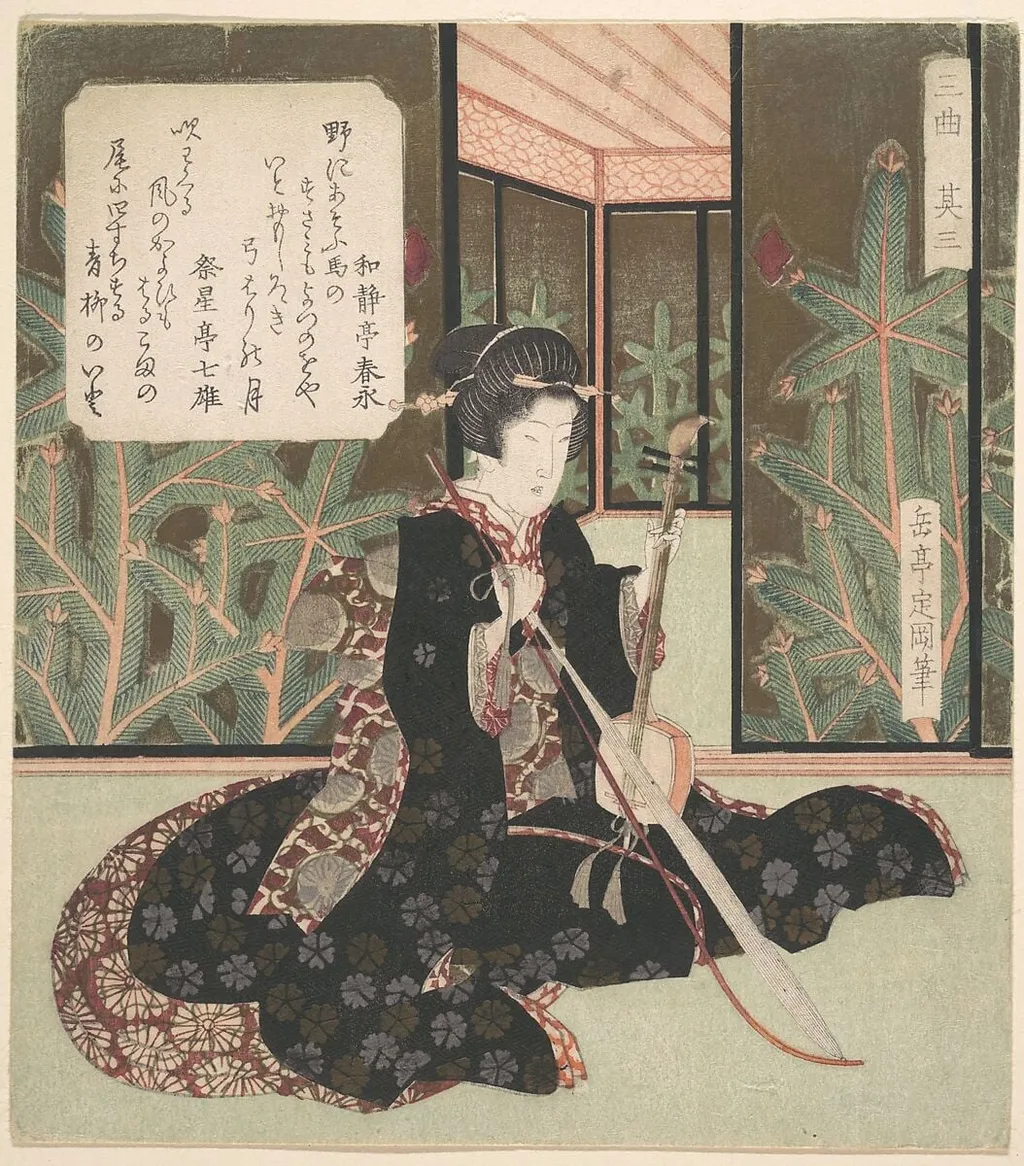
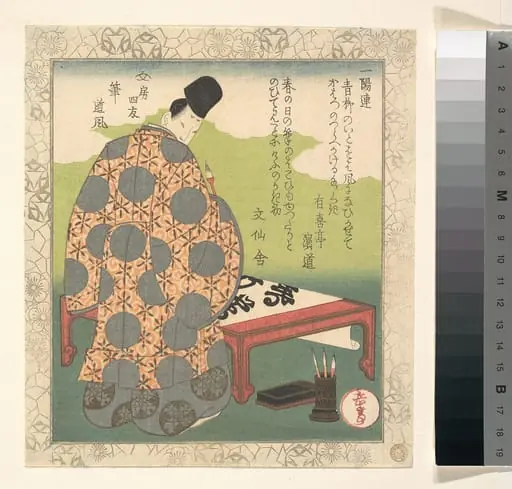
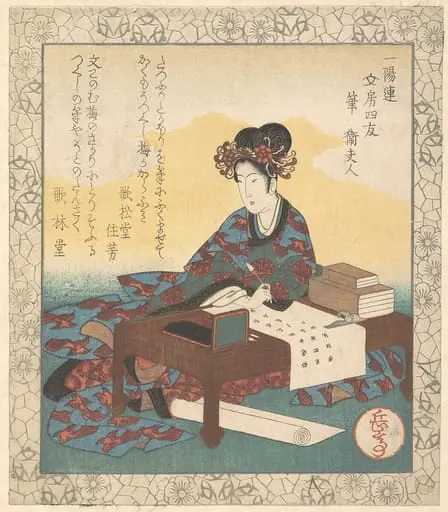
Untitled is an ink print by the Romanticist artist Yashima Gakutei. It dates from 1827 and is held in the collection of the Metropolitan Museum of Art.
About this work
Overview
Gakutei, trained under Hokkei and Hokusai, brought a poet’s sensibility to his prints, elevating them beyond mere illustration.
Created in 1827, this surimono woodblock print by Yashima Gakutei is a privately commissioned work produced for literary enthusiasts in early 19th-century Japan. Executed in ink and color on paper, it exemplifies the refined aesthetic of surimono, a genre known for its delicate craftsmanship and integration of visual and poetic elements. Gakutei, trained under Hokkei and Hokusai, brought a poet’s sensibility to his prints, elevating them beyond mere illustration.
Subject & Meaning
The scene portrays a woman seated on the floor, playing a small stringed instrument, likely a koto or shamisen. Her black robe, adorned with floral motifs, and ornate headwear suggest refined status. A scroll beside her implies literary engagement, while the glimpse of leaves and a bird beyond the sliding door evokes a quiet, natural harmony. The composition invites contemplation, aligning the act of music with poetic solitude and seasonal awareness.
Technique & Style
Gakutei employed precise woodblock carving and hand-coloring to achieve sharp outlines and rich, layered tones. The floral patterns on the robe and the delicate rendering of foliage behind the door demonstrate meticulous attention to texture and detail. Ink washes suggest depth in the leaves, while bold contrasts define form without excess. The integration of calligraphic text within the image reinforces the print’s literary character, typical of surimono’s hybrid nature.
History & Provenance
As a surimono, this print was likely commissioned by a member of a poetry circle or private patron, not sold publicly. Such works were often distributed as New Year’s greetings or commemorative gifts among literati. Gakutei’s association with kyōka poets and his training under established ukiyo-e masters positioned him as a favored artist for these intimate, high-quality prints, though few survive with documented provenance.
Context
Surimono emerged in the late 18th century as a niche art form catering to Japan’s educated elite, blending poetry, calligraphy, and printmaking. Unlike mass-produced ukiyo-e, these prints emphasized subtlety and personal expression. Gakutei’s work reflects the cultural value placed on refined leisure, seasonal imagery, and the interplay between music, verse, and nature—core themes in Edo-period literary circles.
Legacy
Gakutei’s surimono prints are regarded as exemplars of the genre’s artistic potential, admired for their balance of visual elegance and literary depth. Though less widely known than his mentors, his contributions helped sustain the surimono tradition into the 19th century. Surviving examples remain important for understanding the intersection of poetry and print culture in late Edo Japan.
Artist & collection
Artist
Yashima Gakutei (Japanese: 八島岳亭; c. 1786 – 1868) was a Japanese artist and poet who was a pupil of both Totoya Hokkei and Hokusai. Gakutei is best known for his kyōka poetry and surimono works.

 Untitled
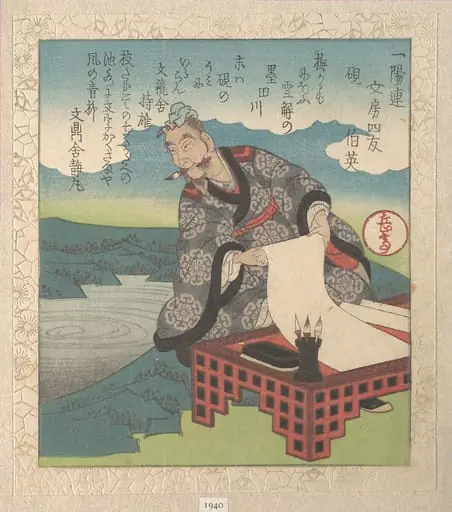 「一陽連文房四友 硯 伯英」『春雨集』 摺物帖|The Chinese Calligrapher Boying (Japanese: Hakuei; also known as the “Sage of Cursive Script”); “Inkstone” (Suzuri), from Four Friends of the Writing Table for the Ichiyō Poetry Circle (Ichiyō-ren Bunbō shiyū) From the Spring Rain Collection (Harusame shū), vol. 1
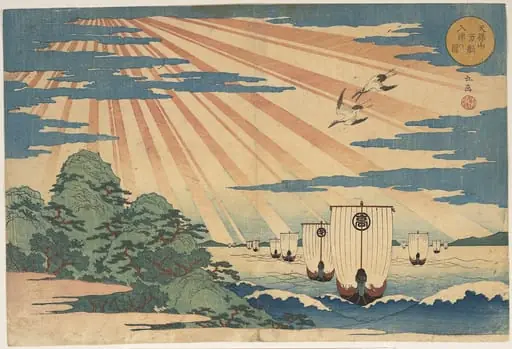 Untitled
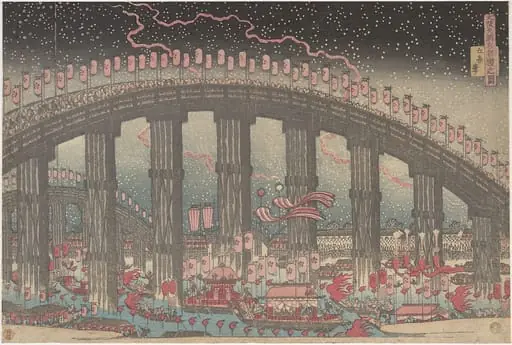 Osaka Tenmangu sairei no zu|The Tenmangu Festival at Osaka
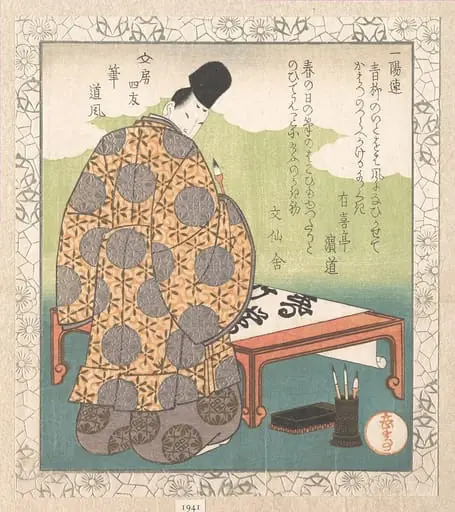 「一陽連文房四友 筆 道風」『春雨集』 摺物帖|The Heian Court Calligrapher Ono no Tōfū (894–966); “Calligraphy Brush” (Fude), from Four Friends of the Writing Table for the Ichiyō Poetry Circle (Ichiyō-ren Bunbō shiyū)From the Spring Rain Collection (Harusame shū), vol. 1
 Untitled
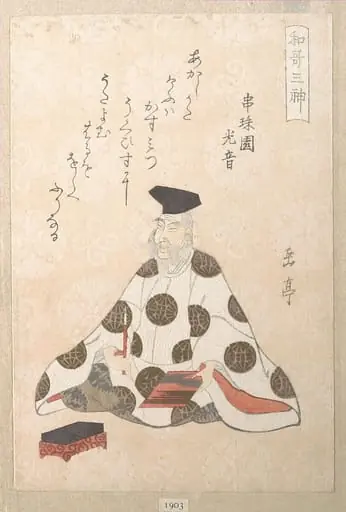 『和歌三神』 柿本人麻呂|Kakinomoto no Hitomaro (ca. 662–710), One of the Three Gods of PoetryFrom the Spring Rain Collection (Harusame shū), vol. 1
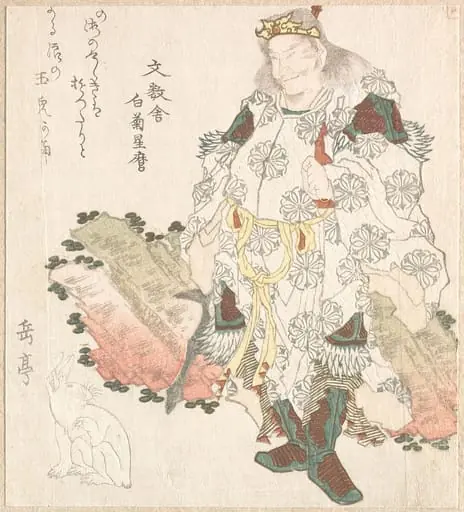 Untitled
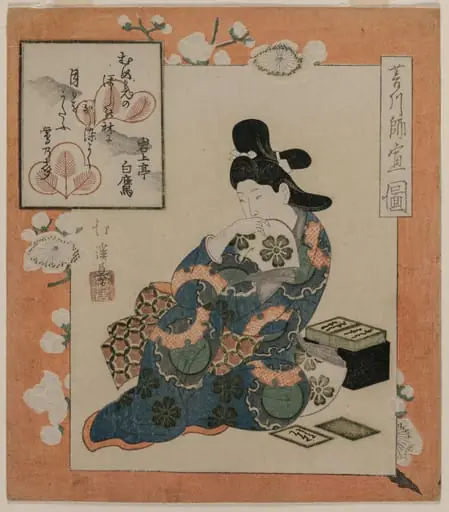 A Picture by Hishikawa Moronobu: Woman with a Set of Poem Cards
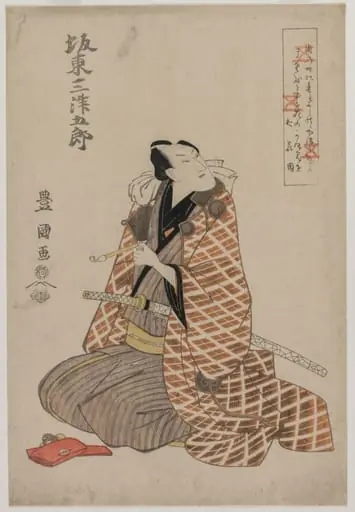 Bando Mitsugoro IV in a Travelling Robe
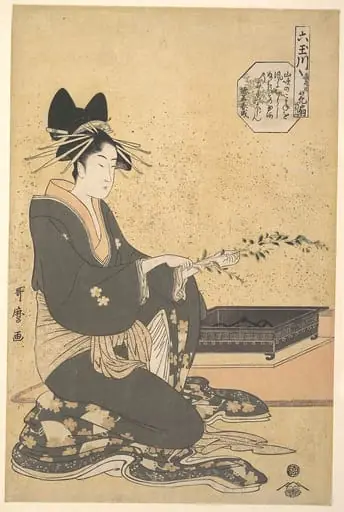 喜多川歌麿画 六玉川 扇屋内 花扇 扇屋内花扇|The Oiran Hanaogi of Ogiya, from the series “Six Jewel Rivers” (Mutamagawa)
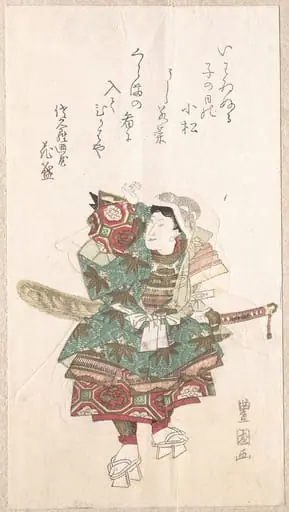 Untitled
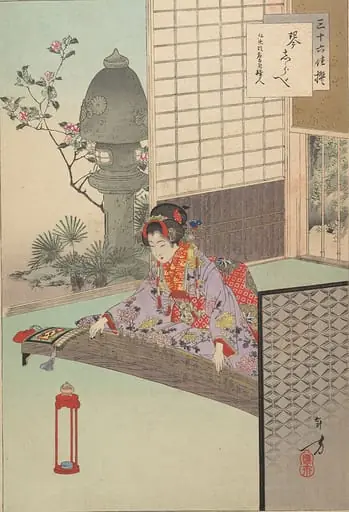 Untitled
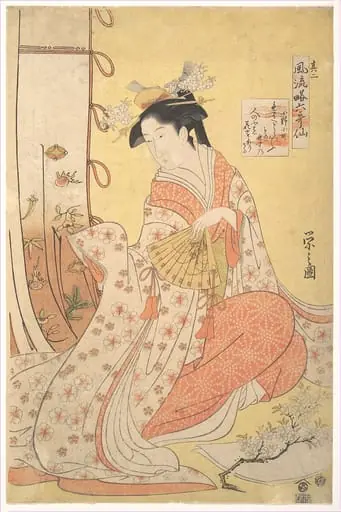 鳥文斎栄之画 「風流略六哥仙 其の二」小野小町|Ono no Komachi: Number Two (Sono ni), from the series Stylish Parodies of the Six Poetic Immortals (Fūryū yatsushi rokkasen)
 Untitled
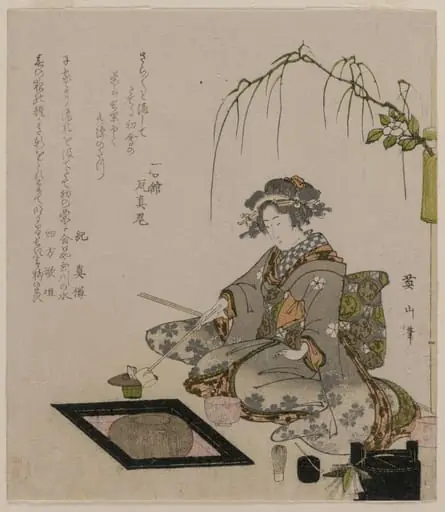 Woman Performing the Tea Ceremony
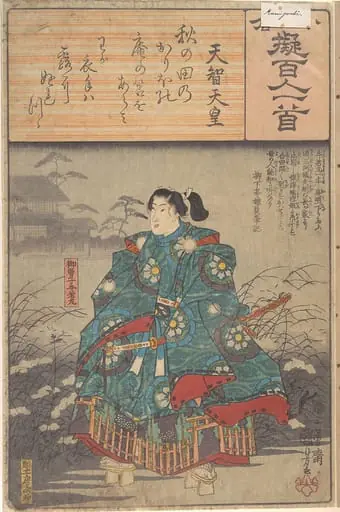 小倉擬百人一首|Album of Eighty-eight Prints from the series Ogura Imitations of One Hundred Poems by One Hundred Poets (Ogura nazorae hyakunin isshu)
 Untitled
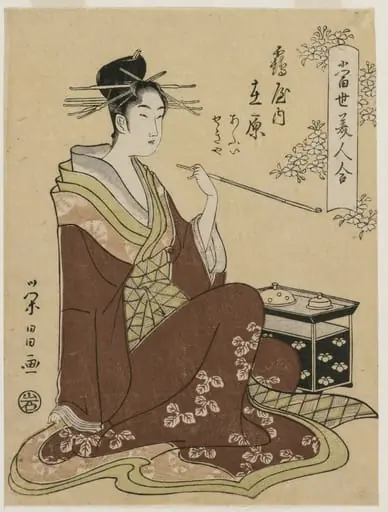 The Courtesan Ariwara of the Tsuruya Seated by a Smoking Chest (From the series A Collection of Modern Beauties)
 Untitled