Artwork
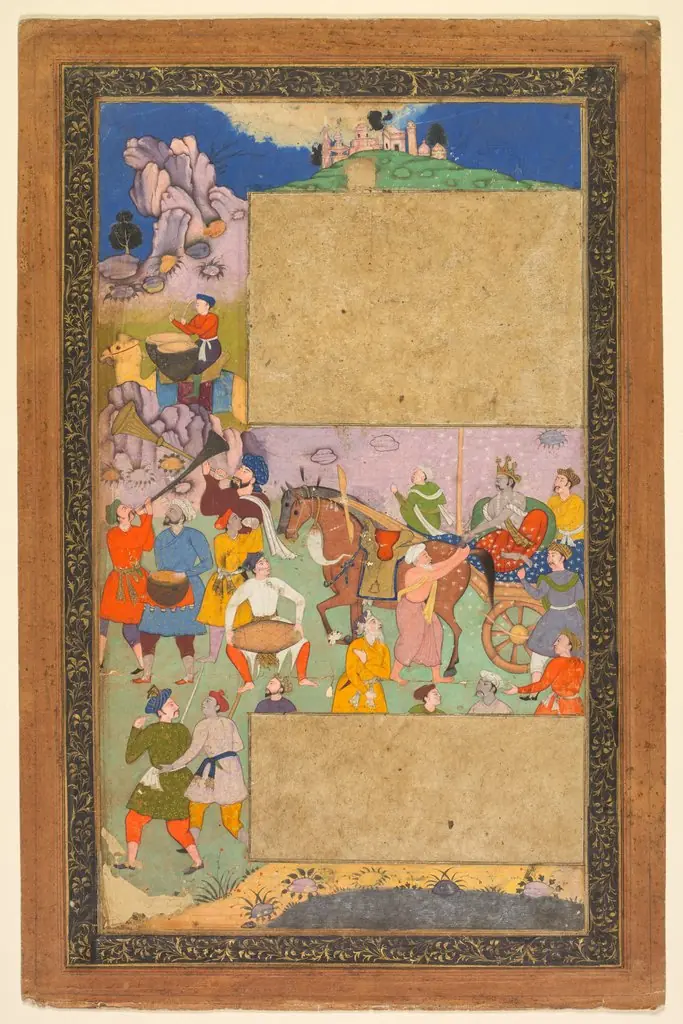
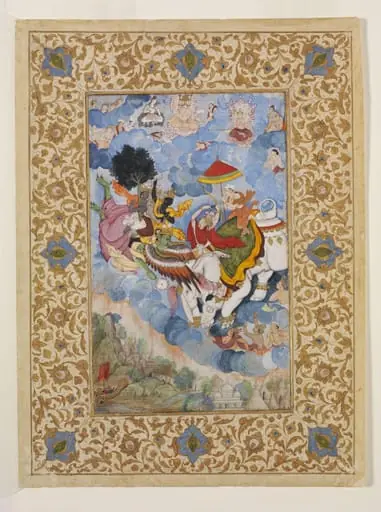
A charioteer riding through a rocky landscape with an entourage of footmen and musicians, page from a Razm-nama (Book of Wars) adapted from the Sanskrit Mahabharata and translated into Persian by Mir Ghiyath al-Din Ali Qazvini, known as Naqib Khan (Persian, d. 1614)
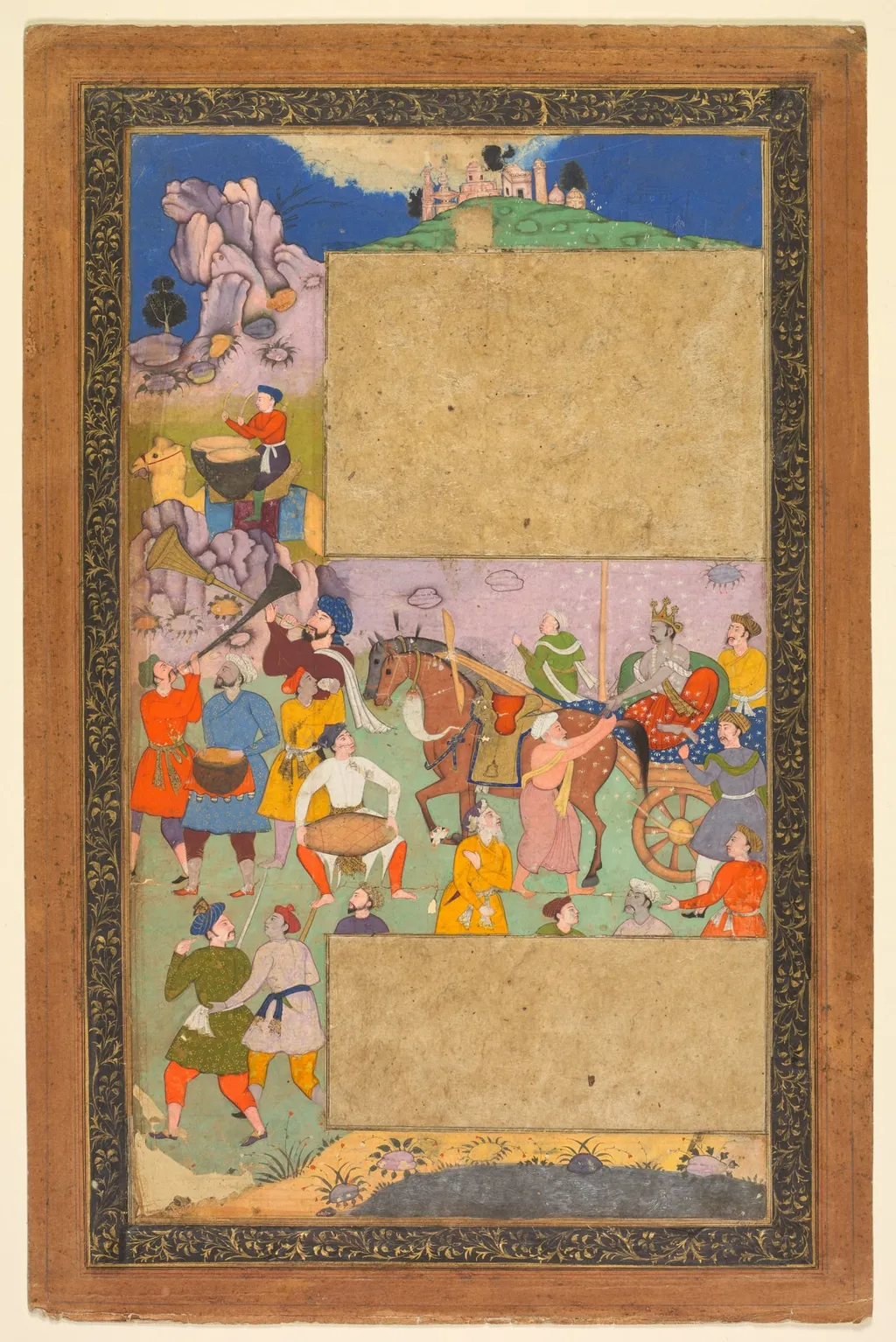
A charioteer riding through a rocky landscape with an entourage of footmen and musicians, page from a Razm-nama (Book of Wars) adapted from the Sanskrit Mahabharata and translated into Persian by Mir Ghiyath al-Din Ali Qazvini, known as Naqib Khan (Persian, d. 1614) is an unspecified painting by the Baroque artist Yusuf Ali. It dates from 1616 and is held in the collection of the Cleveland Museum of Art. This painting is a folio from the Razm-nama, a Persian translation of the Mahabharata commissioned by the Mughal court.
About this work
Overview
The work was produced under the patronage of Abd al-Rahim Khan-i-Khanan, a high-ranking noble and key figure in Akbar’s cultural projects.
This painting is a folio from the Razm-nama, a Persian translation of the Mahabharata commissioned by the Mughal court. Created in 1616 by the artist Yusuf Ali, it illustrates a scene from the epic’s war narratives. The work was produced under the patronage of Abd al-Rahim Khan-i-Khanan, a high-ranking noble and key figure in Akbar’s cultural projects. It resides today in The Cleveland Museum of Art.
Subject & Meaning
The scene depicts a noble figure in a chariot, surrounded by attendants, musicians, and foot soldiers, suggesting a royal procession or military movement. The camel-borne figure above may represent a messenger or supply carrier, reinforcing the logistical scale of the journey. The composition reflects the Mahabharata’s emphasis on duty, hierarchy, and the grandeur of warrior-kings, adapted to Mughal visual conventions of power and order.
Technique & Style
Yusuf Ali employed fine brushwork and layered pigments to achieve vivid hues—crimson, cobalt, and emerald—against muted earth tones. Figures are rendered with precise detail in costume and posture, while the rocky terrain is suggested through rhythmic, stylized contours rather than naturalistic depth. The division of space into upper and lower zones reflects a traditional Persian compositional approach, balancing narrative clarity with decorative richness.
History & Provenance
The Razm-nama was commissioned during the reign of Emperor Akbar and completed under Jahangir, with Naqib Khan overseeing the Persian translation from Sanskrit. Yusuf Ali was one of several artists working in the imperial atelier. This folio was likely part of a multi-volume manuscript, later dispersed. It entered the Cleveland Museum of Art’s collection through documented acquisitions in the 20th century.
Context
The Razm-nama project reflected Mughal efforts to synthesize Hindu and Islamic cultural traditions. Translating the Mahabharata into Persian was both a scholarly and political act, reinforcing imperial authority through literary patronage. The visual style merges Indian iconography with Persian miniature techniques, demonstrating the cosmopolitan nature of early 17th-century Mughal art under Abd al-Rahim’s patronage.
Legacy
This folio exemplifies the Mughal atelier’s ability to adapt epic narratives into visually complex courtly art. While the full Razm-nama manuscript is fragmented, surviving pages like this one remain vital for understanding cross-cultural exchange in early modern South Asia. They inform ongoing studies of how religious texts were reimagined through imperial aesthetics and artistic collaboration.
Artist & collection

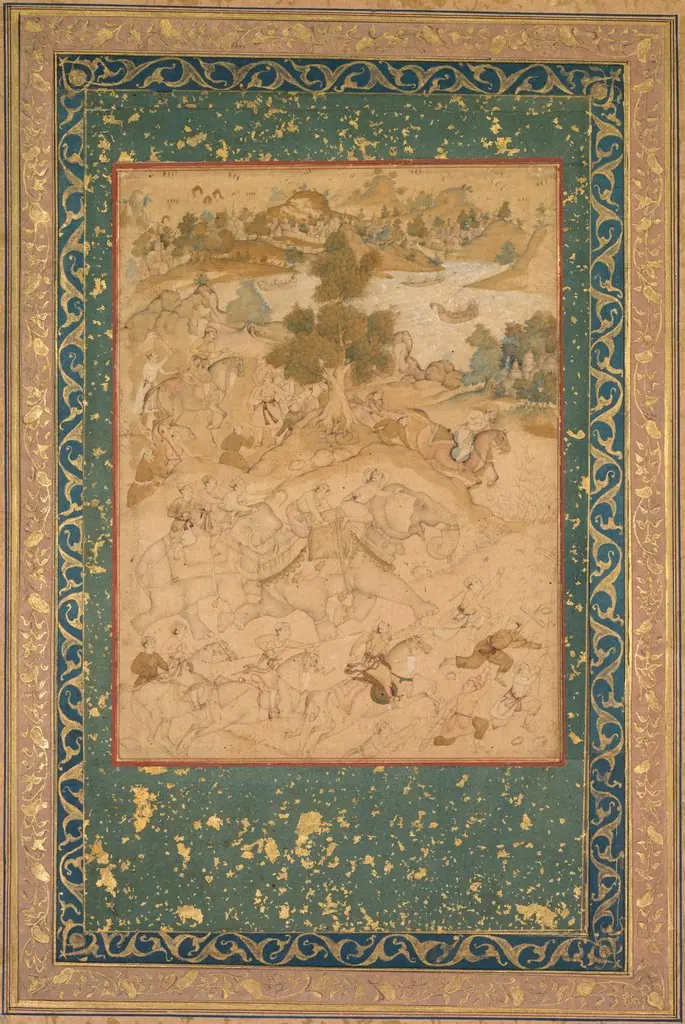 Akbar supervising the capture of wild elephants at Malwa in 1564, painting 90 from an Akbar-nama (Book of Akbar) of Abu’l Fazl (Indian 1551–1602)
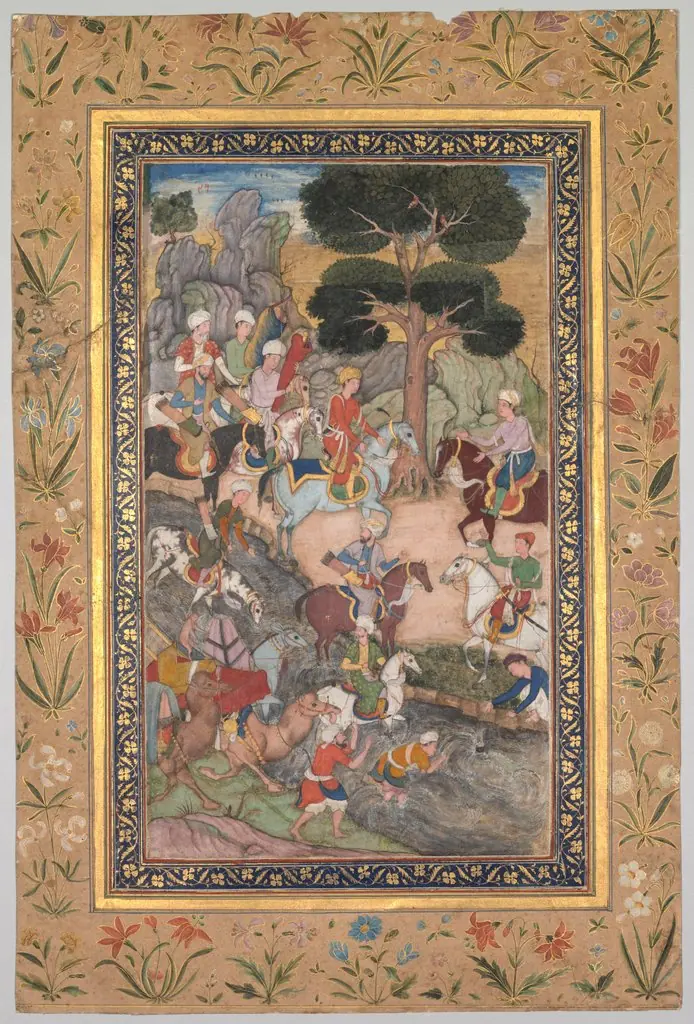 Babur meeting with Sultan Ali Mirza at the Kohik River, from a Babur-nama (Memoirs of Babur)
 Babur meeting with Sultan Ali Mirza at the Kohik River, from a Babur-nama (Memoirs of Babur)
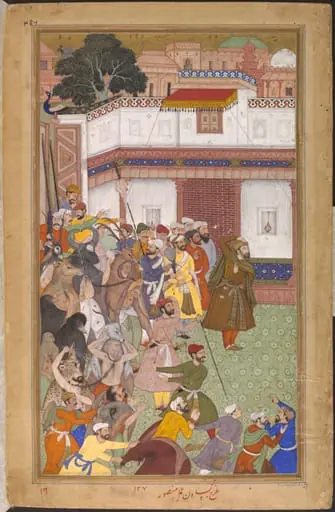 Husain Quli and Akbar
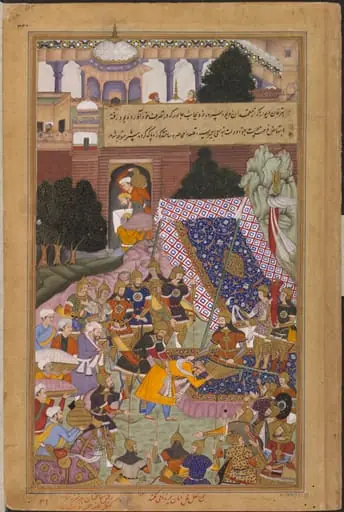 Tarkhan Divana and Husain Quli Khan
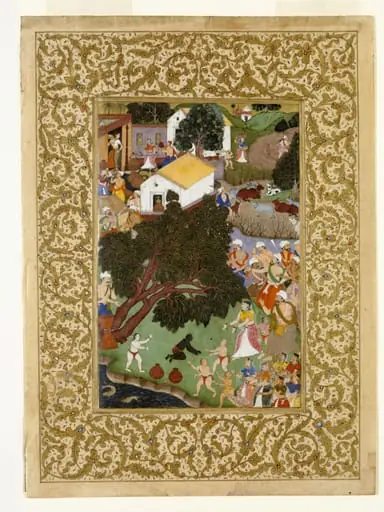 Krishna
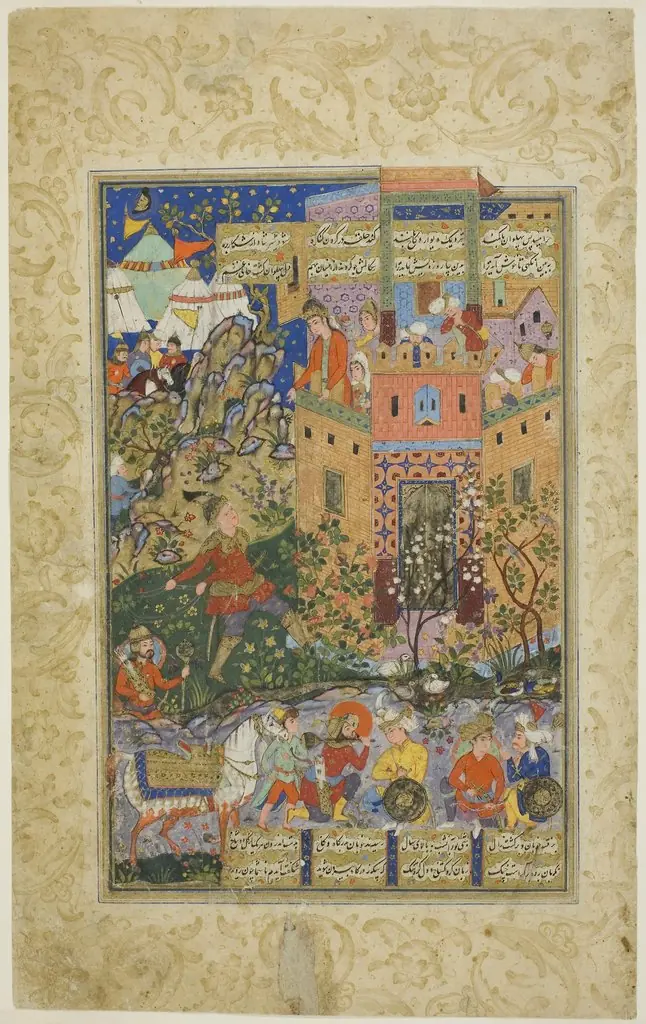 Zal Climbing to Rudaba, page from a copy of the Shahnama of Firdausi
 A charioteer riding through a rocky landscape with an entourage of footmen and musicians, page from a Razm-nama (Book of Wars) adapted from the Sanskrit Mahabharata and translated into Persian by Mir Ghiyath al-Din Ali Qazvini, known as Naqib Khan (P
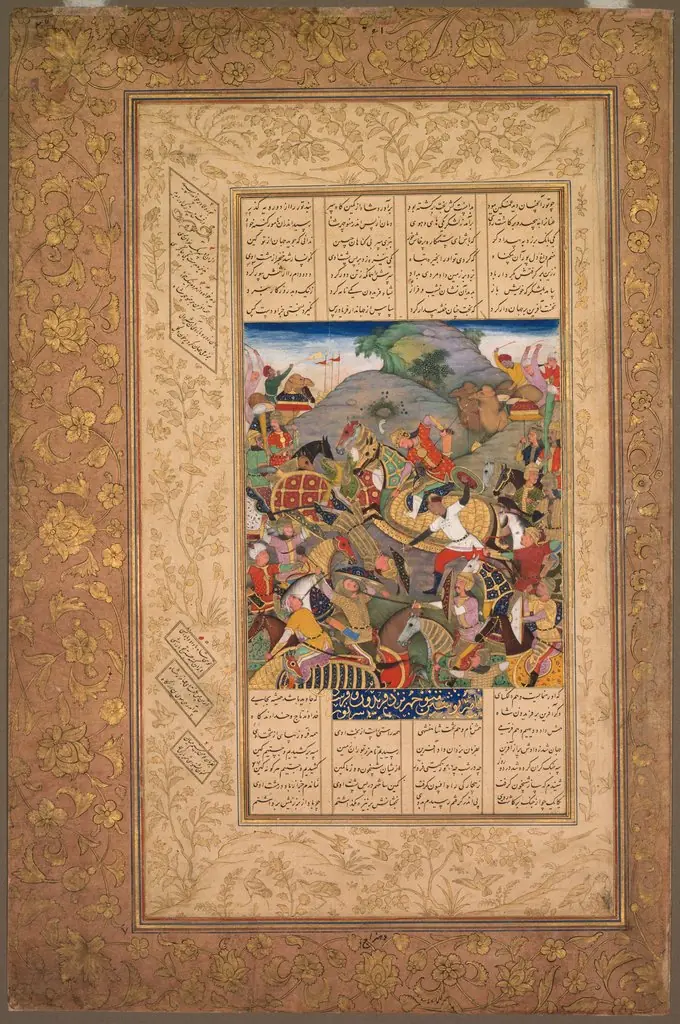 Battle between Manuchihr and Tur, from a Shah-nama (Book of Kings) of Firdausi (Persian, c. 934–1020)
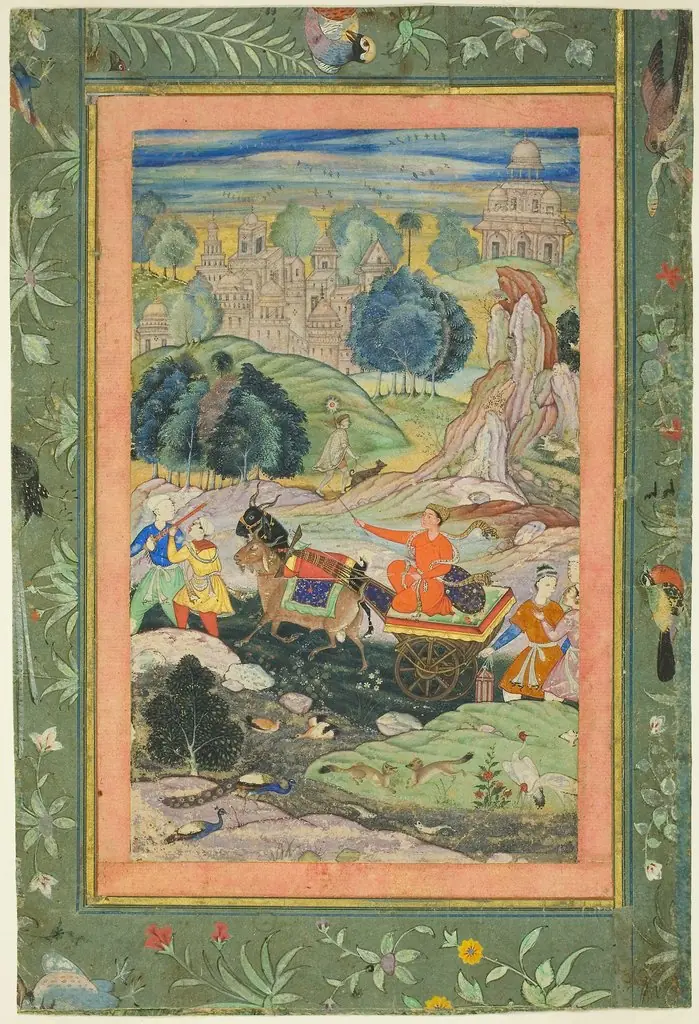 Prince Riding in Chariot Drawn by Goats
 Battle between Manuchihr and Tur, from a Shah-nama (Book of Kings) of Firdausi (Persian, c. 934–1020)
 Krishna and Indra