Artwork
Shepherds Traveling past a Ruined Rotunda
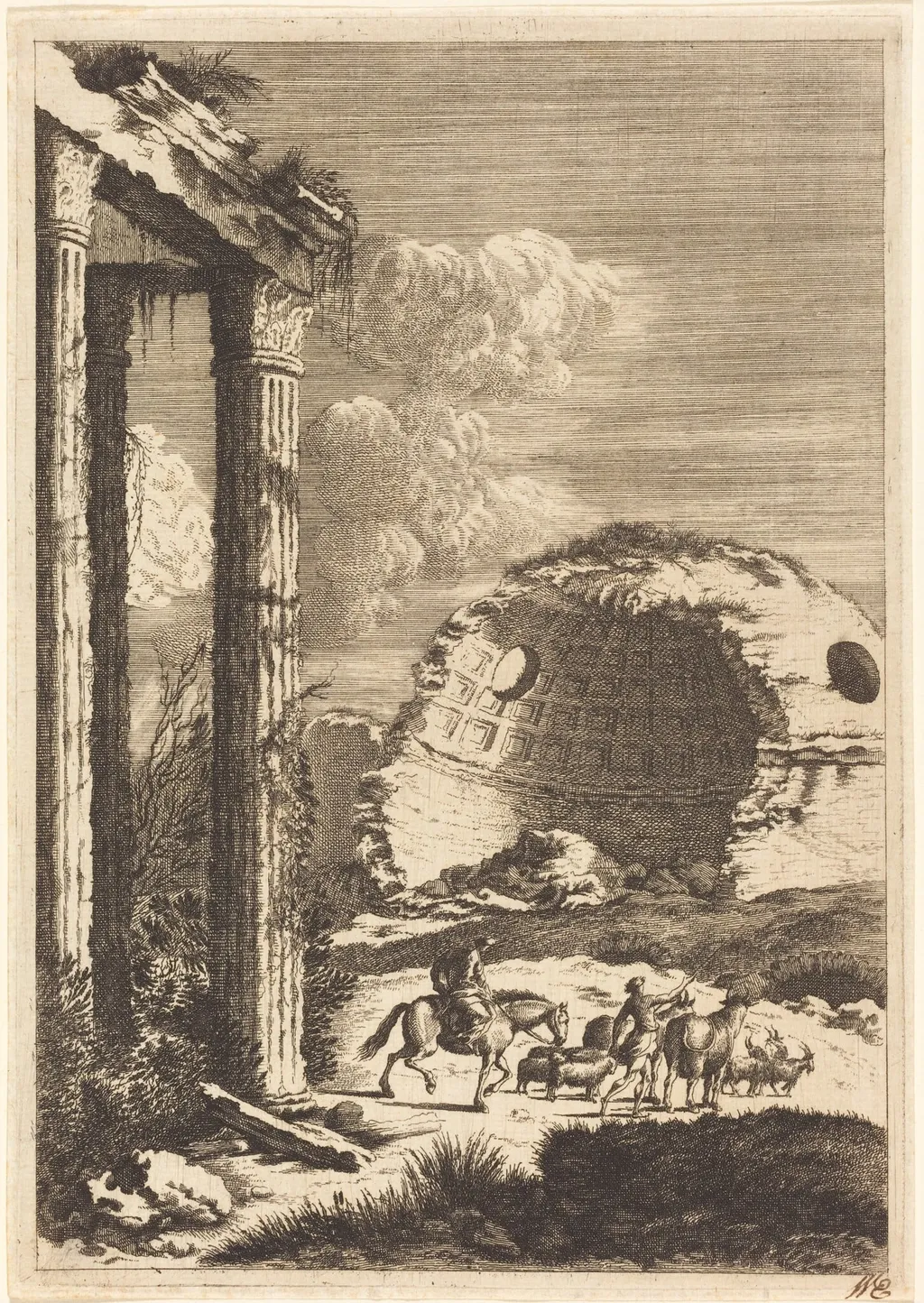
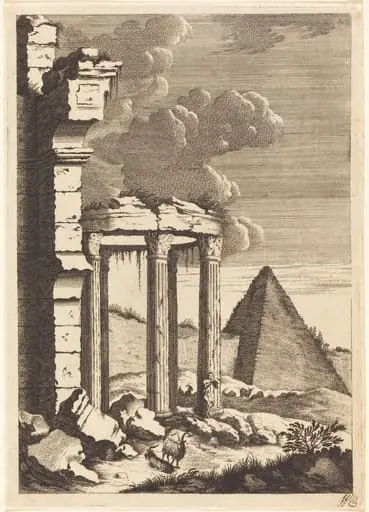
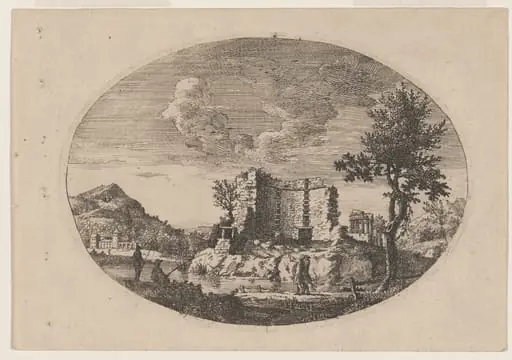
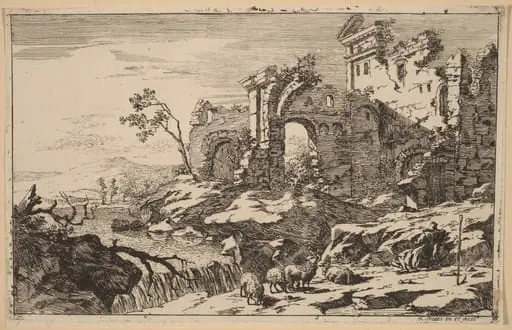
Shepherds Traveling past a Ruined Rotunda is an ink print by the Renaissance artist Bernhard Zaech. It dates from 1650 and is held in the collection of the National Gallery of Art.
About this work
Overview
Bernhard Zaech's etching, Shepherds Traveling past a Ruined Rotunda, dates to around 1650. It depicts a serene scene of shepherds moving past ancient ruins, exploring themes of transience and contemplation.
Subject & Meaning
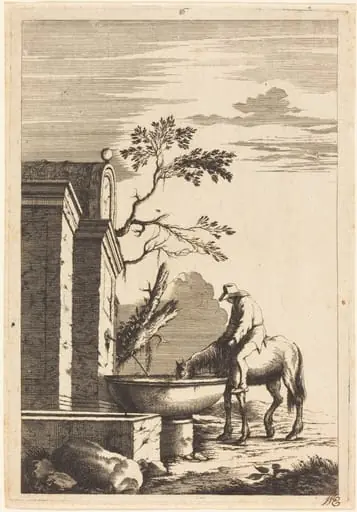
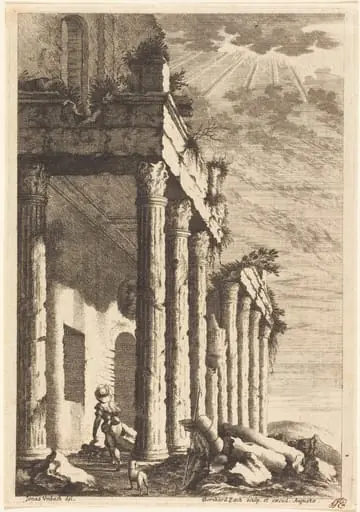
The etching shows shepherds in quiet reflection, accompanied by a horse and sheep, near a ruined classical rotunda. The contrast between the natural, living elements and the decaying structure symbolizes the fleeting nature of human accomplishments and the inevitability of time's passage.
Technique & Style
Executed in etching on laid paper, the work utilizes a nuanced tonal range, from deep blacks to light grays, to achieve depth and texture. This technical approach enhances the emotional and thematic depth of the scene, drawing the viewer into the shepherds' contemplative state.
History & Provenance
Created circa 1650 by Bernhard Zaech, specific details regarding the etching's provenance and historical context of creation are not provided in the available information.
Context
The piece reflects 17th-century European artistic interests in classical ruins and the emotional potential of landscape. It may also touch on contemporary philosophical themes of mortality and the passage of time, common in Baroque art.
Legacy
The enduring appeal of Shepherds Traveling past a Ruined Rotunda lies in its thoughtful juxtaposition of nature, decay, and human presence, contributing to the broader tradition of reflective, thematically rich landscape etchings in European art.
Artist & collection