Artwork
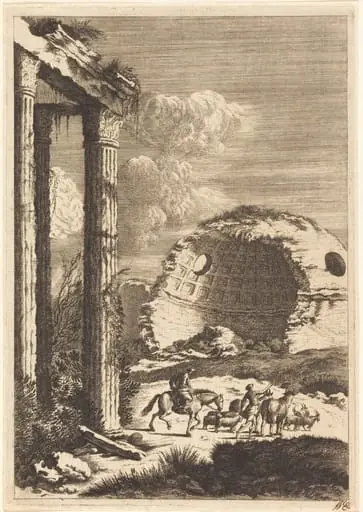
Travelers beside a Ruined Portico
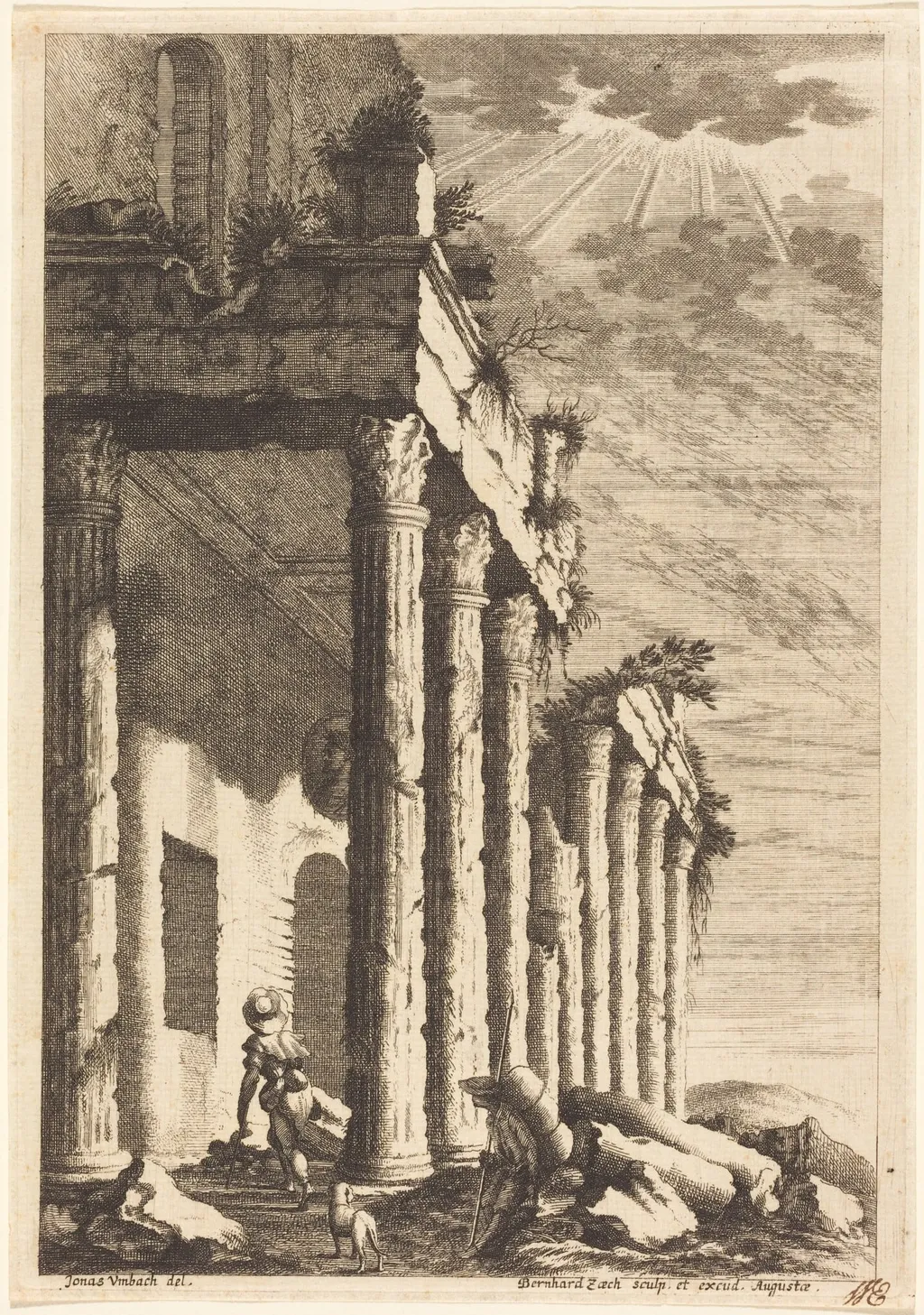
Travelers beside a Ruined Portico is an ink print by the Renaissance artist Bernhard Zaech. It dates from 1650 and is held in the collection of the National Gallery of Art.
About this work
Overview
Its subject is a desolate architectural fragment, rendered with a careful balance of line and tone that conveys depth despite the flat medium.
Travelers beside a Ruined Portico is an early‑modern etching executed on laid paper, attributed to Bernhard Zaech around 1650. The work measures a modest size typical of the period’s printmaking and presents a monochrome composition rendered entirely in ink. Its subject is a desolate architectural fragment, rendered with a careful balance of line and tone that conveys depth despite the flat medium.
Subject & Meaning
The image depicts two diminutive figures moving beneath a collapsed stone portico, its columns fractured and pierced by shafts of light. Palm fronds dangle from the remnants, while scattered stones litter the ground, suggesting a once‑grand structure now succumbing to time. The juxtaposition of human travelers with the ruin evokes a sense of transience and the passage of history, inviting contemplation of decay and continuity.
Technique & Style
Zaech employed traditional intaglio methods, incising the design onto a copper plate and using acid to bite the lines. The resulting inked impression relies on cross‑hatching and delicate stippling to model the stone’s solidity and the play of light through the gaps. The tonal gradations achieve a three‑dimensional effect, while the crisp outlines maintain a clear, graphic quality characteristic of mid‑seventeenth‑century etchings.
History & Provenance
The print is known from a limited number of surviving impressions, typical for works of this era, and has been documented in several European print collections. Its attribution to Zaech rests on stylistic comparison with other signed plates and archival references dating the execution to the mid‑1600s. No specific patron or original ownership record has been identified.
Context
Created during a period when artists frequently explored ruins as symbols of antiquity, the work reflects the broader Baroque fascination with the sublime and the passage of time. The inclusion of palm foliage hints at a classical or Mediterranean setting, aligning the piece with contemporary interests in archaeological imagination and the moralizing potential of decayed architecture.
Artist & collection


 Landscape with Ruins
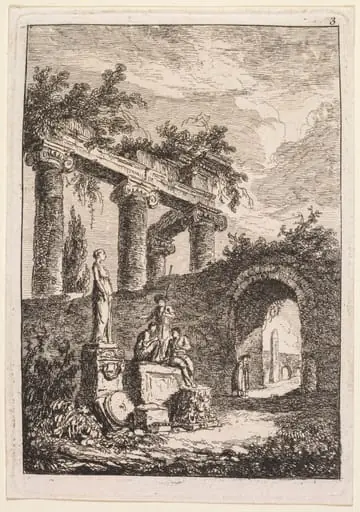 The Statue in Front of Ruins
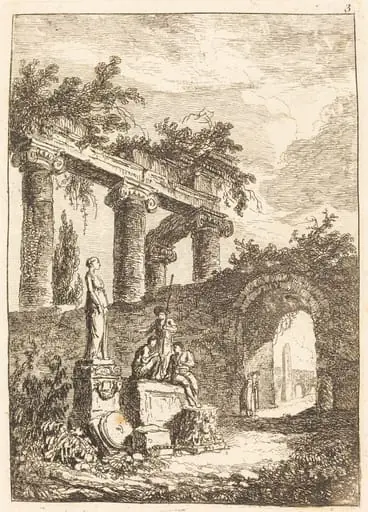 The Statue before the Ruins
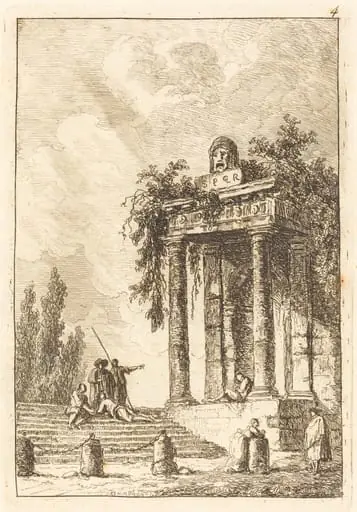 Steps to the Four Landmarks
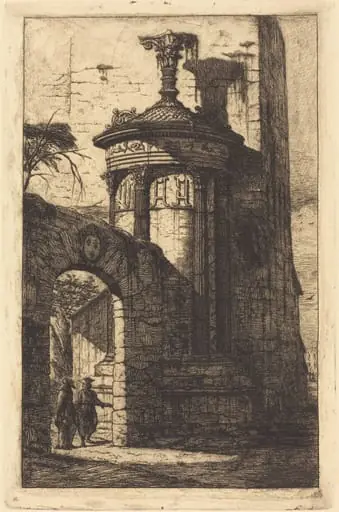 Entrée du Couvent des Capucins français à Athenes (Entrance to the French Capuchin Convent at Athens)
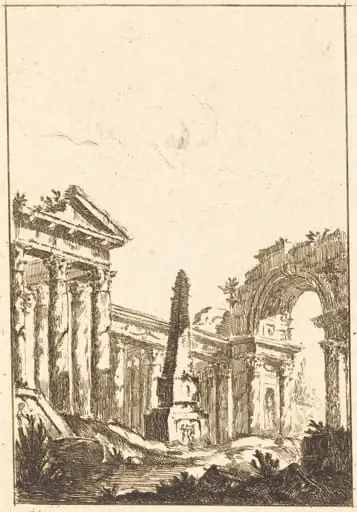 Capriccio with Ruins and an Obelisk
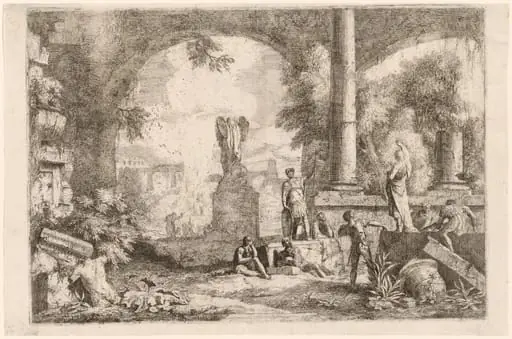 Capriccio of Antique Ruins with Men Gazing at a Classical Orator
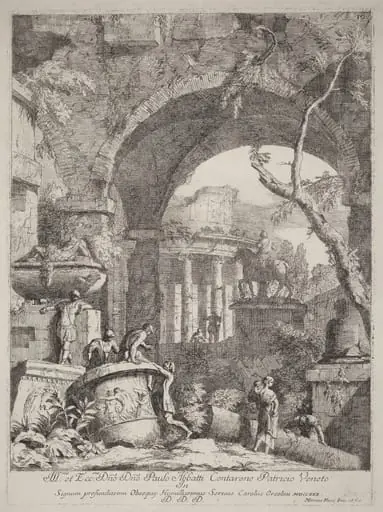 Capriccio: Ruins
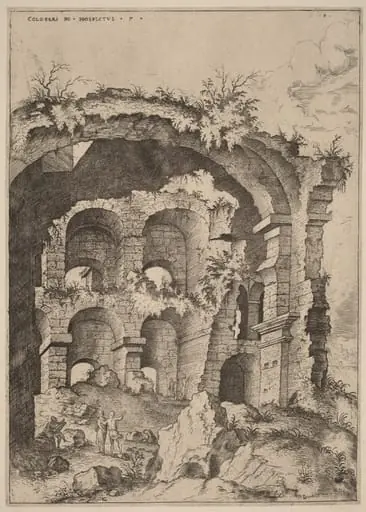 Seventh View of the Colosseum
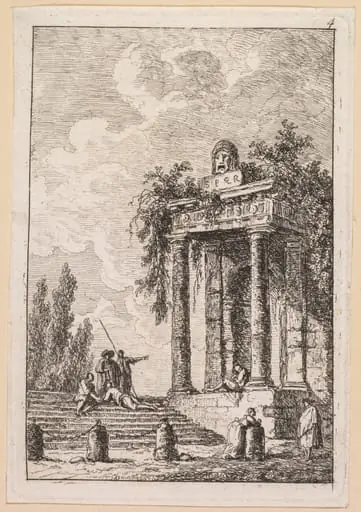 Les Soirées de Rome: L'Escalier aux quatre bornes