Artwork
Horse and Rider at a Fountain
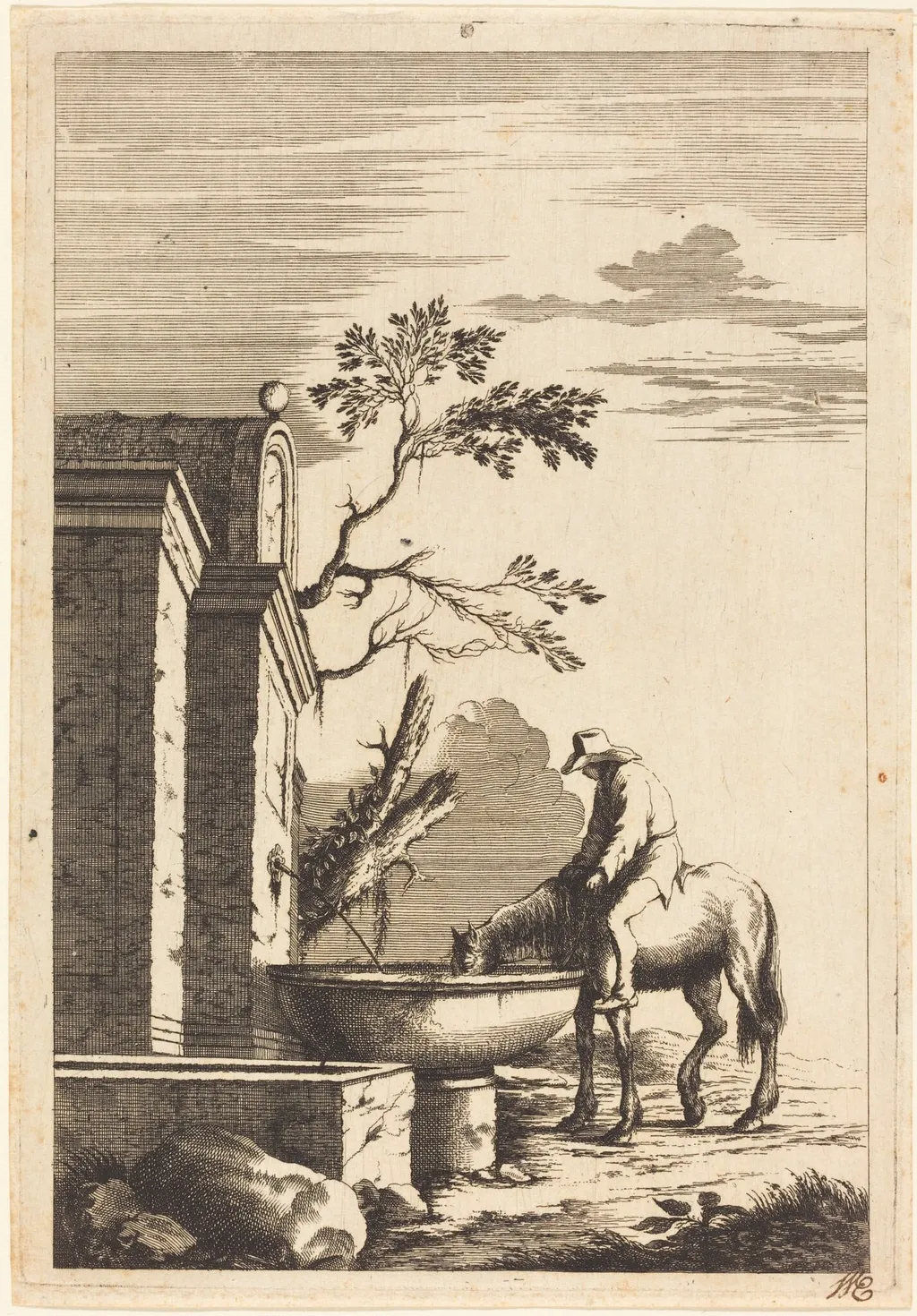
Horse and Rider at a Fountain is an ink print by the Renaissance artist Bernhard Zaech. It dates from 1650 and is held in the collection of the National Gallery of Art.
About this work
Overview
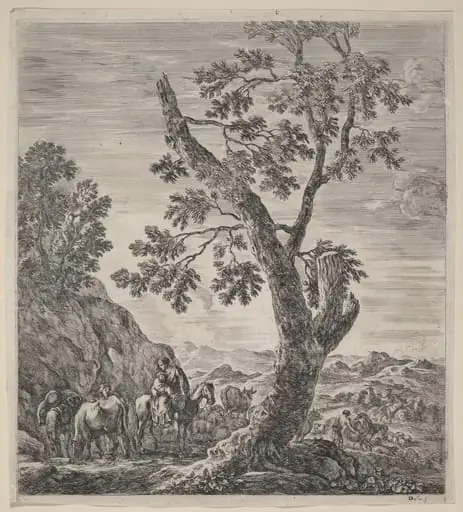
The composition is rendered in monochrome, with a modest architectural backdrop and a sparse landscape that includes a lone tree and a few grazing sheep.
Created around 1650, this etching on laid paper by Bernhard Zaech presents a solitary figure on horseback positioned beside a stone fountain. The composition is rendered in monochrome, with a modest architectural backdrop and a sparse landscape that includes a lone tree and a few grazing sheep. The overall atmosphere is calm and restrained, emphasizing the quiet interaction between rider, animal, and environment.
Subject & Meaning
The central focus is a rider, distinguished by a wide-brimmed hat, who leans slightly forward as if preparing to move. The horse stands still, its form defined by delicate lines that convey both strength and poise. The surrounding elements—a fountain, a tree, and distant buildings—frame the scene, suggesting a moment of pause within a rural or semi‑urban setting, perhaps alluding to themes of travel, vigilance, or the everyday.
Technique & Style
Zaech employed traditional etching methods, incising the image onto a copper plate and using acid to create varying depths of line. The resulting prints on laid paper display a nuanced gradation of tone, achieved through careful hatching and cross‑hatching that model the figures and give the composition a sense of spatial depth. The restrained use of shadow and line typifies mid‑seventeenth‑century Northern European printmaking.
History & Provenance
The work dates to the mid‑17th century, a period when etching was gaining popularity among German artists for its capacity to reproduce detailed scenes. While specific ownership records are scarce, the piece is catalogued among Zaech’s surviving prints and has appeared in several scholarly surveys of early modern German graphic art, confirming its attribution and situating it within the artist’s broader oeuvre.
Artist & collection


 Peasant Woman on Horseback with a Child in Her Arms
 Landscape with Figures
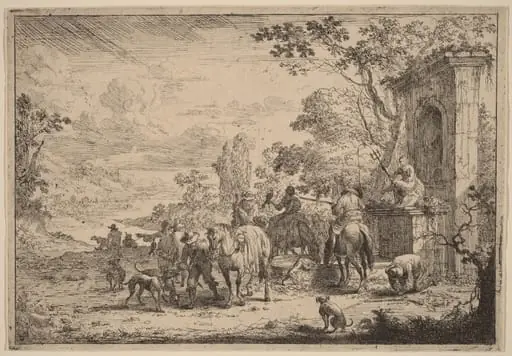 Huntsmen Resting
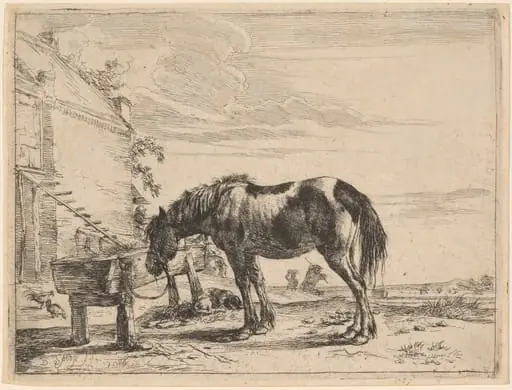 A Horse Bound to a Feeding Trough
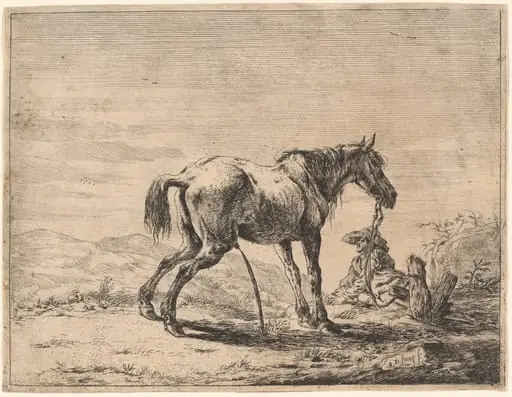 A Pissing Horse Bound to a Post
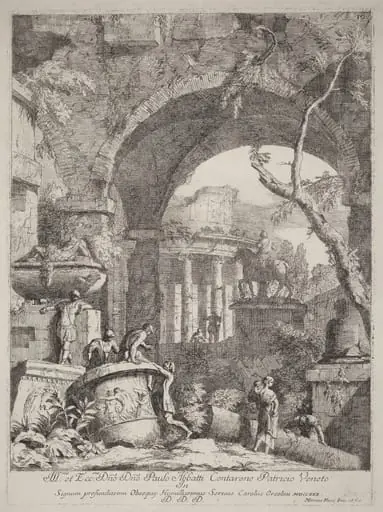 Capriccio: Ruins
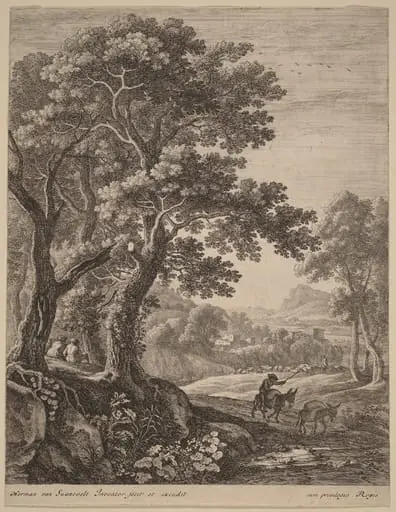 The Mule Driver
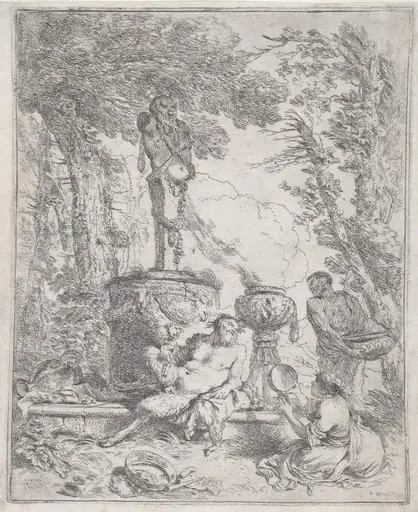 Pan Reclining before a Herm
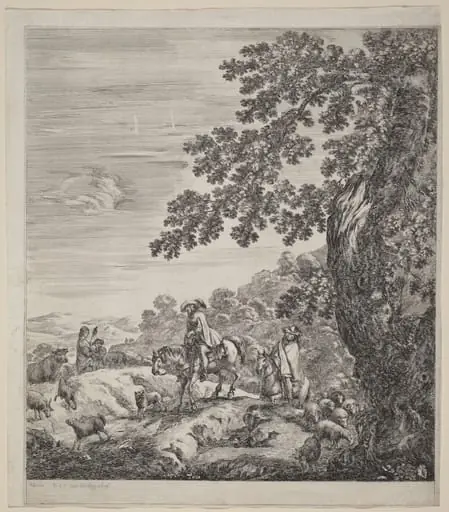 Two Riders Passing Near a Herd of Animals
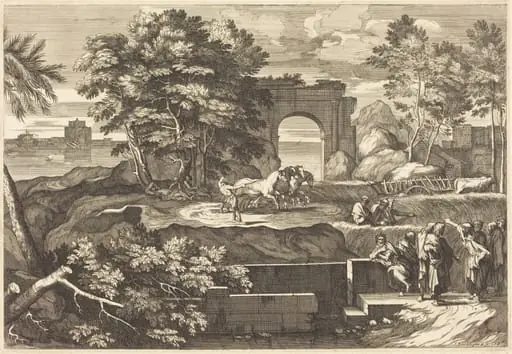 The Pharisees Complain to Our Lord
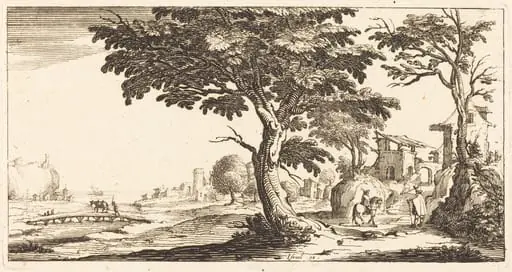 Landscape
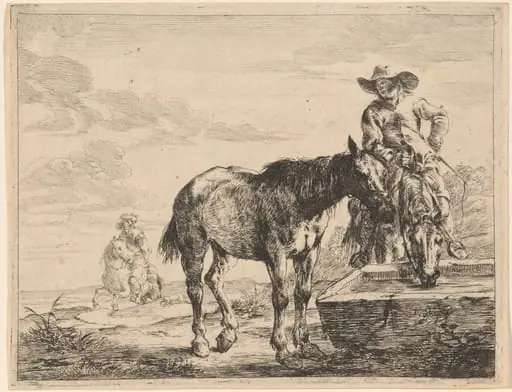 Two Horses Drinking at a Trough