Artwork
Still life. Art items
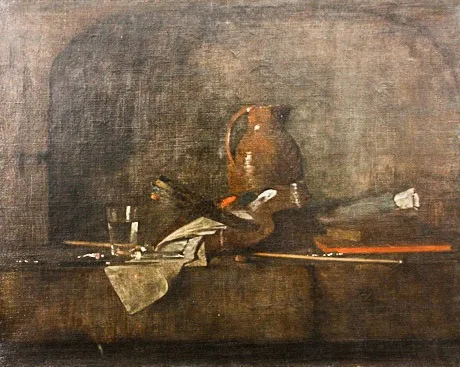
Still life. Art items is an oil painting by the Post-Impressionist artist Zakar Zakarian. It dates from 1900 and is held in the collection of the National Gallery of Armenia.
About this work
Overview
Painted in 1900 by Zakar Zakarian, this oil still life presents a quiet arrangement of artist’s tools and household objects on a table. The composition is restrained, focusing on form and texture rather than narrative. Held in the National Gallery of Armenia, the work reflects early 20th-century Armenian artistic practice, grounded in observation and material presence rather than symbolism.
Subject & Meaning
The painting features two brown jugs, a white cloth, a paintbrush, and a palette smeared with pigment. These objects, commonly found in an artist’s studio, suggest a meditation on the tools of creation. Their placement implies a pause in work, inviting contemplation of the artistic process itself. No overt symbolism is present; meaning arises from the quiet dignity of everyday items.
Technique & Style
The muted brown background recedes gently, anchoring the objects without distraction, reinforcing the painting’s introspective tone.
Zakarian employed oil paint to build subtle tonal variations and tactile surfaces. Light falls from the left, casting soft shadows that model the forms of the jugs and cloth with chiaroscuro. The brushwork is deliberate but unobtrusive, emphasizing volume over detail. The muted brown background recedes gently, anchoring the objects without distraction, reinforcing the painting’s introspective tone.
History & Provenance
The painting has remained in the collection of the National Gallery of Armenia since its creation. There is no documented exhibition history prior to its inclusion in the national collection. Its preservation suggests it was valued within Armenian artistic circles, though little public record exists of its early reception or ownership beyond institutional custody.
Context
Created at the turn of the century, the work aligns with a broader trend in Eastern European art that turned inward, valuing quiet realism over grand narratives. Zakarian, active in Yerevan, engaged with European academic traditions while focusing on local subjects. This still life reflects a moment when Armenian artists were refining a visual language rooted in observation rather than romanticism.
Legacy
Though not widely known outside Armenia, the painting stands as a representative example of early modern Armenian still life. It contributes to the understanding of how regional artists adapted European techniques to express domestic and professional environments. Its endurance in the national collection underscores its role as a quiet anchor in Armenia’s art historical record.
Artist & collection

 Still Life
 Still life 2
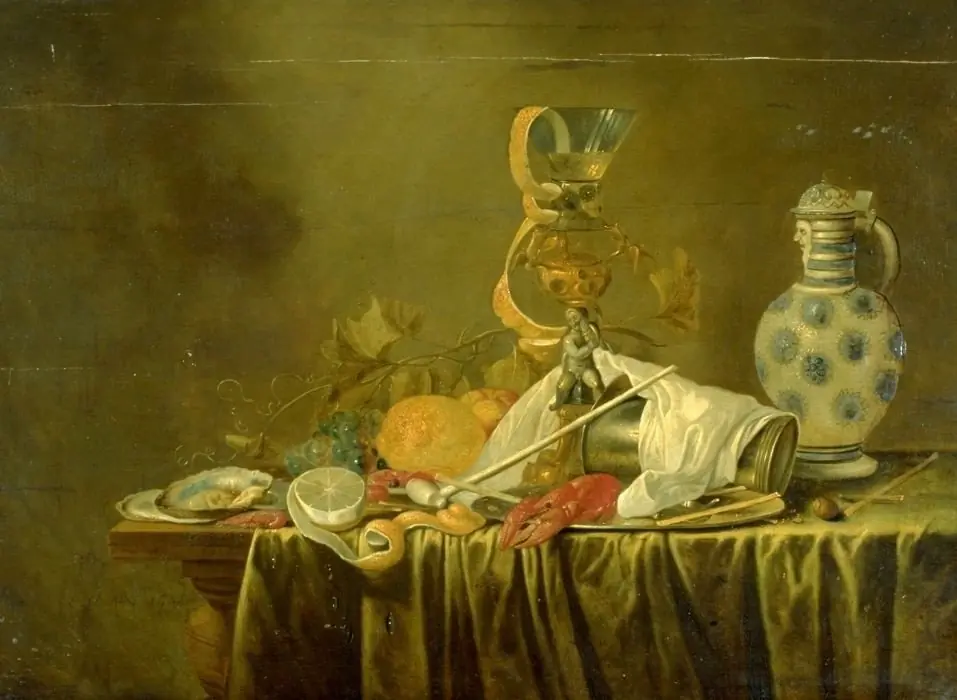 Still life with wine glass and stoneware jug
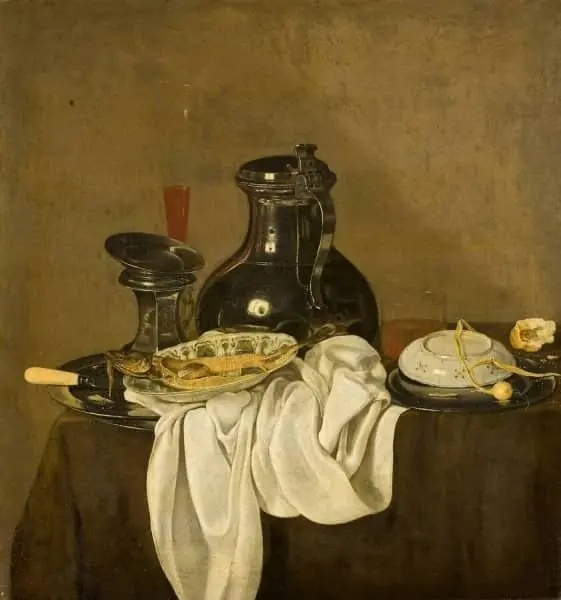 Still Life circa 1640
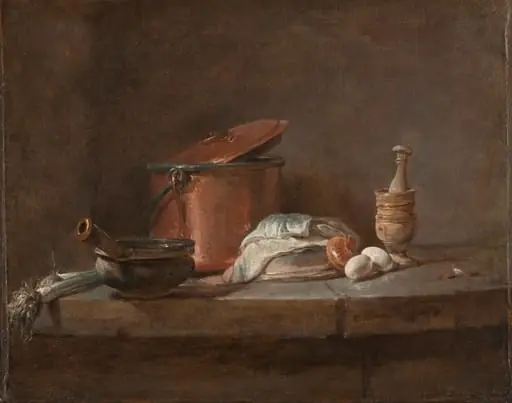 Kitchen Utensils with Leeks, Fish, and Eggs
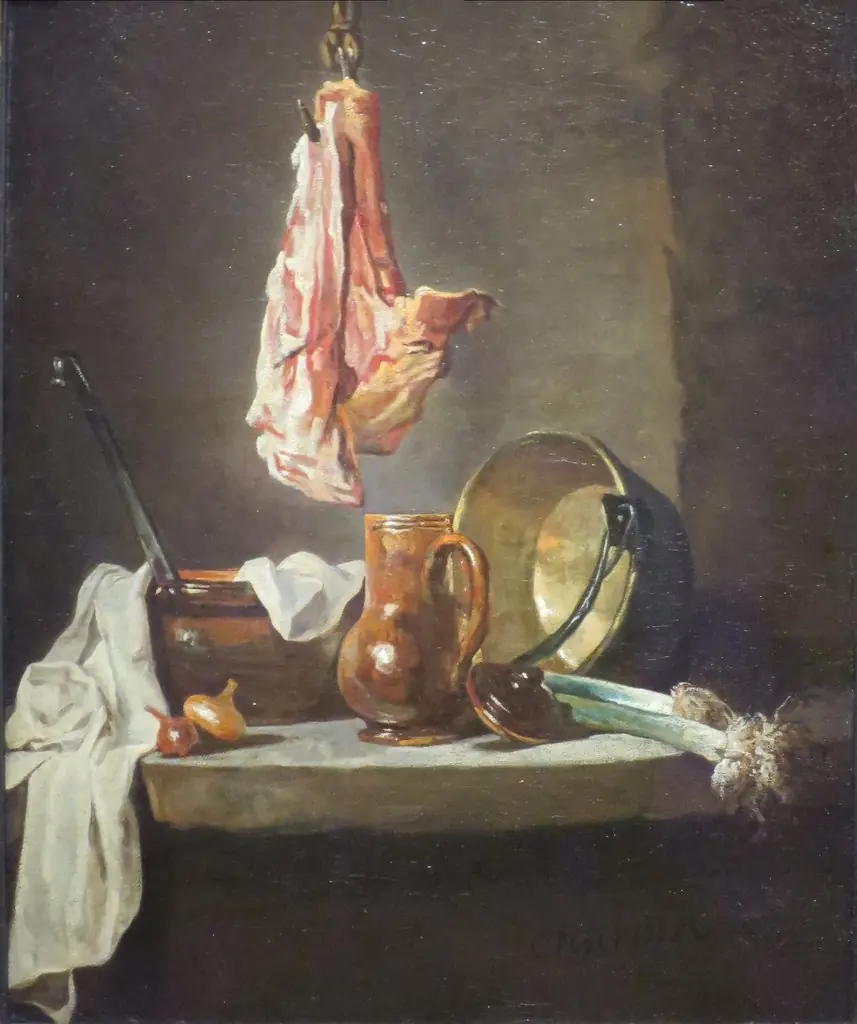 Still Life with Cooking Utensils
 Still Life with Fruit
 Still Life with Clay Pipes
 Fruit still life
 Natură moartă cu vânat și flori (în registrul inventar: „Natură moartă și unelte de vânat”)
 Bodegones
 Still-Life