Artwork
J.B. Faure
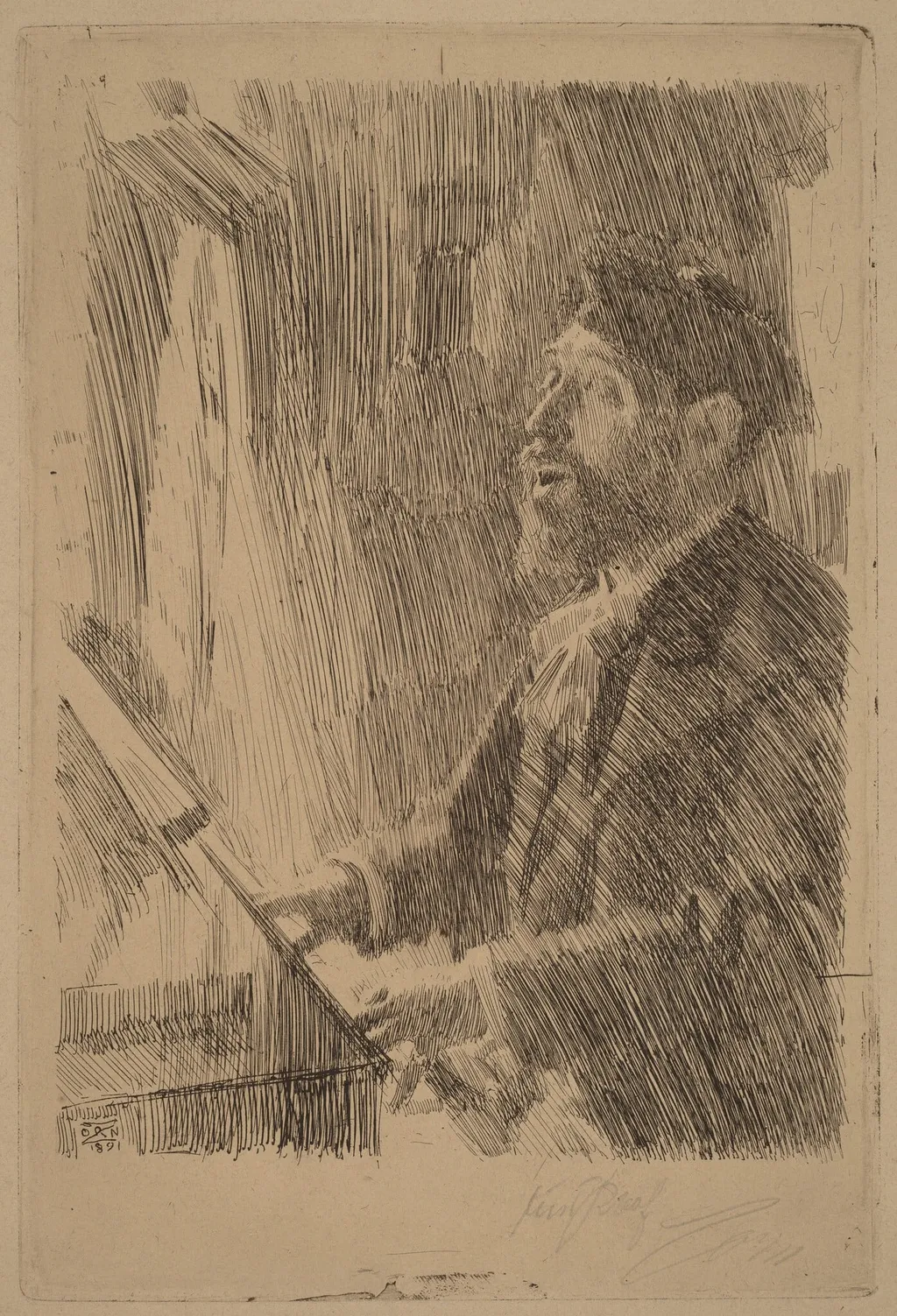
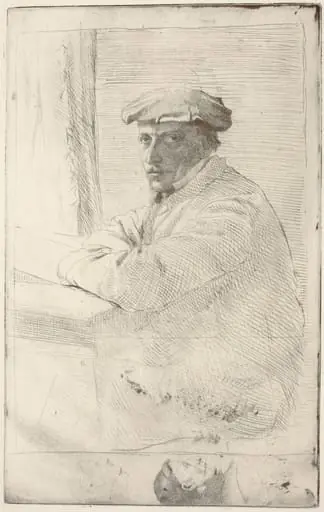
J.B. Faure is an ink print by the Impressionist artist Anders Zorn. It dates from 1891 and is held in the collection of the National Gallery of Art. Created in 1891, J.
About this work
Overview
Created in 1891, J.B. Faure is a print by Swedish artist Anders Zorn. Executed on wove paper, the work is catalogued as an etching, though it incorporates drypoint elements that give the image a distinctive, slightly blurred quality.
Subject & Meaning
The composition presents a partially turned head and shoulders, the figure’s profile hinted at by swift, restless lines. The rendering suggests a fleeting moment, capturing the subject’s expression and attire with an immediacy that hints at introspection or quiet observation.
Technique & Style
Zorn employed drypoint, incising the design directly into a metal plate. This produces fine, fuzzy edges that retain ink, resulting in a textured, energetic surface. Parallel, tight strokes build the hair and clothing, while the overall line work remains loose and sketch‑like.
History & Provenance
The print was produced in the late nineteenth century, a period when Zorn was experimenting with various printmaking methods. It has survived on aged, warm‑toned paper with uneven margins, indicating frequent handling or display over the decades.
Context
During the 1890s Zorn was renowned for his portraiture and genre scenes, often exploring the interplay of light and line. J.B. Faure reflects his interest in quick, expressive drawing techniques, aligning with contemporary movements that valued spontaneity in print.
Artist & collection

Artist
Anders Leonard Zorn was born in February 1860 in Mora, Dalarna, the illegitimate son of a Bavarian brewer and a Swedish farmer's daughter; his mother died shortly after his birth, and his grandparents raised him.

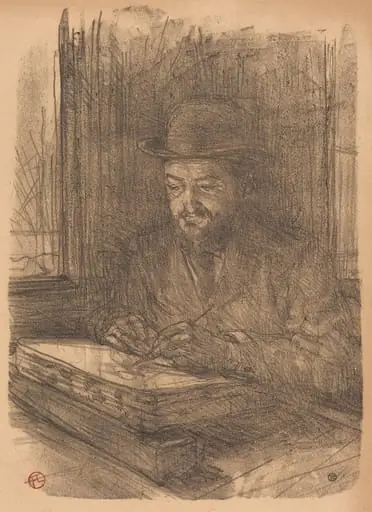 The Fine Printmaker Adolphe Albert (Le bon graveur - Adolphe Albert)
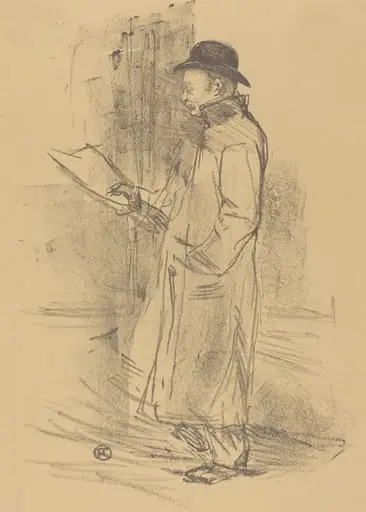 Program for "Benefice Gemier" (Programme du "Bénéfice Gémier")
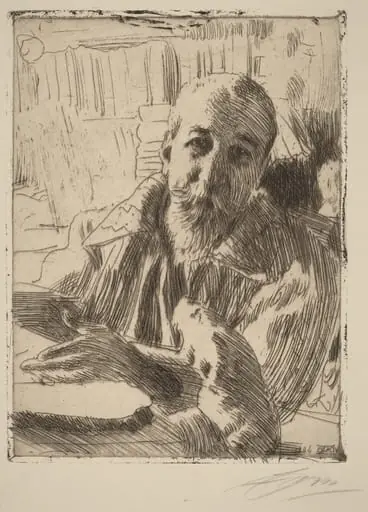 Anatole France
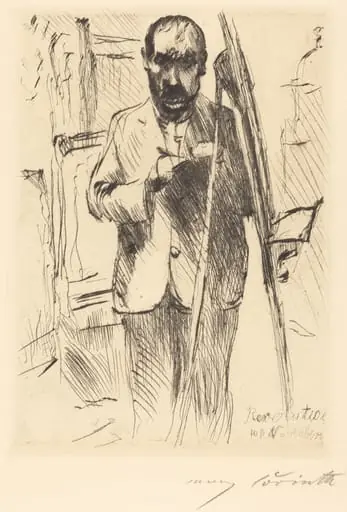 Selbstbildnis an der Staffelei (Self-Portrait with Easel)
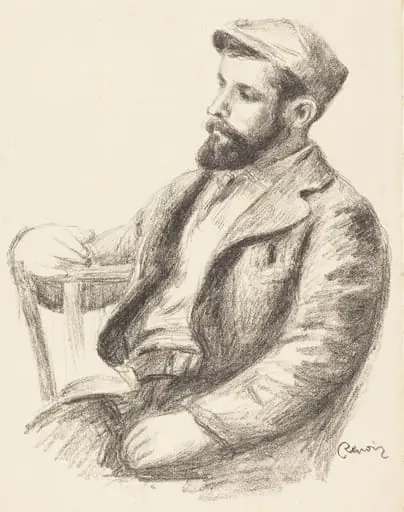 Louis Valtat
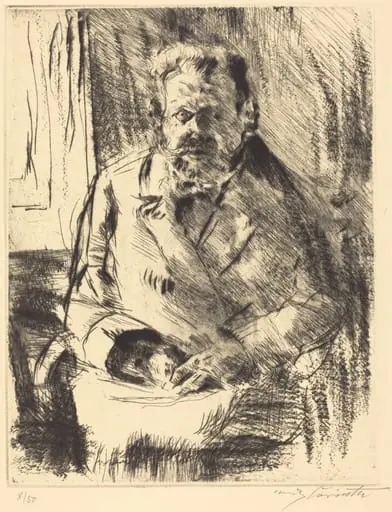 Der Dichter (The Poet)
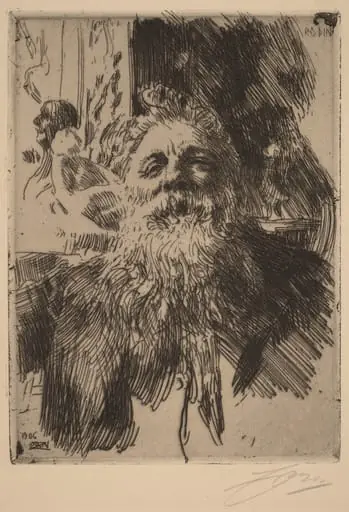 Auguste Rodin
 Study of a Workman
 Benefit for Firmin Gémier
 The Good Lithographer
 Bildnisstudie H. St. (Portrait Study of H. St.)
 The Engraver Joseph Tourny (Le graveur Joseph Tourny)