Artwork
Harpocrates (or Horus), God of Silence
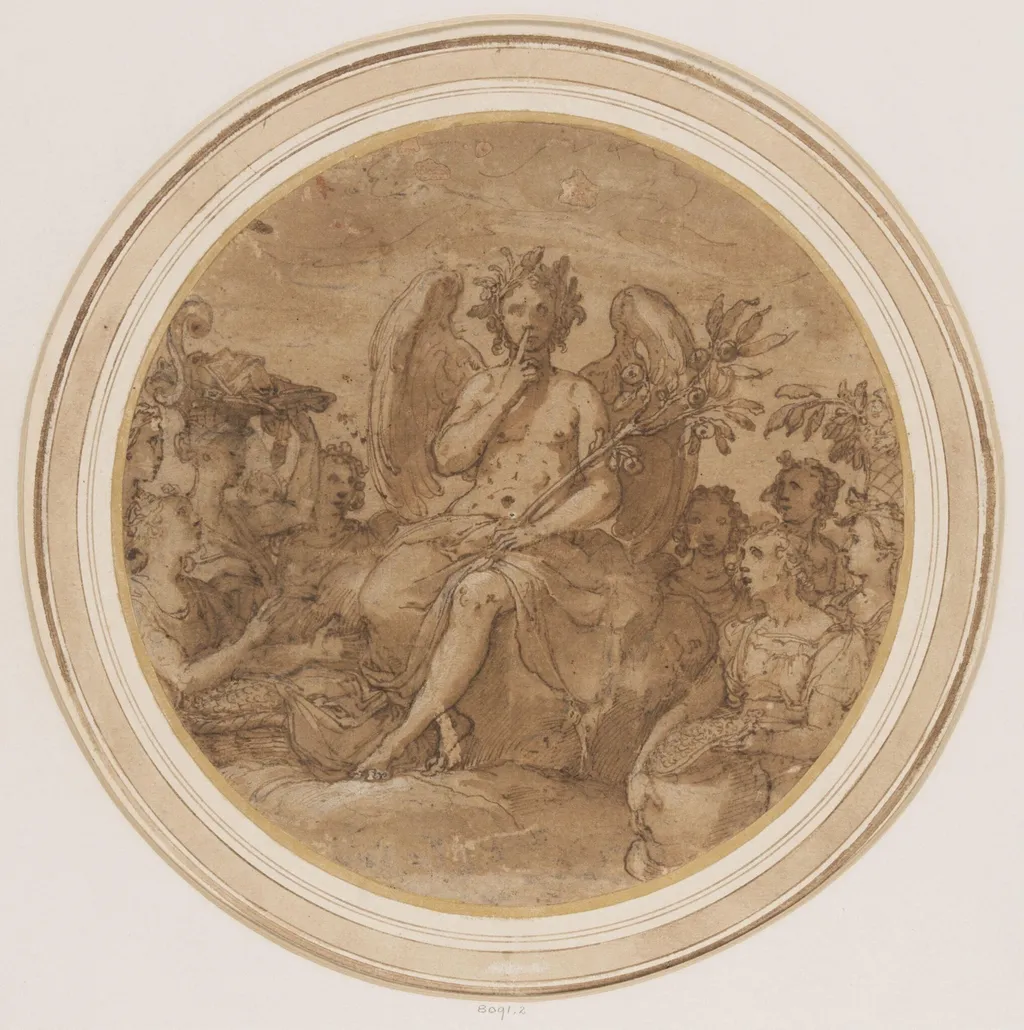
Harpocrates (or Horus), God of Silence is a drawing by the Renaissance artist Federico Zuccaro. It dates from 1540 and is held in the collection of the Victoria and Albert Museum.
About this work
Overview
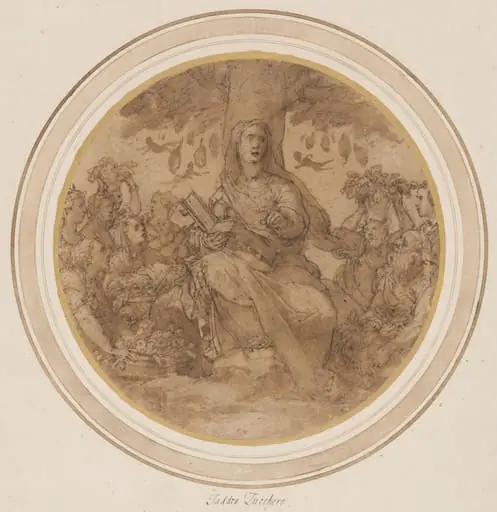
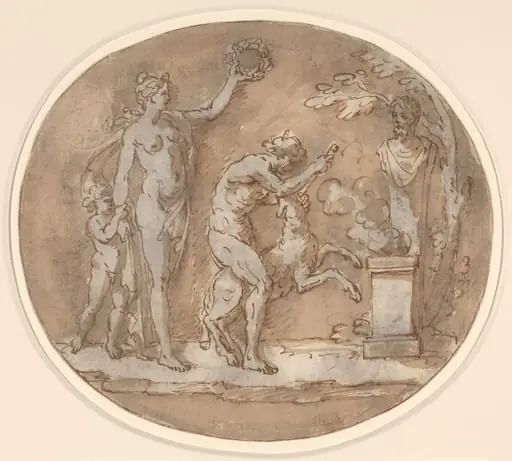
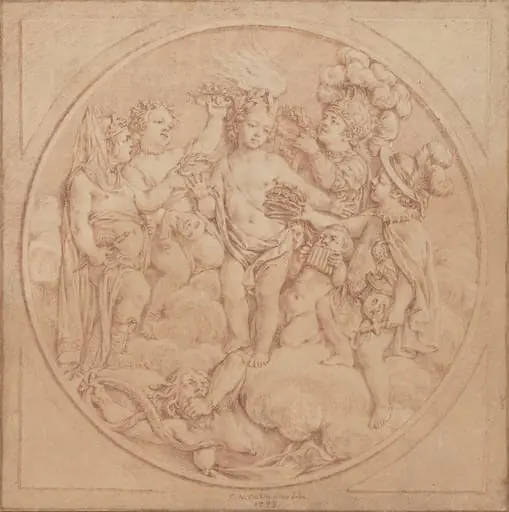
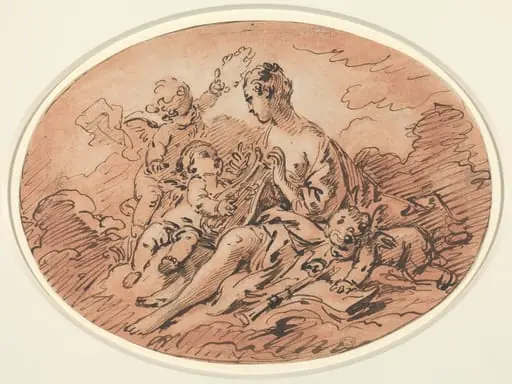
A pen-and-ink drawing with wash and white highlights portrays a seated winged youth, identified as Harpocrates, the Egyptian deity of silence.
A pen-and-ink drawing with wash and white highlights portrays a seated winged youth, identified as Harpocrates, the Egyptian deity of silence. The composition is enclosed within a circular frame, softened by subtle tonal gradients and delicate linework. The figure holds a staff topped with foliage and plays a flute, surrounded by two silent observers. The work is part of a 16th-century collection once owned by Padre Resta and Lord Somers, later entering institutional hands in 1876.
Subject & Meaning
Harpocrates, depicted as a youthful figure with wings and a wreath, embodies the concept of silence through stillness rather than suppression. His flute, typically associated with music, here suggests a quiet melody or suspended sound, reinforcing the theme. The two figures behind him, motionless and attentive, amplify the atmosphere of reverent quiet. The staff with leaves may symbolize growth or divine authority, aligning with Hellenistic interpretations of the god as a guardian of secrecy.
Technique & Style
Executed in fine pen lines and diluted ink washes, the drawing employs white heightening to accentuate form and light. The circular framing creates a meditative focus, while the soft shading suggests depth without harsh contrast. The linework is precise yet fluid, reflecting a Mannerist sensitivity to elongated forms and atmospheric tone. The technique echoes contemporary draftsmanship practiced in Rome, where such mythological subjects were studied through classical revival.
History & Provenance
The drawing belonged to Padre Resta, an 18th-century collector of antiquities and drawings, and later passed to Lord Somers. A manuscript in the British Museum contains Resta’s annotations detailing his catalog of works, including this piece. It was acquired by the museum in 1876, where it remains documented as part of a broader group of Renaissance drawings linked to classical iconography and scholarly collecting practices of the period.
Context
Created in the late 16th century, the drawing reflects the European fascination with Egyptian and Greco-Roman deities during the Mannerist era. Artists like Federico Zuccaro studied ancient symbols through printed sources and antiquities, reinterpreting them in refined, intimate formats. This work fits within a trend of scholarly drawings that blended mythological themes with contemplative composition, often intended for private collections rather than public display.
Legacy
Though not widely exhibited, the drawing contributes to the understanding of how Renaissance artists engaged with non-Western deities through textual and visual fragments. Its preservation in the British Museum underscores the importance of collector-driven documentation in art history. The piece remains a quiet example of how classical mythology was reimagined in intimate, graphic form during a period of intense intellectual curiosity about ancient cultures.
Artist & collection