Artwork
Urania
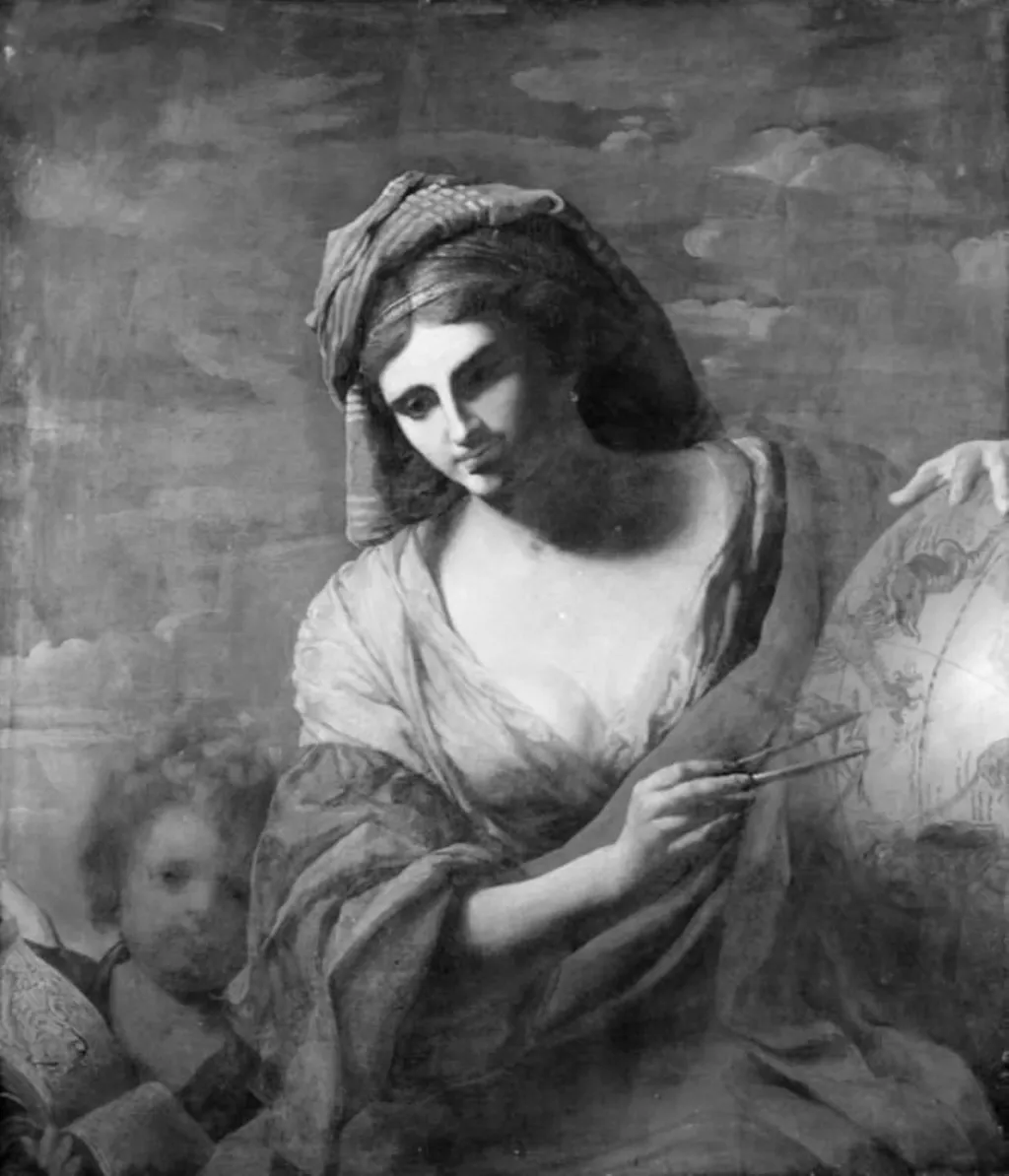
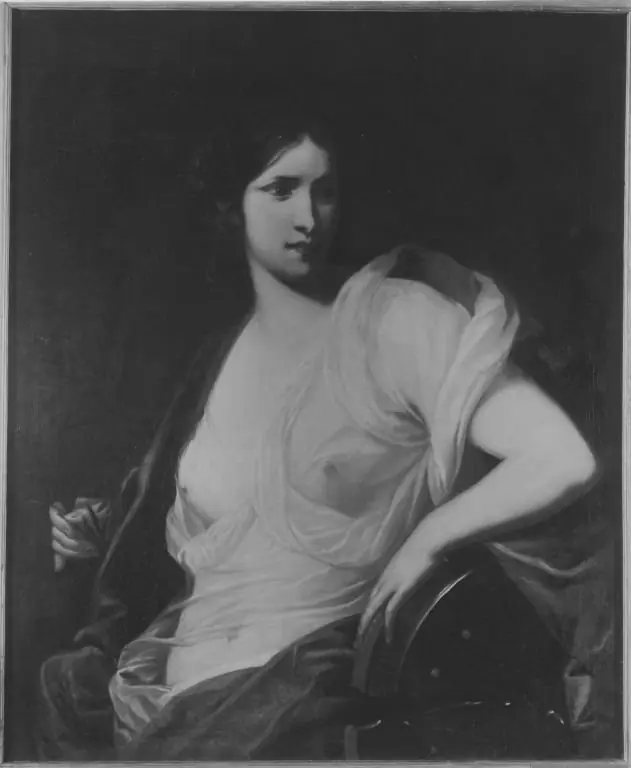
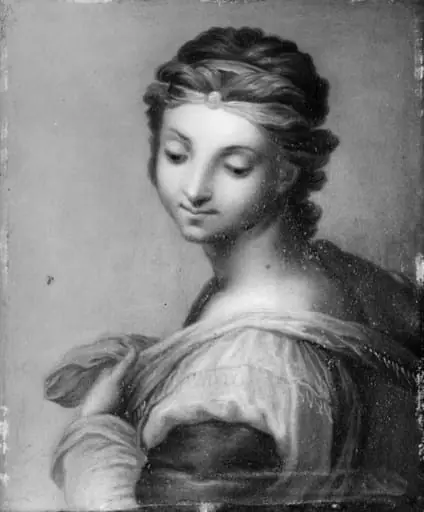
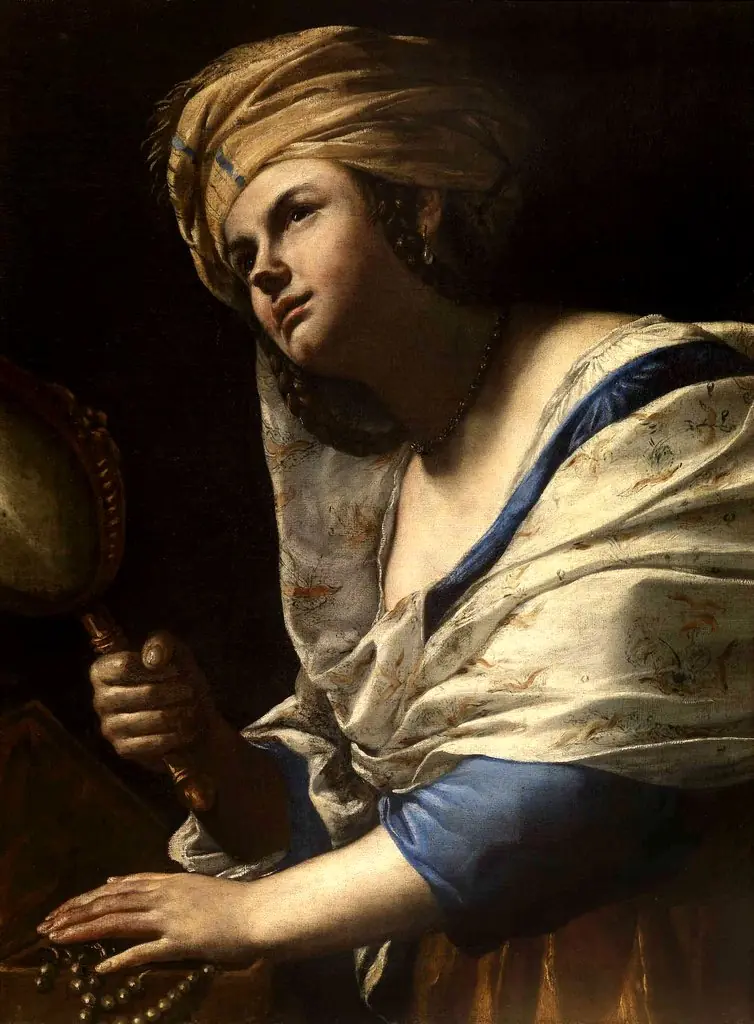
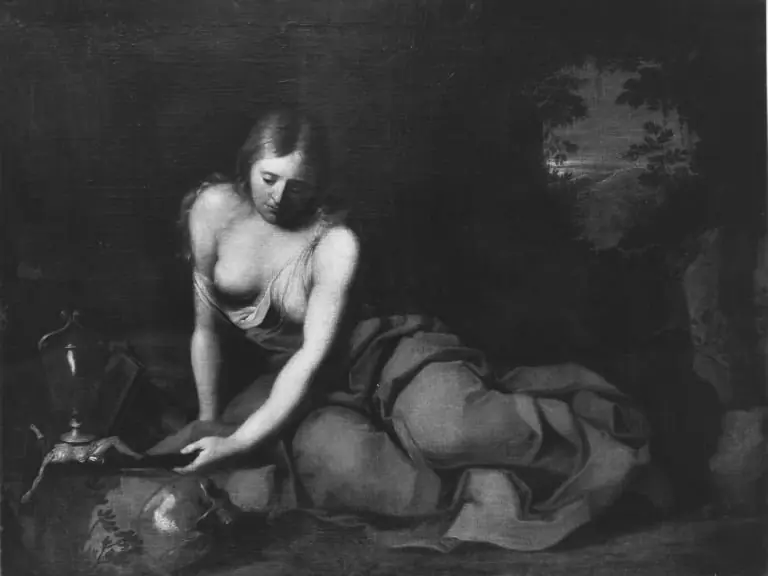
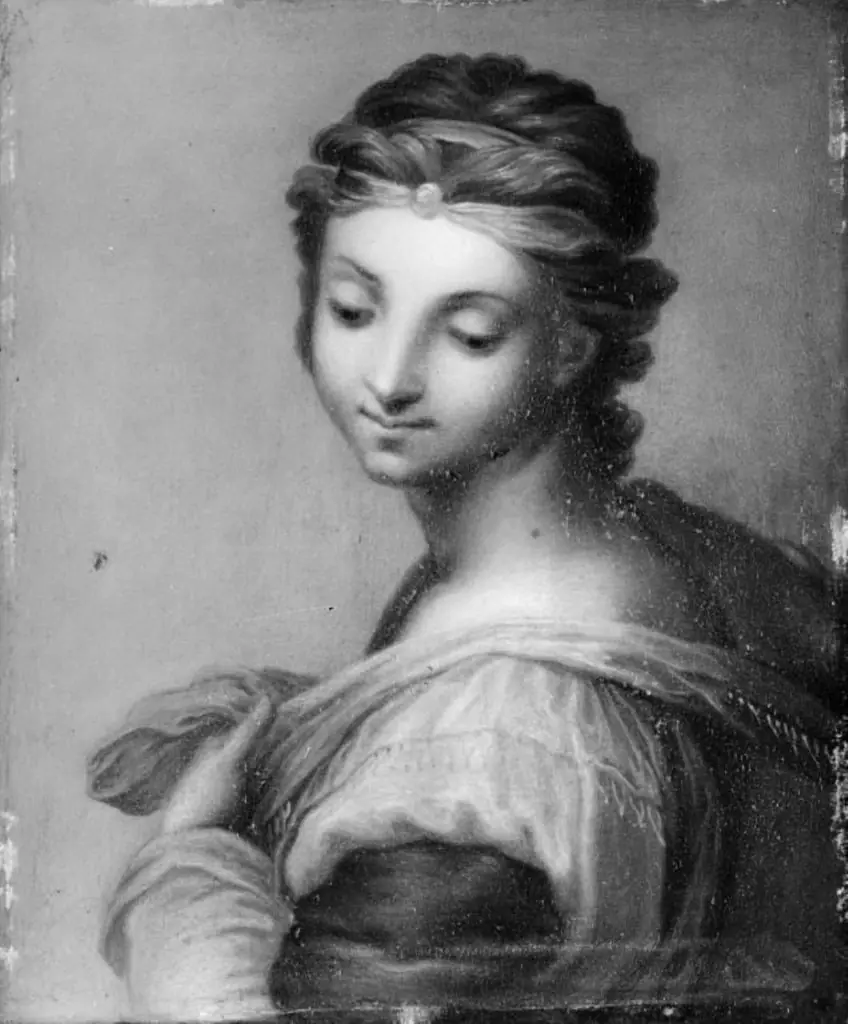
Urania is a photography by Unknown. It dates from 1750 and is held in the collection of the Statens Museum for Kunst.
About this work
Overview
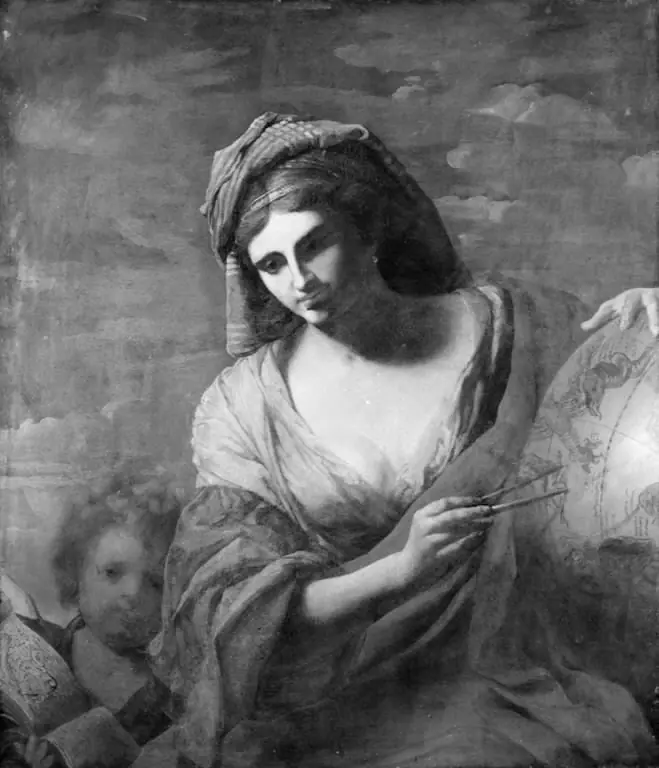
The composition centers on a robed female figure beneath a textured sky, with symbolic elements including a globe and a small object she holds.
Created around 1750, this monochrome painting portrays Urania, the Greek muse of astronomy, in a contemplative pose. It is part of the collection at the Museum of Ethnography. The composition centers on a robed female figure beneath a textured sky, with symbolic elements including a globe and a small object she holds. A child emerges subtly from behind her, adding narrative depth. The work’s restrained palette and lighting suggest a scholarly or allegorical intent.
Subject & Meaning
Urania, traditionally associated with celestial observation, is depicted here not as a mythic figure but as a quiet, grounded presence. The globe she faces implies an engagement with cosmic knowledge, while the child may represent nascent learning or the next generation of inquiry. The covered hair and modest posture reflect 18th-century ideals of intellectual dignity, possibly aligning the muse with Enlightenment values of reason and quiet discovery rather than theatrical grandeur.
Technique & Style
The artist employs chiaroscuro to model form and direct attention toward the figure’s face and the globe, creating a sense of volume without color. The drapery is rendered with soft, flowing lines that enhance the figure’s stillness, while the cloudy background is loosely brushed to suggest atmospheric depth. The child’s partial emergence adds a compositional surprise, breaking the symmetry and introducing a subtle narrative tension within the otherwise serene scene.
History & Provenance
The painting entered the Museum of Ethnography’s collection in the late 19th or early 20th century, though its earlier ownership remains undocumented. Its attribution to '2868_person' reflects an unresolved or anonymized origin, possibly due to loss of records or deliberate anonymity common in certain academic or devotional traditions of the period. No preparatory sketches or related works have been identified to date.
Context
In mid-18th-century Europe, allegorical depictions of the muses were common in academic and private collections, often used to signify intellectual pursuits. This work diverges from the ornate styles of courtly art, instead favoring quiet introspection. Its presence in an ethnographic museum suggests it was collected not merely as art but as a cultural artifact reflecting how knowledge and gender were visually represented in its time.
Legacy
Though not widely reproduced or studied, the painting offers a rare, subdued interpretation of Urania, distinct from the more dramatic Baroque portrayals. Its inclusion in an ethnographic context invites reconsideration of how scientific and mythological imagery intersected in everyday visual culture. It remains a quiet testament to the ways in which learning was personified beyond official academic circles.
Artist & collection

 Domestic Scene
 Giacomo and Cardinal Marco, investing Andrea, Abbot of San Zeno, with his Benefice
 The Nymph of Fontainebleau
 Portrait of a Woman
 Madonna and Child with Saints in the Enclosed Garden
 Venus and Minerva
 Family Group of Four on Sofa
 Wall painting from Room H of the Villa of P. Fannius Synistor at Boscoreale