Artwork
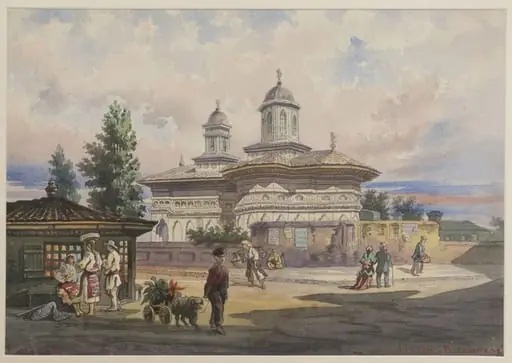
Gadeparti i Athen. Med Hadji Hazekis' palads og Tzistarakis Moskeen
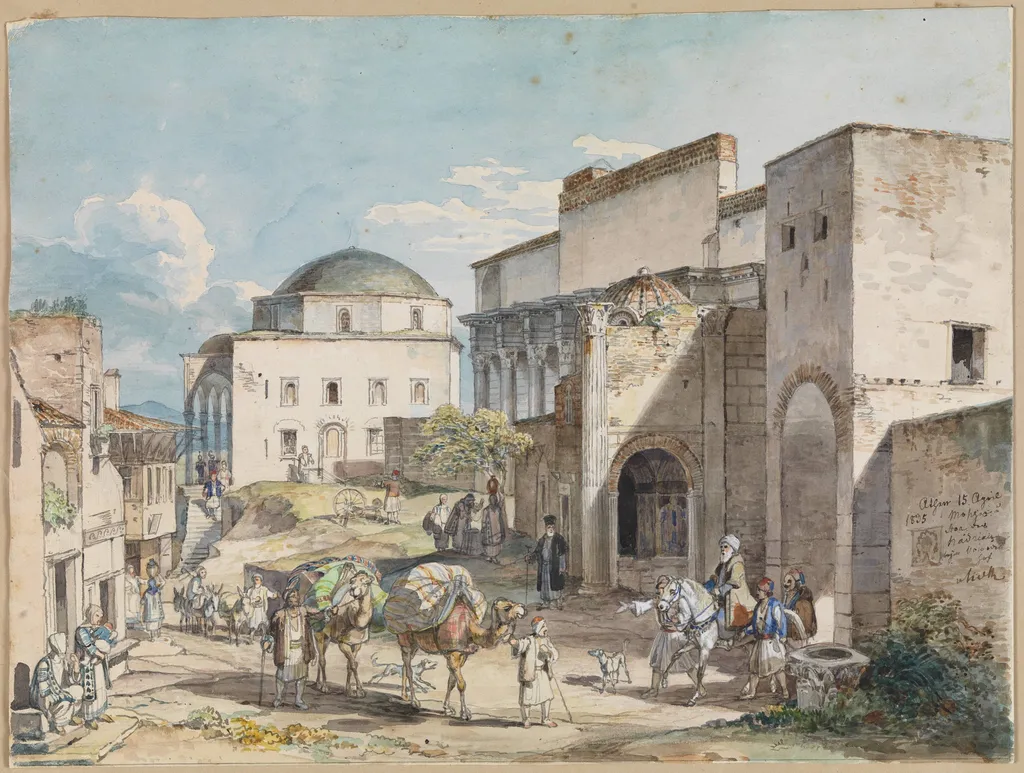
Gadeparti i Athen. Med Hadji Hazekis' palads og Tzistarakis Moskeen is an unspecified painting by the Romanticist artist Unknown. It dates from 1835 and is held in the collection of the Statens Museum for Kunst. Created in 1835 by the artist recorded as 33229_person, this watercolor‑like sketch captures a bustling Athenian street.
About this work
Overview
Soft blues and muted earth tones convey the atmospheric light of the scene, emphasizing everyday movement within a historic urban setting.
Created in 1835 by the artist recorded as 33229_person, this watercolor‑like sketch captures a bustling Athenian street. The composition centers on the imposing dome of the Tzistarakis Mosque behind the palace of Hadji Hazekis, while a crowd of pedestrians, vendors, and two camel caravans animate the foreground. Soft blues and muted earth tones convey the atmospheric light of the scene, emphasizing everyday movement within a historic urban setting.
Subject & Meaning
The drawing juxtaposes local Athenian life with the presence of traveling merchants, as indicated by the camels draped in colorful blankets. Figures are shown conversing, strolling, and pausing near a public fountain, suggesting a communal space where commerce and social interaction converge. The prominent religious dome and nearby palace underscore the coexistence of civic, religious, and commercial spheres in early nineteenth‑century Athens.
Technique & Style
Executed with delicate washes and fine line work, the artist employs a restrained palette of light blues, grays, and browns to render architectural forms and human figures. The treatment of light and shadow reflects Romantic-era interests in atmospheric realism, while the detailed rendering of clothing and accessories conveys an ethnographic attention to costume and daily routine.
History & Provenance
The work entered the collection of the Museum of Ethnography, where it remains part of the institution’s holdings on Greek urban life. Its dating to 1835 places it shortly after Greece’s independence, offering a visual record of the capital’s transformation during a period of nation‑building and renewed interest in documenting local customs.
Artist & collection

 Domestic Scene
 Giacomo and Cardinal Marco, investing Andrea, Abbot of San Zeno, with his Benefice
 The Nymph of Fontainebleau
 Portrait of a Woman
 Madonna and Child with Saints in the Enclosed Garden
 Venus and Minerva
 Family Group of Four on Sofa
 Wall painting from Room H of the Villa of P. Fannius Synistor at Boscoreale
 Το Τζαμί του Τζισδαράκη στο Μοναστηράκι
 Biserica Stavropoleos
 Pera
Pera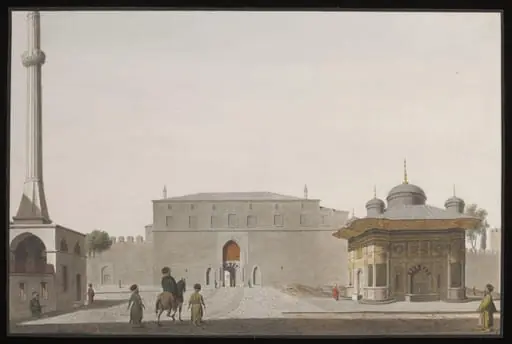 Bab-i-Hümayün (Imperial Gate) to Topkapi Sarayi, with the Fountain of Sultan Ahmet III
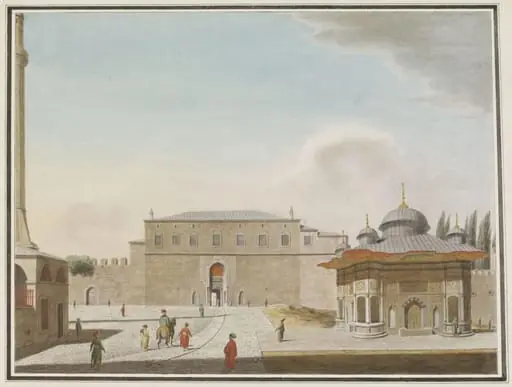 Bab-i-Hümayün (Imperial Gate) to Topkapi Sarayi, with the Fountain of Sultan Ahmet III
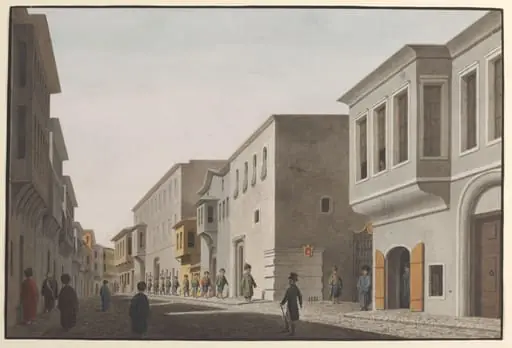 Street scene outside an embassy in Pera
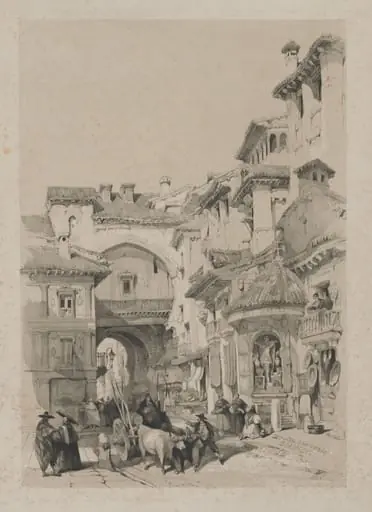 Picturesque Sketches in Spain: Gate of the Vivarrambla, Granada
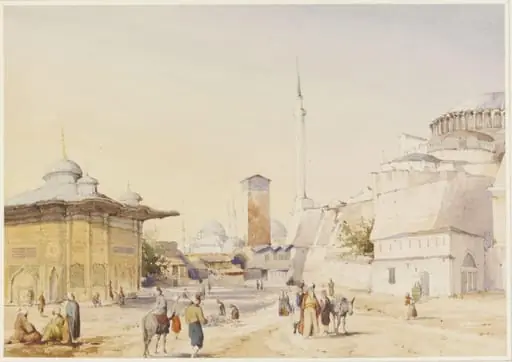 Fountain & part of Mosque of St. Sophia, Stamboul
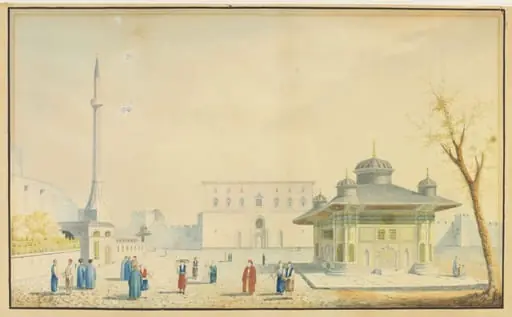 The Bab-i Hümayün or Imperial Gate of Topkapi Sarayi, with the Fountain of Sultan Ahmet III
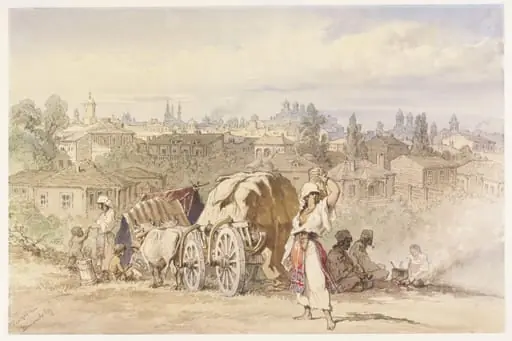 A Gipsy Encampment at Filaret outside Bucharest
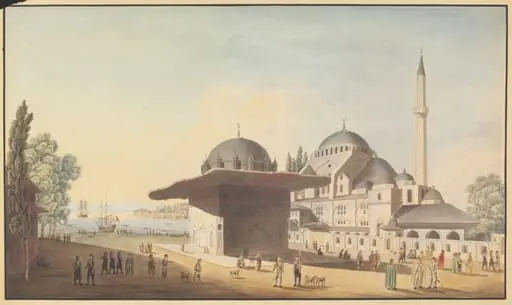 Tophane Çesmesi with Kiliç Ali Pasa Camii
 Biserica Batiștei