Artwork
Jupiter og Juno sidder i kærlig omfavnelse, imellem dem står ørnen, trædende på tordenkilen, til venstre tænder en vinget genius sin fakkel hos en anden, og oven over disse svæver påfuglen ned. I baggrunden et landskab/ Ida bjerget/.
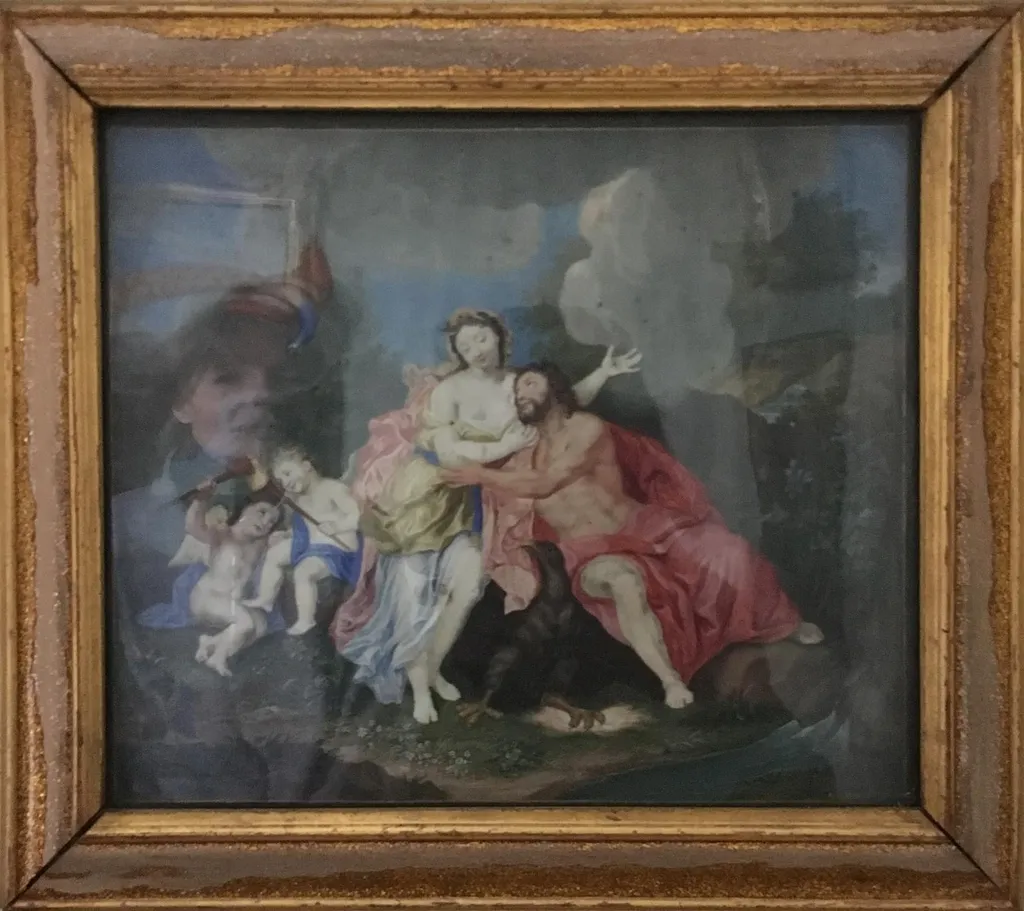
Jupiter og Juno sidder i kærlig omfavnelse, imellem dem står ørnen, trædende på tordenkilen, til venstre tænder en vinget genius sin fakkel hos en anden, og oven over disse svæver påfuglen ned. I baggrunden et landskab/ Ida bjerget/. is an unspecified work on paper by Unknown. It dates from 1650 and is held in the collection of the Statens Museum for Kunst. Created around 1650, this image presents a complex allegorical tableau attributed to the artist known as 609_person.
About this work
Overview
Created around 1650, this image presents a complex allegorical tableau attributed to the artist known as 609_person. Central to the composition are a nude male figure and a clothed female figure seated together in an intimate embrace, set against a landscape that includes a recognizable mountain, likely Mount Ida, and a soaring peacock above them.
Subject & Meaning
The seated couple is identified as Jupiter and Juno, the chief deities of Roman mythology. Between them, an eagle clutches a lightning bolt, a traditional attribute of Jupiter, while winged figures on the left hold torches, suggesting divine presence or enlightenment. The inclusion of the peacock, associated with Juno, reinforces the mythological identification.
Technique & Style
The work employs a detailed, figurative style typical of mid‑17th‑century Northern European painting, with careful rendering of drapery, anatomy, and naturalistic landscape. The use of bright reds, yellows, and blues highlights the central figures, while the surrounding symbolic elements are rendered with a slightly flatter, decorative quality.
History & Provenance
Attributed to the anonymous or catalogued creator 609_person, the image dates to circa 1650 and is currently part of the collection of the Museum of Ethnography. Its acquisition history is not recorded in the available sources, and the work remains catalogued primarily for its iconographic interest.
Context
During the mid‑17th century, allegorical compositions featuring classical deities were common in both courtly and scholarly settings, serving both decorative and didactic purposes. The juxtaposition of mythological figures with natural motifs such as Mount Ida reflects contemporary interests in merging classical antiquity with landscape painting.
Artist & collection

 Domestic Scene
 Giacomo and Cardinal Marco, investing Andrea, Abbot of San Zeno, with his Benefice
 The Nymph of Fontainebleau
 Portrait of a Woman
 Madonna and Child with Saints in the Enclosed Garden
 Venus and Minerva
 Family Group of Four on Sofa
 Wall painting from Room H of the Villa of P. Fannius Synistor at Boscoreale
 La Danse des Saisons
 Diana and Endymion
 Judecata lui Paris
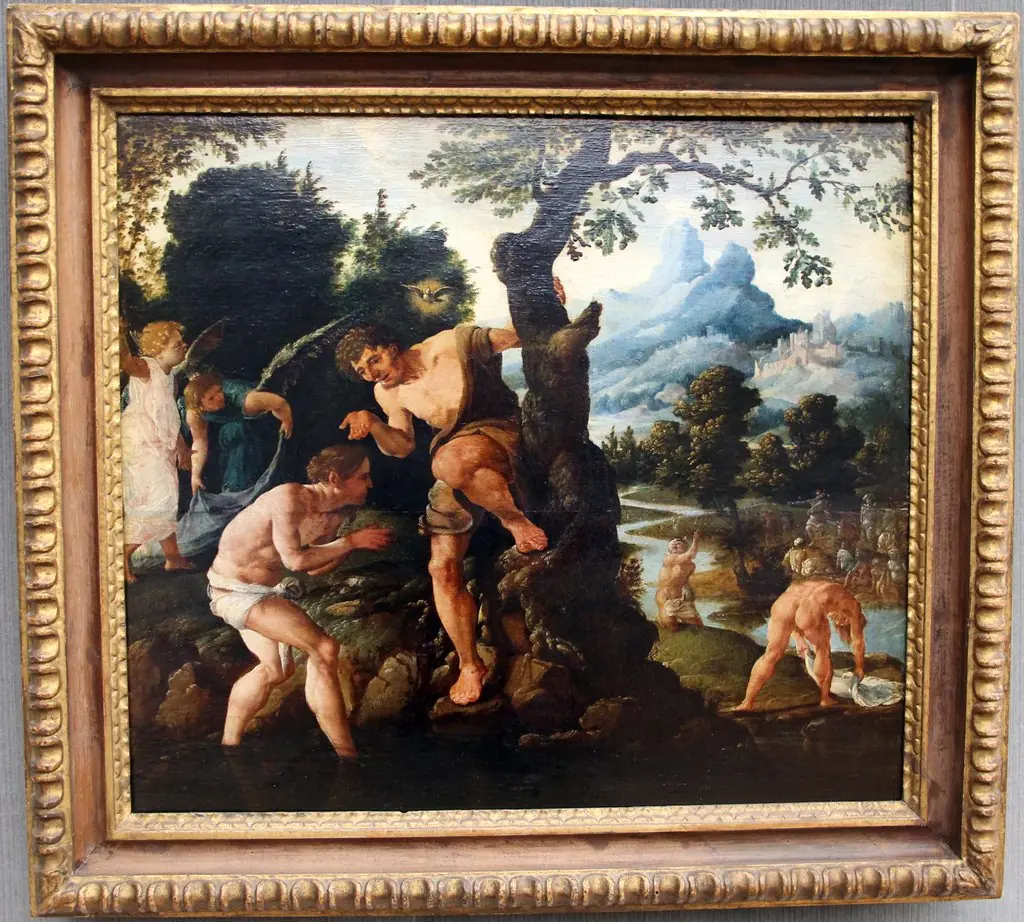 Baptism of Christ
 Satir și numfă
 Amazonslaget: Kampen føres heftigt i forgrunden; på højden bagved ligger en brændende by og t. h. ses en stor bro, hvorpå kampen fortsættes. I baggrunden høje bjerge.
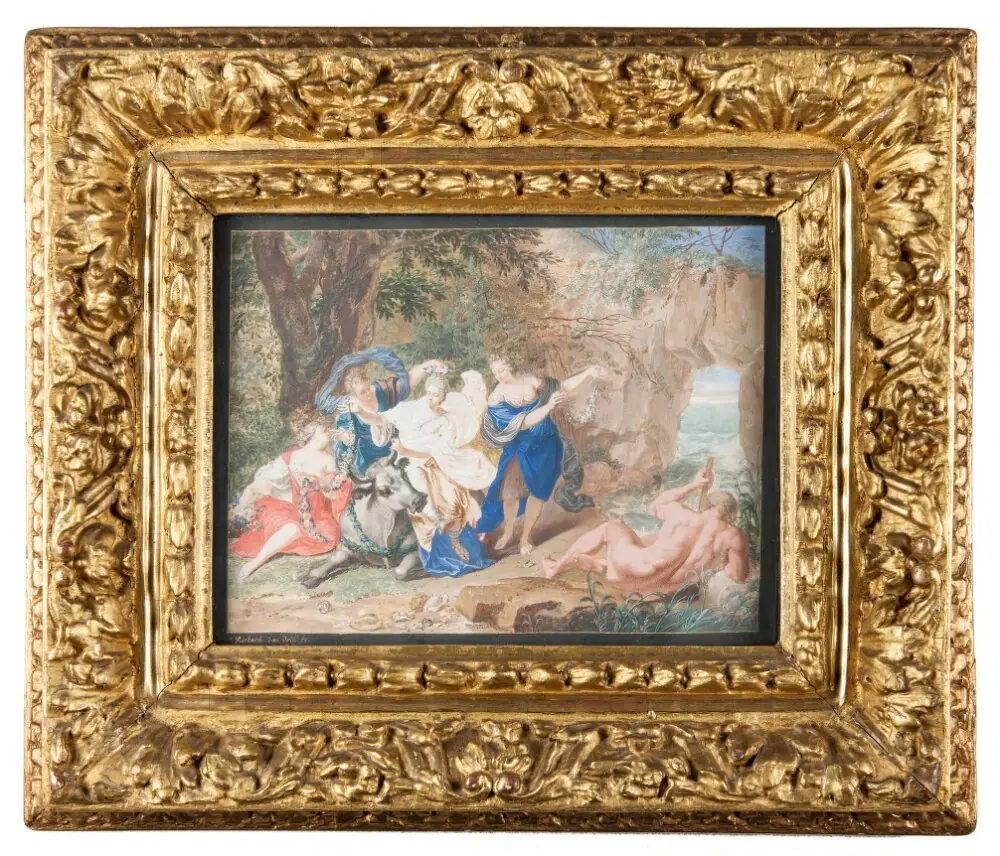 The rape of Europa
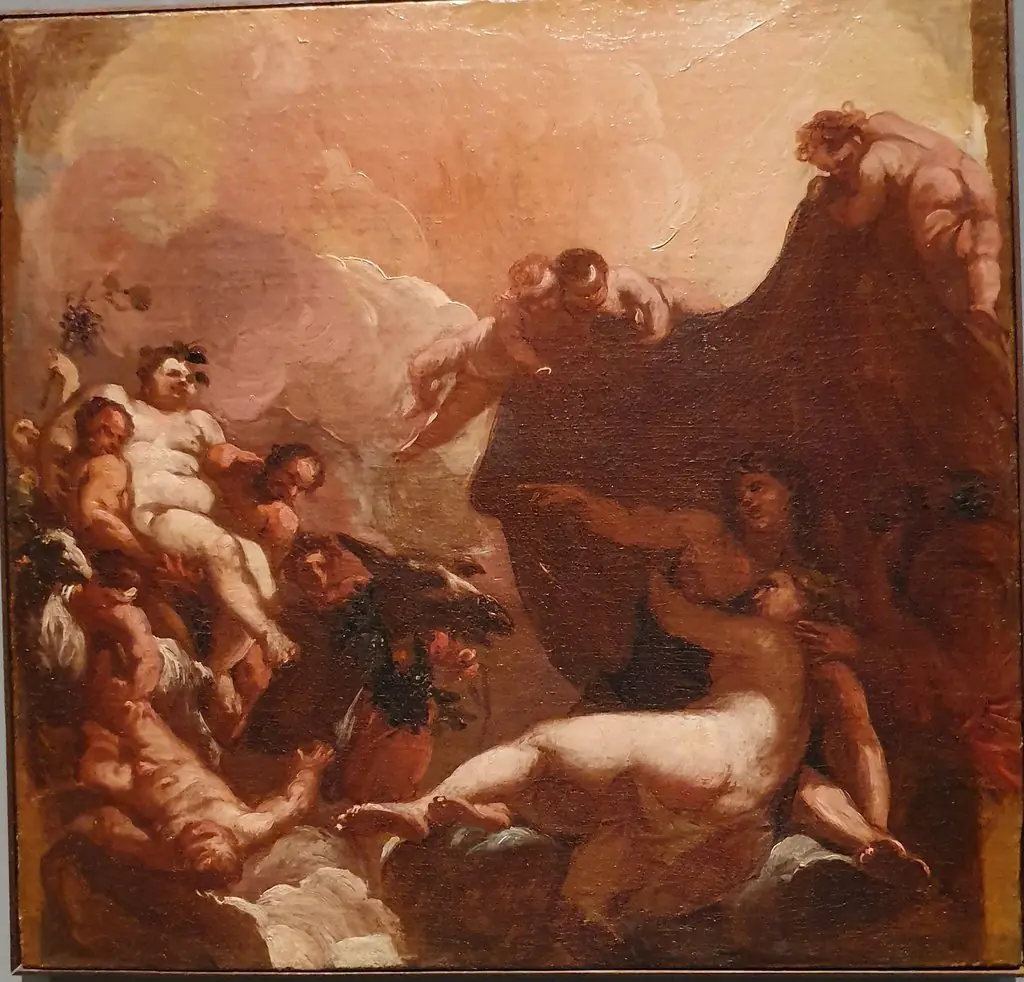 Drunken Silenus
 Narciso na Fonte
 Raiul
Raiul Allégorie de l'abondance
 Puttengruppe mit Blumen (?)