Artwork
Untitled
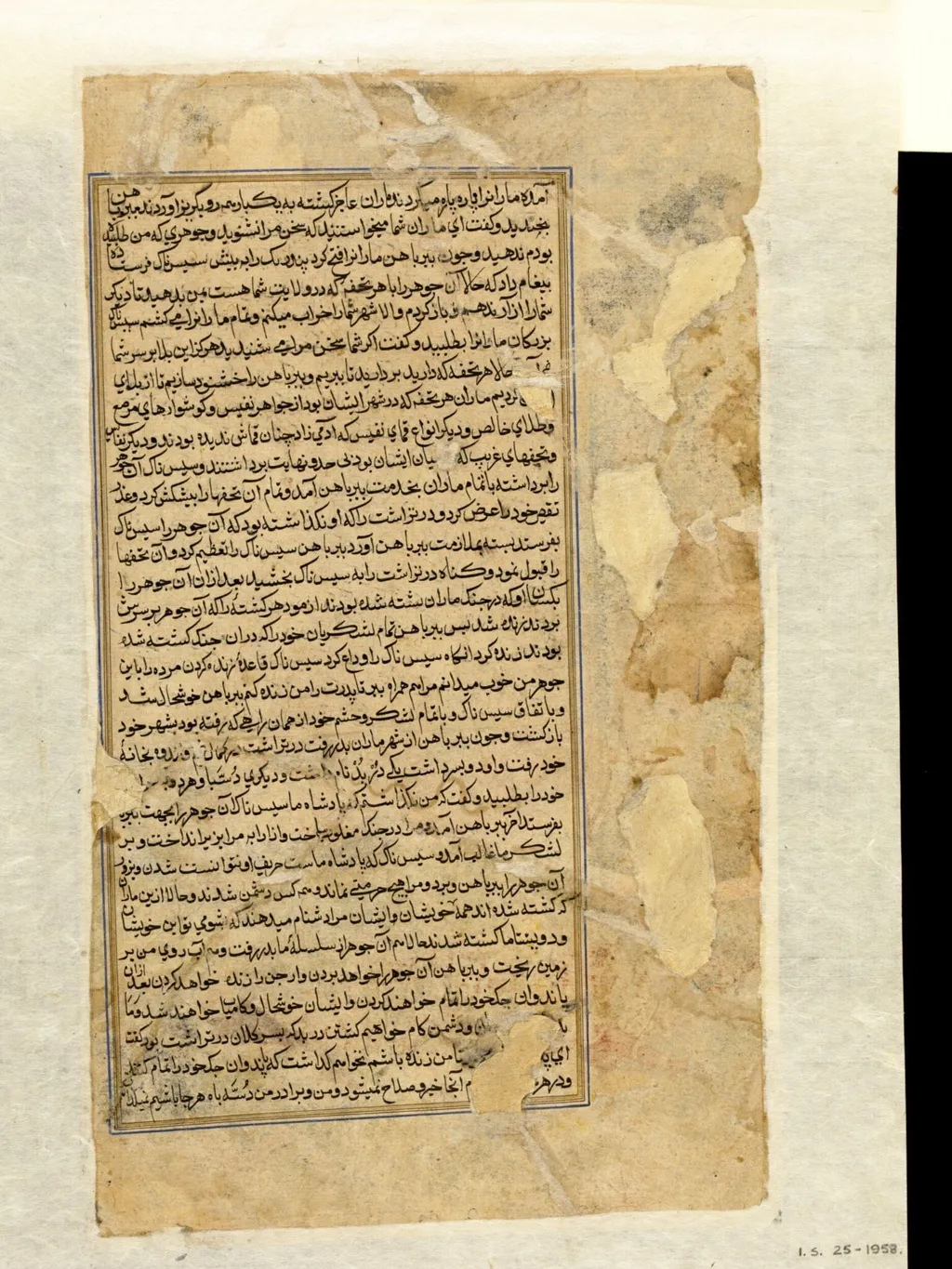
Untitled is a paint painting by the Baroque artist Abdullah. It dates from 1616 and is held in the collection of the Victoria and Albert Museum.
About this work
Overview
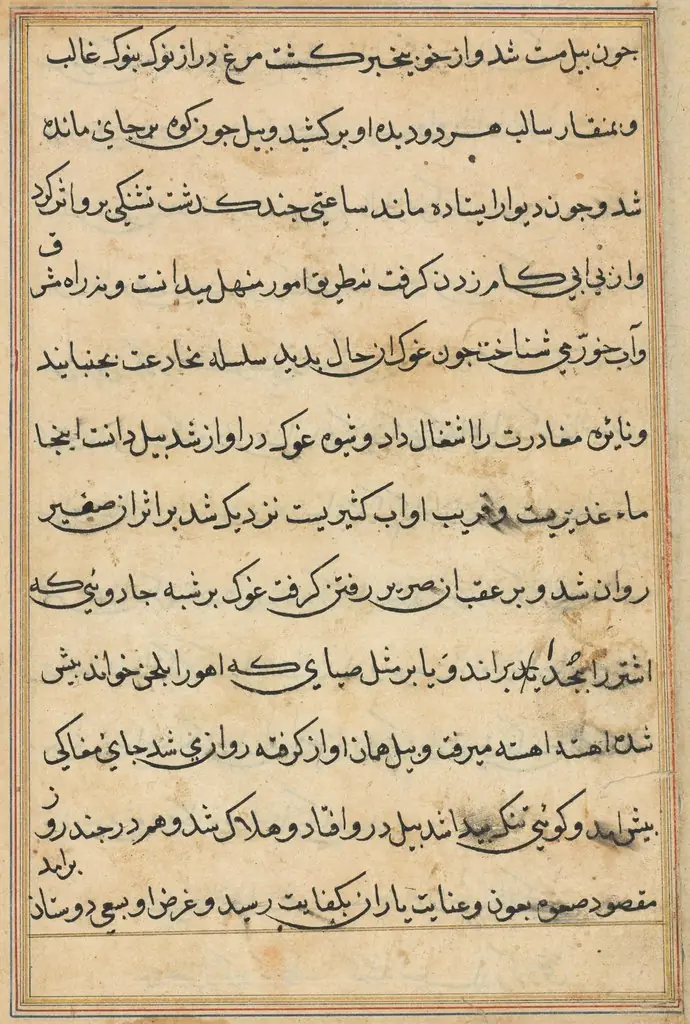
A sheet of lightly textured paper bears a dense block of Arabic script in black ink, mounted on the reverse side of an illustration from the Razm Nama.
A sheet of lightly textured paper bears a dense block of Arabic script in black ink, mounted on the reverse side of an illustration from the Razm Nama. The text is contained within a narrow gold border, with no illustrative elements beyond a slender vertical strip of beige pigment along the right edge, suggesting a fragment of rock or cliff. The composition is otherwise austere, emphasizing the formal presence of the writing.
Subject & Meaning
The inscription is a textual component from the Razm Nama, a Persian translation of the Mahabharata commissioned by the Mughal emperor Akbar. Its placement on the verso indicates it served as a label or commentary, possibly identifying the scene depicted on the recto. The script’s precision reflects its function as a record, not decoration, anchoring the image in a literary tradition.
Technique & Style
The script is executed in fine, controlled brushwork, with subtle variations in ink density suggesting deliberate pacing or multiple strokes. The border is drawn in gold, framing the text without ornamentation. The addition of a minimal rock fragment at the edge introduces an unexpected spatial cue, breaking the flatness of the page while remaining functionally unrelated to the script.
History & Provenance
This folio originates from the Razm Nama, produced in the Mughal atelier between 1582 and 1586. The manuscript was compiled under imperial patronage, blending Indian epic tradition with Persian artistic conventions. Its verso inscriptions were standard practice, ensuring textual continuity across illustrated pages. The object remains part of a dispersed collection, with fragments held in institutions worldwide.
Context
In Mughal manuscript culture, textual and visual elements were interdependent. Inscriptions on verso pages often provided narrative context or chapter markers, functioning as metadata for the illustrated scenes. The inclusion of a rock fragment here may reflect a stylistic habit from illustrated folios, where landscape elements were occasionally carried over as visual echoes, even when irrelevant to the text.
Legacy
The page exemplifies the Mughal emphasis on textual authority within illuminated manuscripts. Its restrained aesthetic contrasts with the elaborate illustrations on the recto, underscoring the hierarchy between word and image. Such folios remain critical to understanding how literary content was curated, preserved, and physically structured in early modern South Asian court culture.
Artist & collection
Artist
Abdullah painted delicate Mughal miniatures in the early 1600s, blending soft washes of color with precise linework.

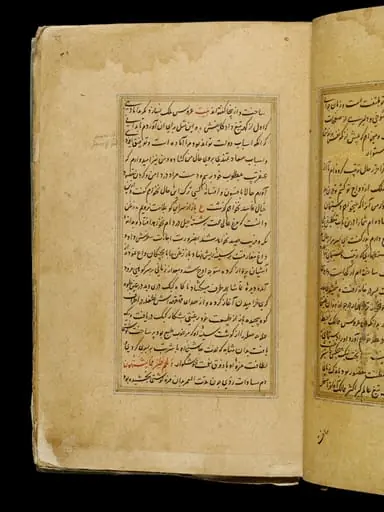 Anvar-i Suhayli
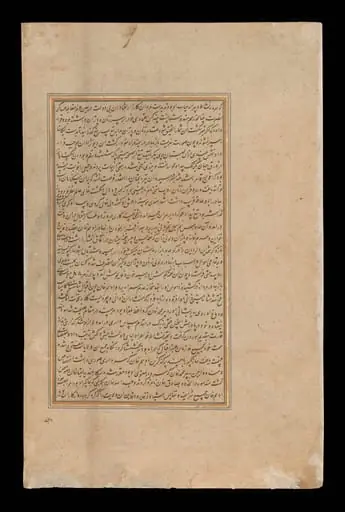 Baz Bahadur
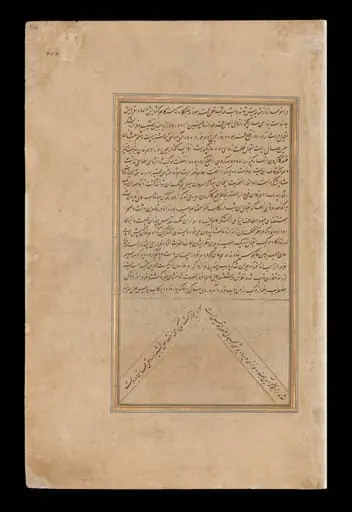 Adham Khan and Akbar
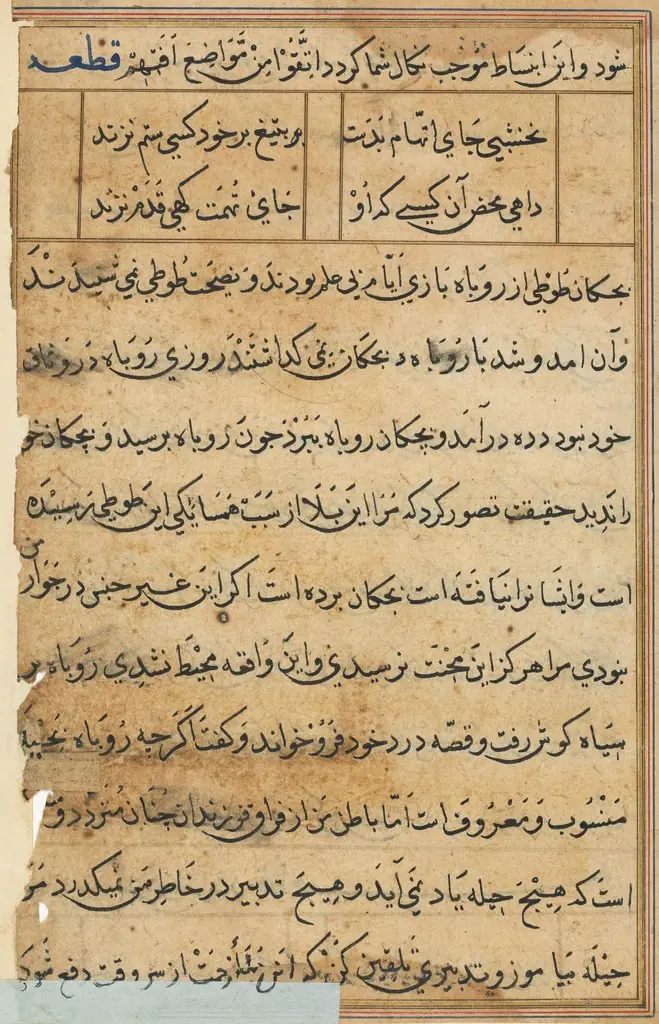 Page from Tales of a Parrot (Tuti-nama): text page
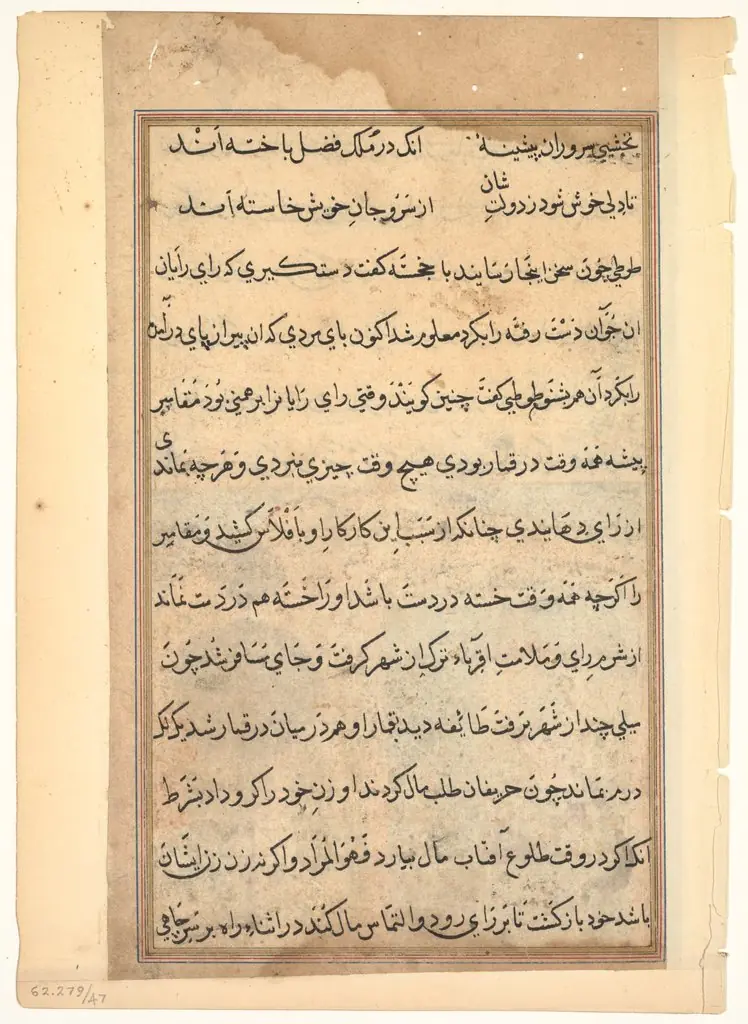 Page from Tales of a Parrot (Tuti-nama): text page
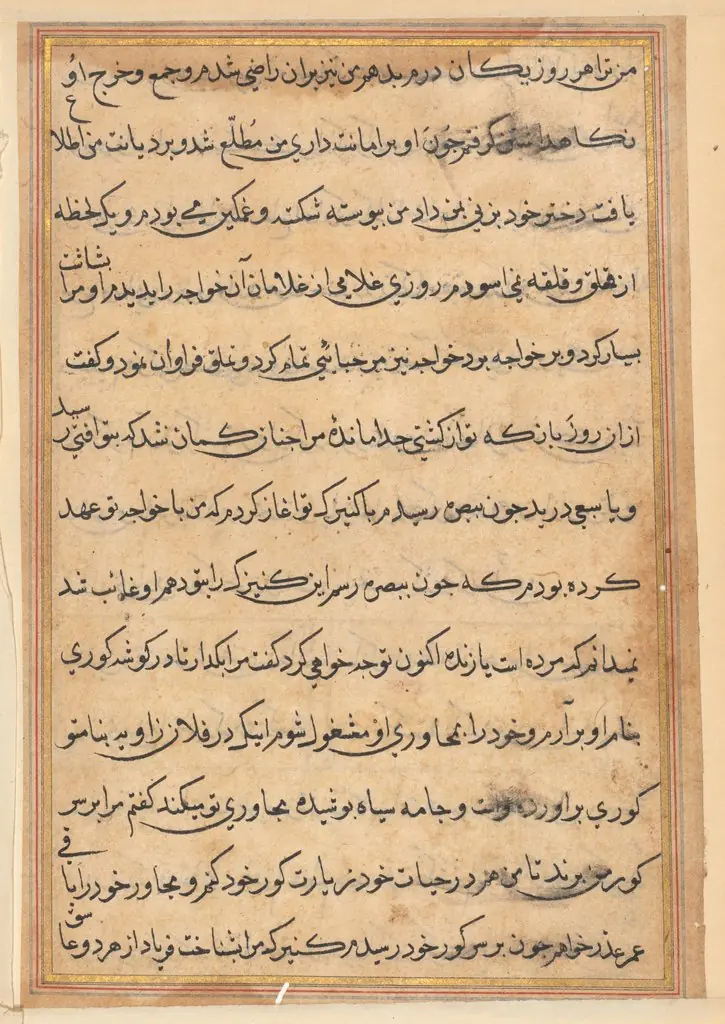 Page from Tales of a Parrot (Tuti-nama): text page
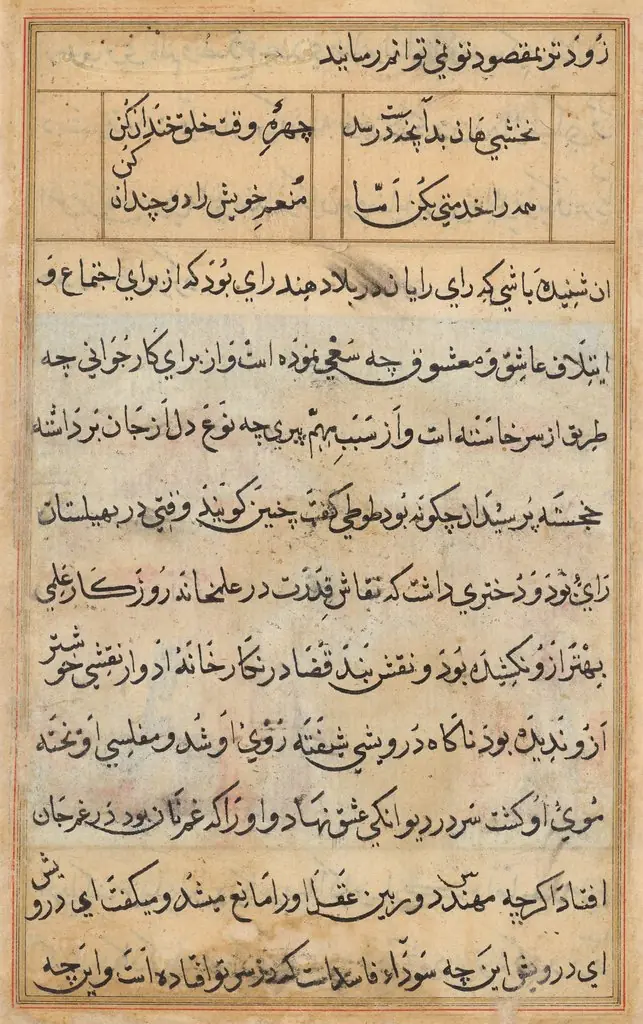 Page from Tales of a Parrot (Tuti-nama): text page
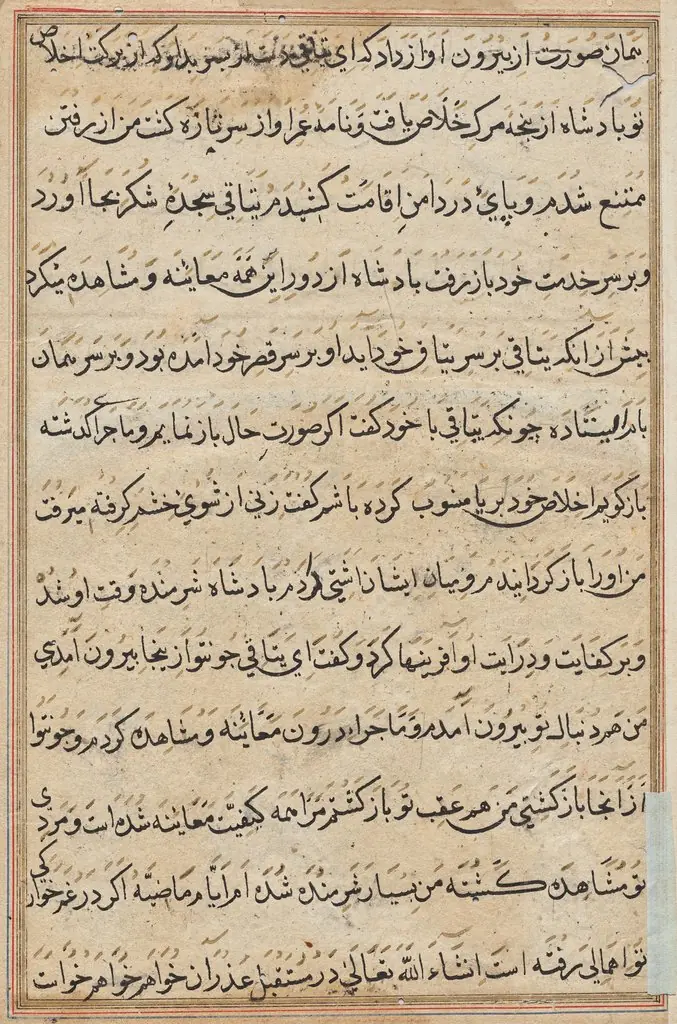 Page from Tales of a Parrot (Tuti-nama): text page
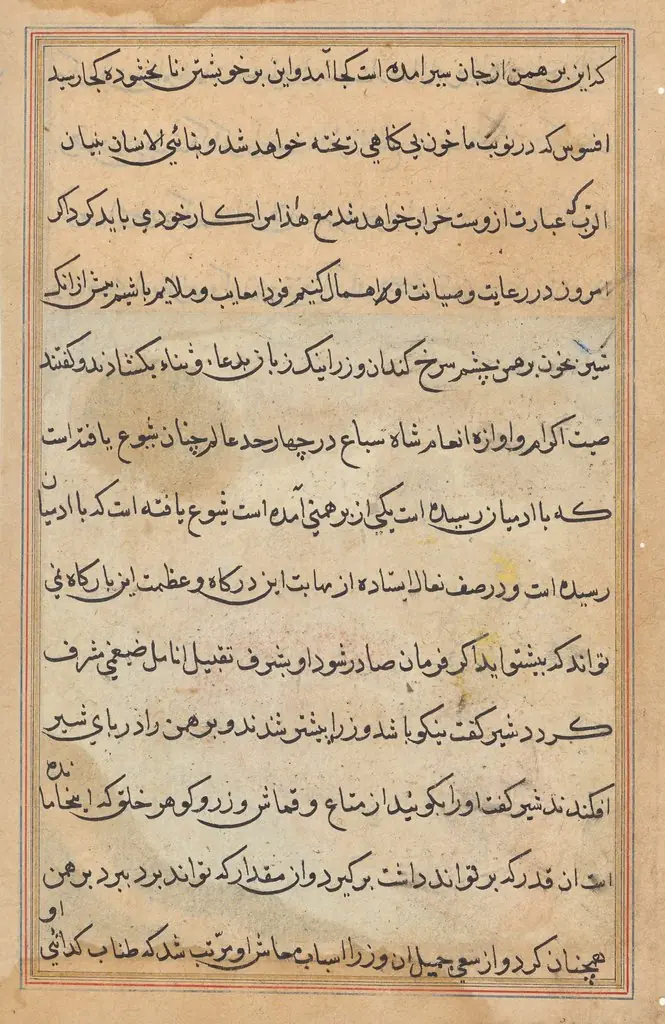 Page from Tales of a Parrot (Tuti-nama): text page
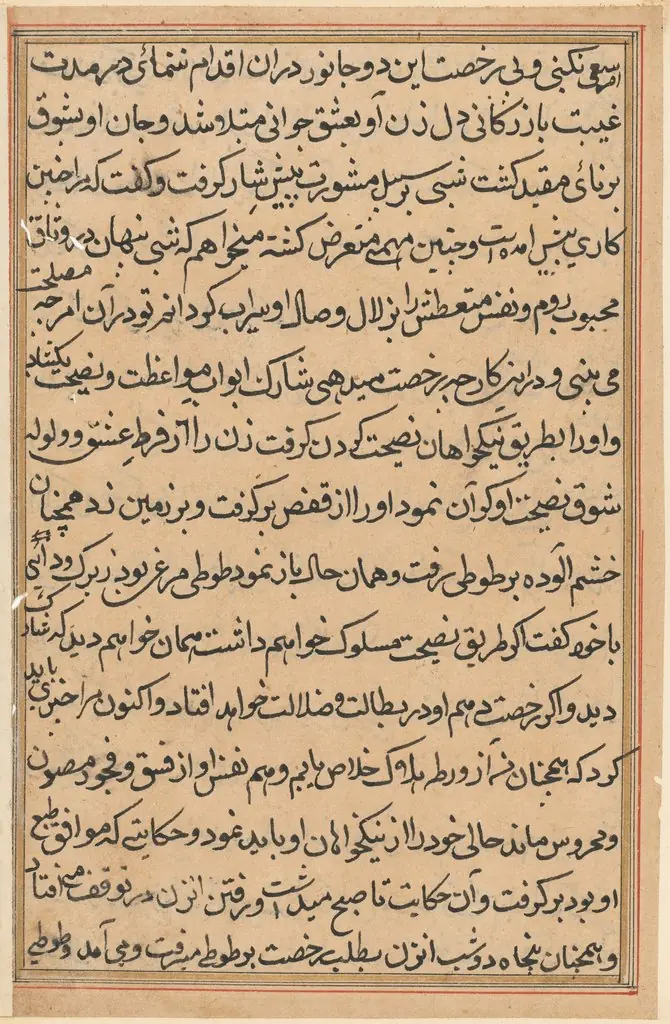 Page from Tales of a Parrot (Tuti-nama): text page
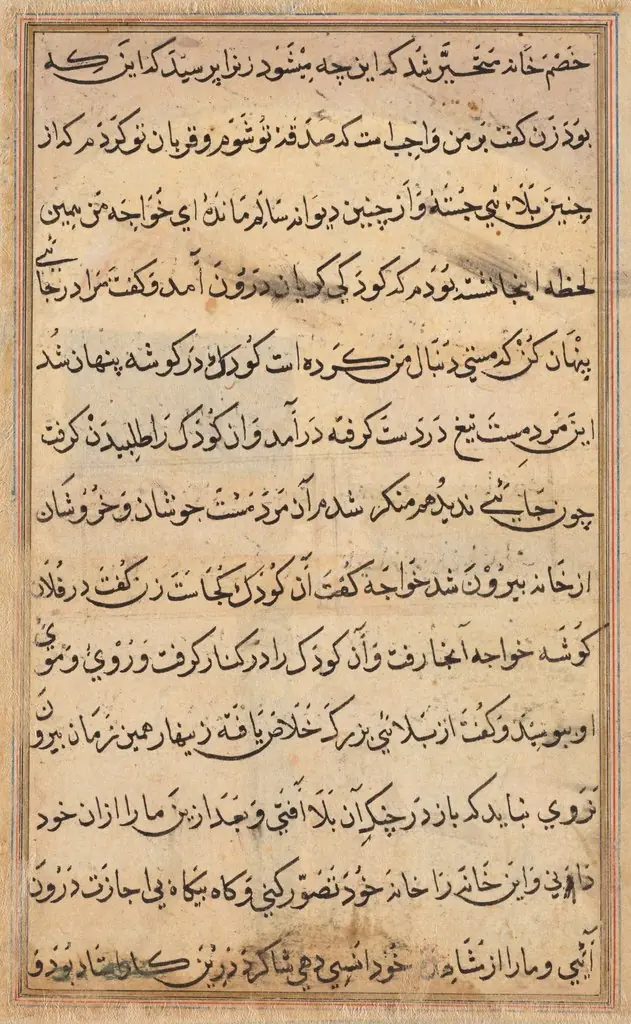 Page from Tales of a Parrot (Tuti-nama): text page
 Page from Tales of a Parrot (Tuti-nama): text page