Artwork
Anvar-i Suhayli
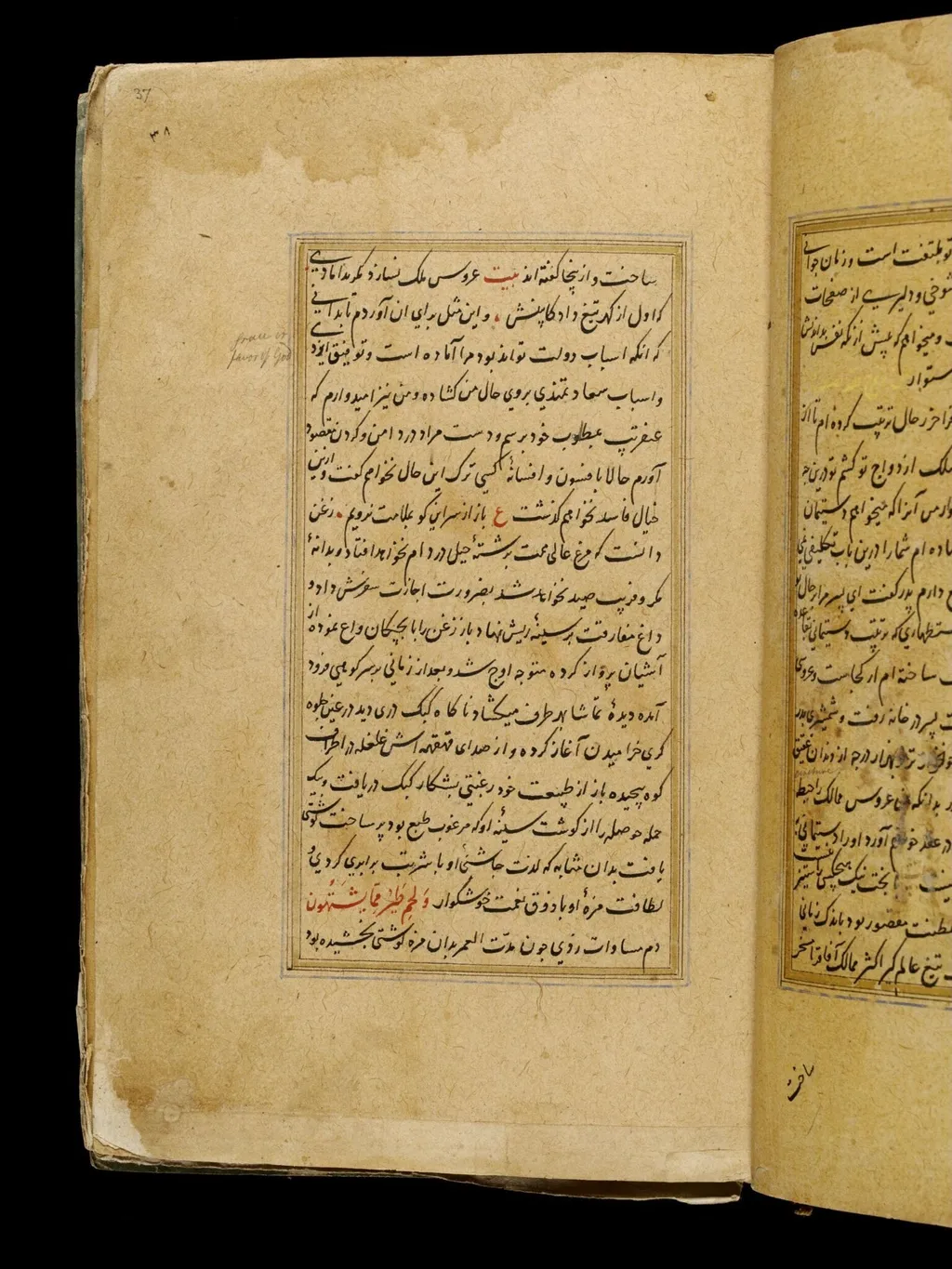
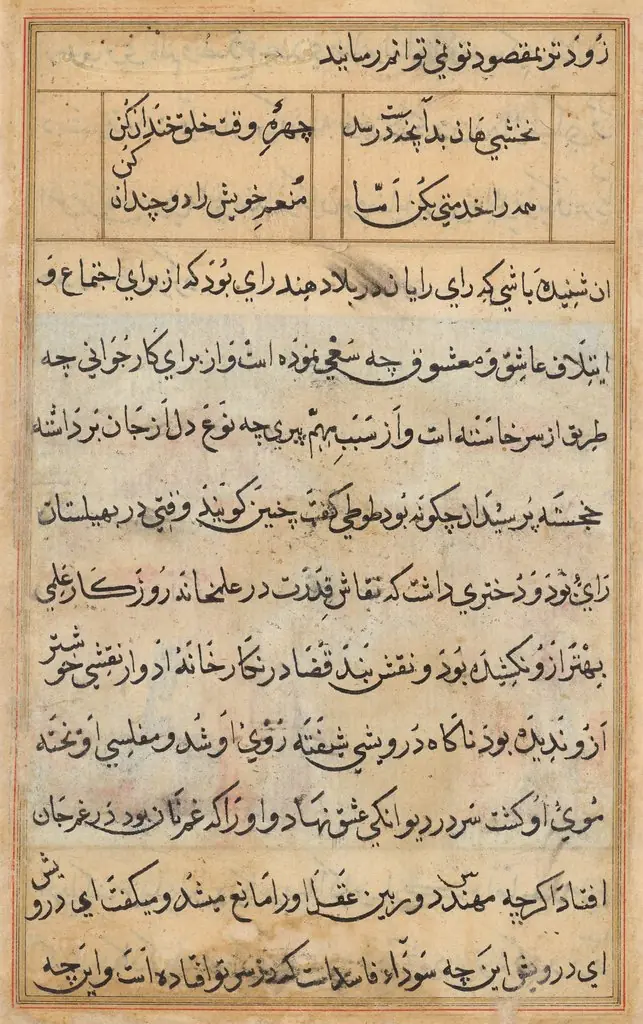
Anvar-i Suhayli is a paint painting by the Mughal Painting artist Unknown. It dates from 1550 and is held in the collection of the Victoria and Albert Museum.
About this work
Overview
A small illustrated fragment appears along the right edge, hinting at the presence of decorative elements that once accompanied the text.
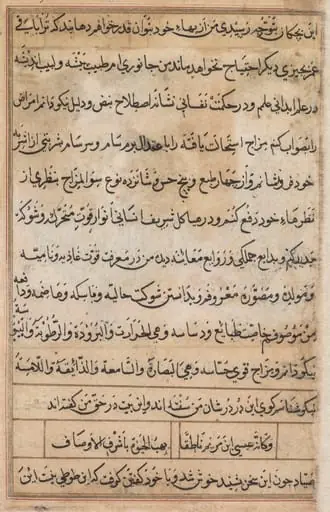
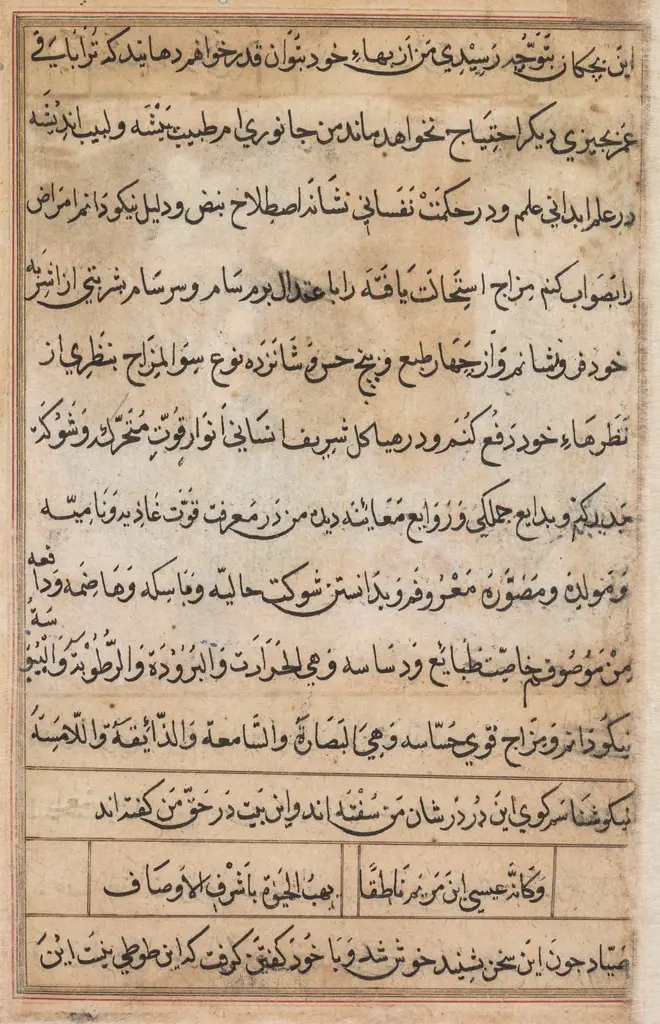
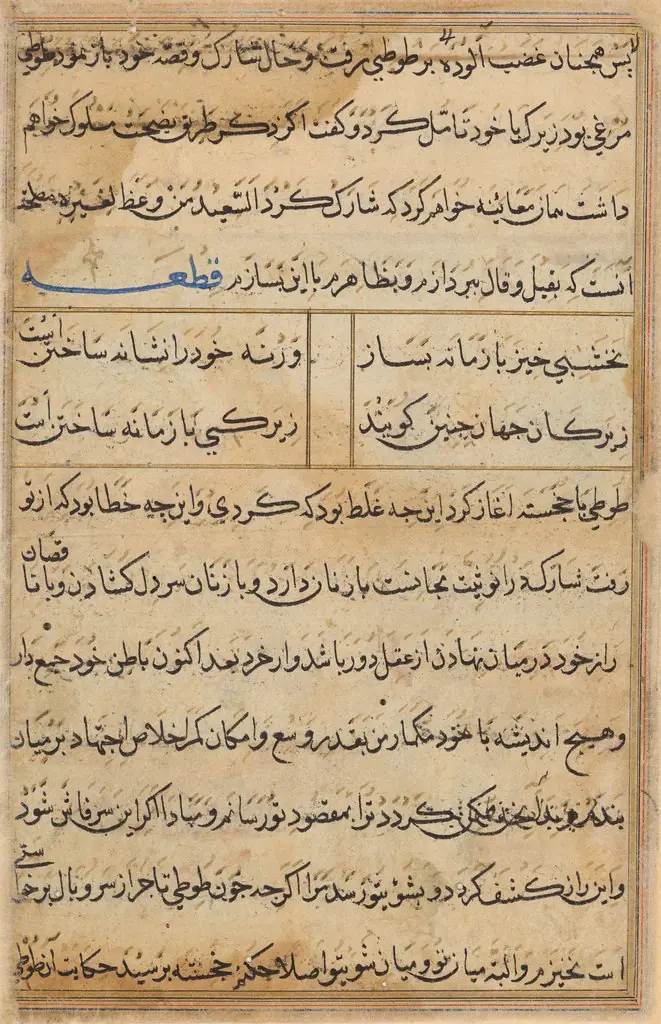
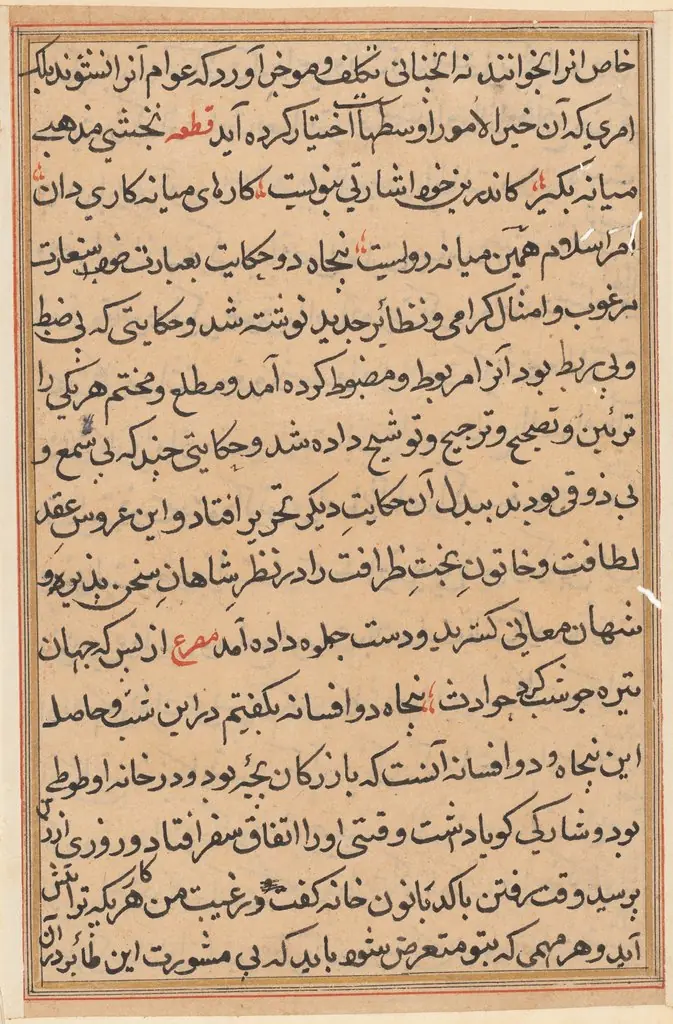
This manuscript folio, dated 1550, contains text from the Anvar-i Suhayli, written in neat black ink on paper. A narrow blue border encloses the script, while select words are emphasized in red pigment. The paper shows signs of age—mild yellowing and faint stains—evidencing its use and passage of time. A small illustrated fragment appears along the right edge, hinting at the presence of decorative elements that once accompanied the text.
Subject & Meaning
The text is drawn from the Anvar-i Suhayli, a Persian adaptation of the Indian fable collection Kalila wa Dimna. Its stories use animal allegories to convey moral and political wisdom. The red highlights in the script signal key passages, guiding readers to central teachings. This method of textual emphasis reflects a tradition of close, reflective reading common in scholarly and courtly circles of the period.
Technique & Style
The script is executed in a precise, compact calligraphic hand, typical of Persian manuscript production. Ink is applied with uniformity, while red accents are sparingly used for emphasis. The faint traces of illustration on the margin suggest the use of mineral pigments—blue, red, and gold—applied with fine brushes. The restrained decoration aligns with a focus on textual clarity over ornamental excess.
History & Provenance
Created in the mid-16th century, this folio likely originated in a royal or aristocratic atelier in Persia. Its survival with minimal damage indicates careful handling and storage. The presence of partial illumination implies it was once part of a larger, illustrated manuscript, possibly commissioned for a patron interested in literary and ethical traditions.
Context
During the 16th century, Persian courts valued illustrated manuscripts as both cultural artifacts and instruments of governance. The Anvar-i Suhayli, with its ethical tales, served as a tool for instructing rulers and elites. Manuscripts like this one were produced in workshops where calligraphers, illuminators, and binders collaborated, blending literary, artistic, and pedagogical aims.
Legacy
This folio represents a moment in the enduring transmission of Persian literary culture. Its preservation offers insight into how texts were curated, annotated, and visually framed for study. Though the full manuscript may be lost, fragments like this continue to inform scholarship on the interplay between writing, illustration, and intellectual life in early modern Persia.
Artist & collection

 Domestic Scene
 Giacomo and Cardinal Marco, investing Andrea, Abbot of San Zeno, with his Benefice
 The Nymph of Fontainebleau
 Portrait of a Woman
 Madonna and Child with Saints in the Enclosed Garden
 Venus and Minerva
 Family Group of Four on Sofa
 Wall painting from Room H of the Villa of P. Fannius Synistor at Boscoreale
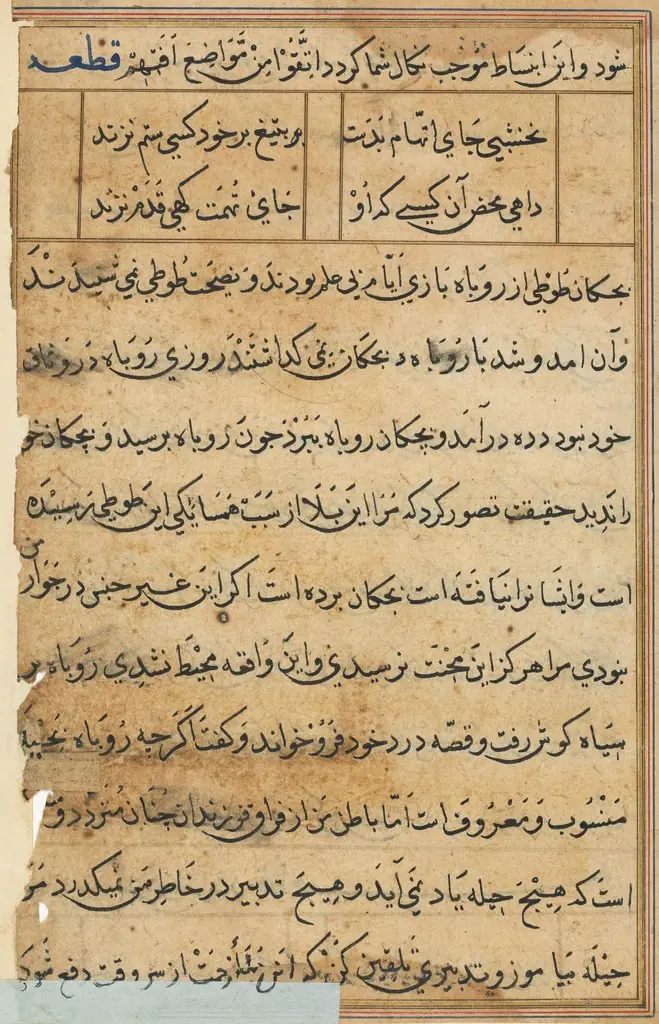 Page from Tales of a Parrot (Tuti-nama): text page
 Untitled
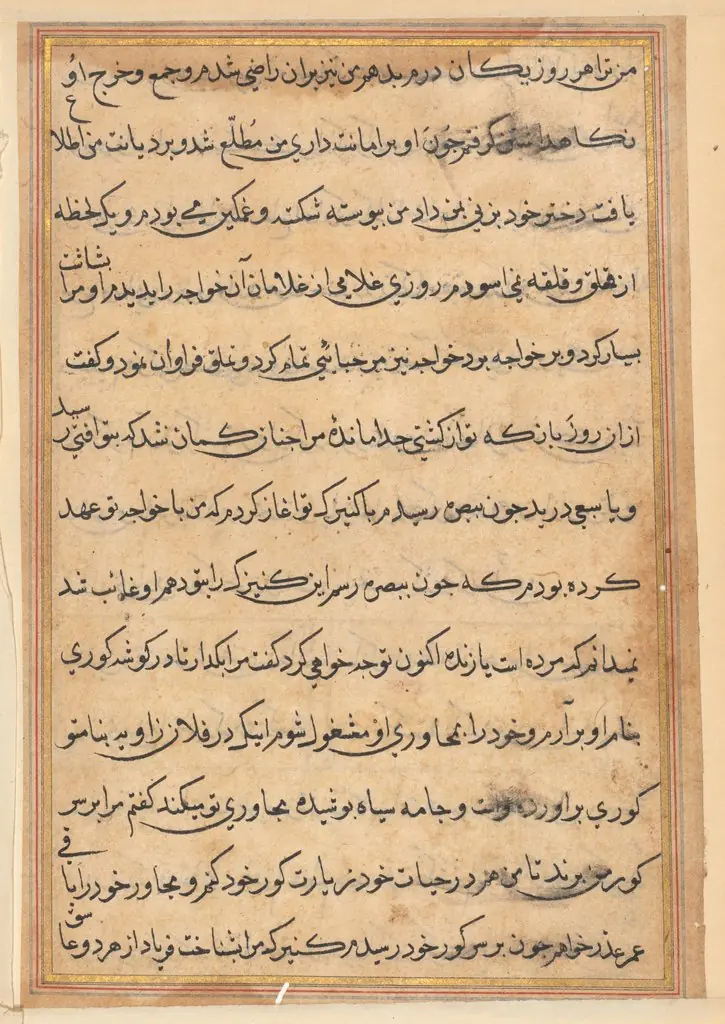 Page from Tales of a Parrot (Tuti-nama): text page
 Page from Tales of a Parrot (Tuti-nama): text page
 Page from Tales of a Parrot (Tuti-nama): text page
 Page from Tales of a Parrot (Tuti-nama): text page
 Page from Tales of a Parrot (Tuti-nama): text page
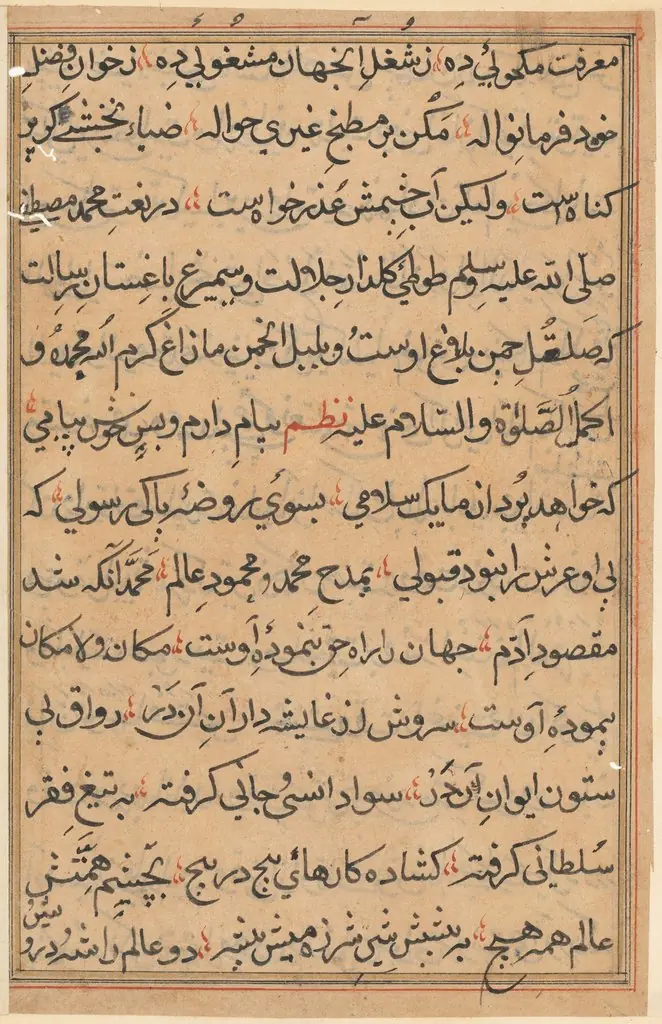 Page from Tales of a Parrot (Tuti-nama): text page
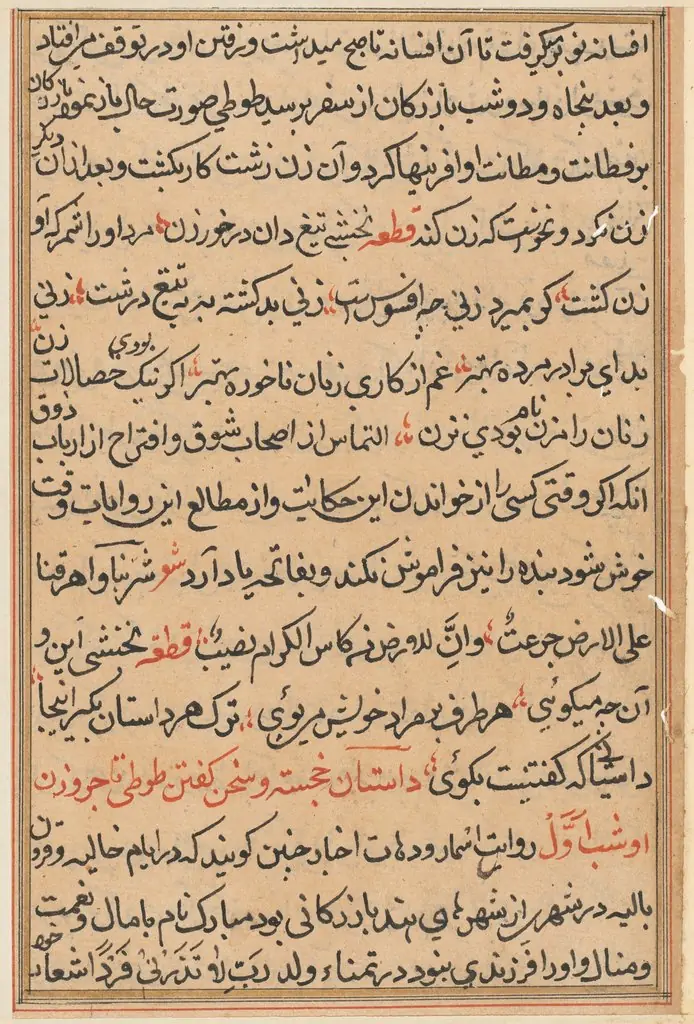 Page from Tales of a Parrot (Tuti-nama): text page
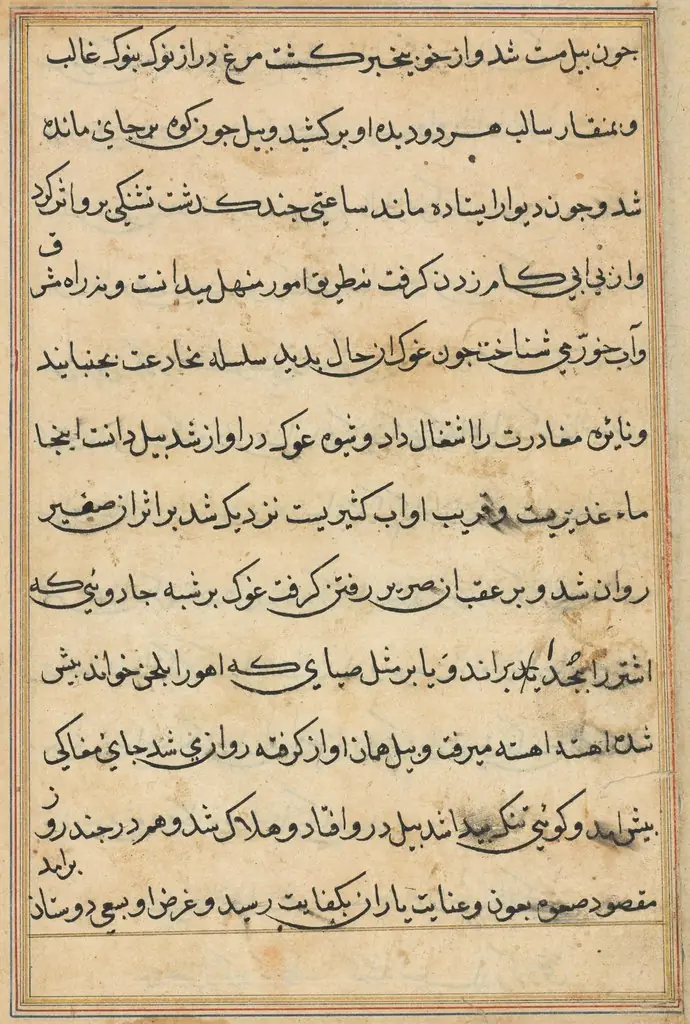 Page from Tales of a Parrot (Tuti-nama): text page
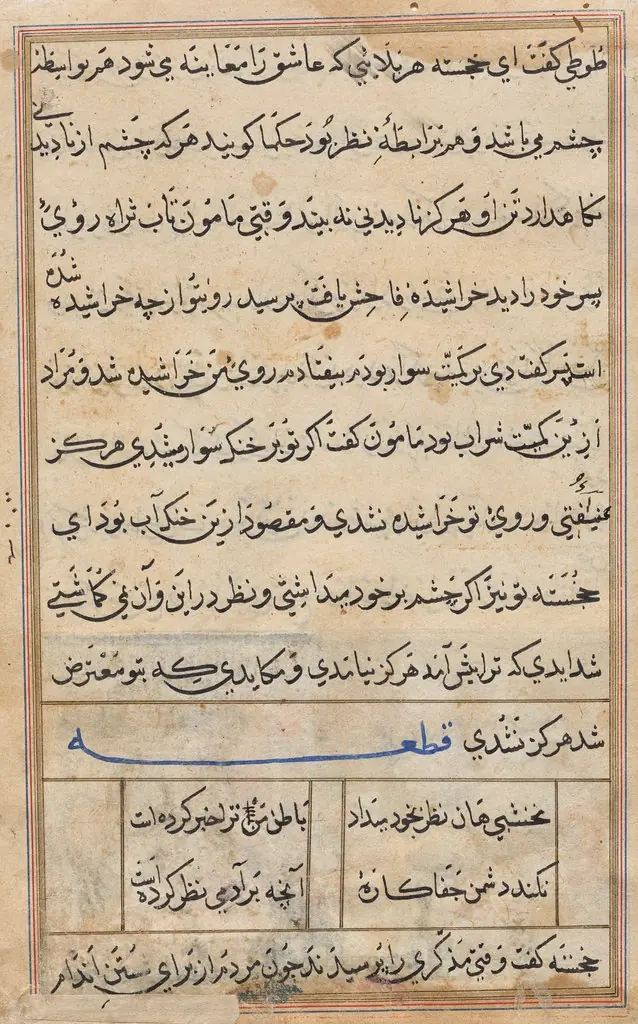 Page from Tales of a Parrot (Tuti-nama): text page
 Page from Tales of a Parrot (Tuti-nama): text page