Artwork
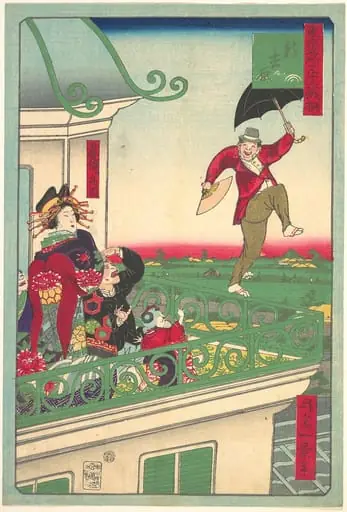
安達吟光画 第二番目五幕目 漂流奇譚西洋劇 巴里府演劇の場|“Act II, Scene 5: At the Opera in Paris,” from the series The Strange Tale of the Castaways: A Western Kabuki
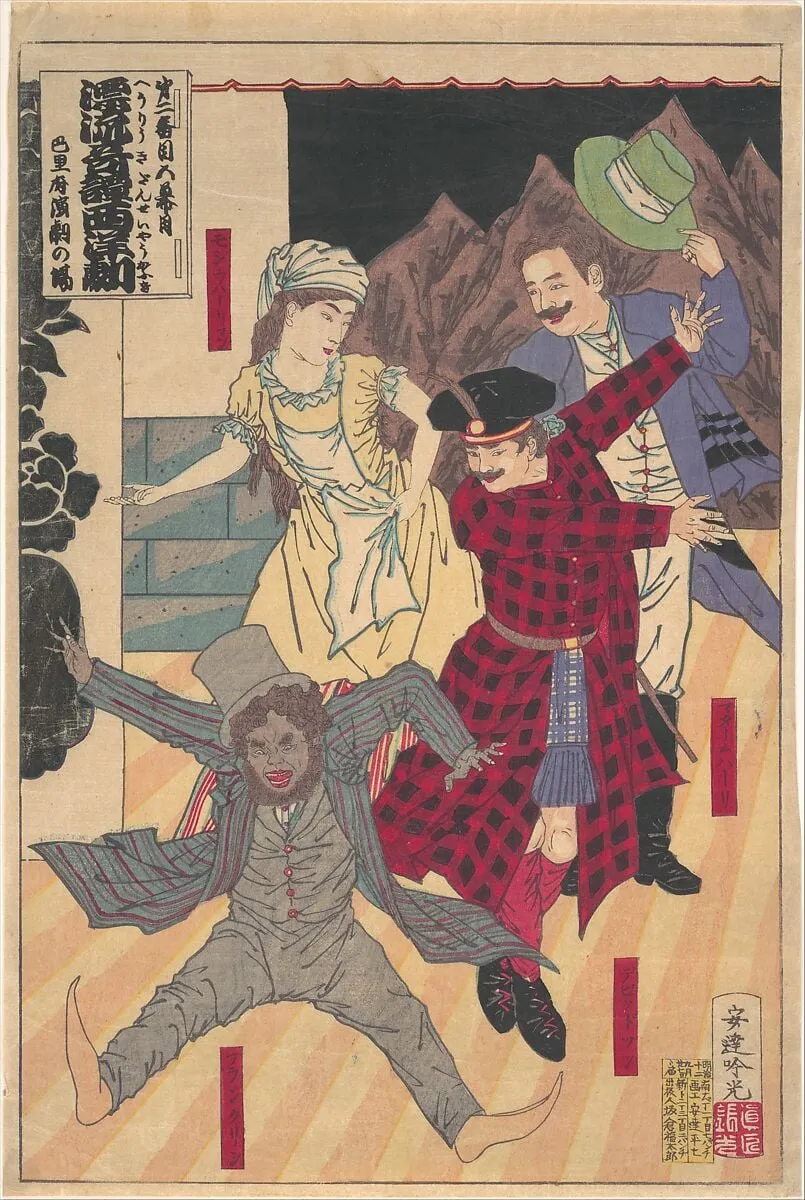
安達吟光画 第二番目五幕目 漂流奇譚西洋劇 巴里府演劇の場|“Act II, Scene 5: At the Opera in Paris,” from the series The Strange Tale of the Castaways: A Western Kabuki is an ink print by the Impressionist artist Adachi Ginkō. It dates from 1879 and is held in the collection of the Metropolitan Museum of Art.
About this work
Overview
Adachi Ginkō’s woodblock print, dated 1879, depicts the fifth scene of the second act in his series The Strange Tale of the Castaways: A Western Kabuki. Executed as a vertical ōban nishiki-e, the image presents a bustling theatrical moment titled “At the Opera in Paris.” The work is part of the Metropolitan Museum of Art’s collection.
Subject & Meaning
Costumes are richly patterned—a red‑black checked coat, a blue suit with a green hat, and a gray suit topped by a top‑hat—suggesting a Western operatic setting.
The composition gathers five figures in varied, animated postures before a stylized backdrop of mountains under a dark sky. Costumes are richly patterned—a red‑black checked coat, a blue suit with a green hat, and a gray suit topped by a top‑hat—suggesting a Western operatic setting. The dynamic stance of the central man, poised as if leaping, conveys theatrical excitement and the cross‑cultural curiosity of the period.
Technique & Style
Printed using the nishiki-e method, the piece combines multiple carved blocks to apply ink and vivid pigments on paper, achieving bright, saturated hues. The artist emphasizes exaggerated gestures and bold color contrasts, typical of late‑Edo ukiyo‑e’s shift toward narrative drama. The vertical ōban format allows for a compact yet detailed scene, balancing foreground action with a atmospheric background.
History & Provenance
Created in 1879, the print belongs to a series that blended Japanese kabuki conventions with Western theatrical motifs, reflecting Meiji‑era fascination with foreign culture. It entered the Metropolitan Museum of Art’s collection through acquisition in the early 20th century, where it remains catalogued as an example of cross‑cultural printmaking.
Artist & collection

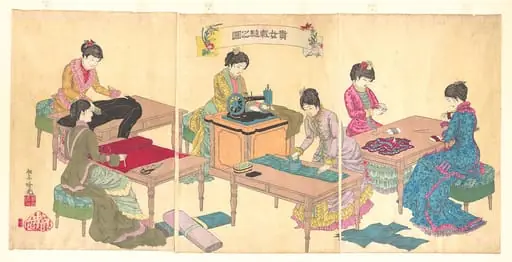 安達吟光画 『貴女裁縫之図』|Ladies Sewing (Kijo saihō no zu)
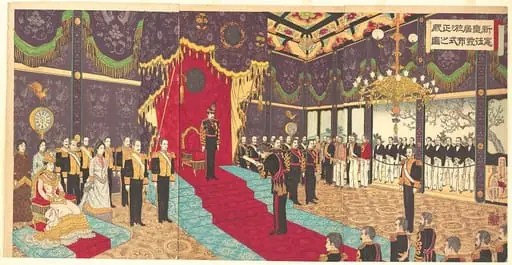 新皇居於テ正殿憲法発布式之図|Illustration of the Issuing of the State Constitution in the State Chamber of the New Imperial Palace (Shin kōkyo ni oite seiden kenpō happushiki no zu)
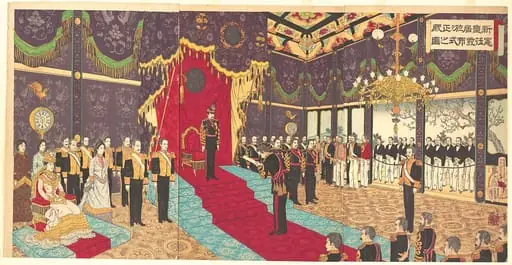 Shinkokyo Oite Seiden Kempo Happu no zu|View of the Issuance of the State Constitution in the State Chamber of the New Imperial Palace
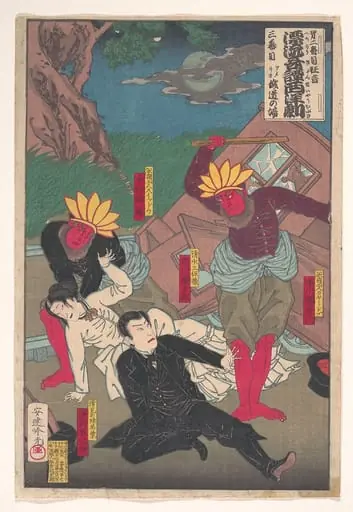 安達吟光画 第二番目狂言 漂流奇譚 西洋劇 三幕目 アメリカ鉄道の場|“Act II, Scene 2: Along Train Tracks in America,” from the series The Strange Tale of the Castaways: A Western Kabuki
![Nōgei no seiran|Returning Sails at Nōgei [American couple riding over the Nōgei Bridge], by Utagawa Yoshitora](https://artifactworldgallery.com/img/utagawa-yoshitora--nogei-no-seiran-returning-sails-at-nogei-american-couple-rid--332c5cab5263a5c5-w320.webp) Nōgei no seiran|Returning Sails at Nōgei [American couple riding over the Nōgei Bridge]
Nōgei no seiran|Returning Sails at Nōgei [American couple riding over the Nōgei Bridge]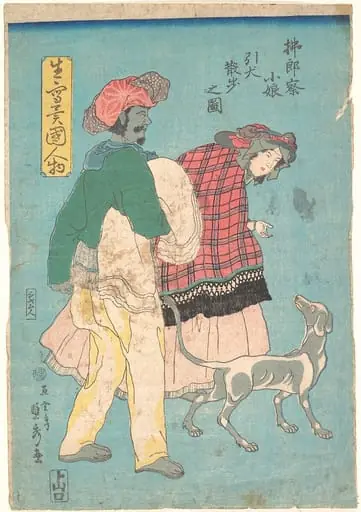 Untitled
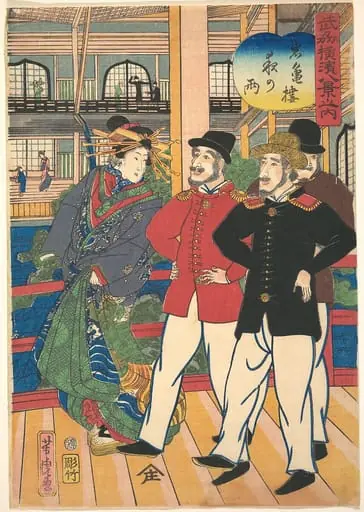 Gankirō yoru no ame|Night Rain at Gankirō
 Untitled
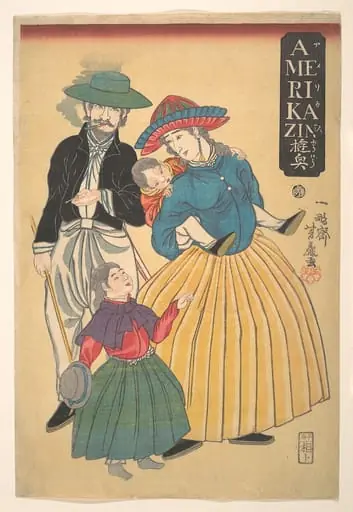 一鵬斎芳藤画 「AMERIKAZIN (アメリカ人)遊興」|Americans on an Outing (Amerikajin yūgyō)
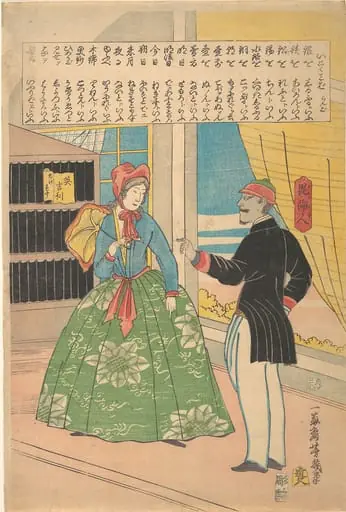 Igirisu to korombojin|English Woman with Black Man
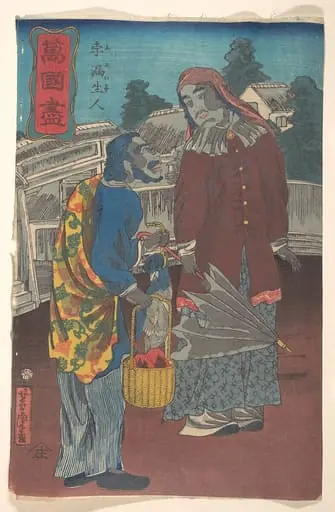 Porosiajin|A Prussian Couple
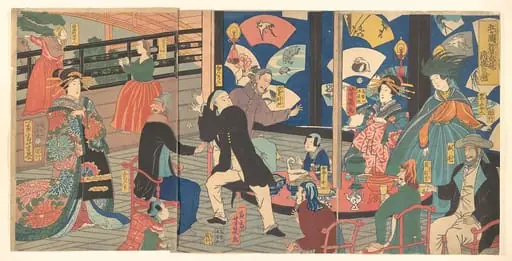 Gok'koku o Gankirō sakamori no zu|The Five Nations Enjoying a Drunken Revel at the Gankirō Tea House
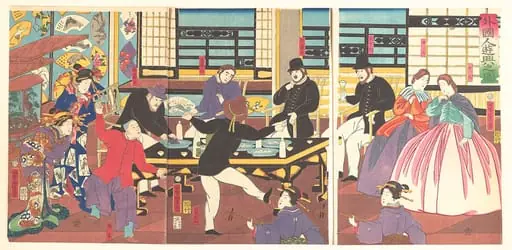 歌川義虎画 『外国人遊興之図』|Foreigners Enjoying a Party (Gaikokujin yūkyō no zu)
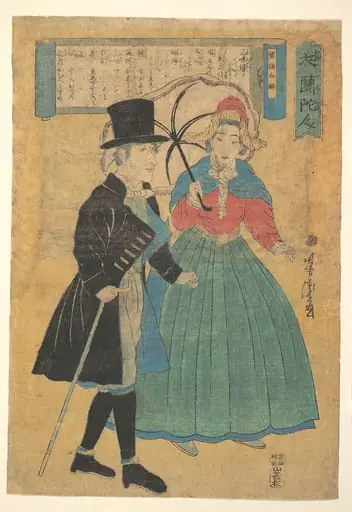 Orandajin|A Dutch Couple
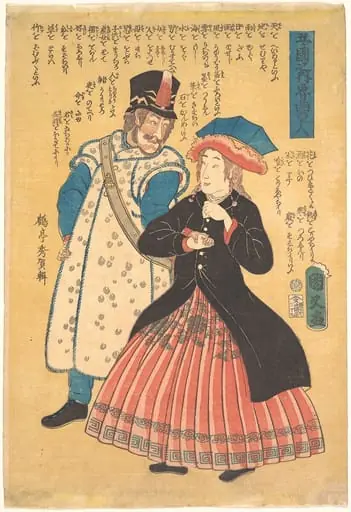 Roshiajin|Russians