Artwork
Gankirō yoru no ame|Night Rain at Gankirō
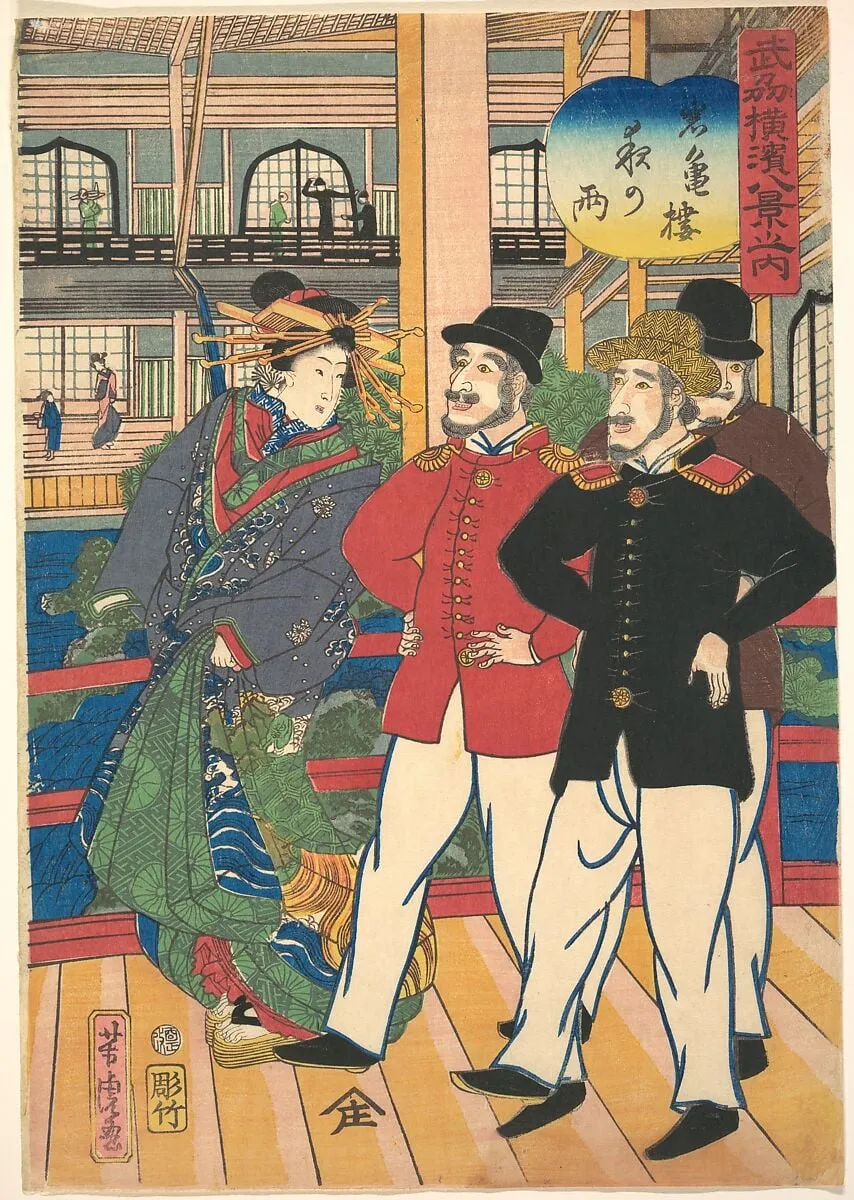
Gankirō yoru no ame|Night Rain at Gankirō is an ink print by the Impressionist artist Utagawa Yoshitora. It dates from 1 and is held in the collection of the Metropolitan Museum of Art.
About this work
Overview
This woodblock print, titled Night Rain at Gankirō, was produced by Utagawa Yoshitora in the late 19th century. Executed in ink and color on paper, it belongs to the ukiyo-e tradition of Japanese printmaking. The work is part of the collection at The Metropolitan Museum of Art, where it represents a moment of urban life during a period of rapid social change in Japan.
Subject & Meaning
The presence of a sign with Japanese script and a canal-side building implies a specific urban locale, possibly a commercial district adapting to modernization.
The scene depicts three figures navigating a rainy night beneath a wooden bridge, their movements framed by the architecture of a bustling city. A woman in a vividly patterned kimono walks beside two men dressed in Western-style coats, suggesting a convergence of traditional and foreign influences. The presence of a sign with Japanese script and a canal-side building implies a specific urban locale, possibly a commercial district adapting to modernization.
Technique & Style
Yoshitora employed bold outlines and saturated colors to define forms and convey motion through the rain. The contrast between the woman’s bright blue robe and the men’s dark coats draws attention to their differing cultural attire. The composition uses layered spatial depth—foreground figures, midground bridge, and background architecture—to create a sense of crowded urban atmosphere, typical of late Edo-period print aesthetics adapted to contemporary themes.
History & Provenance
Created during the Meiji era, the print reflects Japan’s transition as it absorbed Western customs while retaining traditional artistic forms. Though exact production details are sparse, Yoshitora’s known output includes scenes of contemporary life, often documenting societal shifts. The print entered The Metropolitan Museum of Art’s collection through documented acquisitions of Japanese prints in the early 20th century.
Context
In the late 1800s, Japanese cities like Tokyo underwent rapid transformation, with Western clothing, architecture, and infrastructure becoming visible in daily life. Yoshitora’s depiction of mixed attire and urban settings captures this cultural intersection. Unlike earlier ukiyo-e focused on theater or nature, this work documents the evolving identity of urban Japan during a time of modernization and foreign influence.
Legacy
The print stands as a record of visual adaptation during Japan’s Meiji reforms, illustrating how traditional printmaking responded to new social realities. While not widely known outside specialized collections, it contributes to the broader understanding of how ukiyo-e artists documented modernity. Its preservation in major institutions ensures continued study of cross-cultural representation in 19th-century Japanese art.
Artist & collection

 Untitled
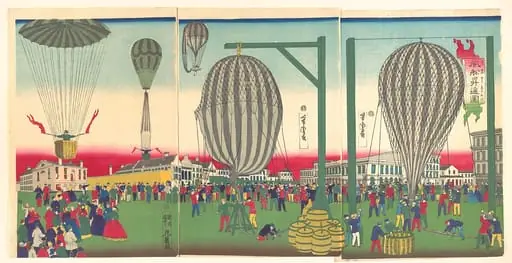 風船昇遥図|Illustration of a Balloon Ascending (Fūsen shōyō no zu)
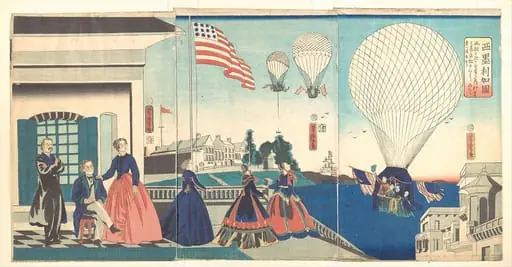 「亜墨利加國」|“America”: Enjoying Hot Air Balloons
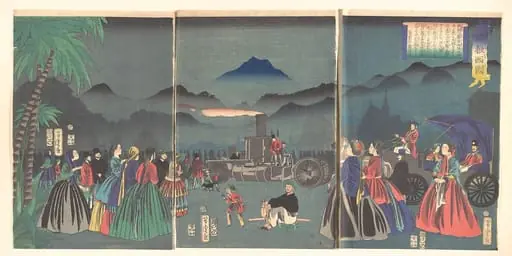 仏蘭西国|France (furansukoku)
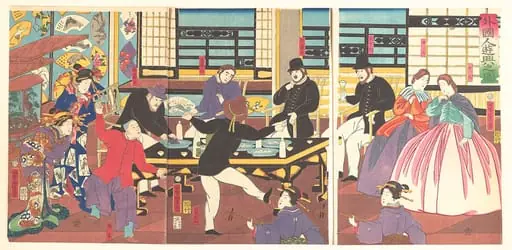 歌川義虎画 『外国人遊興之図』|Foreigners Enjoying a Party (Gaikokujin yūkyō no zu)
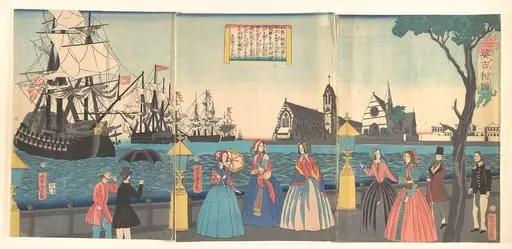 英吉利国|England (Igirisukoku)
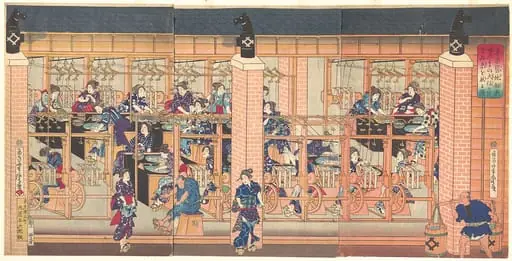 『東京築地舶来ぜんま い大仕かけきぬ糸をとる図』|Imported Silk Reeling Machine at Tsukiji in Tokyo
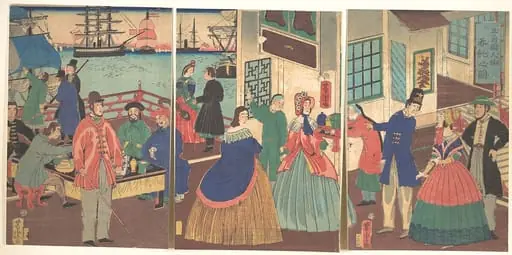 歌川芳虎画 『五箇国人物 呑飥之図』|People of the Five Nations Drinking and Eating (Gokakoku jinbutsu dontaku no zu)
![Motomura no yūdachi|Evening Glow at Motomura [Two Englishmen looking at the sunset], by Utagawa Yoshitora](https://artifactworldgallery.com/img/utagawa-yoshitora--motomura-no-yudachi-evening-glow-at-motomura-two-englishmen--2e8bfdf3deec941b-w320.webp) Motomura no yūdachi|Evening Glow at Motomura [Two Englishmen looking at the sunset]
Motomura no yūdachi|Evening Glow at Motomura [Two Englishmen looking at the sunset]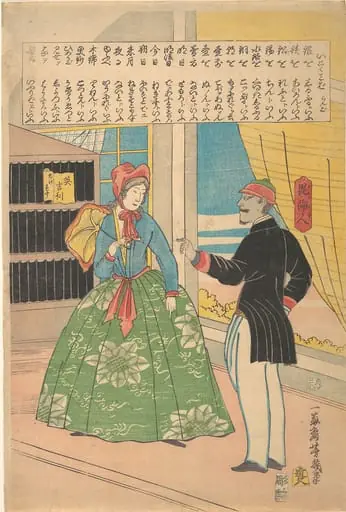 Igirisu to korombojin|English Woman with Black Man
![Michiyuki no embō|Evening Glow on a Traveling Drama [Chinese watching a Kabuki play], by Utagawa Yoshitora](https://artifactworldgallery.com/img/utagawa-yoshitora--michiyuki-no-embo-evening-glow-on-a-traveling-drama-chinese--d1f5bd27ea6e846c-w320.webp) Michiyuki no embō|Evening Glow on a Traveling Drama [Chinese watching a Kabuki play]
Michiyuki no embō|Evening Glow on a Traveling Drama [Chinese watching a Kabuki play]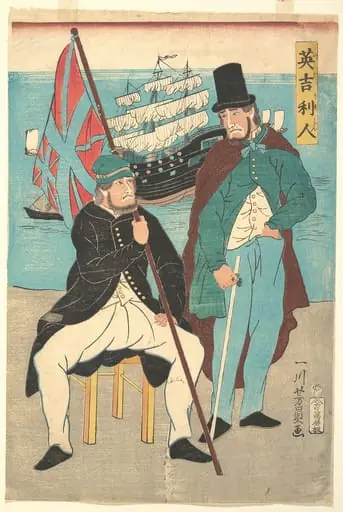 Igirisujin|Englishmen
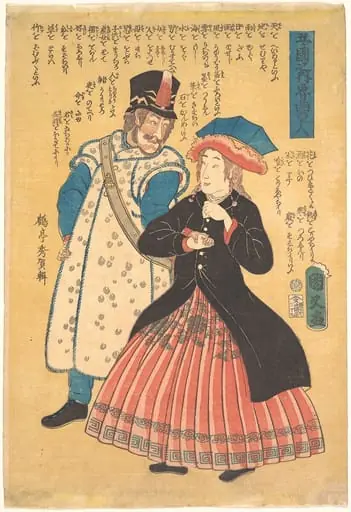 Roshiajin|Russians
 Untitled
 Untitled
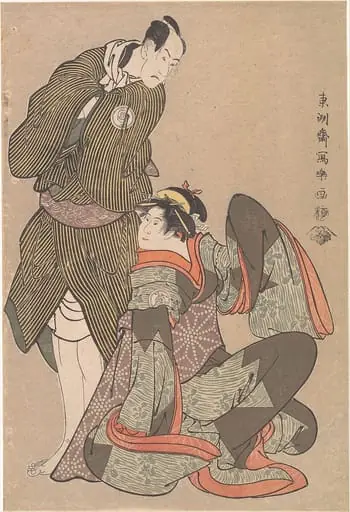 東洲斎写楽画 三代目坂東彦三郎の帯屋長右衛門と四代目岩井半四郎の信濃 屋お半 『二本松陸奥生長』|Bandō Hikosaburō III in the Role of Obiya Chōemon and Iwai Hanshiro IV in the Role of Shinanoya Ohan, from the Play “Nihonmatsu Michinoku sodachi”
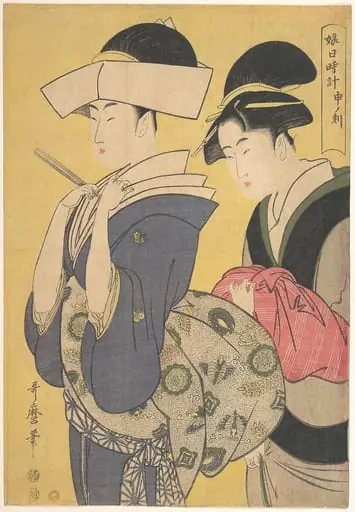 娘日時計 申ノ刻|Seru no Koku
 Untitled
![Nōgei no seiran|Returning Sails at Nōgei [American couple riding over the Nōgei Bridge], by Utagawa Yoshitora](https://artifactworldgallery.com/img/utagawa-yoshitora--nogei-no-seiran-returning-sails-at-nogei-american-couple-rid--332c5cab5263a5c5-w320.webp) Nōgei no seiran|Returning Sails at Nōgei [American couple riding over the Nōgei Bridge]
Nōgei no seiran|Returning Sails at Nōgei [American couple riding over the Nōgei Bridge]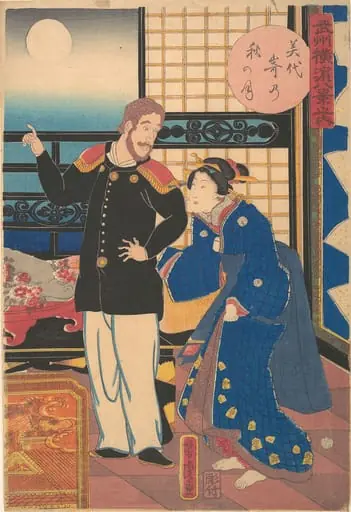 Miyozaki no shūgetsu|Autumn Moon at Miyozaki